 Bellingham Roofing
 Asphalt Shingle Roofing Built for Barkley's Weather
Barkley sits close enough to Bellingham Bay and the surrounding wetlands that its roofs take on a specific kind of punishment. It's not the driest neighborhood in Whatcom County, and it's not the windiest either — but the combination of moisture, mild temperatures, and shade from mature landscaping adds up to conditions that wear out a poorly installed or poorly ventilated shingle roof faster than most homeowners expect. We work on roofs in this part of Bellingham regularly, and the patterns repeat: moss creeping in along north-facing slopes, granule loss near valleys and eaves, and soft spots developing under shingles that were never given a chance to dry out between storms.
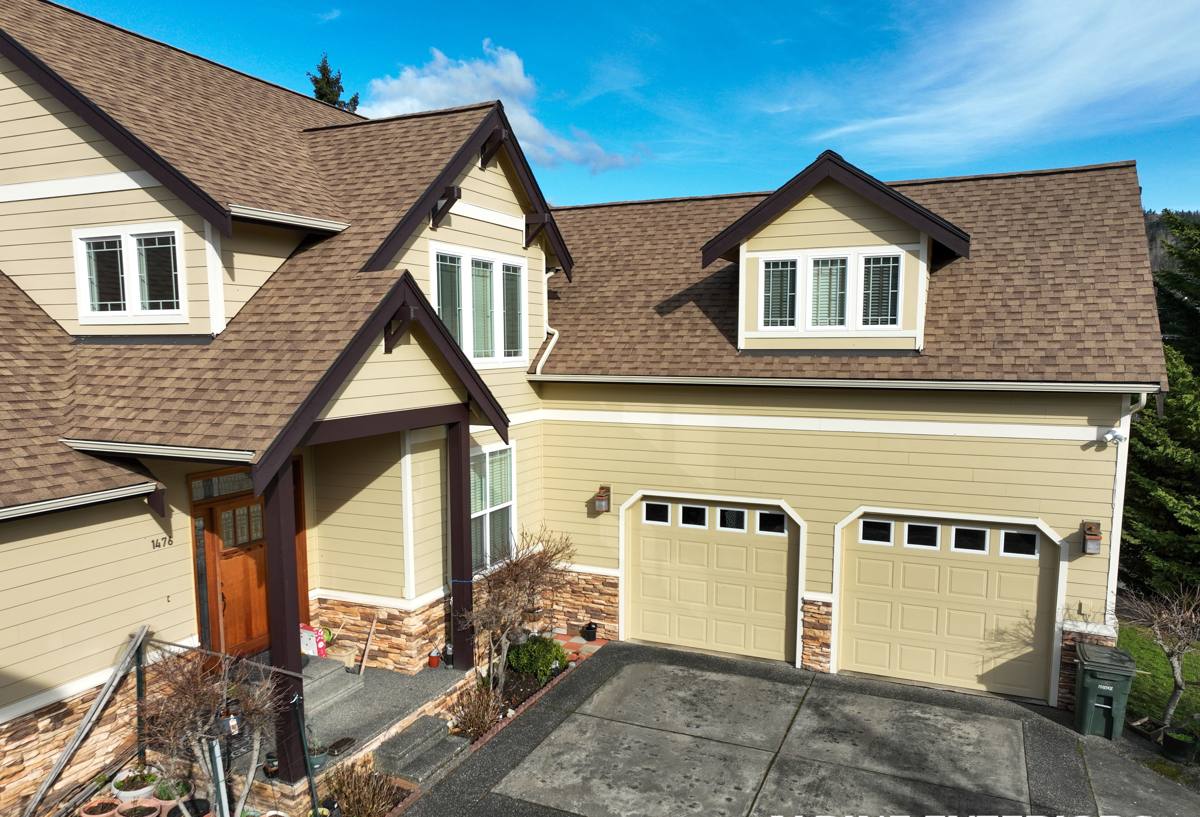
Asphalt shingles remain one of the most practical roofing choices for this climate when they're installed correctly, with the right underlayment, ventilation, and edge detailing. The material itself isn't the weak link in most roof failures we see — the installation is. This page covers what a correctly built asphalt shingle roof looks like for a Barkley home, what tends to go wrong, and how we approach the work.
Why Local Climate Matters More Than the Shingle Brand
Whatcom County's marine climate means Barkley roofs deal with long stretches of low-intensity rain rather than short, hard downpours. That sounds gentler than a thunderstorm climate, but it's actually harder on a roof in some ways — water has more time to find its way under improperly sealed shingles, around flashing, and into valleys that weren't lapped correctly. Add in salt-tinged air drifting off the bay, which accelerates corrosion on exposed metal fasteners and flashing, and you have a set of conditions that punishes shortcuts.
Then there's moss. Bellingham's moss season isn't a minor cosmetic issue — it's a structural one if left unchecked. Moss and algae hold moisture directly against the shingle surface for months at a time, especially on shaded, north- or east-facing roof planes common in Barkley's tree-lined lots. Over time this breaks down the asphalt mat, lifts shingle edges, and creates channels where wind-driven rain can get underneath the roofing system entirely.
The Three Local Stressors We Design Around
- Driving rain: wind off the bay can push rain sideways during storms, which means standard overlap and sealing isn't always enough at edges, valleys, and penetrations.
- Salt air: accelerates corrosion on nails, flashing, and vent hardware, especially on roofs with west or southwest exposure toward the water.
- Moss and shade: mature trees common throughout Barkley keep certain roof sections damp for extended periods, encouraging organic growth that shortens shingle life.
What a Correct Asphalt Shingle Job Actually Involves
A roof that's going to hold up under these conditions isn't just "shingles nailed to plywood." Every layer underneath the visible shingle matters, and in a climate like this, the details most homeowners never see are usually what determines whether a roof lasts 15 years or 30.
Deck Inspection and Prep
Before anything goes down, the roof deck itself needs to be sound. Soft, delaminated, or water-stained sheathing gets replaced — not covered over. Skipping this step is one of the most common shortcuts we see on older re-roofs in this area, and it's the reason some "new" roofs start leaking again within a few years.
Underlayment
Given how much sustained moisture Barkley roofs deal with, we don't treat underlayment as an afterthought. A synthetic or self-adhered underlayment provides a secondary water barrier that matters a lot more here than in a drier climate, especially on lower-slope sections or roofs with limited overhang.
Ice and Water Protection at Vulnerable Points
Eaves, valleys, and areas around chimneys or skylights are where roofs actually fail. Self-adhering waterproof membrane in these zones gives a second line of defense when wind-driven rain or ice-dam-style backup pushes water uphill under the shingle courses.
Flashing
Corrosion-resistant flashing at every wall intersection, chimney, vent pipe, and valley is non-negotiable this close to the bay. We don't reuse old flashing on a re-roof unless it's in genuinely good condition — most of the leaks we get called out to trace back to flashing that was patched or caulked instead of properly replaced.
Shingle Installation
Correct nail placement, proper exposure, and manufacturer-specified sealing patterns all affect wind resistance and how well the roof sheds driving rain. Nailing too high, too low, or with the wrong fastener pattern is a common cause of premature shingle failure that isn't visible until wind gets under the tabs.
Ventilation
A shingle roof without balanced intake and exhaust ventilation traps heat and moisture in the attic, which shortens shingle life from underneath — even if the top side looks fine. In a humid climate like Whatcom County's, this is one of the most overlooked factors in how long a roof actually lasts.
Ventilation and Moisture: The Part Most Estimates Skip
We spend more time talking about attic ventilation than most homeowners expect on an asphalt shingle project, because it directly affects how well the roof performs in this climate. Poor ventilation traps warm, moist attic air against the underside of the roof deck. Over a Bellingham winter, that moisture can condense, saturate the sheathing, and eventually show up as mold, rot, or premature shingle deterioration — problems that have nothing to do with the shingle brand and everything to do with airflow.
A correctly balanced system pulls cooler air in at the eaves and pushes warm, moist air out near the ridge. When we quote a re-roof, we look at existing soffit vents, ridge vents, and any obstructions (like blown-in insulation blocking soffit intake) before we ever talk shingle color.
Choosing the Right Shingle for This Climate
Not every asphalt shingle product performs the same way under sustained moisture and moss pressure. We steer homeowners toward algae-resistant shingles (shingles with copper- or zinc-infused granules) for roof planes that get significant shade, since standard granules offer little resistance to the streaking and moss colonization common on north-facing slopes in this area. We also weigh wind ratings carefully given the exposure some Barkley lots have toward open weather off the bay.
| Factor | Standard 3-Tab Shingle | Architectural (Laminate) Shingle |
|---|---|---|
| Typical lifespan in this climate | 15-20 years | 25-30+ years |
| Wind resistance | Lower rated, more vulnerable to lift | Higher rated, better for exposed lots |
| Moss/algae resistance (with treated granules) | Available, less common | Widely available |
| Appearance | Flat, uniform | Dimensional, heavier shadow lines |
| Upfront cost | Lower | Moderate premium |
For most Barkley homes, the cost difference between standard and architectural shingles is small relative to the labor cost of the roof, and the added wind rating and durability tend to be worth it given local exposure. We'll walk through the actual options and trade-offs for your specific roof during the estimate rather than pushing one product line.
Signs a Barkley Roof Needs Attention
Because moss and moisture damage build slowly, a lot of homeowners don't realize how much wear a roof has until it's actively leaking. Watch for these signs, especially heading into or coming out of the wet season:
- Moss or dark streaking concentrated on shaded or north-facing slopes
- Granules collecting in gutters or at downspout outlets
- Shingle edges that look curled, lifted, or cupped
- Soft or spongy spots when walking the roof (should only be assessed by a professional)
- Water stains on interior ceilings, especially near exterior walls or chimneys
- Daylight visible through the attic roof deck
- Rusting or corroded flashing around vents, chimneys, or wall intersections
If you're seeing more than one of these, it's worth getting a roof looked at before the next stretch of sustained rain rather than after.
Maintenance That Actually Extends Roof Life Here
Given the moss and moisture pressure in this area, a shingle roof in Barkley benefits from a maintenance rhythm that a drier-climate roof wouldn't need:
- Periodic moss removal using methods that don't strip granules or damage the shingle mat — pressure washing shingles is generally a bad idea and can shorten roof life
- Gutter clearing before the fall wet season, since clogged gutters back water up under eave-line shingles
- Flashing checks every few years given the accelerated corrosion from salt-tinged air
- Attic ventilation checks if insulation work or other renovations have happened since the roof was installed
- Prompt repair of storm damage rather than waiting, since a small lifted shingle can become a deck-level leak after a few more rain events
Our Process for Barkley Roofing Projects
We keep the process straightforward because most homeowners just want clear answers and a roof that doesn't come back to bite them:
- On-site inspection: we look at the deck, existing ventilation, flashing condition, and any moss or moisture patterns specific to your roof's exposure and shading.
- Written estimate: a clear breakdown of materials, scope, and pricing — no vague allowances or surprise add-ons buried in fine print.
- Material selection: we talk through shingle options suited to your roof's actual exposure, not a one-size-fits-all recommendation.
- Installation: deck repair as needed, underlayment, flashing, ventilation corrections, and shingle installation done to manufacturer specification.
- Final walkthrough: we review the completed work with you before calling the job done.
Why a Crew That Already Works Barkley Matters
Roofing crews that mostly work drier inland regions sometimes under-detail moisture protection because it's never bitten them before. A crew working Whatcom County roofs regularly sees firsthand what sustained marine-climate moisture, salt exposure, and moss pressure do to a roof over five, ten, and twenty years — and that shapes how we detail valleys, flashing, and ventilation from the start rather than treating this as a generic install. Knowing which slopes in this kind of neighborhood tend to hold shade and moss longer, or how far wind-driven rain can push water under an eave, isn't something you get from a manufacturer's install guide alone. It comes from doing the work here, on roofs like yours, in this weather.
If your Barkley home needs a new roof, a repair, or you just want an honest read on how much life is left in your current shingles, we're happy to take a look. Reach out for a free, no-pressure estimate using the form below.