 Bellingham Roofing
 Exterior Work Built for Birch Bay's Coastal Conditions
Birch Bay sits right on the water, and that changes what a roof, a wall of siding, or a set of exterior windows has to put up with compared to a home a few miles inland. Salt-laden air off the bay, wind-driven rain that doesn't fall so much as blow sideways, and a moss season that stretches longer here than in drier parts of Whatcom County all add up to faster wear on the materials that keep a house dry. We work on homes throughout this stretch of coastline and understand the difference between a roof or siding job done for a typical Bellingham lot and one that has to hold up a few hundred feet from saltwater.
This page covers how we approach roofing, siding, window, and deck work for Birch Bay properties specifically — what tends to fail first out here, what materials and details actually help, and what to expect when you call us for an estimate.
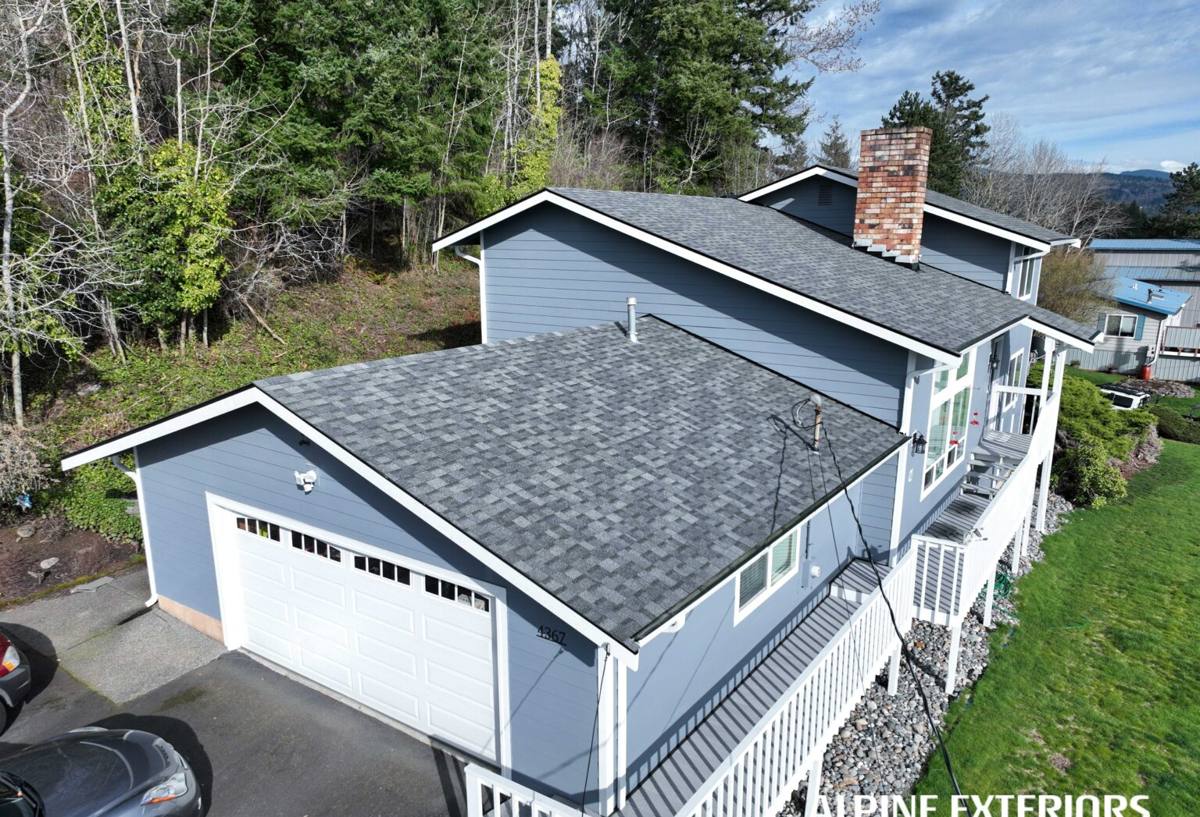
What the Birch Bay Climate Does to a House
Salt Air and Corrosion
Airborne salt from the Salish Sea settles on everything — roofing metal, fasteners, window frames, gutters — and accelerates corrosion in a way inland homes simply don't experience. Standard fasteners and flashing that would last decades a few miles east can start showing rust and pitting much sooner near the water. This is one of the biggest reasons material selection matters more out here than it does elsewhere in the county.
Driving Rain and Wind Exposure
Birch Bay gets direct exposure to wind coming off the water, and wind-driven rain doesn't behave like a normal rainstorm. It gets pushed sideways and upward under eaves, around window trim, and into siding laps and roof transitions that would stay dry in a calmer setting. Flashing details, underlayment, and sealing at penetrations carry more of the workload here than on a sheltered inland lot.
Extended Moss and Moisture Season
Shade, humidity, and the marine layer common along this part of the coast mean moss and algae growth gets an earlier start in fall and holds on longer into spring. Moss retains moisture against roofing material and works into shingle laps and seams, which shortens the useful life of a roof that isn't kept clear of it. North-facing slopes and roofs under tree cover are usually hit hardest.
Roofing in Birch Bay
For a coastal property like this, we look at three things before recommending a roofing approach: how exposed the roof is to prevailing wind and salt air, how much shade and moss pressure the property has, and how the existing flashing and ventilation are holding up. A roof that's failing at the flashing and penetrations is a different repair than one that's failing across the field of the shingles from age and moss damage, and we'll tell you honestly which one you're dealing with before recommending a full replacement.
- Corrosion-resistant fasteners and flashing at valleys, chimneys, and roof-to-wall transitions
- Underlayment suited to wind-driven rain, not just standard felt
- Attention to ventilation, since trapped moisture under a roof deck compounds salt and moss damage from both sides
- Moss treatment and prevention built into maintenance, not just addressed after it's already established
Siding for a Coastal Exposure
Siding on a Birch Bay home is doing double duty — it's the main defense against wind-driven rain finding its way behind the wall, and it's constantly exposed to salt air that will find any gap in paint, caulk, or trim. We pay close attention to how siding is lapped, how trim and window transitions are sealed, and how the wall assembly behind the siding is meant to drain and dry if moisture does get past the surface.
Material Trade-Offs Near the Water
Every siding material has a maintenance profile, and that profile shifts once you're within sight of the bay. Wood siding needs more diligent paint and caulk upkeep to keep salt air and moisture out of end grain and joints. Fiber cement holds up well to moisture but depends on correct installation and sealing at every cut edge and penetration — get that wrong and the material's advantages don't matter. Vinyl is low-maintenance but can become brittle with age and UV/salt exposure faster in a harsher coastal microclimate. We'll walk you through what fits your home, your budget, and how much upkeep you actually want to take on, rather than pushing one product as a default.
| Factor | Inland Bellingham Home | Birch Bay Coastal Home |
|---|---|---|
| Fastener/flashing corrosion risk | Low to moderate | Higher — salt air accelerates rust |
| Wind-driven rain exposure | Moderate, sheltered by terrain/trees | Direct, especially on water-facing walls |
| Moss/algae season length | Typical Whatcom County season | Extended by marine humidity and shade |
| Recommended detailing | Standard flashing and fasteners | Corrosion-resistant hardware, reinforced sealing at penetrations |
Windows That Actually Seal Against Salt and Wind
Older or poorly installed windows are usually where a coastal home first shows moisture problems — not because the window itself failed, but because the flashing and sealant around it gave out under repeated wind-driven rain. When we replace or install windows in Birch Bay, the flashing detail at the rough opening gets as much attention as the window unit itself. We also talk with homeowners about frame material: vinyl and fiberglass generally resist salt-driven corrosion better than bare aluminum, and that's worth factoring in for a home this close to the water.
Beyond moisture control, well-sealed windows cut down on drafts during the windier stretches of fall and winter, which is a real comfort and efficiency difference on an exposed lot.
Decks Facing Wind, Salt Spray, and Moisture
A deck at Birch Bay takes a beating that an inland deck doesn't — salt spray on hardware and fasteners, standing moisture from driving rain, and UV exposure with less tree cover to shade it on open water-facing lots. We build and repair decks with corrosion-resistant fasteners and connectors as a baseline out here, not an upgrade, and we pay close attention to drainage so water doesn't sit on the deck surface or pool where boards meet the house.
- Corrosion-resistant fasteners, hangers, and hardware throughout
- Proper flashing where the deck ledger meets the house to prevent hidden rot
- Decking material chosen with salt and moisture exposure in mind, not just appearance
- Gaps and slope built in for real drainage, not just visual spacing
Maintenance That Matters More on the Coast
A lot of the damage we see on Birch Bay homes isn't a defect in the original work — it's the natural result of salt air and moisture doing their job faster than homeowners expect. A maintenance routine suited to this location goes a long way toward protecting the investment in your roof, siding, windows, and deck.
A Practical Seasonal Checklist
- Rinse salt residue off siding, trim, and window frames periodically, especially on water-facing walls
- Clear moss and debris from the roof and gutters before it has a chance to hold moisture against the roofing material
- Inspect caulking and sealant around windows and trim annually — salt air breaks these down faster than inland exposure
- Check deck hardware and fasteners for early signs of corrosion, particularly at ledger and post connections
- Keep gutters and downspouts clear so wind-driven rain has somewhere to go besides behind your siding
Why a Local Crew Matters for This Location
Whatcom County covers a lot of different microclimates, from sheltered inland neighborhoods to fully exposed waterfront. A crew that only works inland can underestimate what a Birch Bay property is up against — using standard fasteners where corrosion-resistant hardware is needed, or skipping the extra flashing detail that a water-facing wall actually requires. We work across this county regularly enough to know that Birch Bay isn't the same job as a roof in a sheltered part of Bellingham, and we build our recommendations and our work around that difference rather than treating every property the same.
It also matters for something simpler: showing up. A coastal property can have access or weather considerations that an out-of-area crew isn't set up to plan around, and a local team is easier to reach for a follow-up question or a warranty check months or years down the line.
What to Expect When You Call Us
We start with an honest look at your roof, siding, windows, or deck and tell you what condition it's actually in — not just what needs replacing, but what can reasonably be repaired or maintained instead. If replacement is the right call, we'll walk through material options with the trade-offs laid out plainly, including how each one holds up to the salt air and wind exposure specific to your lot. There's no pressure and no inflated urgency — just a clear assessment so you can make a decision that fits your home and your budget.
If you own a home in Birch Bay and want a straight answer on the condition of your roof, siding, windows, or deck, reach out for a free, no-pressure estimate using the form below.