 Bellingham Roofing
 Roofing Built for Lynden's Weather, Not Just Any Weather
Lynden sits inland from Bellingham Bay, but it still lives under the same wet, gray weather machine that defines Whatcom County for most of the year. Long stretches of low-intensity rain, wind that funnels down out of the Fraser Valley, and short, dark winter days all add up to a roofing environment that's easy to underestimate. A roof that would hold up fine in a drier climate can start failing here years ahead of schedule if it wasn't installed with this region in mind.
The biggest factor isn't any single storm — it's persistence. Whatcom County roofs spend more days per year damp than dry, which means moss, algae, and slow moisture intrusion do more damage over time than any one wind event. Add in salt-laden air that drifts inland off the Salish Sea and driving rain that gets pushed sideways under eaves and around flashing, and you've got a climate that rewards careful detail work and punishes shortcuts.
We're Bellingham Roofing Company, and we work throughout Whatcom County, including Lynden. This page covers how the local climate affects roofs and exteriors in this area, what services we offer, and what to consider whether you're patching a leak or planning a full replacement.
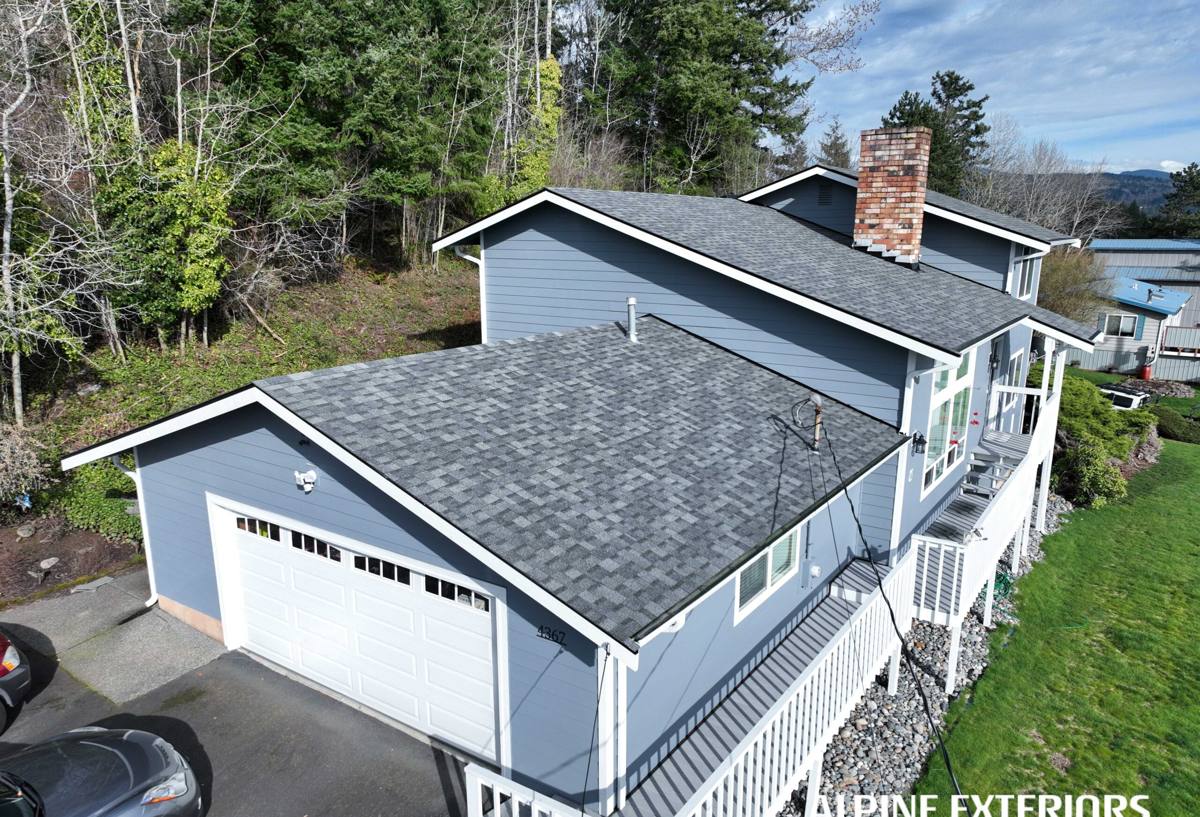
What Lynden Homes Face Year-Round
A Long Moss Season
Moss doesn't need a rainforest to take hold — it just needs consistent moisture and shade, and Whatcom County provides both for a good chunk of the year. Once moss establishes itself on a roof, it holds water against the shingle or panel surface long after the rest of the roof has dried out. That constant dampness accelerates granule loss on asphalt shingles and can work its way under laps and seams on other materials. Roofs with north-facing slopes or heavy tree cover tend to see the worst of it.
Driving Rain and Wind-Driven Moisture
Rain here doesn't always fall straight down. When wind pushes it at an angle, water can get forced up under shingle tabs, around chimney flashing, and into gaps that would never see moisture in a calmer climate. This is why flashing detail and underlayment quality matter more here than in drier parts of the country — the roof covering itself is only half the system.
Salt Air and Coastal Influence
Even though Lynden is set back from the water, marine air still moves through the county and can accelerate corrosion on exposed metal fasteners, flashing, and gutter hardware over time. It's a slower process than what you'd see right on the coast, but it's part of why we favor corrosion-resistant fasteners and flashing components on every job in this area, not just for waterfront properties.
Cold Snaps and Ice
Whatcom County doesn't see the sustained deep freeze of the Cascades or the interior, but cold snaps do happen, and a roof that's already compromised by moisture damage is far more vulnerable to freeze-thaw stress during those cold stretches than a well-maintained one.
Roofing Services We Provide in the Lynden Area
We handle the full range of residential roofing work, from small repairs to complete replacements:
- Roof inspections and leak diagnosis
- Shingle, metal, and composite roof repair
- Full roof replacement and tear-off
- Flashing repair and replacement around chimneys, valleys, and skylights
- Moss treatment and roof cleaning
- Gutter and downspout work tied to overall roof drainage
- Storm damage assessment and repair
Most calls fall into one of two categories: a homeowner who's noticed a specific problem — a stain on a ceiling, missing shingles after a windstorm, visible moss buildup — or a homeowner planning ahead for a roof that's simply reaching the end of its service life. Both are worth a proper inspection rather than guesswork, because what looks like a small leak can trace back to a flashing failure several feet away, and what looks like just cosmetic moss can be sitting on top of granule loss that's already shortened the roof's remaining life.
Choosing a Roofing Material for This Climate
There's no single "best" roofing material — the right choice depends on your home, your budget, and how much long-term maintenance you're willing to take on. Here's how the common options compare for a wet, moss-prone climate like ours:
| Material | Typical Lifespan | Moss/Moisture Behavior | Maintenance Level |
|---|---|---|---|
| Asphalt Composition Shingle | 20-30 years | Prone to moss and algae without treatment; granule loss over time | Moderate — periodic cleaning and inspection |
| Metal Roofing | 40-60+ years | Sheds water and moss well due to smooth surface and slope | Low — occasional fastener and seam checks |
| Composite/Synthetic Shingle | 30-50 years | More resistant to moisture absorption than standard asphalt | Low to moderate |
| Wood Shake | 20-30 years with upkeep | Absorbs moisture readily; needs active moss and rot management | High — regular treatment required |
We're upfront with homeowners about trade-offs rather than pushing one product across the board. Asphalt shingles remain the most common choice because of upfront cost and wide availability, but they do ask more of you in terms of periodic cleaning in a climate like this. Metal and composite options cost more initially but shed moisture more efficiently and generally mean less time thinking about your roof year to year. The right call depends on how long you plan to stay in the home, your budget, and how much maintenance you actually want to keep up with.
What Affects the Cost of a Roofing Project
Every roof is different, and we'd rather walk your property and give you real numbers than throw out a generic figure that doesn't hold up once we're actually on the roof. That said, a few factors consistently drive cost up or down:
- Roof size and complexity — more valleys, dormers, and penetrations mean more labor and flashing work
- Pitch and access — steep or hard-to-access roofs take longer and require more safety setup
- Material choice — asphalt, metal, and composite options carry different material and installation costs
- Existing damage — decking that needs to be replaced due to rot or moisture adds to the scope
- Layers to remove — a tear-off with multiple existing layers takes more labor than a single-layer replacement
We provide written estimates that break down labor and materials so you know what you're paying for, and we'll flag anything we find mid-project — like unexpected decking damage — before doing the work, not after.
Full Exterior Care: Siding, Windows, and Decks
Roofing is only one piece of how a home holds up against Whatcom County weather. We also handle siding, windows, and decks, because these systems all interact with each other. A roof with poor drainage can stain and damage siding below it. Aging windows can let moisture into wall cavities that eventually shows up as trim or siding rot. A deck exposed to the same driving rain and seasonal dampness needs the same attention to water-shedding detail as a roof does.
Siding
Siding takes a steady beating from wind-driven rain and the humidity that keeps moss and mildew active for much of the year. We repair and replace siding with attention to proper flashing and drainage behind the material, not just how it looks from the curb.
Windows
Old or poorly sealed windows are a common source of drafts and slow moisture intrusion around the frame. Replacing them is often as much about stopping water and air infiltration as it is about appearance or energy efficiency.
Decks
Decks in this climate deal with near-constant dampness for months at a time. Proper spacing, fastener choice, and moisture-resistant materials matter more here than in drier climates, where a deck can dry out between rain events.
Why a Local Crew Matters
Roofing crews who work primarily in drier regions sometimes bring assumptions that don't hold up here — underlayment specs, ventilation approaches, and flashing details that work fine in a dry climate but fall short under sustained Whatcom County rain. Working this region day in and day out means we've seen how moss actually behaves on local roof slopes, how wind moves through this part of the county during a storm, and which flashing details tend to fail first when they're not done right.
It also means we're not a crew that shows up once and disappears. If something needs a follow-up look after a big storm, or you have a question a year after the work is done, you're calling a local company, not a call center.
Signs Your Roof Needs Attention
A lot of roofing problems are visible before they become a leak inside the house. Watch for:
- Visible moss or algae streaking on shingles or panels
- Granules collecting in gutters or at downspout outlets
- Curling, cracked, or missing shingles
- Dark stains or sagging on interior ceilings
- Daylight visible through the roof deck from the attic
- Rust or corrosion on flashing and metal fasteners
- Gutters pulling away from the fascia or overflowing during rain
Catching these early is almost always cheaper than waiting for a leak to show up inside the house, since interior water damage tends to cost more to fix than the roof issue that caused it.
How We Approach a Project
Every job starts with an actual inspection, not a drive-by estimate. We look at the roof surface, the flashing details, attic ventilation where accessible, and any signs of past or active moisture problems. From there we give you a straightforward written estimate that covers the scope of work, materials, and timeline, and we answer questions before you commit to anything. During the work itself, we keep the property protected and cleaned up, and we walk you through what was done once it's finished.
If you're dealing with a leak, planning ahead for a roof replacement, or just want an honest read on where your roof, siding, windows, or deck stand, we're happy to take a look. Reach out for a free, no-pressure estimate using the form below.