 Bellingham Roofing
 Why "How Much Does a Roof Cost" Never Has a One-Line Answer
Every homeowner asks the same question first: what's this going to cost? It's a fair question, and it's also the wrong place to start, because a roof replacement price is really a stack of eight or nine separate decisions, each with its own cost driver. Two houses on the same Bellingham street, similar square footage, can land tens of thousands apart depending on pitch, layers, decking condition, and material choice. This page walks through the actual variables so you can understand your own estimate instead of just comparing a bottom-line number between bids.
We also want to be upfront that Whatcom County's climate is not a neutral backdrop here. Salt air off Bellingham Bay, driving wind-driven rain, and a moss season that can run eight or nine months a year all shape which materials make sense and how long any given roof will actually last once it's on your house.
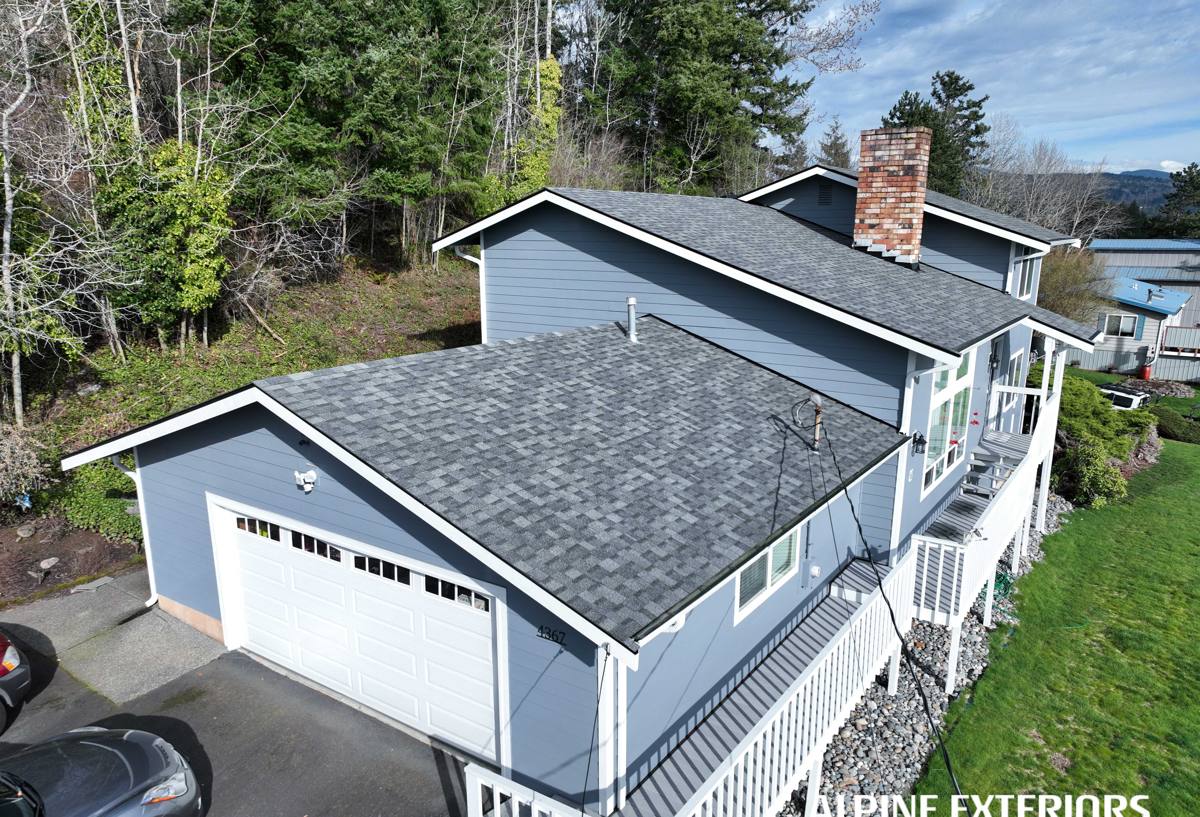
The Big Four: Size, Pitch, Complexity, and Layers
Roof Size and Squares
Roofing is priced in "squares" — 100 square feet of roof surface, not floor space. A 2,000 square foot single-story home with a simple gable roof might only have 20-24 squares to cover, while the same footprint with dormers, a walkout basement, and a steep pitch can push past 30 squares. Size is the most obvious cost driver, but it's rarely the one that surprises people.
Pitch (Steepness)
Steeper roofs take longer to work on, require more fall-protection setup, and often need materials to be hauled up rather than walked up. A low-slope roof a crew can move around freely costs less per square to install than a steep Craftsman-style roof where every step is deliberate. Pitch alone can shift labor pricing by a meaningful margin between two roofs of identical size.
Roof Complexity
Valleys, hips, dormers, skylights, chimneys, and multiple roof planes all add labor. Every penetration and transition needs flashing, and flashing work is slow, detail-oriented labor — it's also the part of the roof most likely to leak if it's rushed. A simple rectangular roof is inexpensive to flash. A roof with six valleys and three skylights is a different job entirely, even at the same square footage.
Tear-Off Layers
Many older Bellingham homes have two or even three layers of roofing stacked on top of each other from past re-roofs. Code allows this in some cases, but it's not something we recommend carrying forward, and a full tear-off is the only way to properly inspect the decking underneath. More layers mean more disposal weight, more labor to strip, and sometimes surprises once the old material comes off.
Material Choice: What You're Actually Buying
Material is usually the single biggest line item on a roofing estimate, and it's also the one homeowners have the most control over. Here's a straightforward comparison of what's commonly used in this region and the honest trade-offs of each.
| Material | Typical Lifespan Here | Relative Cost | Notes for Our Climate |
|---|---|---|---|
| 3-Tab Asphalt Shingle | 15-20 years | Lowest | Budget option; less wind resistance in exposed coastal locations |
| Architectural (Laminate) Shingle | 25-30 years | Moderate | Most common choice locally; good balance of cost and durability |
| Metal (Standing Seam) | 40-50+ years | High | Sheds moss and moisture well; performs well in wind and salt air with proper coating |
| Cedar Shake | 20-30 years with upkeep | High | High-maintenance in a wet climate; moss and moisture control is an ongoing job, not a one-time treatment |
| Synthetic/Composite Shingle | 30-50 years | Moderate-High | Growing option locally; consistent moisture resistance without the upkeep cedar requires |
We'll talk you through the honest maintenance burden of each option rather than just selling the one with the best margin. Cedar shake, for example, can look excellent, but in a climate with this much sustained moisture and shade cover, it demands real upkeep — moss removal, periodic treatment — to hit its expected lifespan. That's not a defect in the product, it's just what the material needs here, and it's worth knowing before you commit.
What's Under the Shingles: Decking, Underlayment, and Ventilation
Decking Condition
The plywood or OSB sheathing under your roofing material has to be sound before anything new goes down. If a tear-off reveals soft, delaminated, or water-stained decking, that section gets replaced — and that's priced separately from the base roofing estimate because it can't be known for certain until the old material is off. A reputable contractor should walk you through decking condition as it's uncovered, not just bill it after the fact without explanation.
Underlayment
This is the water-resistant barrier between your decking and your shingles, and in a region with this much driving rain, it matters more than it does in drier climates. Synthetic underlayment and ice-and-water shield at eaves, valleys, and penetrations cost more upfront than felt paper but provide meaningfully better protection against wind-driven rain finding its way under shingle edges.
Attic Ventilation
Proper intake and exhaust ventilation keeps your attic temperature regulated and moisture from condensing where it shouldn't. Poor ventilation shortens shingle life from underneath, regardless of how good the shingle itself is, and in our humid climate it can also contribute to moss and mildew forming faster in shaded roof sections. Adding or upgrading ridge vents, soffit vents, or baffles is a common and worthwhile line item, not an upsell.
Moss, Moisture, and Why Whatcom County Roofs Age Differently
Bellingham's roofs don't fail the same way roofs in drier climates fail. Sun-baked, brittle shingles are less of an issue here than sustained moisture exposure. Moss and algae growth on north-facing and shaded slopes traps water against the shingle surface, which accelerates granule loss and can work its way under shingle tabs over years of freeze-thaw cycles. A roof that looks fine from the driveway can have real wear building underneath a moss mat that's been sitting there since spring.
Salt air near the bay is a slower, quieter factor — it accelerates corrosion on exposed metal components like flashing, fasteners, and gutter hardware faster than it would inland. This is why fastener and flashing material quality matters more here than in a landlocked climate; it's a place where cutting corners shows up early, not late.
None of this means you need the most expensive material on the market. It means the maintenance plan and material choice should account for these conditions honestly, rather than being priced and installed as if the house were in a dry inland climate.
Labor, Access, and Site Conditions
A few site-specific factors affect labor cost that have nothing to do with the roof itself:
- Access: Steep driveways, tight side yards, or limited space for a dumpster and material staging can slow a crew down and affect equipment placement.
- Height: Two and three-story homes require more scaffolding, fall protection setup, and time moving material.
- Landscaping proximity: Roofs close to mature trees or delicate landscaping need extra care and time to protect what's below during tear-off.
- Permitting: Most full roof replacements in Whatcom County and within Bellingham city limits require a permit and inspection, which adds a modest but predictable cost and timeline.
- Disposal: Tear-off debris has to be hauled and disposed of, and heavier materials (multiple layers, tile, wet shakes) cost more to remove than a single layer of asphalt shingle.
Repair vs. Replace: Knowing Which One You Actually Need
Not every roof problem means a full replacement, and an honest contractor should tell you that plainly. Isolated leaks, a handful of damaged shingles, or flashing failure around one chimney are often repairable, especially on a roof that's otherwise mid-life. Full replacement usually makes sense when:
- The roof is at or past its expected material lifespan
- Multiple areas show granule loss, curling, or cracking rather than one isolated spot
- Decking has widespread moisture damage rather than a single localized area
- You're seeing recurring leaks in different locations each season
- Moss coverage has been established long enough that it's affecting shingle integrity, not just appearance
An inspection is the only reliable way to tell the difference, and that inspection should look at the whole system — decking, ventilation, flashing, and the shingles themselves — not just the spot where the leak showed up inside.
Reading a Roofing Estimate
When you compare quotes, look past the total number at the bottom. A useful estimate should specify the material and its warranty terms, whether it's a full tear-off or overlay, what underlayment is being used, whether decking repair is included or billed separately as discovered, ventilation work if any, permit and disposal costs, and the labor warranty period separate from the manufacturer's material warranty. A quote missing most of these details is hard to actually compare against another one, no matter how competitive the number looks.
Getting an Honest Number for Your Roof
The only way to get a real cost figure is to have someone look at your actual roof — its size, pitch, current material, decking condition, and how much moss and moisture exposure it's dealing with. We're happy to come out, walk the roof, and give you a straightforward estimate with no pressure to decide on the spot. If a repair is genuinely the better call for your situation, we'll tell you that too. Reach out through the form below to schedule a free estimate.