 Bellingham Roofing
 Exterior Contractor Serving Sudden Valley
Sudden Valley sits along Lake Whatcom in a heavily wooded, hilly stretch of Whatcom County, and that setting shapes what a house here needs from its exterior. Mature tree cover keeps roofs and siding shaded and damp for long stretches of the year, lake-effect moisture adds to the humidity load, and the same marine air that reaches all of Whatcom County brings driving rain and salt-laden wind off the Puget Sound side of the region. None of that is unusual for this part of Washington, but it does mean roofs, siding, windows, and decks in Sudden Valley tend to show wear in specific, predictable places — and a contractor who works this area regularly knows where to look first.
We handle roofing, siding, windows, and decks for homeowners throughout Sudden Valley and the surrounding Bellingham area. This page walks through what we typically see on homes here, how we approach repairs and replacements for this kind of site, and what to expect from a straightforward, honest estimate.
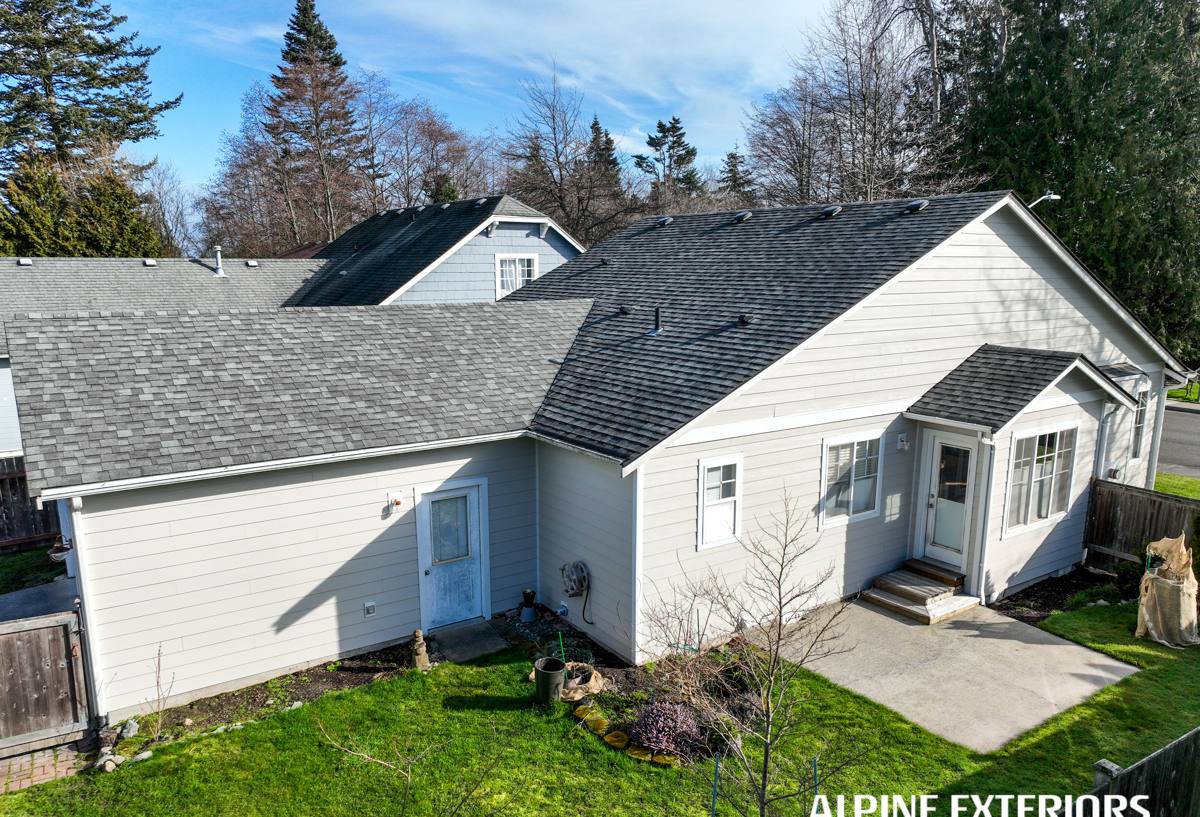
What the Climate Does to a Sudden Valley Home
Moss, Algae, and Shade
Wooded lots are one of the appeals of living in Sudden Valley, but tree canopy also means roof surfaces and north-facing siding stay shaded and slow to dry out after rain. That combination — shade plus moisture — is exactly what moss and algae need to take hold. On composition shingle roofs, moss growth lifts shingle edges and traps water underneath, which shortens the life of an otherwise sound roof. On siding, algae staining is mostly cosmetic, but sustained dampness behind siding that isn't ventilated well can lead to rot in the sheathing underneath.
Driving Rain and Wind-Driven Moisture
Bellingham-area storms often come in sideways rather than straight down, which pushes water into places a roof or siding system wasn't necessarily designed to shed water from — vertical seams, window flashing, deck ledger connections. Over time, wind-driven rain finds the weak points in flashing details long before it causes an obvious leak, so a lot of the damage we find during inspections has been building quietly for years.
Salt Air and Metal Fatigue
While Sudden Valley is inland from the open Sound, this part of Whatcom County still sees enough salt-bearing air moving through the region to accelerate corrosion on unprotected fasteners, flashing, and gutter hardware faster than you'd expect for a lake community. It's a slower process than in a home right on saltwater, but it adds up over a 15- or 20-year roof life.
Roofing for Sudden Valley Homes
Most of the roof problems we find on Sudden Valley homes trace back to moisture that had somewhere to sit — under moss, behind poorly lapped flashing, or in valleys that don't get enough sun to dry out between storms. Our approach starts with a straightforward inspection: we look at shingle condition, flashing around chimneys and skylights, valley metal, and ventilation before we ever talk about a full replacement.
- Roof inspections that check flashing, valleys, and ventilation, not just shingle surface wear
- Moss and debris removal done without damaging the shingle mat, plus guidance on realistic maintenance intervals for shaded roofs
- Leak diagnosis that traces water back to its actual entry point, which is often several feet from where the stain shows up inside
- Full roof replacement when a roof has reached the point where repair no longer makes financial sense
- Attic ventilation review, since poor airflow is one of the most common reasons roofs in wooded, shaded settings fail early
We're not going to recommend a full tear-off on a roof that has a repairable flashing issue, and we're not going to patch a roof that's genuinely at the end of its service life just to avoid a harder conversation. That call gets made based on what we actually find on your roof, not a sales script.
Siding: Matching the Material to the Site
Siding choice matters more on a shaded, wooded lot than it does on an open one, because the material has to handle staying damp longer between dry spells. We install and repair fiber cement, engineered wood, and vinyl siding, and we'll walk through the real trade-offs of each rather than pushing one product across every job.
| Siding Type | Moisture Behavior | Maintenance | Best Fit |
|---|---|---|---|
| Fiber cement | Dimensionally stable, resists rot, holds paint well in damp shade | Repaint every 10-15 years; caulking checked periodically | Shaded lots, homes wanting a long-term, low-drama exterior |
| Engineered wood | Treated to resist moisture but more sensitive to installation gaps and standing water | Regular inspection of joints and trim; touch-up painting | Homeowners who want a wood look with better rot resistance than solid wood |
| Vinyl | Won't rot, but can trap moisture behind it if house wrap and flashing details aren't done right | Low — occasional washing | Budget-conscious projects on sites with decent sun exposure |
On heavily shaded Sudden Valley lots, we lean toward fiber cement more often than not, simply because it holds up best when it doesn't get a lot of time to dry out. But the right answer depends on your specific site, sun exposure, and budget — we'll give you a straight assessment rather than a default recommendation.
Windows: Sealing Out Wind-Driven Rain
Window failures in this area are rarely about the glass itself — they're about flashing and sealant that's aged out or was never detailed correctly around the rough opening. Wind-driven rain finds gaps at the head flashing or sill pan long before a homeowner notices anything beyond a little fogging or a soft spot in the wall below the sill.
When we replace windows, we pay close attention to the flashing integration with the siding or wall assembly around it, not just the window unit itself. A well-built window installed with poor flashing will still leak; a modest window installed correctly usually won't. We also handle window repair and re-sealing for homeowners who aren't ready for a full replacement but want to stop an active moisture problem.
Decks: Built for Wet Wood, Not Against It
Decks in Sudden Valley take a beating from the same shade and moisture that affects roofs and siding, plus the added stress of ground-level or near-ground moisture and organic debris from surrounding trees. The most common deck problems we see are ledger board rot where the deck attaches to the house, fastener corrosion, and decking boards that were never gapped properly for drainage and airflow.
- Ledger board and flashing inspection — this connection point is the single most important structural detail on most decks
- Fastener and hardware upgrades to corrosion-resistant materials appropriate for a damp, wooded environment
- Proper board spacing and substructure ventilation so wood dries out between rain events instead of staying saturated
- Composite decking options for homeowners who want to reduce the ongoing maintenance burden of a wood deck under tree cover
A deck built or repaired without attention to drainage and airflow will keep failing in the same spots no matter how many times you refinish it. We build and repair decks to actually shed water, not just to look right on installation day.
Why a Local Crew Matters Here
Sudden Valley is a bit removed from the center of Bellingham, and homes here often sit on private roads and wooded lots that aren't always straightforward to access. A crew that already knows the area shows up on time, understands the terrain they're working on, and isn't guessing at how the local climate affects the materials they're installing. We also know that a roof or siding issue you notice in October is going to get worse — not better — through a wet Whatcom County winter, so we try to move on real problems before they compound.
Beyond logistics, working locally means we stand behind our work in the same community we live and operate in. If something needs a follow-up visit, we're not driving in from out of the area to handle it.
A Practical Seasonal Checklist for Sudden Valley Homeowners
- Clear moss and debris from roof valleys and gutters before the fall rains set in
- Check for soft spots or discoloration on siding near ground level and around window sills
- Inspect deck ledger boards and support posts for soft or discolored wood
- Look for gutter overflow during heavy rain — it's often the first visible sign of a clogged or undersized system
- Trim back tree limbs that keep sections of roof or siding in constant shade, where it's practical to do so
- Have flashing around chimneys, skylights, and windows checked every few years, since sealant and metal both degrade with age
None of these take the place of a professional inspection, but catching an early sign yourself can be the difference between a minor repair and a much larger one.
Getting an Estimate
Every Sudden Valley property is a little different depending on tree cover, sun exposure, and how exposed the lot is to wind and rain. If you're seeing moss buildup, a stain on a ceiling, soft siding, or a deck that's starting to feel less solid than it used to, we're happy to come take a look. We offer free, no-pressure estimates for roofing, siding, window, and deck work — just fill out the form below and we'll get in touch to schedule a time to walk the property with you.