 Bellingham Roofing
 Exterior Contracting in Birchwood, Bellingham
Birchwood is a residential pocket of Bellingham with a wide mix of housing stock — older single-family homes from decades past sitting alongside newer infill construction, plus a good number of homes that have been added onto or remodeled over the years. That mix matters when it comes to exterior work, because a roof, siding system, or window package that makes sense on a 1970s ranch isn't necessarily the right call for a home built in the last ten years. We work on both, and we size up each house on its own terms rather than applying a one-size answer to every job.
What ties Birchwood homes together isn't their age or style — it's what they're up against every year. Whatcom County sits close enough to the water that salt-laden air is a real factor in how exterior materials age, and Bellingham's rain pattern means long stretches of damp, low-sun weather rather than short violent storms. That combination is quietly harder on a house than people expect, and it shapes almost every recommendation we make in this part of town.
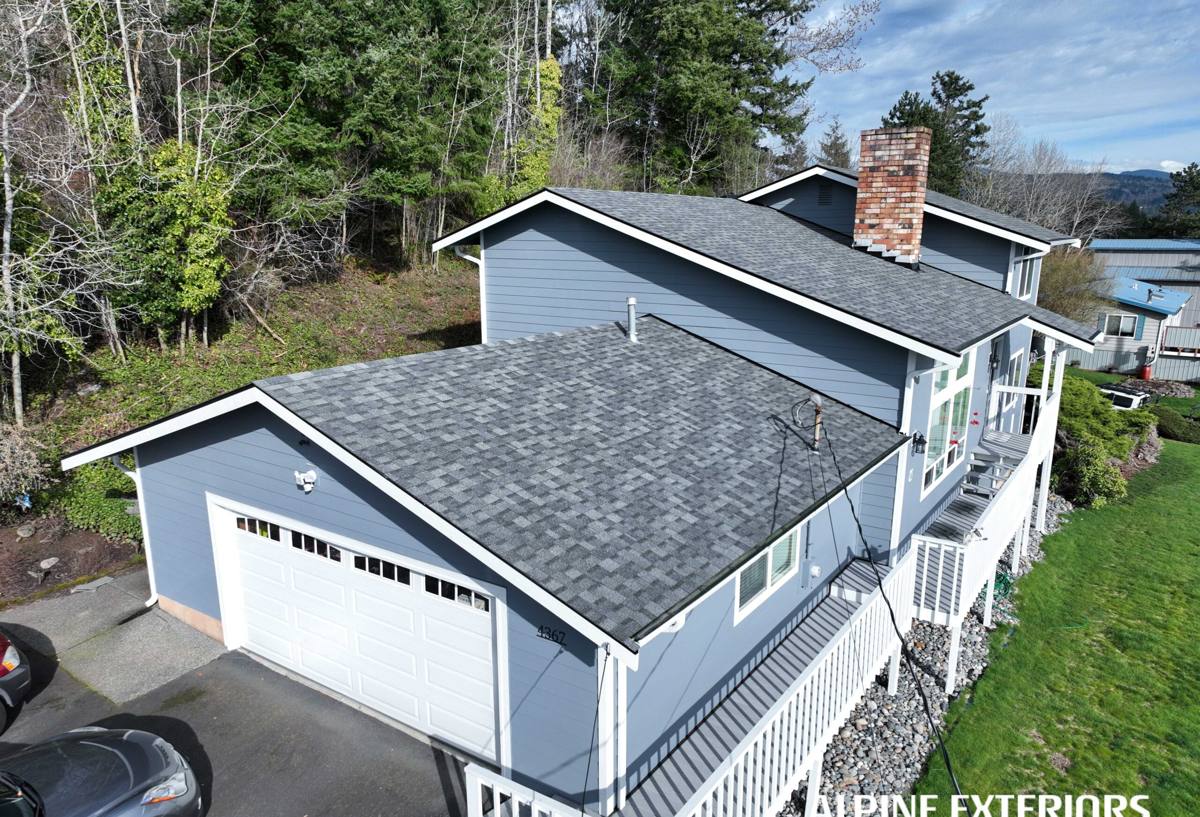
What the Local Climate Actually Does to a House
Salt Air and Metal Fatigue
Proximity to Puget Sound means the air carries a fine salt content, especially closer to the water and on windier days. Salt air accelerates corrosion on exposed metal — flashing, fasteners, gutter hardware, and any unpainted or lower-grade metal components. It's a slow process, so it's easy to ignore for years, but it's also why we pay close attention to fastener quality and flashing material on every roofing and siding job in this area rather than defaulting to whatever is cheapest.
Driving Rain and Wind-Driven Moisture
Bellingham doesn't just get rain — it gets rain that comes in sideways often enough to matter. Driving rain finds weaknesses that a straight-down rainfall never would: gaps under siding laps, poorly sealed window flanges, roof penetrations with tired caulking. A roof or wall assembly that's "good enough" for a drier climate can leak here simply because the wind pushes water into places it was never designed to reach.
Moss, Shade, and the Long Wet Season
Whatcom County's tree cover and extended overcast season create ideal conditions for moss and algae growth on roofs, especially on north-facing slopes or sections shaded by mature trees — common in older Birchwood yards. Moss isn't just a cosmetic issue. It holds moisture against the roofing surface, works into shingle laps, and over time can lift edges and shorten the life of the roof underneath it.
Roofing for Birchwood Homes
Roof work here is driven almost entirely by the climate factors above. We look at moss and algae staining as a diagnostic tool, not just an eyesore — it tells us where a roof has been holding moisture and where ventilation or shading might be working against the homeowner. On inspections we check flashing condition around chimneys, skylights, and roof-to-wall transitions first, since those are the most common failure points in a wet climate, well before the field of the roof itself shows any trouble.
For re-roofs, we talk homeowners through material options honestly, including the maintenance tradeoffs of each:
| Roofing Material | How It Handles This Climate | Maintenance Reality |
|---|---|---|
| Asphalt composition shingle | Solid, cost-effective performance when properly ventilated and flashed | Periodic moss treatment in shaded areas; standard inspection cycle |
| Metal roofing | Sheds moisture and moss well; needs corrosion-resistant fasteners and coatings near salt air | Low maintenance once installed correctly; fastener and seam quality matter more here than inland |
| Cedar shake/shingle | Traditional look, but more moisture-sensitive in a long wet season | Higher upkeep — regular treatment and inspection needed to manage moss and rot risk |
We're candid with homeowners about that last option: cedar can look great, but the maintenance burden it carries in a climate this wet is real, and we'd rather set that expectation up front than have someone surprised by it in year five.
Siding That Holds Up Near the Water
Siding failures in this area are almost always moisture-related — water getting behind the cladding rather than the surface material simply wearing out. That's why we spend as much time on the details you don't see — house wrap, flashing at windows and doors, proper lap sequencing, weep paths at the bottom of the wall — as we do on the visible siding itself. A beautiful siding job with sloppy flashing underneath will fail from the inside out, and in Birchwood's rain pattern, that failure shows up faster than in drier parts of the state.
We install fiber cement, engineered wood, and vinyl siding systems, and we'll walk through the honest tradeoffs of each for a specific house — sun exposure, tree cover, and how exposed the elevation is to prevailing wind and rain all factor into that conversation.
Common Siding Trouble Signs We Look For
- Soft or spongy spots when pressed, especially near the bottom courses or window sills
- Paint or finish failing in one localized area rather than evenly across the wall
- Visible gaps or separation at seams, corners, and trim boards
- Persistent dark staining or moss growth on north- or shade-facing walls
- Caulking that's cracked, shrunk, or pulled away from siding-to-trim joints
Windows: Sealing Out Wind-Driven Rain
Window failures in Bellingham are rarely about the glass — they're about the seal between the window unit and the wall. Wind-driven rain will find a poorly flashed window flange, and once water gets behind a window, it can travel and cause damage well beyond the window opening itself before anyone notices. When we replace windows, proper flashing integration with the surrounding wall assembly is treated as the core of the job, not an afterthought.
Older Birchwood homes with original single-pane or early double-pane windows also see real comfort and efficiency gains from replacement, on top of the moisture-management benefits — draftier original windows let in more of the area's persistent damp cold during the long wet season.
Decks Built for Wet-Climate Realities
A deck in this climate lives outdoors in standing damp conditions for a large part of the year, which makes fastener choice, board spacing for drainage, and ledger flashing at the house connection critical details rather than nice-to-haves. Composite decking has become a popular option locally because it resists the moisture absorption and splintering that wood decking is prone to under Bellingham's rain load, though it comes at a higher upfront cost than traditional wood. We'll lay out real cost and maintenance differences so the decision is based on facts, not a sales pitch.
Wood vs. Composite Decking — Quick Comparison
| Factor | Wood Decking | Composite Decking |
|---|---|---|
| Upfront cost | Lower | Higher |
| Moisture/rot resistance | Requires regular sealing and upkeep | Resists moisture absorption without sealing |
| Appearance over time | Can gray, splinter, or warp if not maintained | Holds color and finish longer with minimal upkeep |
| Repair approach | Individual boards easily replaced | Board replacement possible but material cost is higher |
Why a Local Crew Matters in a Neighborhood Like This
Exterior work in Whatcom County isn't the same job as exterior work in a drier or warmer part of the country, and a crew that mostly works elsewhere will make different assumptions by default — about flashing detail, material selection, and how much attention moss and moisture deserve. Working regularly in and around Bellingham means we see how a given product or installation detail actually performs after a few Whatcom County winters, not just how it looks on installation day. That feedback loop is what shapes the recommendations above.
Local also means being reachable and accountable after the job is done — if a question comes up down the road, you're not calling a call center or waiting on a crew that's three counties away.
What to Expect When You Call Us
- A straightforward inspection or estimate visit — we'll point out what's actually a problem versus what's cosmetic
- Honest material recommendations based on your home's exposure, shade, and age, not a default upsell
- Clear explanation of scope before any work starts, including what's involved in moisture and flashing details you won't see once the job is finished
- No pressure to decide on the spot
If you're in Birchwood and noticing moss buildup on the roof, a siding section that feels soft to the touch, drafty or foggy windows, or a deck that's starting to show its age, it's worth having a local crew take a look before a small issue turns into a bigger repair. We offer free, no-pressure estimates — use the form below to get in touch and we'll set up a time to come take a look.