 Bellingham Roofing
 Roofing in Columbia: A Neighborhood Built Close to the Bay
Columbia is one of Bellingham's older, established neighborhoods, and it shows in the housing stock: a mix of early-1900s bungalows, mid-century homes, and newer infill construction sitting close together on modest lots. Being near Bellingham Bay means homes here catch a different kind of weather than houses further inland in Whatcom County. Salt-laden air moves in off the water, driving rain comes in sideways during winter storms, and the tree cover common throughout Bellingham keeps roofs shaded and damp for long stretches of the year. That combination is exactly what shortens the life of a roof if it isn't installed and maintained with this specific climate in mind.
We work on roofs throughout Columbia and the surrounding Bellingham area, and the patterns we see here are consistent. Older homes often have roofs that have been patched more than once, sometimes with materials or methods that don't match the rest of the system. Newer homes tend to have straightforward asphalt shingle roofs that are due for their first major inspection or maintenance cycle. Either way, a roof in this part of Whatcom County is working harder than the same roof would in a drier, less coastal climate.
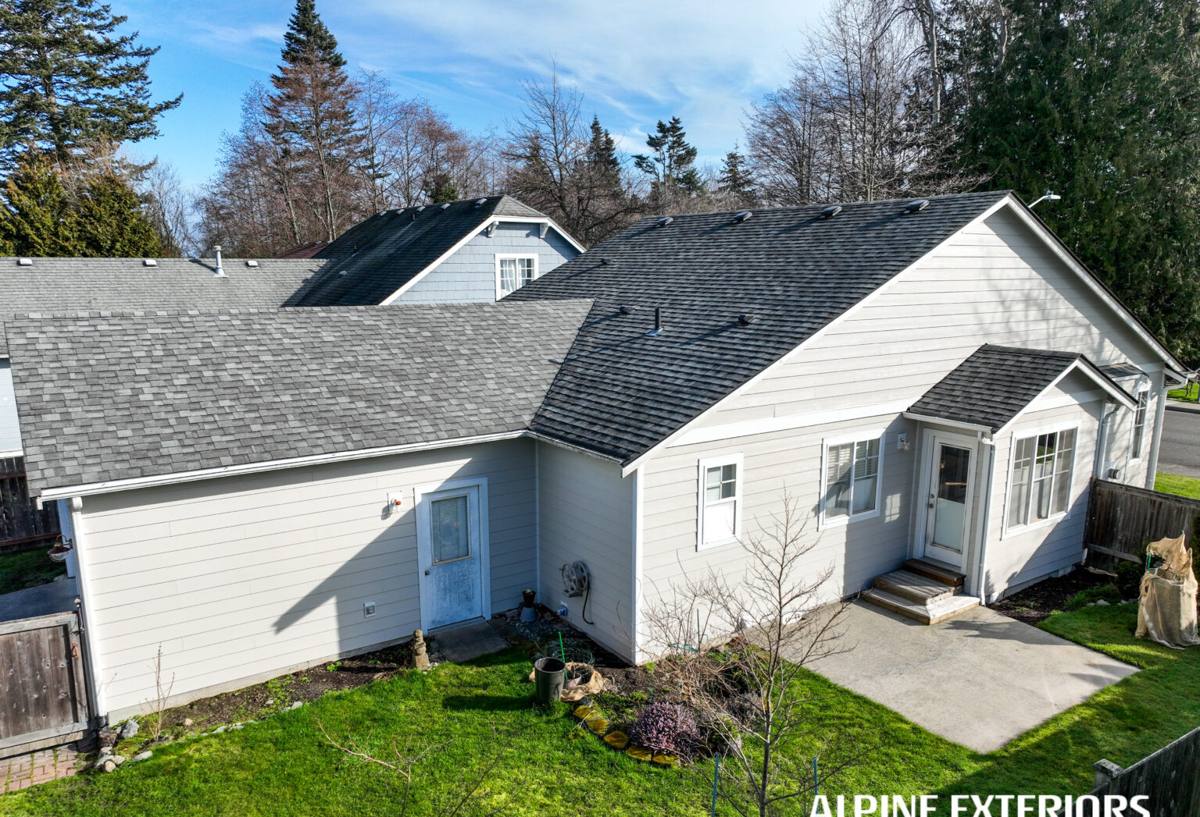
What Bellingham Bay's Climate Does to a Roof
Salt Air and Metal Fasteners
Proximity to the bay means airborne salt settles on roofing materials, flashing, and exposed fasteners over time. Standard steel fasteners and lower-grade flashing can corrode faster in this environment than they would just a few miles inland. This is one reason we pay close attention to fastener and flashing material selection on Columbia roofs specifically — it's a small cost difference upfront that prevents rust streaks, weakened fastener holding power, and premature flashing failure down the road.
Driving Rain and Wind-Driven Water
Whatcom County storms don't always drop rain straight down. When wind pushes rain sideways, it tests every seam, valley, and penetration on a roof — places where standard installation might be "good enough" in a calmer climate but isn't good enough here. Proper underlayment, ice-and-water shield in vulnerable areas, and correctly lapped flashing matter more in a place that regularly sees driving rain than they do in drier regions.
Moss, Shade, and Moisture Retention
Bellingham's long moss season is a direct result of moisture plus shade plus mild temperatures — conditions that hold for much of the year here. Moss doesn't just look bad; it holds water against the roofing surface, lifts shingle edges, and can work its way under laps over time. Roofs with north-facing slopes or heavy tree cover, both common in Columbia, are especially prone to moss buildup and need a maintenance plan that accounts for it rather than ignoring it until it becomes a bigger problem.
Roof Replacement: What Homeowners in Columbia Should Know
Most roof replacements in this area involve asphalt composition shingles, which remain the most common and cost-effective choice for Whatcom County homes. That said, the right choice depends on the home's age, roof pitch, sun and shade exposure, and how long the homeowner plans to stay in the house. We walk through those factors honestly rather than pushing a single product for every job.
| Roofing Material | Typical Lifespan (This Climate) | Best Suited For |
|---|---|---|
| Asphalt composition shingle | 20-30 years | Most homes; best value, wide color range |
| Architectural/dimensional shingle | 25-35 years | Homes wanting more wind and impact resistance |
| Standing seam metal | 40-50+ years | Steep pitches, homeowners planning long-term ownership |
| Cedar shake | 20-25 years with upkeep | Historic-style homes; requires more moisture maintenance |
We do steer some homeowners away from lower-grade cedar shake or untreated wood roofing in heavily shaded, salt-air locations like Columbia. It's not that the material is bad — it's that untreated wood roofing demands a level of ongoing moisture management and moss control that many homeowners underestimate when they choose it, and the maintenance burden and shortened lifespan in a wet coastal climate often outweigh the appearance benefit. If a homeowner wants that look, we'll talk through treated options and what upkeep actually looks like before committing.
Roof Repair vs. Replacement
Not every roofing problem in Columbia means a full tear-off. We look at the age of the existing roof, the extent of the damage, and whether the underlying decking is still sound before recommending anything. Common repair situations we see in this neighborhood include:
- Localized leaks around chimneys, skylights, or vent pipes where flashing has failed
- Wind-lifted or cracked shingles after a storm
- Moss and debris buildup causing water to back up under shingle edges
- Gutter and downspout issues contributing to water intrusion at the roofline
- Isolated soft spots in decking from long-term moisture exposure
A roof that's structurally sound but showing isolated wear is usually a repair candidate. A roof nearing the end of its expected lifespan with widespread granule loss, multiple leak points, or soft decking is usually better served by replacement, since patching an aging roof repeatedly tends to cost more over time than addressing it once.
Siding, Windows, and Decks: The Rest of the Exterior
Roofing is only part of what protects a Columbia home from the weather it faces. Siding takes a beating from the same driving rain and salt air, especially on the sides of a house facing the bay or open exposure. Windows in older homes in this neighborhood are frequently original single-pane units that let in drafts and moisture around aging frames. Decks left untreated or built with the wrong materials for this climate can develop rot, cupping, and slippery moss growth faster than homeowners expect.
Because we handle siding, roofing, windows, and decks, we can look at a Columbia home's exterior as one connected system rather than treating each component in isolation. A roof replacement is a natural time to check flashing where it meets siding. A siding project is a good time to evaluate window trim and sealant. Addressing these together, when it makes sense, often costs less than solving each problem separately down the road.
Signs Your Exterior Needs Attention
- Moss or algae streaking on the roof, siding, or deck boards
- Soft or spongy decking underfoot, especially near stairs or railings
- Visible gaps, peeling paint, or warping around window frames
- Granules collecting in gutters or downspouts
- Rust staining near roof fasteners, flashing, or metal trim
- Drafts or condensation around older windows
Why a Local Crew Matters for Columbia Homes
A roofing crew that works regularly in Whatcom County understands things a traveling or out-of-area contractor often doesn't: how far a roof needs to be built up in valleys and at eaves to handle this rainfall pattern, which fastener and flashing grades hold up near the bay, and how much moss prevention actually matters here versus in a drier climate. Building codes and permitting requirements in Bellingham are also something a local crew navigates regularly rather than learning on the job.
There's also the simple matter of accountability. A local contractor is still in the area next year, next storm season, and the one after that — which matters if a warranty issue or unexpected problem comes up down the road.
Maintenance That Actually Extends Roof Life Here
Given the climate Columbia sits in, we recommend homeowners think about roof maintenance on a different schedule than they might in a drier part of the country. That generally means:
- An inspection after major windstorms, particularly checking for lifted or missing shingles
- Moss treatment and removal before it has a chance to establish itself, rather than after it's visibly thick
- Keeping gutters and downspouts clear so water isn't backing up at the roof edge
- Trimming back tree branches that keep sections of the roof shaded and damp
- A general roof check every couple of years even without an obvious problem, since small issues are far cheaper to fix early
What to Expect When You Call Us
We start with an honest look at the roof, siding, windows, or deck in question — no pressure to replace something that can be reasonably repaired, and no guessing about what your Columbia home actually needs. We'll explain what we find, what the realistic options are, and what a fair timeline and scope of work looks like before any decisions get made.
If you're dealing with a leak, noticing moss buildup, or just want a second opinion on the condition of your roof, siding, windows, or deck, we're happy to take a look. Reach out for a free, no-pressure estimate using the form below.