 Bellingham Roofing
 Roofing in York, One of Bellingham's Older Established Neighborhoods
York sits among Bellingham's inner neighborhoods, home to a mix of older single-family houses, mid-century remodels, and newer infill construction. That range means roofing needs vary block to block: a 1940s cottage with a low-slope addition faces different problems than a two-story home built in the last decade. What ties them together is the climate. Whatcom County sits at the northern edge of the Pacific Northwest's marine weather pattern, and York's roofs take the same steady beating every other Bellingham neighborhood does — just with the specific mix of tree cover, exposure, and roof age that comes with an established residential area.
We've worked on enough roofs around Bellingham to know that "it's just a little algae" or "the flashing's probably fine" are the two most common things homeowners say right before a bigger repair bill shows up. A roof in this climate doesn't fail all at once. It fails in inches, over years, usually starting at a seam, a nail head, or a spot where two roof planes meet.
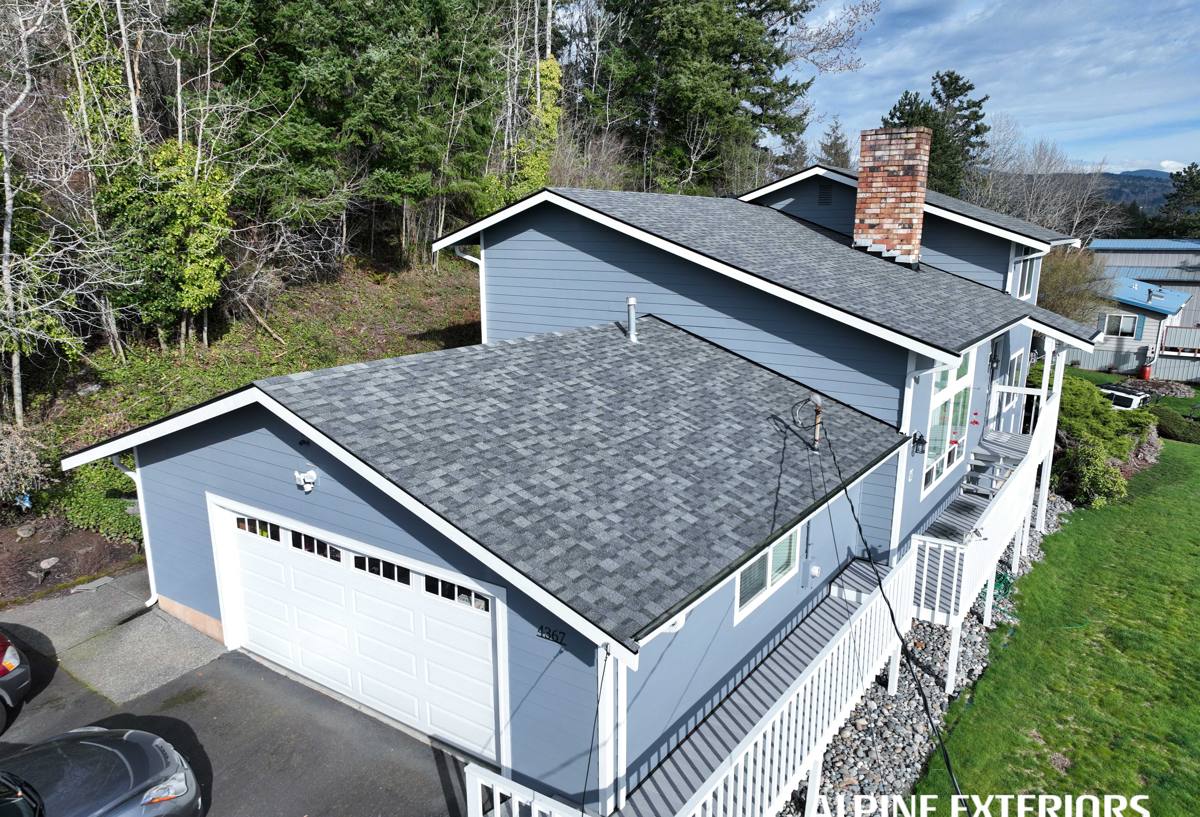
What the Local Climate Actually Does to a Roof
Bellingham's roofing challenges aren't dramatic — there's no hurricane season here — but they're relentless. That's arguably harder on a roof than the occasional violent storm, because it's a slow, cumulative wear pattern rather than a single event you can point to.
Moss and Organic Growth
Whatcom County's long wet season, mild temperatures, and shaded lots (York has a good amount of mature tree cover on and around many properties) create ideal conditions for moss, lichen, and algae to take hold on a roof. Moss isn't just cosmetic. Once it establishes on asphalt shingles, its root structure lifts shingle edges and holds moisture against the roof deck long after the surrounding area has dried out. That trapped moisture is what eventually leads to soft decking, granule loss, and premature shingle failure — often 5 to 10 years before the shingle's rated lifespan would suggest.
Driving Rain and Wind-Driven Moisture
Bellingham doesn't usually get rain falling straight down — it comes in at an angle, pushed by wind off the water. That matters because a roof system designed only to shed water vertically can still let moisture work sideways under shingles, around vents, and through poorly sealed flashing. Driving rain finds every shortcut in a roofing installation: underlayment gaps, thin flashing, nail pops, and valleys that weren't detailed carefully.
Freeze-Thaw and Temperature Swings
Whatcom County doesn't see extreme cold most winters, but it does see enough freeze-thaw cycling — especially on north-facing slopes that hold moss and stay damp longer — to stress roofing materials that are already compromised by trapped water. Water that's absorbed into decking or underlayment expands when it freezes, widening small cracks and accelerating deterioration that started as a moisture problem.
Salt Air and Coastal Exposure
Bellingham's proximity to the Salish Sea means metal roofing components, flashing, fasteners, and gutter systems are exposed to airborne salt to a degree that inland Washington homes simply aren't. Lower-grade or improperly coated metal fasteners can corrode faster here than the manufacturer's general specifications assume. It's one of the reasons we pay attention to fastener and flashing material quality, not just the shingle or panel brand, when we spec a roofing job in this area.
How We Approach a Roofing Job in York
Every roof we work on starts with an actual inspection, not a drive-by estimate. That means getting on the roof (weather permitting) or using a close visual and moisture-check process to look at decking condition, flashing details, vent boots, valleys, and the overall wear pattern — not just the shingle surface. A roof that looks fine from the driveway can have soft decking under a moss patch that's been sitting there for three winters.
Repair vs. Replacement
We don't default to "you need a new roof" as the answer to every problem. A lot of what we see in York is fixable: isolated flashing failures, a section of storm damage, a vent boot that's cracked and letting water in around one penetration. We'll tell you plainly when a repair makes sense and when the roof's overall condition means a repair is just delaying an inevitable full replacement at a worse cost down the line.
What a Typical Roofing Project Involves
- On-roof or close visual inspection of decking, flashing, valleys, and penetrations
- Moisture and soft-spot check, particularly around chimneys, skylights, and low-slope sections
- Tear-off and deck inspection/repair where needed (not just a re-layer over existing damage)
- Underlayment suited to the slope and exposure of the specific roof plane
- Properly lapped and sealed flashing at all valleys, walls, and penetrations
- Ventilation check — intake and exhaust balance matters as much as the shingle itself
- Cleanup and haul-away, with a final walk-through before we call it done
Choosing Roofing Materials for This Climate
There's no single "best" roofing material — there's a best material for a given roof's slope, exposure, budget, and how long the homeowner plans to stay in the house. We walk through the honest trade-offs rather than pushing whatever's easiest for us to install.
| Material | Typical Lifespan Here | Moss/Moisture Behavior | Key Trade-Off |
|---|---|---|---|
| Architectural asphalt shingle | 20-30 years | Moderate — benefits from periodic cleaning and good ventilation | Best value; wide color range; needs maintenance to hit full lifespan |
| Standing seam metal | 40-60 years | Sheds moisture well; minimal moss adhesion on smooth panels | Higher upfront cost; requires correct fastener/coating spec for salt air |
| Cedar shake | 20-30 years with upkeep | Higher moisture sensitivity; needs regular treatment and airflow underneath | Traditional look many older neighborhoods favor; highest maintenance burden |
| Synthetic/composite shingle | 30-50 years | Low organic growth; consistent performance | Cost between asphalt and metal; product quality varies by manufacturer |
For a lot of York's older homes, a well-installed architectural asphalt system with proper ventilation and flashing is the practical, cost-effective choice. For homes with more sun exposure or owners planning to stay long-term, metal often pencils out over a 30-40 year horizon even with the higher install cost.
Ventilation: The Part of a Roof Nobody Sees
We can't talk about roofing in this climate without talking about attic ventilation, because it's the single most overlooked factor in premature roof failure. A roof that's shedding rain perfectly on the outside can still fail early if warm, moist air from inside the house is trapped in the attic with nowhere to go. That trapped moisture condenses on the underside of the decking, and over a wet Bellingham winter, that's enough to rot decking from the inside while the shingles above look completely normal.
Balanced intake (usually at the eaves) and exhaust (ridge or roof vents) keeps air moving through the attic space, which does two things: it controls moisture from the inside, and it moderates attic temperature, which reduces the freeze-thaw stress on the roof deck and helps shingles last closer to their rated lifespan. When we quote a re-roof, we look at existing ventilation as part of the job, not an optional add-on.
Gutters, Drainage, and the Roof System as a Whole
A roof doesn't work in isolation. Gutters, downspouts, and grading around the foundation are part of the same water-management system. In a neighborhood like York, with mature trees dropping needles and leaves through much of the year, gutters clog faster than a lot of homeowners expect. A clogged gutter during a heavy Bellingham rain event backs water up under the roof edge and behind fascia boards, which is a common source of rot that has nothing to do with the roofing material itself. We check gutter condition and flow as part of any roof inspection, because ignoring it undermines even a brand-new roof.
Beyond the Roof: Siding, Windows, and Decks
Roofing is usually what brings a homeowner to call, but the same weather conditions that stress a roof — driving rain, moss, salt air, temperature swings — stress the rest of the building envelope too. We handle siding, windows, and decks for the same reason we handle roofing: these systems all depend on each other to keep water out of a house. Failing caulk around a window, a siding seam that's opened up, or a deck ledger board that's holding moisture against the house framing can all cause damage that looks like a roof problem but isn't. When we're on-site for a roof estimate, we'll flag anything else we notice — not to upsell, but because it's the same water-intrusion logic driving all of it.
Storm Damage and Emergency Situations
Whatcom County gets its share of windstorms, particularly in late fall and winter, and a roof that was marginal before a storm can fail outright during one. If you've got missing shingles, a tree limb strike, or visible daylight in the attic after a storm, that's a call-us-now situation, not a wait-and-see one. Water intrusion after storm damage compounds fast — a tarped roof that sits exposed for a week in Bellingham's winter rain will cause more interior damage than the original storm event.
Signs You Shouldn't Wait On
- Missing, curled, or cracked shingles visible from the ground
- Granules collecting in gutters or at downspout outlets
- Daylight visible through the roof deck from inside the attic
- Water stains on interior ceilings, especially near chimneys or skylights
- Sagging rooflines or soft spots you can feel underfoot on a flat or low-slope section
- Heavy moss buildup, particularly on north-facing slopes
Why a Local Crew Matters for a Job Like This
A roofing crew that works across the whole Puget Sound region and swings through Bellingham a few times a year doesn't have the same read on Whatcom County's specific weather pattern as a crew based here. We know how moss behaves on the shaded lots common in neighborhoods like York, how salt air affects fastener choice near the water, and how to schedule tear-offs around the rainy stretches so a roof isn't sitting open when a system rolls in. That local knowledge shows up in small decisions — flashing detail, underlayment choice, timing — that add up to a roof that actually performs over its expected lifespan instead of just meeting it on paper.
Maintenance That Actually Extends a Roof's Life
Most roofing warranties assume a level of basic maintenance that a lot of homeowners simply don't do, mainly because nobody tells them what's involved. It's not complicated, but it matters in this climate specifically.
- Gutter cleaning at least twice a year, more often under heavy tree cover
- Moss treatment or gentle removal before it establishes a root structure into the shingle
- Periodic visual check of flashing around chimneys, skylights, and vents
- Trimming back overhanging branches that keep sections of roof shaded and damp
- Prompt attention to any interior water stains, even small ones
If you're not comfortable getting on a roof yourself — and for a lot of roof pitches, you shouldn't be — an annual professional check catches small issues while they're still small.
Get a Straight Answer About Your Roof
Whether you're dealing with visible moss, a leak you can't source, storm damage, or you're just trying to plan ahead for a roof that's getting up in years, we'll come take an honest look and tell you what we actually see — not a sales pitch. We offer free, no-pressure estimates for homeowners in York and throughout Bellingham. Fill out the form below and we'll get in touch to schedule a time that works.