 Bellingham Roofing
 Roofing Built for Sunnyland's Corner of Bellingham
Sunnyland is one of Bellingham's older, established neighborhoods, with a housing stock that spans early-20th-century bungalows, mid-century ramblers, and newer infill construction tucked in among mature trees. That mix means no two roofs in the neighborhood are dealing with quite the same set of problems, but they're all dealing with the same weather. Whatcom County's marine climate is the constant: cool, wet winters, a short dry stretch in summer, and enough humidity most of the year that any weak point in a roof or exterior gets found out sooner rather than later.
We work throughout Bellingham, but a neighborhood like Sunnyland benefits from a crew that already understands its housing age range and canopy cover. Older homes often have roof framing and ventilation that were never designed around today's underlayment and insulation standards, and mature tree cover means moss, needle litter, and shade are part of daily life for a roof, not an occasional nuisance.
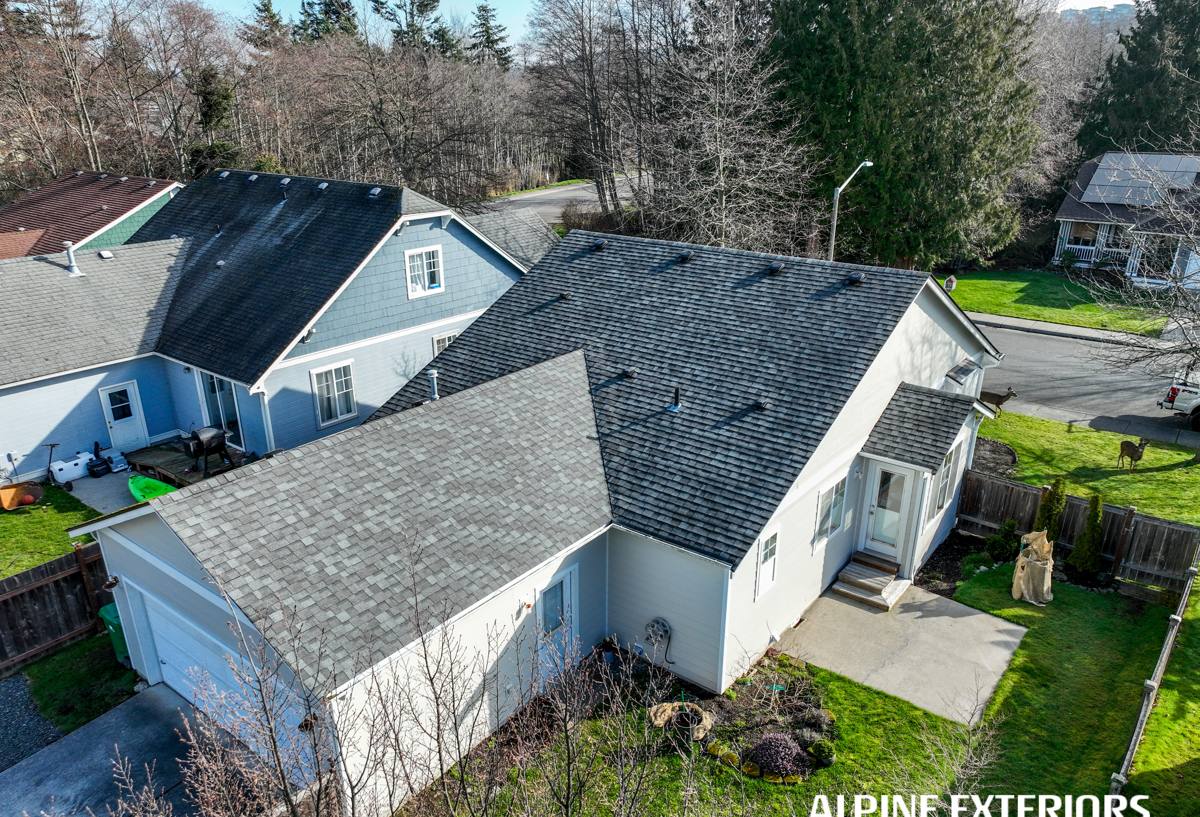
What the Regional Climate Does to a Roof and Exterior
Bellingham sits close enough to Puget Sound that salt-laden air is a real factor, especially on homes with any western or southern exposure that catches wind off the water. Combine that with driving rain during fall and winter storms, and you get a steady cycle of moisture intrusion testing every seam, flashing point, and fastener on a house. Add a moss season that, in this part of Whatcom County, can realistically run eight or nine months out of the year, and you have three separate stressors working on a roof at once.
Salt Air
Airborne salt accelerates corrosion on exposed metal — flashing, fasteners, gutter hardware, and any hardware on siding or deck structures. It doesn't ruin a roof overnight, but it shortens the useful life of lower-grade metal components and is one reason material choice matters more here than in a dry inland climate.
Driving Rain
Wind-driven rain doesn't just fall straight down — it gets pushed sideways and upward under shingle tabs, around window trim, and behind siding laps. A roof or exterior that's fine in a light rain can still leak in a sideways storm if flashing details and underlayment weren't installed with that in mind.
Moss and Shade
Moss holds moisture against roofing material long after the rain stops, and in shaded, tree-covered lots like many in Sunnyland, that moisture rarely gets a chance to fully dry out between storms. Over time, moss growth lifts shingle edges, traps debris in valleys, and clogs gutters — all of which shorten a roof's service life if left unmanaged.
Roofing Services
We handle roof replacement, repair, and maintenance across all the common residential roofing types used in this area. For most Sunnyland homes, that means asphalt composition shingles, though we also work with metal roofing and low-slope/flat roof systems on additions, garages, and some mid-century homes.
- Full roof replacement, including tear-off, deck inspection, and code-compliant underlayment
- Leak diagnosis and repair, especially around chimneys, skylights, and valleys
- Moss treatment and removal, done in a way that doesn't damage granule coating
- Gutter and downspout work tied into the overall roof drainage plan
- Attic ventilation assessment — critical in older homes with limited or blocked airflow
Ventilation deserves its own mention. A lot of older Sunnyland homes were built before modern attic ventilation standards, and poor airflow traps moisture under the roof deck itself. That trapped moisture can cause rot and premature failure from the inside, even when the shingles up top look fine. We check this on every roof inspection, not just when a homeowner asks.
Siding: The Other Half of Weather Protection
A roof sheds water off the top of a house, but siding is what keeps wind-driven rain from getting in at the walls. In a climate like Bellingham's, siding seams, caulking, and flashing around windows and doors take a real beating over the years, particularly on the sides of a house exposed to prevailing wind and rain.
We install and repair fiber cement, vinyl, and wood siding systems, and we pay close attention to water management details most crews treat as an afterthought: house wrap integration, proper flashing above windows and doors, and drainage gaps behind the siding plane where a home's design calls for it. In a wet coastal climate, the drainage plane matters as much as the siding material itself.
Why We're Selective About Certain Siding Products
Some lower-cost siding products look fine for the first few years but don't hold up well under sustained moisture exposure — not because the material is inherently bad, but because it requires precise installation and ongoing maintenance to perform in a wet marine climate. Our standard is to recommend products and installation methods that give homeowners the best long-term moisture performance for this specific region, even if that means steering away from the cheapest option on the shelf. We'll always explain the trade-offs honestly rather than push one brand over another.
Windows and Doors
Window and door replacement is one of the highest-return exterior upgrades for older Sunnyland homes, both for energy efficiency and for weatherproofing. Older single-pane or early double-pane windows are a common source of drafts, condensation, and slow water intrusion around the frame — problems that compound over time as caulking and weatherstripping degrade.
- Full-frame replacement for windows with failed seals or rotted framing
- Insert replacement where the existing frame is sound
- Entry and patio door replacement, with attention to threshold flashing and drainage
- Trim and flashing repair around existing windows showing early water staining
Decks
Outdoor living is part of the appeal of this part of Washington, but decks take a direct hit from the same rain and humidity that affects roofs and siding — arguably worse, since deck surfaces are horizontal and hold water rather than shedding it. Ledger board connections, joist hangers, and any wood-to-wood contact points are where we see the most moisture damage on older decks in this area.
We build and repair decks with materials and fastening methods suited to sustained wet exposure, including proper flashing at the ledger board (a common failure point that isn't visible until damage is already underway) and drainage-conscious framing that doesn't trap standing water against structural wood.
Comparing Common Exterior Materials for This Climate
| Material | Moisture Behavior | Maintenance Level | Typical Lifespan Here |
|---|---|---|---|
| Asphalt composition shingles | Good with proper underlayment and ventilation | Periodic moss treatment, gutter clearing | 20-30 years |
| Metal roofing | Excellent water shedding, low moss retention | Low, occasional fastener check | 40-plus years |
| Fiber cement siding | Strong moisture resistance when sealed and painted correctly | Repaint every 10-15 years | 30-plus years |
| Vinyl siding | Moisture doesn't absorb into the material, but seams need attention | Low | 20-40 years |
| Wood siding | Requires consistent sealing/staining to resist rot | High | Varies widely with upkeep |
Why a Local Crew Matters
A contractor based outside Whatcom County can install a roof or hang siding, but they're not the ones who'll be around in five years when a fastener starts corroding or a moss patch needs attention before it becomes a leak. We're in Bellingham neighborhoods like Sunnyland regularly, which means we see how our own work — and other contractors' work — actually holds up under years of real Pacific Northwest weather, not just how it looks on install day.
Local knowledge also shows up in smaller ways: knowing which permitting steps apply in Bellingham and Whatcom County, understanding how tree canopy affects roof drying time on a given lot, and being available quickly if a storm causes damage that needs a same-week response rather than a multi-week wait for an out-of-town crew.
A Simple Maintenance Checklist for Sunnyland Homeowners
- Clear gutters and downspouts at least twice a year, more often under heavy tree cover
- Check for moss buildup each spring and fall and treat it before it spreads
- Look for water staining on interior ceilings near chimneys, skylights, and valleys
- Inspect caulking around windows and doors annually for cracking or gaps
- Walk the deck surface and check ledger board area for soft spots or discoloration
- Have attic ventilation checked if the home is more than 20 years old and hasn't been inspected
Getting Started
If you're noticing moss buildup, a slow leak, drafty windows, or a deck that's starting to feel soft in spots, it's worth having someone look at it before the next wet season rather than after. We offer free, no-pressure estimates for roofing, siding, window, and deck work throughout Bellingham and the Sunnyland area — just fill out the form below and we'll take a look.