 Bellingham Roofing
 Why This Decision Trips Up So Many Homeowners
Every roofing call in Bellingham eventually comes down to the same question: is this worth fixing, or is it time to replace the whole thing? It's not always obvious. A roof can look rough from the ground and still have years left in it, or it can look fine and be quietly failing underneath. Add in Whatcom County's climate — salt air rolling in off Bellingham Bay, driving rain that comes sideways off the Sound, and a moss season that stretches from fall through spring — and the calculus gets more complicated than it would in a drier part of the state.
This guide walks through how we actually think about the repair-versus-replace decision when we're standing on a roof, not just reading a brochure. The goal isn't to talk you into a new roof. It's to help you understand what we're weighing so our recommendation makes sense to you.
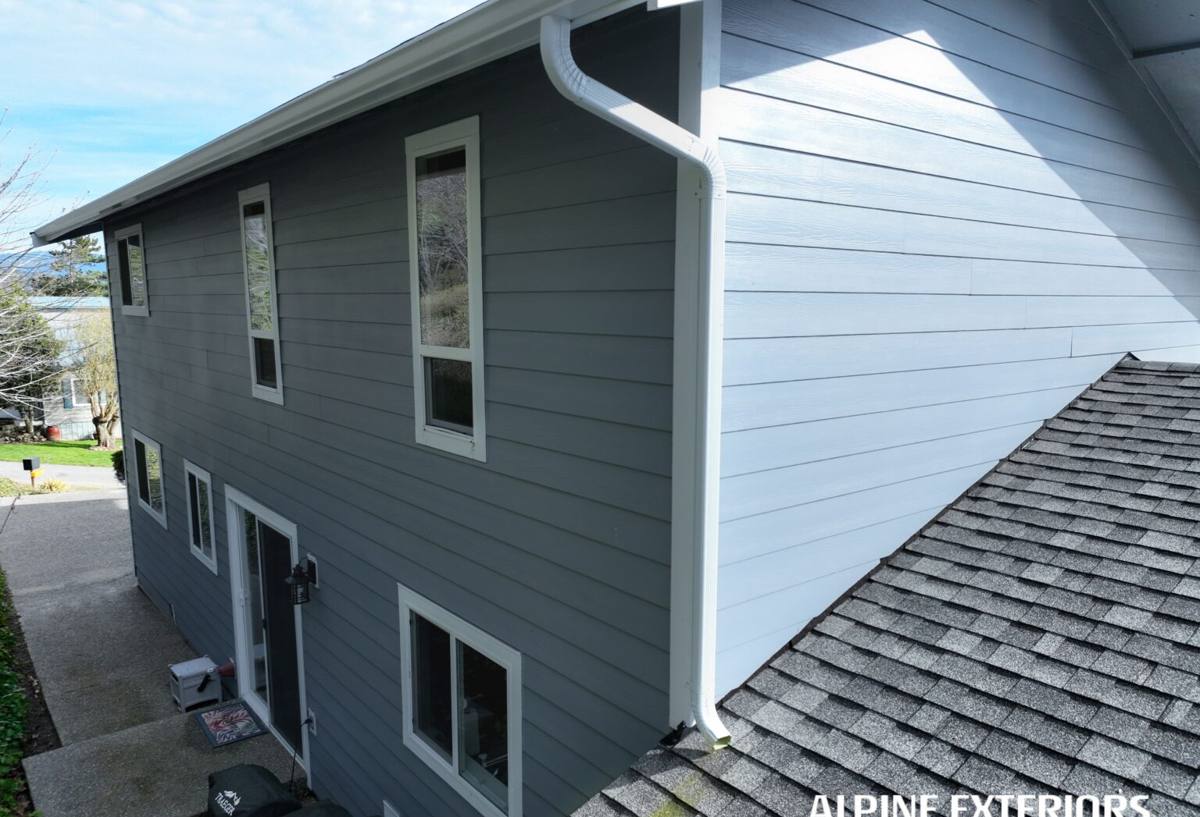
What We Actually Look At During an Inspection
A roof inspection isn't just counting missing shingles. We're trying to answer one question: is the water still getting kept out reliably, and for how much longer? That means checking several things at once.
Age and Material Life Stage
Every roofing material has a rough service life, and where your roof sits in that range matters more than how it looks from the driveway. A 12-year-old asphalt shingle roof with a few damaged shingles is a repair. A 22-year-old asphalt roof with the same damage is often a replacement, because the surrounding shingles are drying out and losing granules even where they look intact.
Extent and Pattern of Damage
One isolated leak near a chimney flashing is usually a repair. Leaks showing up in multiple, unrelated spots — especially after the same storm — tell us the underlayment or the field of the roof itself is failing, not just one detail.
What's Happening Underneath
Staining on the attic decking, soft spots underfoot, and moisture readings on the sheathing tell us more than the surface does. Bellingham's rain volume means a small breach can do real damage to the deck before it ever shows up as a ceiling stain inside the house.
Moss and Organic Growth
Our moss season is long enough that it's worth its own category. Light surface moss on a healthy roof is a maintenance item. Moss that's worked its way under shingle tabs and is lifting them is a different story — at that point it's actively creating entry points for water, and cleaning it off won't undo the damage already done.
Signs That Usually Point to Repair
Not every problem means a new roof. These are the situations where a repair is typically the right, honest call:
- A handful of cracked, curled, or missing shingles in one localized area
- A leak traced to a single flashing point — chimney, skylight, vent pipe, or valley
- The roof is under 15 years old (for asphalt) with no widespread granule loss
- Damage from a specific, identifiable event, like a fallen branch, rather than general wear
- Surface moss or algae staining with no lifted shingles underneath
- Isolated fastener failure or nail pops from age or installation
Signs That Usually Point to Replacement
These are the patterns that tell us a patch would just be delaying a bigger problem:
- Shingles that are brittle, curling broadly, or shedding granules across large sections
- Multiple independent leaks in different parts of the roof
- Visible sagging in the roofline, which usually points to deck or structural moisture damage
- Roof is past 20-25 years old (asphalt) or approaching the end of its rated life for its material
- Moss or growth that has lifted shingle edges in multiple areas, not just stained the surface
- Two or more previous repairs in the same area within a few years — a sign the underlying material is failing, not the spot itself
The Cost Conversation, Honestly
Repairs are cheaper up front, and for a genuinely isolated problem, that's the right outcome — there's no reason to replace a whole roof over one bad flashing detail. But repair costs add up differently than replacement costs, and it's worth understanding the shape of that curve before you decide.
| Factor | Repair | Full Replacement |
|---|---|---|
| Upfront cost | Lower, scoped to the problem area | Higher, covers the whole roof system |
| Cost over time | Can recur if the underlying material is aging out | One cost, then years without major roof spending |
| Warranty coverage | Typically covers only the repaired section | New material and workmanship warranty on the whole roof |
| Effect on resale | Minimal, unless deferred maintenance is visible | Often a selling point, especially with recent replacement documentation |
| Risk if wrong call | Water damage to decking, insulation, or interior finishes | Low — new system, known condition |
The real cost comparison isn't repair price versus replacement price in isolation. It's the cost of a repair today plus the likelihood of another repair in two or three years, versus the cost of replacing now while the deck and structure are still in good shape. A roof that's failing broadly almost always costs more in cumulative repairs than it would have cost to replace at the point the pattern became clear.
How Bellingham's Climate Changes the Math
This isn't a generic decision — where you live affects it. A few things specific to this area shape how we advise homeowners here.
Salt Air and Coastal Exposure
Homes closer to Bellingham Bay and the water see faster wear on metal components — flashing, fasteners, and gutter systems — than homes further inland in the county. If your roof has aging metal flashing in a salt-exposed location, that's a factor that can tip a borderline decision toward replacement, since flashing failure is one of the most common leak sources.
Rain Volume and Driving Rain
Whatcom County gets sustained, often wind-driven rain rather than short heavy downpours. That kind of weather finds weaknesses that a light rain wouldn't — it pushes water sideways under lifted shingles and through marginal flashing details. A repair that would hold up fine in a drier climate sometimes doesn't hold up here, which is part of why we're conservative about patching roofs that already show a pattern of problems.
The Long Moss Season
Because our moss season runs long, roofs here need more regular attention than they would in a drier region. A roof that gets moss cleared and gutters maintained on a regular schedule will genuinely last longer than one that doesn't. This is one area where ongoing maintenance really does change the repair-versus-replace timeline in your favor.
Questions to Ask Before You Decide
Whether you're talking to us or getting a second opinion, these are the questions that actually matter:
- How old is the roof, and what's the expected service life of the material it's built with?
- Is the damage isolated to one area, or showing up in multiple unrelated spots?
- Has this same section been repaired before?
- Is there any visible or measured moisture in the decking or attic?
- What does the flashing look like at chimneys, valleys, and vent penetrations?
- Is there a manufacturer or workmanship warranty still in effect, and does it cover the failure?
Any contractor giving you a straight answer should be able to walk through these points with you, not just hand you a number.
A Simple Way to Think About It
If the problem is contained, recent, and the rest of the roof is aging normally for its material, repair is usually the honest recommendation — and we'll say so. If the damage shows up in more than one place, the roof is near or past its expected life, or you've already paid for a repair in the same area once before, replacement tends to be the better use of your money, even though it costs more today. The wrong call in either direction costs you: patching a failing roof means paying for the same problem twice, and replacing a roof that only needed a repair is money that didn't need to be spent.
Getting a Straight Answer for Your Roof
Every roof is its own case — age, material, exposure to the weather off the bay, and how it's been maintained all factor in differently. If you're not sure which side of this decision your roof falls on, we're happy to take a look and give you a straightforward assessment, including photos of what we find and an explanation of why we're recommending what we're recommending. There's no pressure and no obligation — just a clear read on where things stand. Reach out using the form below to schedule a free estimate.