 Bellingham Roofing
 Roofing Built for the Puget Area's Climate
Homes in the Puget area of Bellingham sit in a stretch of Whatcom County where the weather doesn't do anything in half measures. Winters bring long stretches of driving rain that comes in sideways off the water, summers are mild but damp enough that roofs rarely get a real chance to dry out, and the air carries a steady dose of salt that speeds up corrosion on anything metal. Add in tree cover that's common throughout the neighborhood, and you get a near-constant moss and moisture problem that a lot of roofing systems designed for drier climates simply weren't built to handle.
We've spent years working on roofs in this part of Whatcom County, and the pattern is consistent: the roofs that fail early are almost never the ones that got hit by one big storm. They're the ones where small, ordinary problems — a cracked pipe boot, a moss mat holding water against shingles, a fastener that started to rust — were left alone for a few too many wet seasons. Roofing here is less about surviving a single dramatic event and more about managing constant, low-grade exposure year after year.
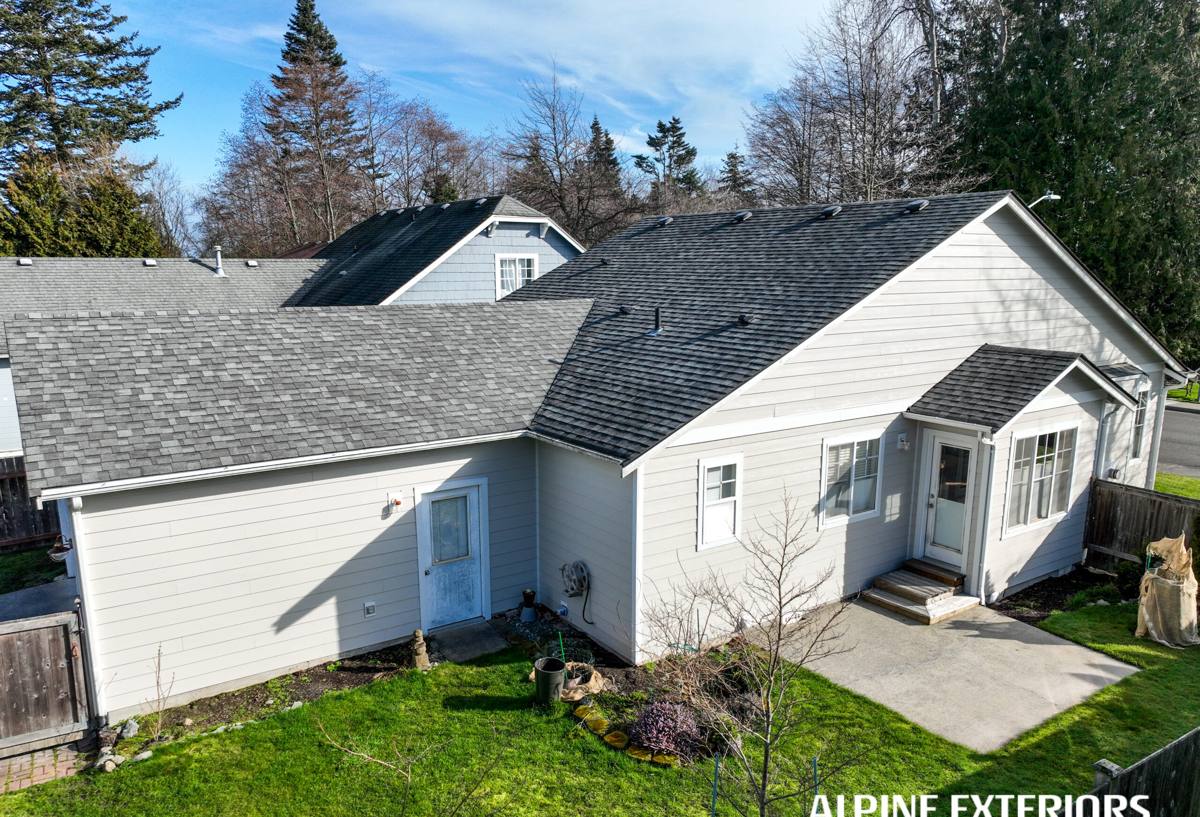
What Puget-Area Homes Are Up Against
Salt Air and Metal Fatigue
Proximity to the water means airborne salt settles on everything, including roofing metal. Flashing, fasteners, and gutter systems that aren't rated for coastal exposure corrode faster here than they would twenty miles inland. This is one of the most overlooked factors in roof failure — the shingles can look fine while the metal underneath and around them is quietly rusting through.
Driving Rain and Wind-Driven Water
Storms coming off the Sound don't just drop rain straight down — they push it sideways, which means water finds its way into gaps that would never leak in a calmer climate. Roof valleys, chimney flashing, and any place where two roof planes meet take the brunt of this. Proper flashing detail work matters more here than in places with gentler weather.
Moss, Shade, and Standing Moisture
A lot of Puget-area lots have mature tree cover, which is great for shade and privacy but keeps roofs damp longer after every rain. Moss doesn't just sit on top of shingles — its root structure works into the granule layer and lifts shingle edges, creating channels for water to get underneath. Left unchecked for a couple of seasons, moss growth can shorten the usable life of an asphalt roof significantly.
Freeze-Thaw Cycling
Whatcom County doesn't get brutal winters, but it does get enough freeze-thaw swings to matter. Water that's worked its way into small cracks or seams expands when it freezes, widening the damage a little more each cycle. It's a slow process, which is exactly why it's easy to ignore until it isn't.
Signs a Puget-Area Roof Needs Attention
- Dark streaking or green/black growth across shingles, especially on north-facing or shaded slopes
- Granules collecting in gutters or at downspout outlets
- Soft spots, sagging, or discoloration on interior ceilings near exterior walls
- Rust staining running down from flashing, vents, or metal chimney caps
- Shingle edges that look lifted, curled, or brittle rather than laying flat
- Daylight visible through the attic decking or damp insulation near the roofline
- Higher-than-expected heating bills, which can point to moisture-compromised insulation
None of these on their own means a full roof replacement is needed. But catching them early is almost always the difference between a repair and a much larger project down the road.
Roofing Materials That Hold Up Locally
We don't push one product as a universal answer — the right roofing system depends on the home's age, roof pitch, budget, and how much tree cover and shade it deals with. Here's how the common options compare for this climate specifically.
| Material | Typical Lifespan Here | Strengths in This Climate | Trade-Offs |
|---|---|---|---|
| Architectural Asphalt Shingle | 20-30 years | Good value, wide color range, solid wind rating when installed correctly | Needs regular moss management; granule loss accelerates in constant shade |
| Standing Seam Metal | 40-60 years | Sheds water and moss buildup well, handles wind-driven rain, low maintenance | Higher upfront cost; needs coastal-rated fasteners and coatings near the water |
| Synthetic/Composite Shingle | 30-50 years | Resists moisture absorption, good impact resistance | Fewer local installers experienced with the product; premium pricing |
| Cedar Shake | 20-30 years with upkeep | Traditional look that fits older PNW homes | High maintenance burden in a damp, shaded climate; moisture management is critical |
For most Puget-area homes we work on, a well-installed architectural asphalt system with proper ventilation and ice-and-water shield in the vulnerable areas hits the right balance of cost and durability. For homes closer to the water or under heavy tree cover, metal roofing earns its higher price tag over the long run because it simply gives moss and moisture less to hold onto.
How We Approach a Puget Roofing Project
Inspection First
Every job starts with an actual roof inspection, not a drive-by guess. We look at flashing details, attic ventilation, decking condition, and how water has historically moved across the roof — that last part tells us a lot about where problems are likely to start.
Ventilation Gets Real Attention
A roof that can't breathe traps moisture underneath the shingles, which shortens its life regardless of how good the material is. In a climate this damp, balanced intake and exhaust ventilation isn't optional — it's one of the biggest factors in how long a roof actually lasts.
Flashing and Waterproofing Details
Given how much of the damage we see traces back to wind-driven rain finding a gap, we treat flashing, valleys, and penetrations (vents, chimneys, skylights) as the parts of the job that matter most, not just a step to move past quickly.
Cleanup and Site Care
Tear-offs get magnetic sweeps for nails, tarps to protect landscaping, and full debris removal. We treat every property the way we'd want ours treated.
Roof Maintenance for the Long Haul
A roof in this climate isn't a set-it-and-forget-it investment. A little routine maintenance goes a long way toward avoiding early replacement:
- Gutter and downspout cleaning at least twice a year, more often under heavy tree cover
- Moss treatment before it establishes a heavy mat, not after
- Annual visual check of flashing around chimneys, vents, and skylights
- Trimming back overhanging branches to reduce shade, debris, and physical wear on shingles
- Attic checks for moisture, mold smell, or insulation that feels damp to the touch
Siding, Windows, and Decks — The Rest of the Exterior
Roofing is usually the most urgent concern, but it's rarely the only one. The same salt air and driving rain that stress a roof work on siding, window seals, and deck lumber too. Siding with failing caulk joints or a compromised weather barrier lets moisture behind the wall assembly, which can cause rot that's far more expensive to fix than the siding itself. Windows with worn seals fog up, leak, and lose efficiency exactly when a home needs it most during a wet Whatcom County winter. Decks exposed to constant moisture and shade need the right fastener hardware, proper board spacing for drainage, and material choices that won't rot or heave with the seasons.
We handle all of it — siding, roofing, windows, and decks — because on a lot of homes in this area, these systems interact. A roof leak can show up as siding damage two floors down. A deck built without drainage in mind can push moisture back toward the foundation. Looking at the whole exterior at once, instead of treating each piece in isolation, tends to catch problems the piecemeal approach misses.
Why a Local Crew Matters Here
Building codes, wind exposure ratings, and moisture management all shift depending on where in Whatcom County a home sits. A crew that mostly works drier inland regions will often under-detail flashing and skip ventilation upgrades that matter a lot more here than they realize. Working locally in and around Bellingham means we see how roofs, siding, and decks in this specific climate actually age — which failure points show up first, which materials genuinely hold up, and which shortcuts cause trouble two or three winters down the line. That local track record shapes every recommendation we make, rather than applying a generic playbook to a climate that doesn't play by generic rules.
Getting Started
If you're noticing moss buildup, a slow leak, aging siding, or a deck that's starting to show its age, it's worth having someone take an honest look before a small issue turns into a bigger repair bill. We offer free, no-pressure estimates for homeowners in the Puget area and throughout Bellingham — use the form below to get started, and we'll walk the property with you and lay out what we're seeing in plain terms.