 Bellingham Roofing
 Exterior Work Built for Barkley's Corner of Bellingham
Barkley sits close enough to Bellingham Bay and the I-5 corridor that homes here get the full Whatcom County weather package: long stretches of steady rain, damp marine air drifting in off the water, and short, weak winters that don't offer much of a hard freeze to slow down moss and moisture. Whether your home is part of the newer construction around Barkley Village or one of the surrounding residential streets, the exterior of your house is doing constant, quiet work to keep that weather out. We're a local exterior contractor that handles roofing, siding, windows, and decks, and we've built our process around exactly this kind of Pacific Northwest climate rather than treating it as an afterthought.
A lot of national and out-of-area contractors treat every job the same way regardless of region. That doesn't work well here. Bellingham's climate is genuinely different from what most manufacturers' install guides assume, and it's different again from what a crew based two states away has experience with. Local knowledge of how Whatcom County weather behaves over years, not just during a single storm, changes how we spec materials, flash penetrations, and sequence a project.
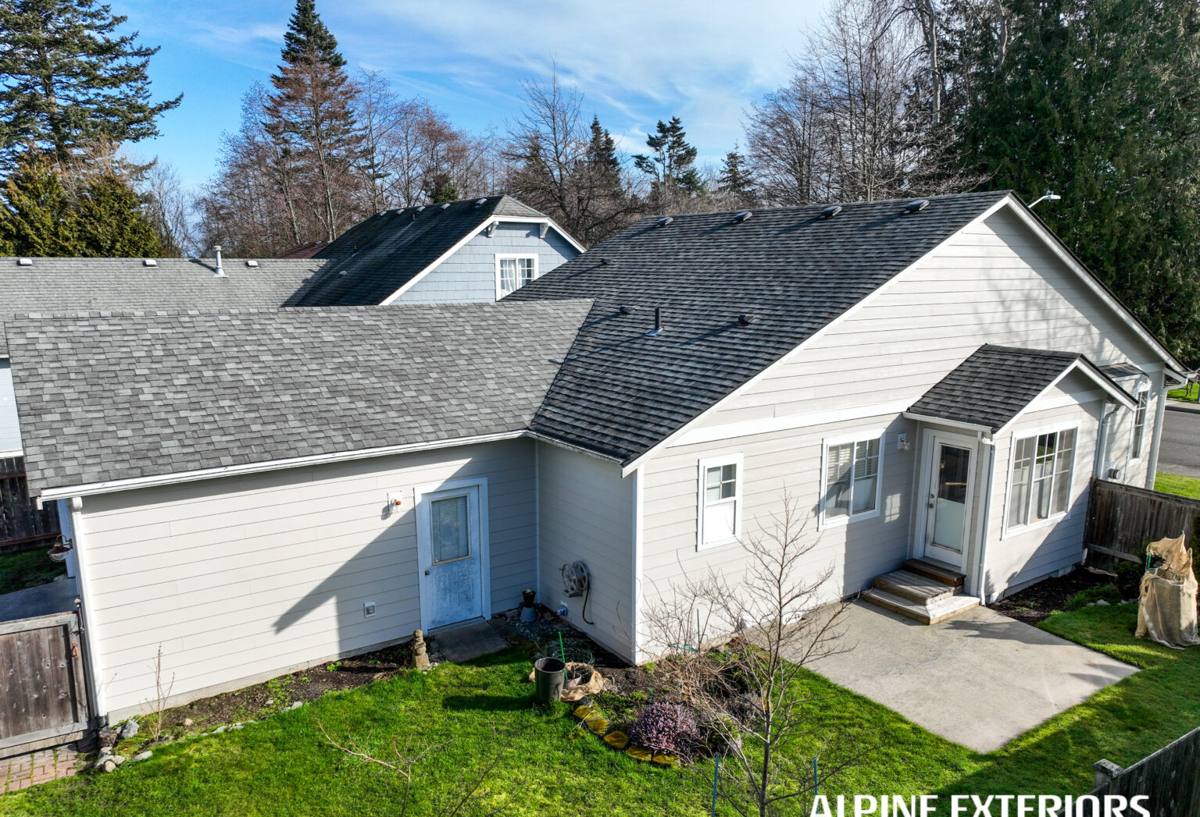
What Barkley Homes Are Up Against
Moss and Organic Growth
Bellingham's moss season isn't a minor cosmetic issue — it's a long-running maintenance factor. Moss holds moisture against roofing and siding materials far longer than the surrounding air would on its own, and on north-facing or shaded roof slopes, it can establish itself and keep spreading through most of the year. Left alone, moss lifts shingle edges, traps debris in valleys, and slowly degrades the surface underneath it. The fix isn't a one-time scrape; it's a combination of material choice, proper ventilation, and periodic maintenance that keeps growth from getting a foothold in the first place.
Driving Rain and Wind-Driven Moisture
Rain in this region doesn't always fall straight down. Storms off the Strait of Georgia and the Sound can push rain sideways against walls, under eaves, and into any gap in flashing or siding laps that wouldn't matter in a calmer climate. That's why flashing detail at windows, doors, roof penetrations, and deck ledger boards matters so much more here than in drier parts of the country — a small gap that would never see standing water in Arizona can become a chronic leak point in a Whatcom County winter.
Salt Air and Corrosion
Being close to Bellingham Bay means metal components — flashing, fasteners, gutter hardware, hinges — are exposed to a low but constant level of salt in the air. Standard hardware can corrode noticeably faster near the water than it would further inland. We factor proximity to the bay into what fastener and flashing materials we recommend, rather than defaulting to whatever is cheapest or most common in a catalog.
Roofing in Barkley
Roof replacement and repair work here has to account for moss resistance, proper underlayment for a wet climate, and ventilation that actually moves air through the attic instead of trapping condensation. We look at the whole system — decking condition, ventilation intake and exhaust, flashing at valleys and chimneys, and the final roofing material — rather than just laying new shingles over old problems.
- Full tear-off and inspection of decking before any new material goes down, since hidden rot under old roofing is common in older Whatcom County homes
- Ice-and-water shield or synthetic underlayment at eaves, valleys, and penetrations for extra protection against wind-driven rain
- Balanced attic ventilation to reduce the trapped moisture that feeds both moss and mold
- Metal flashing detail sized for the amount of rain this region actually sees, not a bare-minimum spec
- Material options selected with algae and moss resistance in mind for shaded or north-facing roof planes
Siding for a Wet Climate
Siding takes a beating from the same driving rain and humidity that affects roofs, plus it has to manage bulk water at ground level, around windows, and at deck attachments. Our approach to siding starts with the water management layer underneath — house wrap, flashing tape, and proper lapping — because siding that looks great on day one can still fail early if what's behind it wasn't done right. We install and repair fiber cement, engineered wood, and traditional wood siding, and we're honest with homeowners about the maintenance tradeoffs of each rather than pushing whatever earns the highest margin.
Why We're Selective About Certain Products
Some siding products marketed as low-maintenance solutions still depend heavily on flawless installation to perform well in a marine climate — any shortcut in flashing or fastening shows up as moisture damage years down the line, and repairs can be more involved than with more forgiving materials. We'd rather steer a homeowner toward a product with a track record of behaving predictably here, even if it costs a bit more or requires more upkeep, than install something that looks good at handoff and creates problems in five years.
Windows That Handle Condensation and Drafts
Bellingham's combination of cool temperatures and high humidity makes window performance a real comfort and energy issue, not just an aesthetic one. Older single-pane or poorly sealed windows tend to show it first as condensation on the glass or sill, then as drafts, then as rot in the surrounding trim if moisture keeps getting trapped. We handle full window replacement and repair, with attention to flashing and sealing around the window opening — the frame itself only does part of the job; the flashing detail around it is what actually keeps water out of the wall assembly.
Signs Barkley Homeowners Should Watch For
- Condensation building up between panes, which usually means a failed seal on a double- or triple-pane unit
- Soft or discolored trim and sills around window openings
- Noticeable drafts near windows even when they're fully closed
- Difficulty opening or closing older wood-framed windows due to swelling
- Visible daylight or gaps around the frame where it meets the siding
Decks Built to Survive Rain, Not Just Look Good
A deck in this climate spends most of the year wet or damp, which makes structural details — ledger board flashing, joist protection, proper drainage gaps between boards — more important than the surface material alone. We build and repair decks with an eye toward keeping water moving off and away from structural wood rather than letting it pool or wick upward. That includes flashing the ledger connection where the deck meets the house, a spot that's a common source of hidden rot when it's not detailed correctly.
Composite and wood decking both have a place depending on budget and maintenance preference. Composite generally needs less upkeep over time but costs more upfront; wood is more affordable initially and can look great, but it needs regular sealing and cleaning to hold up against Whatcom County's rain and moss exposure.
Comparing Material Approaches for This Climate
| Material Area | Lower-maintenance option | Traditional option | Key tradeoff here |
|---|---|---|---|
| Roofing | Algae/moss-resistant shingles or metal | Standard composition shingle | Resistant materials cost more but reduce moss upkeep over time |
| Siding | Fiber cement | Wood lap siding | Fiber cement resists moisture better but is heavier and installation-sensitive |
| Windows | Vinyl or fiberglass, dual/triple pane | Wood-framed | Wood offers classic look but needs more sealing and upkeep against humidity |
| Decking | Composite | Cedar or pressure-treated wood | Composite costs more upfront, wood needs annual sealing/cleaning |
Why a Local Crew Matters for Barkley Specifically
Working regularly in Bellingham and around Whatcom County means we're not guessing at how a roof, wall, or deck will perform after a few winters — we've seen it. We know what moss reclamation looks like on a north-facing slope after two or three wet seasons, and we know which flashing details actually hold up against sideways rain versus which ones look fine on install day and fail quietly. A crew based out of the area doesn't get that feedback loop; they install and move on. We also know that jobs in Barkley can involve navigating homeowner association guidelines in newer developments, which is worth checking early so material choices and colors don't need to be revisited mid-project.
Being local also means we're accountable after the job is done. If something needs a warranty follow-up or a maintenance check a year or two down the line, we're still here, working in the same neighborhoods, not dispatched from out of state.
How We Approach a Project
- Initial inspection and honest assessment — including telling you if a repair makes more sense than a full replacement
- Clear scope and material recommendations based on your specific exposure (sun, shade, wind direction, proximity to the bay)
- A written estimate that spells out materials, labor, and timeline before any work starts
- Proper sequencing — water management layers first, finish materials second, never the other way around
- Final walkthrough so you understand what was done and what maintenance, if any, to expect going forward
Maintenance That Extends the Life of Your Investment
Whatever exterior work you have done, a small amount of regular maintenance goes a long way in this climate. Gutters clogged with moss and debris back water up under roofing and siding. Decking left unsealed for years absorbs moisture that eventually reaches the structure underneath. None of this requires constant attention, but it does require more attention than homeowners in drier climates typically expect.
- Clear gutters and downspouts at least twice a year, more often under overhanging trees
- Have roof moss treated or removed before it spreads across an entire slope
- Reseal or re-stain wood decking on a regular schedule rather than waiting until it visibly fails
- Check window and door flashing for gaps after major storms
- Address small siding damage promptly — a small gap today is a moisture problem in a year
If you're seeing moss buildup, drafty windows, aging siding, or a deck that's starting to show its age, we're happy to take a look and walk you through honest options — no pressure, no upsell. Fill out the form below for a free estimate on your Barkley property.