 Bellingham Roofing
 Board & Batten in Birchwood: Siding Built for This Part of Whatcom County
Board and batten has become one of the most requested siding styles for homes in and around Birchwood, and it's easy to see why. The vertical lines read as clean and modern on newer builds, but they also sit comfortably on older Bellingham homes that want a farmhouse or craftsman look without a full remodel. What most homeowners don't think about until later is that board and batten is not just a look — it's a system of wide boards and narrow battens, fasteners, flashing, and water management details that all have to work together. In a climate like ours, with salt-laden air off Bellingham Bay, long stretches of driving rain, and a moss season that can run most of the year, that system either holds up for decades or starts showing problems within a few winters.
This page is specific to board and batten siding for homes in the Birchwood area. We're not going to give you a generic national rundown of the style — we're going to walk through what this siding needs to do in this specific corner of Whatcom County, what a correct installation actually involves, and why we install it in James Hardie fiber cement and nothing else.
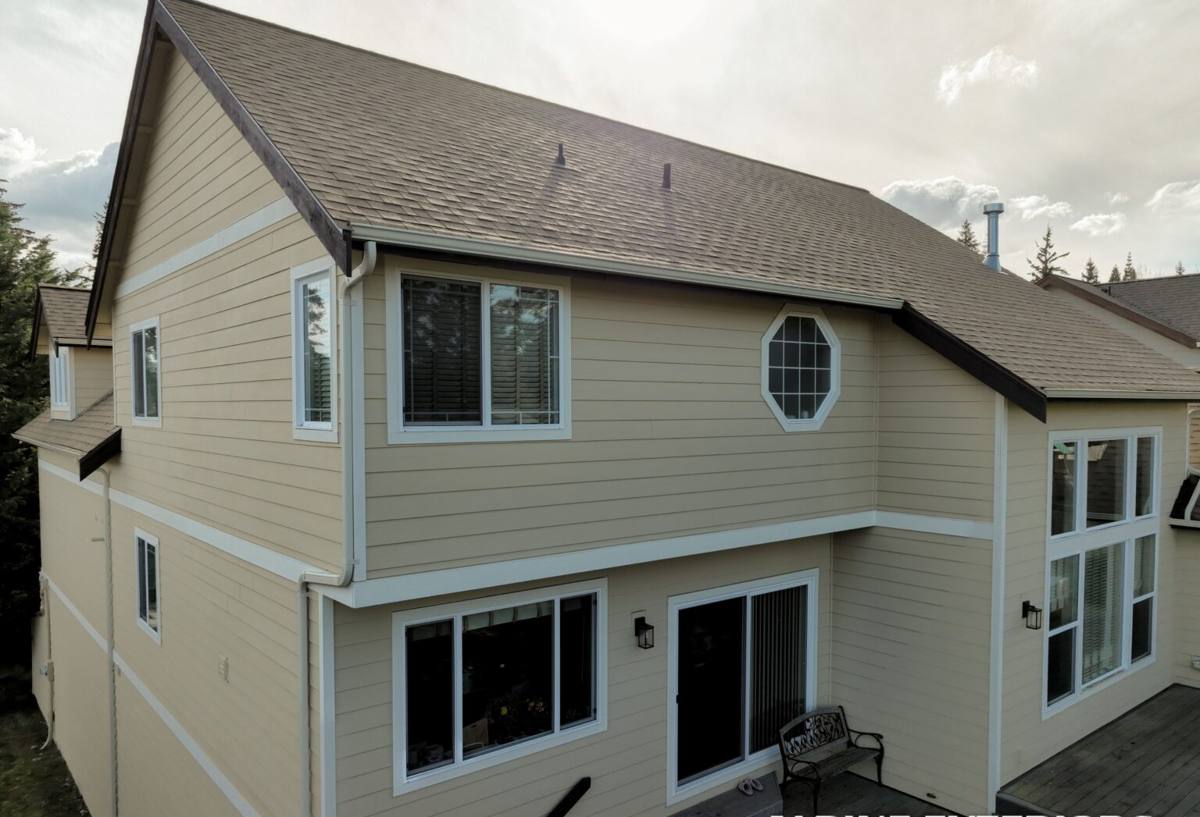
What Birchwood's Climate Actually Does to Siding
Salt Air Off the Bay
Homes closer to Bellingham Bay deal with a steady, low-grade exposure to salt-carrying air. It's not the same intensity as a beachfront property, but over years it accelerates corrosion on exposed metal fasteners, degrades cheaper paint films faster than inland areas, and works its way into any gap in a siding system's water barrier. Board and batten has more vertical seams and more fastener penetrations per square foot than plain lap siding, which means more places for that salt-carrying moisture to find a weak point if the installation wasn't done with this exposure in mind.
Driving Rain
Bellingham doesn't just get rain — it gets rain pushed sideways by wind off the water, which changes how siding needs to perform. Flat, gently sloped rain barely tests a wall. Driving rain tests every joint, every batten seam, and every point where the siding meets a window, door, or trim board. Board and batten's narrow battens cover the seams between the wide boards, but if those boards weren't gapped correctly or the water-resistive barrier behind them wasn't lapped properly, wind-driven rain will find its way behind the cladding.
A Long Moss Season
Shaded lots, tree cover, and the region's damp, mild winters mean moss and algae growth is a near year-round concern for north-facing and shaded walls. On untreated wood-based products, moss doesn't just sit on the surface — it holds moisture against the material and can accelerate rot at seams and edges. Board and batten's vertical battens create horizontal ledges at the bottom of each board where debris and moisture can collect if the profile and gapping weren't detailed correctly.
None of this means board and batten is a bad choice for Birchwood. It means the material and the installation both have to be matched to what this specific climate does to a wall, year after year.
What a Correct Board & Batten Job Involves
Board and batten looks simple from the street, but a correct installation has more moving parts than most homeowners expect. The visible boards and battens are the last layer of a system that starts with what's behind them.
- Water-resistive barrier: A continuous, properly lapped barrier behind the siding, with all seams and penetrations sealed before a single board goes up.
- Flashing at every transition: Windows, doors, roof-to-wall intersections, and deck ledgers all need flashing detailed to shed water outward, not trap it behind the cladding.
- Correct board spacing and fastening: Wide boards need to be fastened and gapped per the manufacturer's specification so they can handle seasonal movement without cracking the finish or pulling fasteners loose.
- Batten placement: Battens need to land squarely over the board seams with consistent reveal, both for water shedding and for the finished look to read clean from the street.
- Rainscreen or drainage gap where called for: A small air gap behind the siding lets any incidental moisture drain and dry instead of sitting against the wall sheathing — this matters more in a wet climate like ours than in drier regions.
- Corner and trim detailing: Outside corners, inside corners, and trim boards need to be integrated into the water management plan, not just caulked and left.
Skip or rush any one of these steps and the siding can still look right for a season or two before problems show up — usually as staining, soft spots, or paint failure at the seams.
Why We Install James Hardie Board & Batten Only
We get asked regularly about vinyl board and batten panels, LP SmartSide, primed spruce, and cedar board and batten. Each of those products has real advantages, and we're not going to pretend otherwise. But we made a decision as a company to install James Hardie fiber cement exclusively, and it comes down to how these materials actually perform in a climate like Whatcom County's over the long run — not just how they look on installation day.
| Material | What it does well | Where it struggles in our climate |
|---|---|---|
| Vinyl board and batten | Low upfront cost, no painting | Can warp or crack in temperature swings; seams and panel joints are a weak point against driving rain; limited to a plastic appearance up close |
| LP SmartSide (engineered wood) | Lighter weight, easier to install than fiber cement | Wood-based core is more vulnerable to prolonged moisture exposure and moss-related rot at cut edges and seams than fiber cement |
| Primed spruce / cedar | Natural wood grain and character | Requires ongoing repainting and sealing to keep moisture out; salt air and moss season accelerate finish breakdown; higher long-term maintenance |
| James Hardie fiber cement | Non-combustible, factory-baked ColorPlus finish, engineered for wet Pacific Northwest climates (HZ5 product line), strong transferable warranty | Higher material cost and heavier to install; correct fastening and gapping is critical |
The short version: vinyl and engineered wood products can absolutely work in the right situation, but in a climate that combines salt air, sideways rain, and moss for most of the year, we've seen where the trade-offs show up over time — and we'd rather not put our name on an installation we know is more likely to need attention in ten years than in twenty-five. James Hardie's fiber cement doesn't have a wood core to rot, doesn't warp the way vinyl can, and its ColorPlus finish is factory-cured specifically to resist the fading and cracking that field-applied paint struggles with in wet climates. It's also engineered in HZ5 formulation for regions like ours that see sustained moisture exposure.
What James Hardie Board & Batten Offers Birchwood Homeowners
- A factory finish (ColorPlus Technology) that resists fading and doesn't require repainting on the same schedule as wood or field-painted siding.
- Fiber cement composition that won't rot, and that stands up to moss and moisture sitting against it far better than wood-based alternatives.
- Non-combustible material, which matters for both safety and, in many cases, insurance considerations.
- A transferable warranty backing the product, which adds real value if you ever sell the home.
- A crisp, true board and batten profile with consistent reveal — not a stamped panel trying to look like it.
Our Process, Start to Finish
Every board and batten project we take on in Birchwood follows the same sequence, because skipping steps is where problems start.
- On-site assessment: We walk the exterior, check the current wall condition, note shaded and exposed sides, and identify any existing moisture or rot issues that need to be addressed before new siding goes on.
- Water management plan: We map out flashing details at every window, door, and roof intersection specific to your home's layout.
- Barrier and prep: The water-resistive barrier goes on continuous and properly lapped, with all penetrations sealed before any siding is installed.
- Board and batten installation: Boards are fastened and gapped to Hardie's specification, battens are set with consistent reveal over the seams, and corners and trim are integrated into the overall water plan.
- Final walkthrough: We go over the finished exterior with you, including how the siding was detailed at trouble spots like roof lines and deck ledgers.
Cost Factors for Board & Batten Siding in Birchwood
Every home is different, and we'll always give you an exact number after seeing the house — but these are the main factors that move the price up or down on a board and batten project in this area.
| Factor | How it affects cost |
|---|---|
| Wall condition underneath | Rot repair or sheathing replacement adds cost before new siding can go on |
| Home size and wall complexity | More corners, dormers, and trim details mean more labor and material cutting |
| Existing siding removal | Tear-off of old vinyl, wood, or damaged siding is a separate line item from new installation |
| Rainscreen / drainage gap | Adding a drainage gap improves long-term moisture performance and adds modest labor cost |
| Trim and color selection | Custom trim packages and premium ColorPlus finishes vary in price by selection |
Maintenance Checklist for Board & Batten Homes in This Climate
James Hardie fiber cement is low-maintenance compared to wood, but "low-maintenance" doesn't mean "no attention." A few simple habits go a long way in a moss-prone, wet climate:
- Rinse siding annually, especially on shaded or north-facing walls where moss and algae are more likely to establish.
- Trim back vegetation and tree limbs that keep a wall shaded and damp longer than the rest of the house.
- Check gutters and downspouts each fall so overflow isn't running down the wall face during heavy rain.
- Inspect caulking at trim, window, and door edges every couple of years and have any cracked sealant redone.
- Watch for any staining or discoloration at seams, which can be an early sign of a flashing or gapping issue worth having looked at.
Why a Crew That Already Works Birchwood Matters
Board and batten's performance in this climate comes down almost entirely to installation quality — the material can only do its job if the water management behind it is right. A crew that already works in and around Birchwood has seen how the local exposure to salt air, wind-driven rain, and moss plays out on real walls over multiple seasons, not just on install day. That means fewer surprises during the assessment, flashing and gapping details that already account for what this specific area throws at a house, and a finished job that's built for the next twenty-five years here, not just for a dry afternoon during the walkthrough.
If you're weighing board and batten siding for a home in Birchwood, we're happy to walk the exterior with you, look at what's there now, and talk through what a correct James Hardie installation would involve for your specific house. Reach out for a free, no-pressure estimate using the form below.