 Bellingham Roofing
 Why Birchwood Homes Need Siding Built for This Climate
Birchwood sits inside Bellingham, close enough to Bellingham Bay and the surrounding waterways that homes here take on a specific combination of weather stress that inland Whatcom County properties don't deal with in the same way. Salt-laden air off the water, long stretches of wind-driven rain through fall and winter, and a moss season that can run for months are the three forces that do the most damage to exterior siding in this neighborhood. Any siding product installed here needs to hold up to all three at once, not just one of them in isolation.
That's the lens we use when we talk with Birchwood homeowners about siding. It's not about picking the cheapest option or the fastest install — it's about picking a material and installation method that will still look and perform well after a decade of this specific climate, and then installing it correctly the first time.
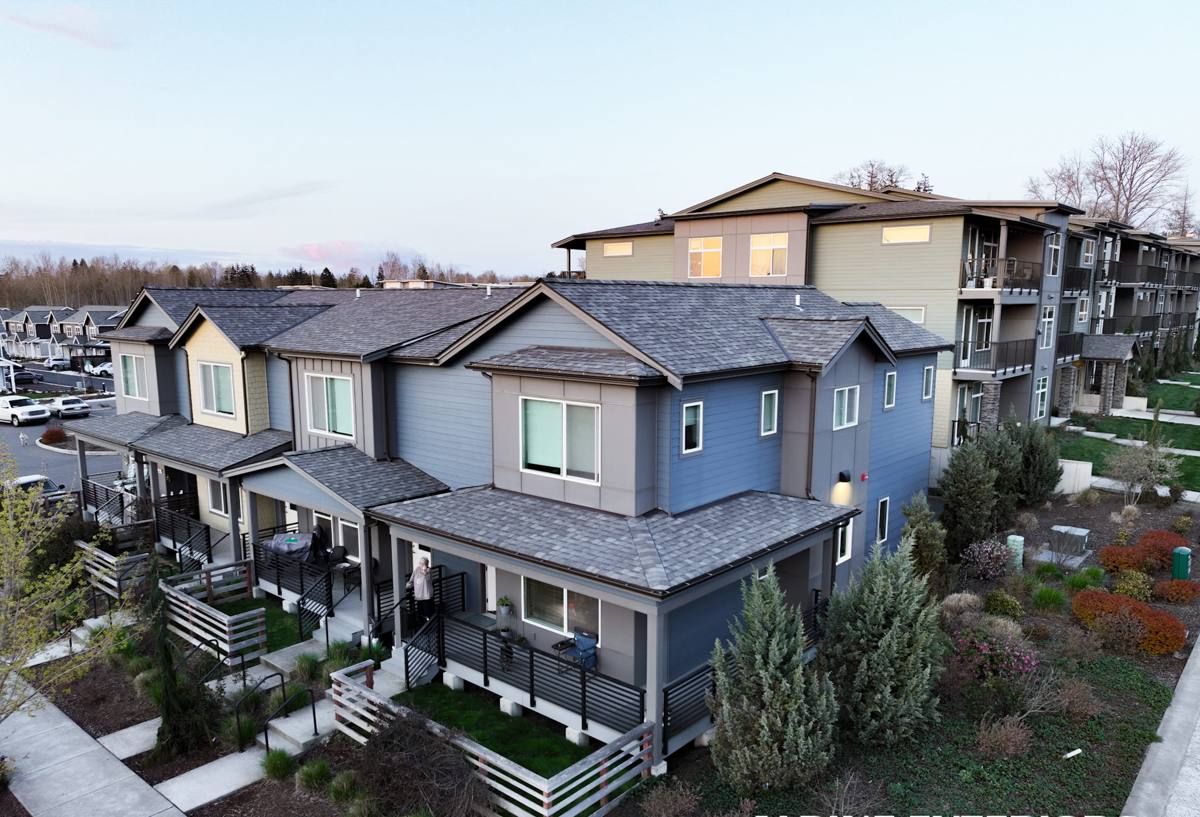
What Salt Air, Driving Rain, and Moss Actually Do to Siding
Salt Air and Moisture
Airborne salt is corrosive and hygroscopic — it pulls moisture out of the air and holds it against whatever surface it lands on. On siding, that means fasteners, trim, and any exposed edges are under near-constant low-level moisture exposure, even on days it isn't actively raining. Materials that aren't dimensionally stable or that rely on paint film alone for protection tend to show wear faster in this kind of environment.
Wind-Driven Rain
Bellingham's weather doesn't just deliver rain — it delivers rain at an angle, driven by wind off the water. That pushes moisture into laps, seams, and fastener penetrations that would stay dry in a calmer climate. Siding systems and installation details that work fine in a low-wind region can fail here specifically because water gets forced into places it was never designed to reach.
Moss and Organic Growth
Whatcom County's damp, mild winters are ideal growing conditions for moss and algae, and Birchwood's tree cover and proximity to water make it worse in shaded and north-facing areas. Moss holds moisture against a wall surface for extended periods, which accelerates whatever moisture-related breakdown is already happening underneath. Siding that can't tolerate sustained damp contact — or that traps moisture behind it — is at a real disadvantage here.
Why We Only Install James Hardie Siding in Birchwood
We've made a deliberate decision to install James Hardie fiber cement exclusively, and we don't install LP SmartSide, vinyl siding, Cemplank, Allura, primed spruce, or cedar. That's not a knock on every homeowner who has one of those products on their house today — plenty of them get reasonable service out of it. It's a professional standard we've set for the work we put our name behind, based on how these materials perform specifically in a salt-air, high-rain, high-moss climate over the long run.
Vinyl siding is inexpensive and low-maintenance in mild climates, but it expands and contracts more than fiber cement, and its seams and J-channels give wind-driven rain more opportunities to get behind the cladding. Wood-based products — cedar and primed spruce — look good initially but require an ongoing maintenance commitment (recoating, caulking, moisture monitoring) that most homeowners underestimate, and moss and driving rain both work against a wood substrate over time. LP SmartSide is an engineered wood product with real strengths, but it's still wood-based at its core, meaning moisture management at cut edges and seams is critical and unforgiving of installation shortcuts. Cemplank and Allura are also fiber cement, and we don't say anything negative about the category — our decision to standardize on James Hardie specifically comes down to their climate-engineered HZ product lines, factory-applied ColorPlus finish, and the strength of their transferable warranty when installation is done to their specification.
Standardizing on one manufacturer also means our crews aren't relearning installation details, fastening patterns, and flashing approaches for five different products. That consistency is part of what keeps installation quality high, project after project.
The James Hardie Product Lines That Make Sense in This Area
James Hardie engineers its siding by climate zone, and Western Washington falls into their HZ5 category, built around moisture and temperature conditions like ours. A few product options come up most often in Birchwood projects:
- HardiePlank lap siding — the most common choice for full re-sides, available in several exposure widths and surface textures.
- HardiePanel vertical siding — often used as an accent on gable ends or in combination with lap siding for a mixed look.
- HardieShingle — a shingle-profile option for homeowners who want a traditional Northwest look without the maintenance burden of real wood shingles.
- HardieTrim — fiber cement trim boards used around windows, corners, and fascia so the whole exterior envelope is consistent, not just the field siding.
ColorPlus factory finish is worth understanding on its own. Instead of field-applied paint, the color is baked on at the factory in a controlled environment, which gives more consistent coverage and better resistance to fading and moisture intrusion at the finish layer — a meaningful advantage in a climate where the finish is under constant assault from salt air and rain.
What a Correct Installation Involves
James Hardie siding performs the way it's designed to only when it's installed to the manufacturer's specification — this is a product where installation quality matters as much as the material itself, especially in a harsh coastal-adjacent climate. Correct installation on a Birchwood home typically includes:
Clearances and Flashing
Maintaining proper clearance between the bottom of the siding and grade, decks, and roof lines so water has somewhere to go instead of wicking up into the board. Flashing at windows, doors, and all penetrations needs to be integrated with the water-resistive barrier, not just caulked over.
Fastening
Correct fastener type, spacing, and placement matter for both structural performance and warranty compliance. Over-driven or under-driven fasteners are a common shortcut that shows up as problems years later.
Joints and Caulking
Butt joints need to be properly backed and sealed, and caulking has to be compatible with the ColorPlus finish so it doesn't degrade or discolor early. In a climate with this much sustained moisture exposure, joint detailing is one of the first places a rushed installation shows its weaknesses.
Moisture Barrier Behind the Siding
A correctly installed weather-resistive barrier and rainscreen approach (where appropriate) gives any moisture that does get past the cladding a way to drain and dry out, rather than sitting against the sheathing.
Our Process, From Estimate to Finished Siding
For a Birchwood project, our process generally looks like this:
- On-site inspection — we look at existing siding condition, moisture damage, trim, and any areas with heavy moss or shade exposure that need special attention.
- Written estimate — a clear scope covering product, color, trim details, and any sheathing or moisture repair we find during inspection.
- Tear-off and moisture check — removing existing siding gives us a direct look at the sheathing and framing underneath, which is often where hidden problems from a prior installation show up.
- Water-resistive barrier and flashing — installed or repaired before a single piece of new siding goes up.
- Hardie installation — to manufacturer spec, with attention to the clearances and fastening details above.
- Final walkthrough — reviewing the finished work with the homeowner before we consider the job done.
Cost Factors for a Birchwood James Hardie Project
Every home is different, but the factors that move a siding estimate up or down are consistent. Broad ranges depend heavily on square footage, tear-off scope, and how much repair work is uncovered once old siding comes off.
| Factor | Why It Affects Cost |
|---|---|
| Tear-off vs. new construction | Removing and disposing of existing siding adds labor and disposal cost compared to new-build siding. |
| Sheathing or framing repair | Moisture damage found during tear-off has to be repaired before new siding goes on — this is common on older homes in wet climates. |
| Product line and profile | Lap, panel, and shingle profiles carry different material costs, and trim complexity adds labor. |
| Home shape and trim detail | Multiple gables, dormers, and cutouts around windows and doors take more time per square foot than a simple rectangular wall. |
| Accessibility | Steep sites, limited staging area, or multi-story sections require more setup time and equipment. |
We'll walk through where your project falls on each of these during the estimate, so there aren't surprises once work starts.
A Homeowner's Maintenance Checklist for Hardie Siding in This Climate
James Hardie siding is genuinely low-maintenance compared to wood, but "low-maintenance" doesn't mean "no maintenance" in a climate like this one. A short annual routine goes a long way:
- Rinse siding with a garden hose once or twice a year to clear salt residue and organic buildup, especially on shaded or north-facing walls.
- Check caulking at trim, windows, and joints annually for cracking or separation, and have gaps re-sealed before they let water in.
- Keep gutters clear so overflow doesn't run down the siding face repeatedly in heavy rain.
- Trim back vegetation and tree limbs that keep a wall section shaded and damp longer than the rest of the house.
- Watch for moss starting at the bottom courses or in shaded corners, and address it early rather than letting it establish.
- Have any impact damage or loose fasteners repaired promptly rather than waiting, since small gaps are where moisture gets a foothold.
Why Hiring a Crew That Already Works Birchwood Matters
Siding installation isn't one-size-fits-all across Whatcom County. A crew that regularly works Birchwood and the surrounding Bellingham neighborhoods has already seen how the local exposure to salt air, wind direction, and moss growth patterns plays out on real homes — which shaded walls need extra attention, which orientations take the worst of the driving rain, and how local permitting and inspection expectations run. That local pattern recognition shows up in better decisions during the estimate and fewer surprises during the tear-off phase, because we're not guessing at how this climate behaves — we've already seen it up close, house after house.
If you're weighing a siding replacement in Birchwood, we're happy to take a look at your home, walk you through what we find, and put together a straightforward, no-pressure estimate — no obligation, just clear information about what your house needs.