 Bellingham Roofing
 New-Construction Windows for Columbia, Bellingham
Columbia is one of Bellingham's older, established neighborhoods, sitting close enough to Bellingham Bay to feel the marine climate in a real way — salt-laden air, long stretches of driving rain, and a moss and mildew season that runs most of the year on shaded north and west walls. When a home in Columbia is being newly built, added onto, or fully re-sided down to the studs, the window installation that goes in during that construction phase sets the tone for how the entire building envelope performs for the next several decades. Get it right during new construction, and windows can go 20-plus years with only routine maintenance. Get it wrong, and homeowners end up dealing with hidden water intrusion long before the windows themselves ever look like the problem.
We work siding, roofing, windows, and decks throughout Bellingham and Whatcom County, and new-construction window work is a specific discipline within that — different from replacing a window in an existing wall. On a new build or a full re-side, the wall assembly is open, which means there's a real opportunity to get flashing, drainage, and window integration done correctly the first time instead of working around what's already there.
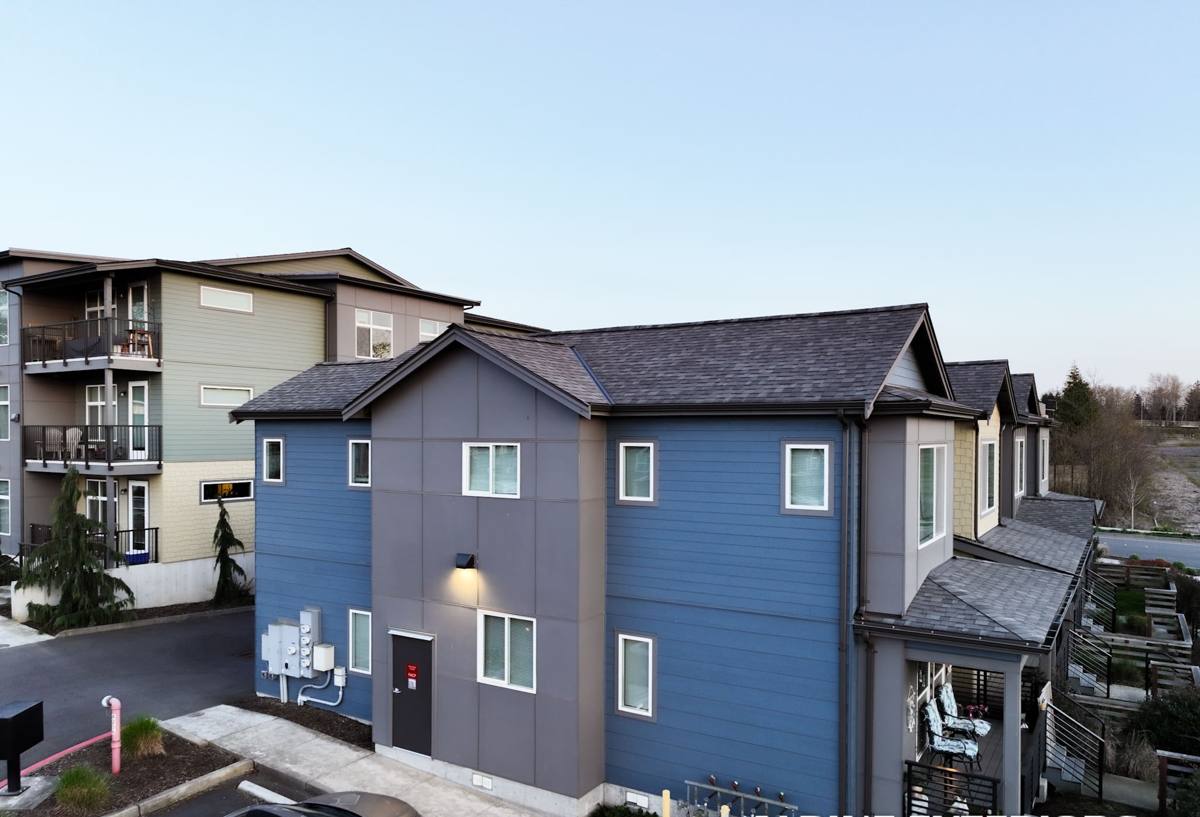
Why New Construction Is Different From Retrofit Window Work
Retrofit or replacement window work means fitting a new unit into an existing rough opening, often working around siding, trim, and a weather-resistive barrier that's already in place. New-construction window work is the opposite: the rough openings, the housewrap or weather barrier, and the flashing sequence are all being built in order, together, before any finish siding goes on. That sequencing matters enormously in a climate like Bellingham's.
The Advantage of an Open Wall
With the wall open, we can lap every layer in the correct order — sheathing, weather-resistive barrier, window flashing, and then siding — so water is always directed down and out rather than trapped behind a layer that was installed out of sequence. That's the single biggest reason new-construction window installation done correctly outperforms a retrofit, even a good one.
The Risk of Rushing It
The flip side is that new-construction schedules move fast, and window flashing is exactly the kind of detail that gets rushed or skipped when a crew is trying to keep a build on schedule. Once siding goes on over a poorly flashed window, the mistake is invisible until it shows up years later as rot, staining, or a soft spot in the wall — often well outside a builder's warranty window.
What Columbia's Climate Demands From New Windows
| Climate Factor | What It Does to Windows | What the Installation Must Do |
|---|---|---|
| Marine air / salt exposure | Accelerates corrosion on hardware, fasteners, and lower-grade frame components | Use corrosion-resistant hardware and fasteners rated for coastal exposure |
| Wind-driven rain | Pushes water sideways into wall assemblies rather than straight down | Flashing must lap correctly and tie into the weather-resistive barrier, not rely on caulk alone |
| Long moss/mildew season | Growth takes hold on sills, trim, and any spot where water sits | Sills and trim need proper slope and drainage so water sheds instead of pooling |
| Cold, damp winters | Condensation forms where warm interior air meets cold glass and frames | Glazing package and frame insulation value need to match Whatcom County's climate zone |
None of these factors are unique to Columbia specifically — they're shared across most of Bellingham and the surrounding Whatcom County coastline — but Columbia's proximity to the bay means homes here see them consistently rather than occasionally. That's part of why we treat every new-construction window job in this neighborhood with the same flashing and drainage standards, regardless of the window brand or budget involved.
What a Correct New-Construction Window Installation Involves
The window unit itself is only one piece of a correct installation. The sequence and detailing around it is what actually determines whether the assembly stays dry.
- Rough opening prep: Openings are framed to the correct dimensions with sound, dry structural framing — nothing gets installed against wet or compromised wood.
- Weather-resistive barrier integration: The housewrap or weather barrier is installed and lapped correctly before window flashing begins, so every layer sheds water to the layer below it.
- Sill pan flashing: A properly sloped sill pan at the bottom of the opening directs any water that does get past the window back outside the wall, rather than letting it sit against the framing.
- Window setting and fastening: The unit is set plumb, level, and square, and fastened according to the manufacturer's specification — proper fastening affects both performance and warranty validity.
- Jamb and head flashing: Side and top flashing laps over the layers below it in the correct shingle-style sequence, directing water down and out and away from the rough opening.
- Sealant as a supplement, not a substitute: Sealant is used at specific points to back up the flashing system — it's never relied on as the only barrier against water intrusion.
- Siding tie-in: Finish siding and trim are installed to shed water away from the window edges, completing the drainage path from roofline down to grade.
Choosing Window Systems for a Columbia Build
We install vinyl and fiberglass window systems suited to the Pacific Northwest's wet, mild climate, and we walk homeowners and builders through real trade-offs rather than steering toward one brand as the only correct answer. For a new-construction project in Columbia, the priorities are a tight, well-engineered frame, a glazing package that handles both energy performance and condensation resistance, and hardware that holds up under sustained marine air exposure.
- Frame material: Vinyl and fiberglass both resist rot in a way uncladded wood frames don't, which matters given how much sustained moisture this climate carries.
- Glazing package: Double-pane with low-E coatings is standard for this climate zone; some builds call for upgraded gas fills or triple-pane glazing depending on orientation and energy goals.
- Hardware grade: Corrosion-resistant hardware matters more here than in a drier inland climate, since salt-laden air reaches most of Bellingham's lower elevations, including Columbia.
- Frame color and finish: New construction is the easiest time to match window color to the home's final exterior palette, since there's no existing frame color constraining the choice.
- Warranty structure: A manufacturer's product warranty only covers the window unit — it doesn't cover a failure caused by poor flashing or installation, which is why installation workmanship needs to be addressed separately in any contract.
How Window Work Fits Into the Rest of a New Build
Windows don't perform in isolation on a new-construction project — they're one connected piece of the building envelope alongside the roof, siding, and drainage plane. A window installed correctly but tied into siding that doesn't shed water properly at the trim line can still leak, and the source often gets misdiagnosed as a "bad window" when the real issue is how the two systems meet. Because we handle siding, roofing, windows, and decks as one crew rather than subcontracting each trade separately, the same team that sets the window flashing also understands how the surrounding siding and roof-to-wall details need to tie into it.
Signs of a Rushed or Incorrect Window Installation on Newer Homes
- Staining or discoloration on interior drywall below or beside a window within the first few years
- Soft spots, bubbling paint, or visible gaps in exterior trim around window openings
- Condensation between panes on a window that's only a few years old, which points to a failed seal rather than normal aging
- Drafts near a window frame despite the home being fully sealed and finished
- Visible caulk buildup around a window edge, which often means caulk was used to patch a flashing gap rather than as a supplement to proper flashing
Any of these on a relatively new home is worth having looked at sooner rather than later, since water damage behind siding tends to get worse quietly before it becomes visible.
Our Process on a Columbia New-Construction Job
We start by reviewing the build plans or existing framing with the homeowner, general contractor, or builder to understand the window schedule, sizing, and timeline. From there we sequence our work to match the build — getting rough openings, weather barrier, and flashing done in the correct order before finish siding goes on, rather than trying to compress steps to hit a schedule. We give a written scope up front that spells out the flashing and drainage details included as standard, not optional add-ons, and we coordinate directly with other trades on site so window timing doesn't create gaps in the drainage plane.
A Simple Checklist Before Hiring for New-Construction Window Work
- Ask specifically how they sequence weather-resistive barrier, sill pan flashing, and window setting — not just what window brand they install
- Confirm current Washington contractor licensing and active liability insurance
- Get a written scope that separates the manufacturer's product warranty from the contractor's installation warranty
- Ask how window installation coordinates with the siding and roofing trades on the same build
- Ask about lead times on window orders, since custom sizes for a new build can take several weeks to arrive
Why a Local Crew Matters for a Columbia Build
A crew that regularly works Bellingham and the surrounding Whatcom County coastline already understands how wind-driven rain and marine air behave here compared to a drier, more sheltered inland climate — and that understanding shows up in the small decisions that actually determine long-term performance: how much lap a flashing detail gets, whether a sill pan is sloped correctly, which hardware grade gets specified for a bay-facing wall. Those decisions are what separate a window installation that stays dry for decades from one that starts showing problems within a few wet winters.
If you're planning a new build, addition, or full re-side in the Columbia neighborhood and want the window installation done right from the start, we're happy to walk the plans with you. Reach out below for a free, no-pressure estimate.