 Bellingham Roofing
 New Roof Installation Built for Cordata's Conditions
Cordata sits far enough north in Bellingham to catch the full range of what Whatcom County weather can do to a roof over a year: salt-laden air rolling in off the bay, long stretches of driving rain, and a moss season that seems to start earlier and last longer every year under the mature tree canopy common in this part of town. A new roof installation here isn't just about swapping old shingles for new ones. It's about building a roof system that's matched to this specific set of conditions, installed correctly the first time, so you're not back to patching leaks or scraping moss off the north slope three years later.
We install new roofs across Bellingham, but Cordata comes with its own patterns worth knowing before you sign a contract with anyone.
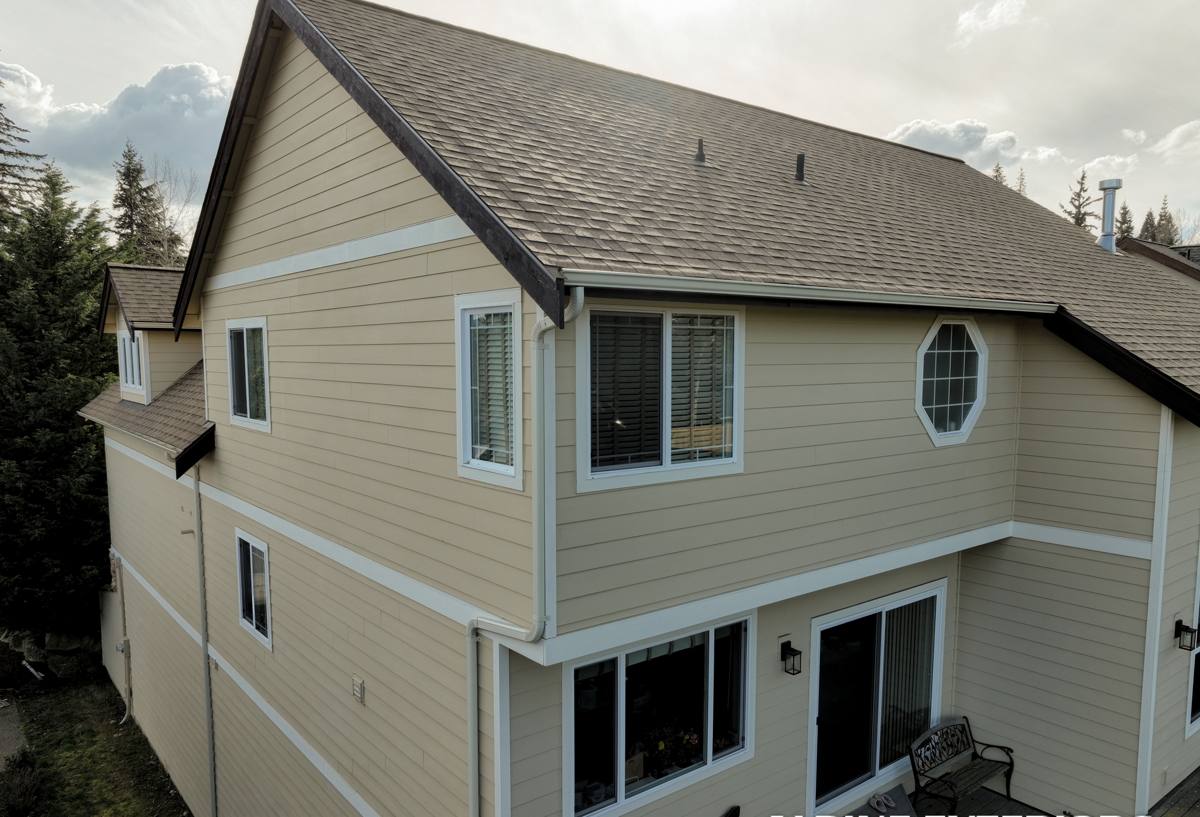
What Bellingham's Climate Actually Does to a Cordata Roof
Salt Air and Metal Fatigue
Bellingham's proximity to salt water means airborne salt works its way onto every exposed surface, including your roof. Over years, that accelerates corrosion on unprotected metal — nails, flashing, vent stacks, and gutter hardware. It's not dramatic or fast, but it's constant, and it's one of the reasons material and fastener choice matters more here than it would in a landlocked climate.
Driving Rain and Wind-Driven Water
Whatcom County storms rarely come straight down. Wind pushes rain sideways and up under shingle edges, into valleys, and around anything protruding through the roof deck — vents, chimneys, skylights. A roof that would hold up fine in a calmer climate can leak here simply because the underlayment, flashing, or shingle overlap wasn't built for wind-driven water.
A Long Moss Season
Cordata's tree cover keeps a lot of roofs in shade for much of the day, especially on north- and east-facing slopes. Shade plus moisture equals moss, and moss holds water against the roof surface long after the rest of the neighborhood has dried out. Left unaddressed, moss lifts shingle edges, traps debris, and shortens the life of the roof underneath it — regardless of how good the shingle itself is.
Signs a Cordata Home Needs a New Roof, Not Another Repair
Repairs make sense for isolated damage. A full replacement makes sense when the roof as a system is failing. Here's what usually tips that decision:
- Shingles are curling, cracking, or losing granules across large sections, not just one spot
- You've had two or more repair calls in the last few years for different leaks
- Moss or dark streaking covers a significant portion of the roof, especially on shaded slopes
- Daylight is visible through the roof deck from inside the attic
- The roof is original to the home and past 20-25 years old, regardless of appearance
- Flashing around chimneys, skylights, or vents is rusted, loose, or was never properly sealed
- Your insurer has flagged the roof's age or condition during a policy review
What a Correct New Roof Installation Actually Involves
Full Tear-Off and Deck Inspection
We don't install over old layers. A full tear-off lets us see the actual condition of the roof deck, which is the part that matters most and the part a shingle warranty never covers. Any water-damaged or soft plywood gets replaced before anything new goes down — skipping this step is the single most common shortcut that leads to early failure.
Underlayment That Matches the Climate
Given how much wind-driven rain this area sees, we don't treat underlayment as an afterthought. Ice-and-water shield membrane goes at eaves, valleys, and around every roof penetration — the spots most exposed to driving rain — with synthetic underlayment across the rest of the deck for a consistent water barrier underneath the shingles.
Flashing Done Right, Not Just Reused
Flashing around chimneys, skylights, and sidewalls is one of the most common failure points on older roofs, and it's often reused during cheaper reroofs to save time. We install new flashing as standard practice, sized and stepped correctly for each penetration, using corrosion-resistant materials suited to salt-air exposure.
Ventilation Sized for Moisture Control
A roof that can't breathe traps moisture in the attic, which shows up later as mold, rot, or premature shingle failure from underneath. We calculate intake and exhaust ventilation based on your attic's actual size and layout rather than installing a generic vent count, which matters more in a consistently damp climate like Bellingham's.
Moss-Conscious Details
On shaded slopes, we factor moss resistance into shingle selection and, where it makes sense, install zinc or copper strips near the ridge that release trace metal ions with each rain, which discourages moss regrowth on the slopes below.
Choosing Materials for Cordata's Conditions
There's no single "best" roofing material for every home — it depends on your roof's slope, shade exposure, budget, and how long you plan to stay in the house. Here's how the common options stack up against Cordata's specific climate demands:
| Material | Moss Resistance | Wind-Driven Rain Performance | Maintenance | Typical Lifespan |
|---|---|---|---|---|
| Architectural asphalt shingle | Moderate (better with algae-resistant granules) | Good with proper underlayment | Periodic moss treatment on shaded slopes | 25-30 years |
| Standing seam metal | High — sheds moss growth surface | Excellent | Low; occasional fastener/seam check | 40-60 years |
| Synthetic/composite shingle | Moderate to high depending on product | Good | Low to moderate | 30-50 years |
| 3-tab asphalt shingle | Lower | Fair — more edge exposure to wind lift | Higher; more prone to moss buildup | 15-20 years |
For most Cordata homes with real tree cover, we steer clients toward algae-resistant architectural shingles or metal on the most shaded slopes, since those two categories hold up best against sustained moisture without constant upkeep. We won't push a product just because it's cheaper up front if it means you're back on the roof scraping moss every fall — that's a maintenance burden we'd rather you avoid than sell you into.
Our New Roof Installation Process, Start to Finish
- On-site inspection and estimate — we walk the roof and attic, check the deck condition where visible, and note shade patterns, slope, and drainage issues specific to your property
- Material selection — we go over the honest trade-offs between shingle types, colors, and metal options based on your budget and how much moss exposure your roof actually gets
- Permitting and scheduling — we handle the City of Bellingham permitting where required and schedule around the weather window rather than rushing a job into a wet forecast
- Tear-off and deck repair — old roofing comes off completely, decking is inspected board by board, and any damaged sheathing is replaced
- Underlayment and flashing installation — ice-and-water membrane at vulnerable points, synthetic underlayment across the field, and new flashing at every penetration
- Shingle or metal installation — installed to manufacturer specification, including nailing pattern and exposure, which directly affects wind and warranty performance
- Ventilation and final details — intake and exhaust vents installed or upgraded, ridge caps set, and moss-deterrent details added on shaded slopes where applicable
- Cleanup and final walkthrough — magnetic sweep for nails, full site cleanup, and a walkthrough so you know what was done and why
Ventilation and Moisture: The Part Homeowners Don't See
A new roof can look flawless from the ground and still fail early if the attic underneath it is trapping moisture. In a climate as consistently damp as Whatcom County's, proper intake and exhaust ventilation isn't optional — it's what keeps warm, moist air from condensing on the underside of the deck during our long wet stretches. We check baffles at the eaves aren't blocked by insulation, confirm exhaust vents are sized to match intake, and correct imbalances as part of every new roof install rather than treating ventilation as a separate add-on service.
Why a Crew That Already Works Cordata Matters
Cordata's mix of mature-tree lots, moderate-slope roof lines, and proximity to Bellingham Bay means the failure patterns we see here are consistent — moss on shaded slopes, corrosion at flashing points, and wind-driven leaks at valleys and skylights. A crew that's replaced roofs throughout this specific area already knows which slopes tend to hold moisture, which flashing details get skipped by lower-bid crews, and which material choices actually hold up under Whatcom County's rain rather than just the manufacturer's lab testing. That local pattern recognition is what separates a roof that lasts its full rated life from one that needs attention again in a decade.
What Affects the Cost of a New Roof in Cordata
Every roof is priced individually after inspection, but the main variables we factor in are consistent across the neighborhood:
- Roof size and number of slopes, valleys, and penetrations (chimneys, skylights, vents)
- Current deck condition and how much sheathing replacement is needed
- Material choice — asphalt, metal, or synthetic — and the tier within that category
- Roof pitch and accessibility, which affect labor time and safety setup
- Ventilation upgrades needed to bring an older attic system up to standard
- Tear-off complexity if multiple old layers are present
We provide a written estimate that breaks these out so you can see exactly what you're paying for, rather than a single lump number.
Ready for a Straight-Talk Estimate?
If your Cordata roof is showing its age, holding moss it shouldn't, or you just want an honest read on whether repair or replacement makes more sense, we're happy to take a look. The estimate is free, there's no pressure to sign anything on the spot, and you'll get a clear explanation of what we find — use the form below to get started.