 Bellingham Roofing
 Roof Repair Built for Edgemoor's Climate
Edgemoor sits close to the water on wooded, hilly ground, and that combination shapes almost every roof repair call we get from homeowners there. Salt-tinged air drifting off Bellingham Bay works on exposed metal and fasteners year-round, whether anyone notices it or not. Rain in this part of Whatcom County rarely falls straight down for long — wind pushes it sideways and forces it up under shingle edges and flashing laps that would stay dry in a calmer storm. And the tree cover that gives Edgemoor lots their privacy and shade also means roof planes stay damp longer after every rain, which is exactly the condition moss needs to take hold and spread.
None of that means an Edgemoor roof is doomed to constant problems. It means a repair has to be diagnosed and executed with those specific stresses in mind, not treated as a generic patch job. This page covers what roof repair actually looks like for a home in Edgemoor — the failure points we see most often, what a correct repair involves, how to tell when repair is still the right call versus when it isn't, and how our process works from the first inspection to the final walkthrough.
Why Edgemoor Roofs Fail Where They Fail
Roof repair calls in this neighborhood tend to cluster around a handful of causes, and they rarely show up alone. A roof weakened by one of these issues is usually more vulnerable to the others as well.
Salt Air and Metal Fatigue
Airborne salt accelerates corrosion on flashing, fasteners, and vent stacks faster than most homeowners expect, especially on roofs facing open water or exposed to prevailing wind. A flashing detail that would hold up fine on an inland roof can start rusting through in a matter of years this close to the bay. Once flashing metal is compromised, water finds a path in long before there's any visible damage from the ground.
Wind-Driven Rain
Because Edgemoor sits on elevated, exposed terrain in places, wind off the water can drive rain sideways and up rather than letting it simply run off the roof surface. That kind of rain finds weaknesses that straight-down rain never would — lifted shingle tabs, under-lapped flashing, and seams that were sealed but not properly integrated into the underlayment system underneath.
Moss and Tree Debris
Heavy tree cover is one of Edgemoor's defining features, and it's also one of the biggest long-term stressors on a roof. Shaded roof planes hold moisture longer after every rain, which gives moss and algae a foothold that spreads season after season if it isn't addressed. Moss doesn't just look bad — it holds water against the roofing surface, lifts shingle edges as it grows, and traps debris that keeps the whole area wetter than the rest of the roof.
Common Roof Repair Issues We See in Edgemoor
Most repair calls fall into a fairly predictable set of problems. Knowing what they are helps a homeowner understand what a contractor should actually be checking for, rather than just patching the spot where water happens to be showing up inside the house.
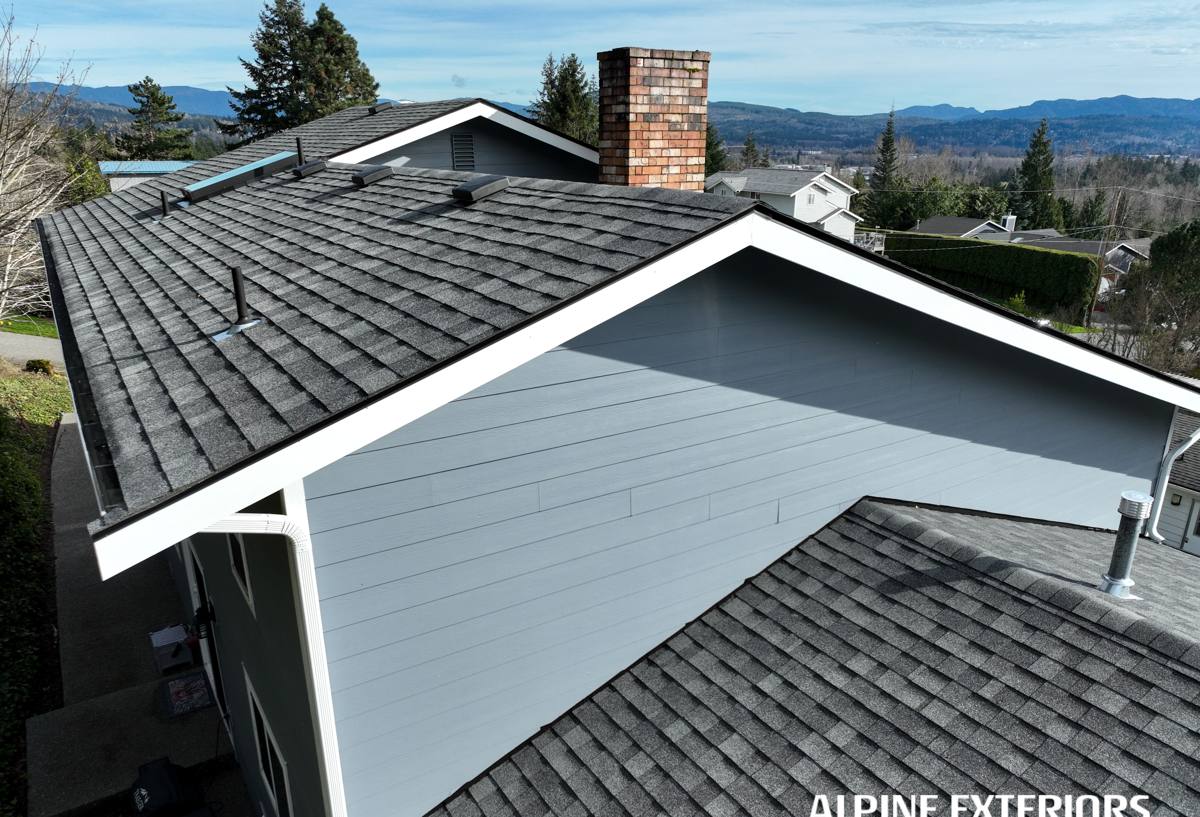
- Flashing failures at valleys, chimneys, and skylights: These transition points are where most leaks originate, not the open field of shingles.
- Wind-lifted or missing shingles: Exposed sections of roof can lose shingles or have tabs lifted enough to let wind-driven rain underneath, even if nothing looks obviously wrong from the ground.
- Moss-related shingle lift and granule loss: Established moss growth physically separates shingles from the deck over time and accelerates surface wear underneath it.
- Clogged or damaged gutters and downspouts: Tree debris backs up water at the roof edge, which can force water up under the first courses of shingles during heavy rain.
- Nail pops and fastener corrosion: Individual fasteners working loose or rusting through create small, isolated leak points that are easy to miss during a quick visual check.
What a Correct Repair Actually Involves
A repair that actually solves the problem starts with finding the real cause, not just sealing the spot where water is showing up. Interior water stains are notoriously misleading — water can travel several feet along a rafter or the underside of the decking before it drips down somewhere visible, which means the leak inside the attic and the failure point on the roof are often not in the same location.
Leak Tracing, Not Guessing
We trace water intrusion back to its actual source, checking flashing, underlayment laps, and fastener patterns in the area rather than assuming the nearest visible damage is the cause. Guessing wrong on a repair means paying for work that doesn't fix the leak, and finding out during the next hard rain.
Matching Materials, Not Just Patching
Where shingles need to be replaced, we match the existing product as closely as possible in profile and color so the repair blends in rather than standing out as an obvious patch. When an exact match isn't available because the original product has been discontinued, we'll tell you that upfront rather than installing a visibly mismatched section and hoping it goes unnoticed.
Flashing Rebuilt to Spec, Not Just Resealed
Caulk over failed flashing is a temporary fix at best. A correct repair rebuilds the flashing detail itself — re-lapping it properly with the underlayment and shingle courses around it — so the repair is structural, not cosmetic.
Moss and Debris Removal Done Without Damage
Moss removal has to be done carefully. Scraping or pressure-washing moss off the wrong way can lift granules and shorten the life of shingles that were otherwise fine. We remove moss by hand where it's established, clear gutters and valleys of trapped debris, and address the underlying moisture and shade conditions where that's realistic, rather than just treating the visible symptom.
Repair or Replace? Reading the Signs Correctly
Not every roof problem in Edgemoor calls for a full replacement, and not every leak is a simple patch. The table below covers the factors that actually determine which side of that line a given roof falls on.
| Situation | Usually Points To |
|---|---|
| Isolated leak at one flashing point, roof otherwise sound | Targeted repair |
| Scattered leaks in multiple, unrelated areas | Roof nearing the end of its service life — replacement worth evaluating |
| Moss confined to one shaded section, shingles intact underneath | Cleaning plus a localized repair |
| Widespread granule loss and brittle, cracking shingles | Shingles have aged out — replacement likely the better long-term value |
| Soft or spongy decking found during inspection | Structural repair or replacement, not a surface patch |
| Roof is under 10-12 years old with isolated damage | Repair is almost always the right call |
We'll tell you honestly which side of that line your roof is on. A repair that's likely to fail again within a year or two isn't a favor to a homeowner, even if it's the cheaper number on paper up front.
Cost Factors Worth Understanding
Repair pricing varies more than most homeowners expect, and it's rarely arbitrary. These are the factors that actually move the number.
| Factor | What It Affects |
|---|---|
| Cause and location of the leak | How much investigation and access work is needed before repair even starts |
| Extent of flashing work required | Whether the fix is a straightforward reseal or a full flashing rebuild |
| Number and size of shingles to replace | Material cost and whether a close color/profile match is available |
| Roof pitch and access | Staging, safety equipment, and labor time on steeper or harder-to-reach sections |
| Extent of moss or debris buildup | Time required for careful hand removal versus a quick surface clean |
| Underlying deck condition | Whether hidden rot is found once the damaged area is opened up |
A written estimate that itemizes these factors separately gives you a far clearer picture than a single flat number, and it's a reasonable thing to ask for from any contractor before work starts.
How Our Process Works
We keep the repair process straightforward, because a roof problem is stressful enough without an unclear plan on top of it.
- In-person inspection: We get on the roof and, when needed, into the attic ourselves to trace the actual source of a leak rather than estimating from photos or a quick look from the ground.
- Honest repair-or-replace assessment: You get a clear read on whether a targeted repair genuinely solves the problem or whether the roof's overall condition means replacement is the better long-term move.
- Written estimate: Scope, materials, and labor are broken out so you know exactly what you're paying for before anything starts.
- Repair work: Flashing, shingles, underlayment, or moss and debris removal are addressed to the actual cause, not just the visible symptom.
- Final walkthrough: We review the completed repair with you and do a cleanup sweep of the work area before considering the job finished.
Why Hiring a Crew That Already Works in Edgemoor Matters
A crew that regularly repairs roofs in Edgemoor has already seen how salt air corrodes underspecified flashing metal, how wind off the bay drives rain into laps that would otherwise stay dry, and which roof orientations under heavy tree cover hold moss the longest. That's practical knowledge that shows up in the small decisions made on every repair — decisions a crew unfamiliar with this specific stretch of Bellingham might not think to make at all.
It also matters that the crew doing the repair is still around if a question comes up afterward. A repair warranty is only as good as the company standing behind it, and a contractor with an ongoing presence in the area is one you can actually reach months or years later, not a name you only see once.
A Practical Checklist Before You Choose a Roof Repair Contractor
- Do they trace the leak to its actual source before proposing a fix, rather than patching the nearest visible damage?
- Does the estimate specify exactly what's being repaired — flashing, shingles, underlayment — not just "roof repair"?
- Will they tell you honestly if replacement is the better long-term option, even if repair is the easier sale?
- Do they carry current WA contractor licensing, liability insurance, and workers' compensation?
- Can they point to recent, real repair work in or near Edgemoor or the surrounding Bellingham area?
- Is the workmanship warranty on the repair spelled out in writing, separate from any manufacturer material warranty?
Signs Your Edgemoor Roof May Need Repair Now
Roof problems in this climate rarely announce themselves clearly. Catching these signs early is usually the difference between a modest repair and a much bigger bill later.
- Water stains on interior ceilings, especially near valleys, chimneys, or skylights
- Visible moss buildup or dark streaking on shaded, tree-covered roof planes
- Granules collecting in gutters, signaling shingles wearing thinner than they should be
- Curling, cracked, or missing shingles after a windy stretch of weather
- Gutters overflowing or backing up during rain due to trapped tree debris
- A musty smell or visible dampness in the attic that wasn't there before
If any of that sounds familiar, it's worth having the roof looked at before the next heavy rain rather than waiting for a small leak to turn into a bigger repair.
If you're dealing with a leak or a roof issue in Edgemoor, we're glad to come take an honest look and give you a straight answer on what it actually needs. Use the form below to request a free, no-pressure estimate.