 Bellingham Roofing
 Asphalt Shingle Roofing Built for Happy Valley's Conditions
Happy Valley sits close enough to Bellingham Bay and the surrounding hillside tree cover that its roofs take on a specific combination of stress: salt-tinged marine air, wind-driven rain off the water, and long stretches of shade that keep shingles damp far longer than roofs in drier parts of Whatcom County. An asphalt shingle roof can handle all of that well, but only if it's specified and installed with this exact environment in mind. A roof detailed for a sunnier, drier climate will underperform here, even if the shingle bundle itself is a good product.
This page covers what asphalt shingle roofing actually needs to hold up in Happy Valley, what a correct installation looks like, and how our crew approaches these projects when we're already working in the neighborhood.
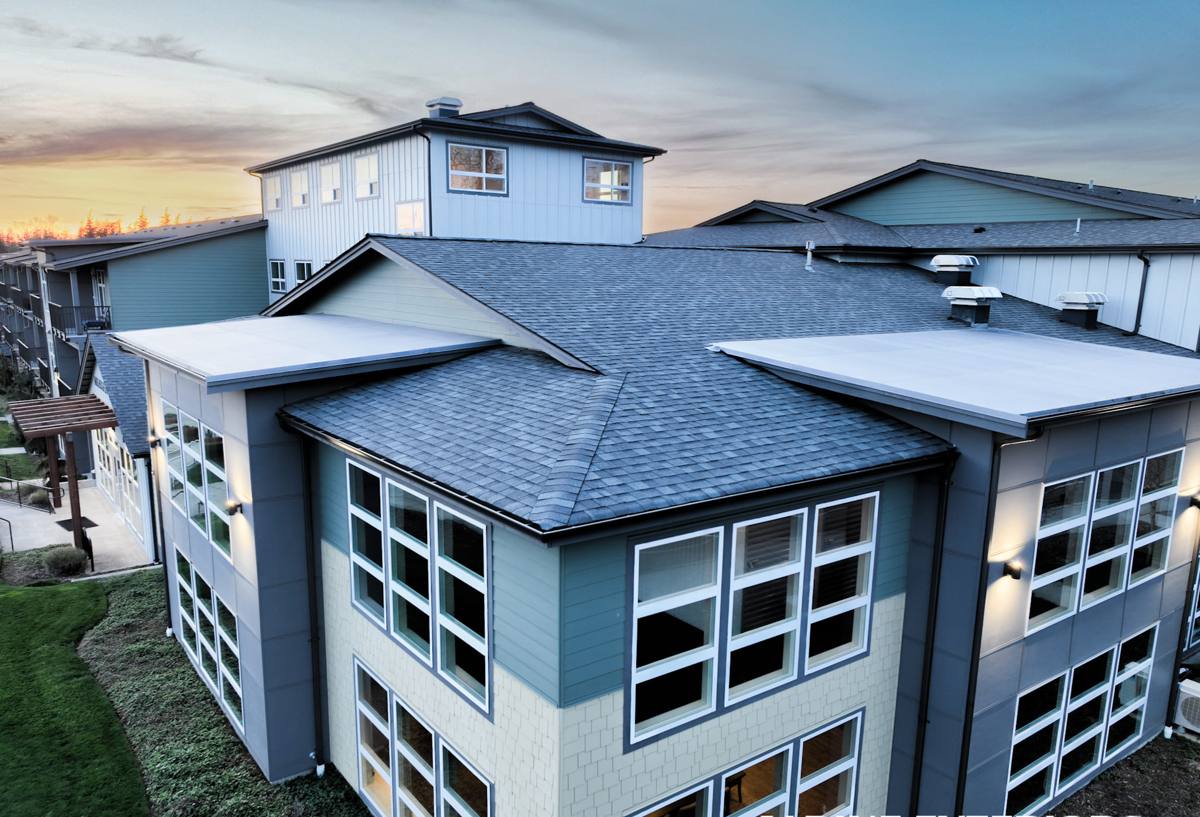
What Bellingham's Climate Does to a Shingle Roof
Three conditions define roofing life expectancy in this part of Whatcom County, and Happy Valley gets all three at once:
- Salt air — proximity to Bellingham Bay accelerates corrosion on exposed metal fasteners, flashing, and vents if they aren't rated for coastal exposure.
- Driving rain — wind off the water pushes water sideways and uphill under shingle edges, ridge caps, and around penetrations, which is why lap and fastening details matter more here than in calmer inland areas.
- Extended moss season — tree cover and persistent moisture mean moss and algae get a long growing window, often close to year-round on north-facing slopes and shaded valleys.
None of these conditions are unusual for the Pacific Northwest, but Happy Valley's mix of tree canopy and bay proximity puts it on the harder end of that spectrum compared to more open, sun-exposed neighborhoods in the Bellingham area.
Why This Matters for Shingle Selection
Standard asphalt shingles are a proven, cost-effective roofing material almost everywhere in the country, including here. The difference in a place like Happy Valley isn't whether asphalt shingles work — it's which grade of shingle, which underlayment system, and which detailing choices actually hold up to sustained moisture exposure rather than the occasional storm.
What a Correctly Installed Shingle Roof Includes
A shingle roof is a system, not a single product. Each layer has a job, and skipping or under-speccing any one of them is where most premature failures start — especially in a wet, shaded neighborhood like this one.
| Component | Role | Why It Matters in Happy Valley |
|---|---|---|
| Underlayment | Secondary water barrier beneath the shingles | Synthetic or self-adhered underlayment resists the prolonged dampness this area sees far better than older felt products |
| Ice-and-water shield | Sealed membrane at eaves, valleys, and penetrations | Stops wind-driven rain that gets pushed uphill under shingle laps during storms off the bay |
| Flashing | Metal detailing at roof-wall joints, chimneys, and valleys | Corrosion-resistant flashing holds up to salt air; poor-grade metal pits and fails early this close to the water |
| Ventilation | Intake and exhaust airflow through the attic | Proper ventilation dries out trapped moisture and reduces the moss and algae growth that thrive in shaded, damp attics and roof decks |
| Shingle fastening | Nailing pattern and placement per manufacturer spec | Correct nail placement is what actually keeps shingles sealed down during sideways rain and wind gusts |
When homeowners ask why one quote is noticeably cheaper than another, the difference is almost always somewhere in this list — usually underlayment grade, flashing material, or a shortcut on ventilation that won't show up as a problem until a few winters in.
Choosing a Shingle for This Neighborhood
Not every asphalt shingle product is a good fit for a shaded, moisture-heavy lot. Here's how the common tiers compare for a Happy Valley application:
| Shingle Type | Typical Lifespan | Moss/Algae Resistance | Best Fit |
|---|---|---|---|
| 3-tab (economy) | 15–20 years | Low unless treated | Budget-driven projects on sun-exposed roof faces |
| Architectural (laminated) | 25–30 years | Moderate; better with algae-resistant granules | Most Happy Valley homes — a solid balance of durability and cost |
| Algae-resistant / copper-infused granule shingles | 25–30 years | High | North-facing or heavily shaded roof planes prone to streaking and moss |
| Impact-rated shingles | 25–30+ years | Moderate to high, product-dependent | Homes wanting extra durability against debris and storm damage |
For most Happy Valley homes, we recommend a laminated architectural shingle with algae-resistant granules as the baseline, with impact-rated upgrades considered on a case-by-case basis depending on the roof's exposure and the homeowner's priorities.
Moss and Algae: Prevention, Not Just Cleanup
Moss on a roof isn't just cosmetic — left alone, it holds moisture against the shingle surface and lifts shingle edges, which is exactly what leads to leaks. In a neighborhood with this much tree cover, moss control has to be built into the roof system rather than treated as an annual chore.
What Actually Helps
- Algae-resistant shingle granules on shaded roof planes
- Zinc or copper strips installed near the ridge, which naturally inhibit moss regrowth as rain washes over them
- Keeping overhanging branches trimmed back to reduce shade and debris buildup
- Clean, unclogged gutters so water isn't sitting against the roof edge
- Gentle, low-pressure moss removal rather than aggressive pressure washing, which can strip granules and shorten shingle life
We factor moss exposure into the roof plan itself when we're working in Happy Valley, rather than leaving it as something the homeowner has to manage separately after installation.
Our Process for Happy Valley Roofing Projects
- On-site inspection. We walk the roof and attic, checking deck condition, ventilation, existing moss or moisture damage, and flashing condition around chimneys and valleys.
- Honest scope and quote. We explain what's actually needed versus what's optional, in plain terms, with a written quote — no pressure tactics.
- Material selection. We walk through shingle and underlayment options suited to the roof's specific sun/shade exposure and slope.
- Tear-off and deck check. Old roofing is removed and the deck is inspected for rot or soft spots before anything new goes down — this step gets skipped by crews trying to move fast, and it's where hidden problems get caught.
- Installation to manufacturer spec. Underlayment, ice-and-water shield, flashing, and shingles installed in the correct order and fastening pattern.
- Final walkthrough and cleanup. We review the finished roof with the homeowner and clear the site of debris and nails.
Cost Factors for a Happy Valley Shingle Roof
Pricing varies by roof size, pitch, access, and material tier, but the main cost drivers are consistent across projects in this area:
| Factor | Impact on Cost |
|---|---|
| Roof size and number of planes | More area and more valleys/hips increase material and labor time |
| Existing deck condition | Rot or soft decking found during tear-off adds repair cost before shingles go down |
| Shingle tier | Architectural and algae-resistant products cost more upfront than 3-tab but last longer and need less maintenance |
| Tree cover and access | Steep pitches or heavily wooded lots can require extra safety setup and cleanup time |
| Ventilation upgrades | Adding or correcting attic ventilation adds cost but reduces future moss and moisture issues |
We provide itemized, written estimates so homeowners can see exactly what's driving the number rather than a single lump-sum figure.
Why a Crew That Already Works Happy Valley Matters
Roofing crews that work broadly across Whatcom County still have to relearn the specifics of every microclimate they land in. A crew that's already spent time on Happy Valley roofs knows which roof faces in this neighborhood hold moss longest, how the tree canopy affects drying time after a storm, and which flashing and fastener grades actually earn their keep this close to the bay. That familiarity shows up in fewer callbacks and a roof that's specified correctly the first time, instead of a generic installation that has to be corrected once problems show up.
It also means we're realistic with homeowners about timelines. Wet-season scheduling, drying windows between rain systems, and moss-related deck damage are all things we plan around rather than discover partway through a job.
Signs Your Happy Valley Roof May Need Attention
- Visible moss or dark streaking, especially on shaded or north-facing roof planes
- Granules collecting in gutters or at downspout outlets
- Curling, cracked, or missing shingles after a windy storm
- Daylight visible through the attic roof deck
- Water stains on interior ceilings or in the attic near valleys or chimneys
- Sagging or soft spots when walking the roofline visually from the ground
Catching these early, before they turn into deck damage or interior leaks, is almost always cheaper than waiting.
If you're in Happy Valley and want a straight answer about your roof's condition, we're glad to take a look. Fill out the form below for a free, no-pressure estimate — no obligation, just an honest assessment from a crew that knows this neighborhood's roofs.