 Bellingham Roofing
 Why Siding in Puget Has to Work Harder Than Siding Inland
Homes in the Puget area of Bellingham sit close enough to the water that the air itself is part of the maintenance problem. Salt-laden marine air moves in off Puget Sound, driving rain comes in sideways during winter storms, and the same cool, damp, low-sun conditions that make Whatcom County green also make it one of the better places in the country to grow moss — on your roof, in your gutters, and on the north and shaded sides of your siding. That's not a knock on the area; it's just what the climate does, and it means siding here is doing more work, more often, than the same product would be doing in a drier inland town.
Most siding failures we see on Puget homes aren't dramatic. They're slow: a fastener that starts to weep rust, a seam that never quite dried out from November through March, a north wall that stays dark and damp long after the rest of the house has dried. Fiber cement siding, installed correctly for this specific climate, is built to shrug off exactly that kind of slow, cumulative moisture exposure. Installed incorrectly — or installed in a product that wasn't engineered for it — it becomes the same slow problem all over again, just in a different material.
What Salt Air, Rain, and Moss Actually Do to a House
Moisture That Never Fully Leaves
Puget's rain isn't just frequent, it's often wind-driven, which pushes water up under laps and into seams that would stay dry in a straight-down rain. Combine that with our long stretches of overcast, low-evaporation weather, and siding assemblies here can stay damp for days after a storm passes. Any siding material that absorbs and holds that moisture — or that traps it behind a face that looks fine but is rotting underneath — is going to fail from the inside out, usually years before a homeowner notices anything from the curb.
Salt Air and Metal Fasteners
The closer a home sits to the Sound, the more salt is in the air it's breathing. Salt accelerates corrosion on exposed metal — fasteners, flashing, trim screws — and corroded fasteners are one of the most common hidden causes of siding failure in coastal Washington. It's rarely the siding material itself that fails first; it's the hardware holding it on.
Moss, Algae, and the North Wall Problem
Bellingham's moss season runs long, and it's not confined to roofs. Shaded, north-facing, and tree-covered walls stay damp enough for moss and algae to take hold on porous or textured surfaces, and once established, that growth holds even more moisture against the wall behind it. A siding product's surface — how porous it is, how well it's factory-sealed, how it's finished — has a direct effect on how much moss and mildew actually take root versus just rinse off.
Why We Install Only James Hardie Fiber Cement Here
We standardized on James Hardie fiber cement for every siding job we do, including in Puget, and we don't install vinyl, LP SmartSide, Cemplank, Allura, primed spruce, or cedar. That's a deliberate professional standard, not a sales preference, and it's worth explaining plainly rather than just asserting it.
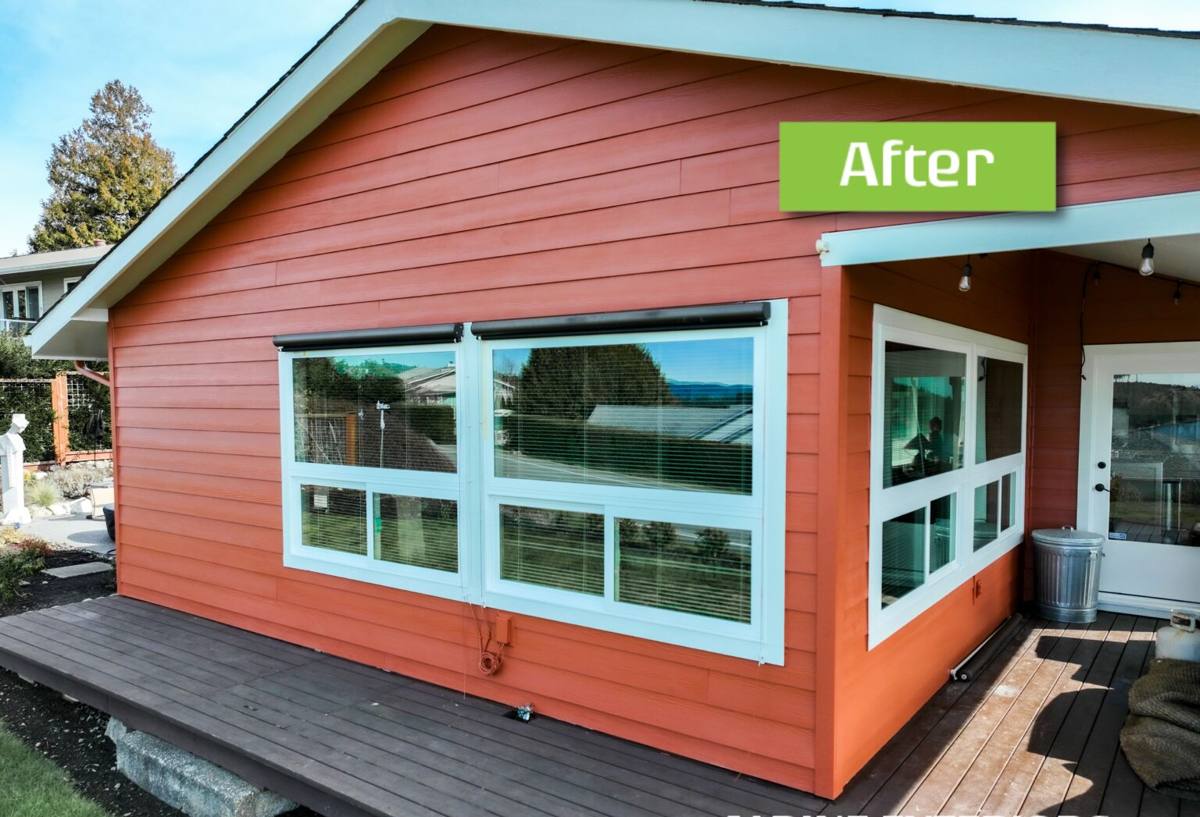
Fiber cement is a mix of cement, sand, and cellulose fibers, engineered specifically to resist the things that hurt siding in a wet, marine climate: it doesn't rot, it isn't a food source for moss or insects, it's non-combustible, and James Hardie's HZ5 product line is formulated for exactly the freeze-moisture-humidity cycle we get in the Pacific Northwest. The factory-applied ColorPlus finish is baked on under controlled conditions rather than field-painted, which matters a lot in a climate where field-applied paint rarely gets a full, dry cure window before the next rain rolls in. We're not saying every other product is worthless — cedar looks great, vinyl is cheap, LP SmartSide has genuine fans — but each of those has a real trade-off in exactly the conditions Puget deals with (rot risk, seam and moisture sensitivity, or a factory finish that isn't as durable), and we'd rather stand behind one product we can install to spec and warranty with confidence than offer five and hope the climate is forgiving. In Puget, it usually isn't.
What a Correct Fiber Cement Installation Actually Involves
Moisture Management Behind the Siding
The siding you see is the last layer, not the only layer. A correct install starts with a weather-resistive barrier, properly lapped and taped, and in most cases a rainscreen gap that lets any water that does get behind the siding drain and the wall cavity actually dry out between storms. Skipping or shortcutting this step is one of the most common ways a good siding product still ends up with a rot problem five years later — the siding itself was never the issue.
Fastening and Flashing for Salt Air
Given how corrosive Puget's salt air is on exposed metal, fastener choice and flashing detail matter more here than they would twenty miles inland. That means corrosion-resistant fasteners driven correctly (not overdriven, not underdriven), and flashing at every window, door, and roofline transition that actually sheds water outward instead of channeling it behind the siding.
Clearances, Seams, and Caulking Done Right
James Hardie publishes specific clearance requirements — gaps from grade, roof lines, decks, and butt joints — that exist specifically to keep the cut edges of the board (which are more absorbent than the factory-finished face) away from standing water and splash-back. A crew that treats those clearances as optional is building in a future callback.
How Fiber Cement Compares in a Climate Like Puget's
Homeowners often ask us to just lay out the honest trade-offs side by side rather than take our word for it. Here's how the products commonly used for siding replacement actually compare under Puget's specific conditions — near-water salt exposure, driving rain, and a long moss season.
| Material | Rot / Moisture Resistance | Moss & Algae Resistance | Salt Air Fastener Risk | Finish Durability |
|---|---|---|---|---|
| James Hardie Fiber Cement | Does not rot; cement-based core | Factory finish resists growth; still needs occasional washing | Managed with correct corrosion-resistant fasteners | Factory-baked ColorPlus finish, not field-painted |
| Vinyl Siding | Doesn't rot, but seams and J-channels trap moisture behind panels | Textured/porous grades can hold growth in shaded areas | Lower risk (fewer exposed fasteners), but panels can warp and gap over time | Color molded in, but fades and becomes brittle with UV and age |
| LP SmartSide (engineered wood) | Wood-based; resin-treated but vulnerable if seals or edges are compromised | Can support growth if surface moisture isn't managed | Same corrosion exposure as fiber cement | Factory finish available, but any exposed cut/edge is a wood product again |
| Cedar / Primed Wood | Natural material; rot risk is real without diligent, ongoing maintenance | One of the more moss/algae-prone surfaces without frequent cleaning | Same corrosion exposure as other materials | Requires repainting/refinishing on a recurring cycle to hold up here |
Our Process for a Puget Siding Job
- Site assessment and measurement — we walk the whole exterior, not just the wall being resided, and note existing moisture issues, exposure to prevailing rain and salt air, and any rot or damage already present.
- Tear-off and substrate check — old siding comes off and we inspect the sheathing underneath. This is where hidden moisture damage from a previous installation usually shows up, and it gets addressed before anything new goes on.
- Weather barrier and drainage plane — house wrap and rainscreen installed to spec, giving the wall a way to shed and dry moisture instead of trapping it.
- Fiber cement installation — Hardie boards or panels installed with correct clearances, corrosion-resistant fasteners, and proper flashing at every penetration and transition.
- Final walk-through — we go over the finished work with the homeowner, including what maintenance (if any) to expect given the home's specific exposure.
Why a Crew That Already Works in Puget Matters
Siding installation isn't purely a product question — it's a detailing question, and the details that matter shift with the site. A crew that mostly works drier, inland jobs can install fiber cement perfectly well by the general spec and still miss the calls that matter most near the water: tighter fastener corrosion resistance, more conservative rainscreen and drainage decisions on the sides that catch the worst of the driving rain, and more attention to shaded walls where moss gets a foothold first. A crew that's worked Puget and the surrounding Bellingham waterfront repeatedly has already made those calls on other homes with the same exposure, which is a very different starting point than treating every job as a generic install.
Living With Fiber Cement Siding in a Moss-Season Climate
Fiber cement is genuinely low-maintenance compared to wood, but "low-maintenance" in Puget still means paying attention to a few things given how long the wet season runs here:
- Rinse siding (garden hose, not a pressure washer aimed directly at seams) once or twice a year, more often on shaded or north-facing walls
- Keep gutters clear so overflow isn't running down the siding face during heavy rain
- Trim back shrubs and trees that keep a wall shaded and slow to dry
- Watch caulking at trim and window edges — it's the first thing to fail, long before the board itself
- Address any small chip or damage to the factory finish promptly so bare edges aren't left exposed to weather
- Have flashing and fastener condition checked periodically, especially on homes with direct water-facing exposure
None of this is heavy upkeep — it's the difference between siding that looks and performs the same in year fifteen as it did in year one, and siding that starts showing this climate's wear early because it was never given the chance to dry out or shed water the way it was designed to.
Get a Straight Answer on Your Puget Home
If your siding is showing moss buildup, staining, soft spots, or you're just planning ahead for a replacement, we're happy to take a look and give you an honest read on what your home actually needs — no pressure, no upsell. Request a free estimate below and we'll walk the exterior with you and talk through what correct, climate-appropriate fiber cement installation looks like for your specific property.