 Bellingham Roofing
 Why Puget-Area Roofs Wear Differently
Homes in the Puget area near Bellingham sit at the intersection of two hard conditions: salt-laden air moving in off the water, and long stretches of the year where rain simply doesn't stop. Add in the shade from mature evergreens common to this part of Whatcom County, and you get a moss season that can run eight or nine months out of twelve. None of these factors is dramatic on its own, but together they age a roof faster than most homeowners expect, especially if the roof wasn't detailed for this climate in the first place.
A roof replacement done right for a Puget home isn't just about swapping old shingles for new ones. It's about correcting whatever let moisture, salt, and organic growth get a foothold the first time around, so the next roof actually lasts its full service life instead of failing early at the flashings, the eaves, or the north-facing slopes that never quite dry out.
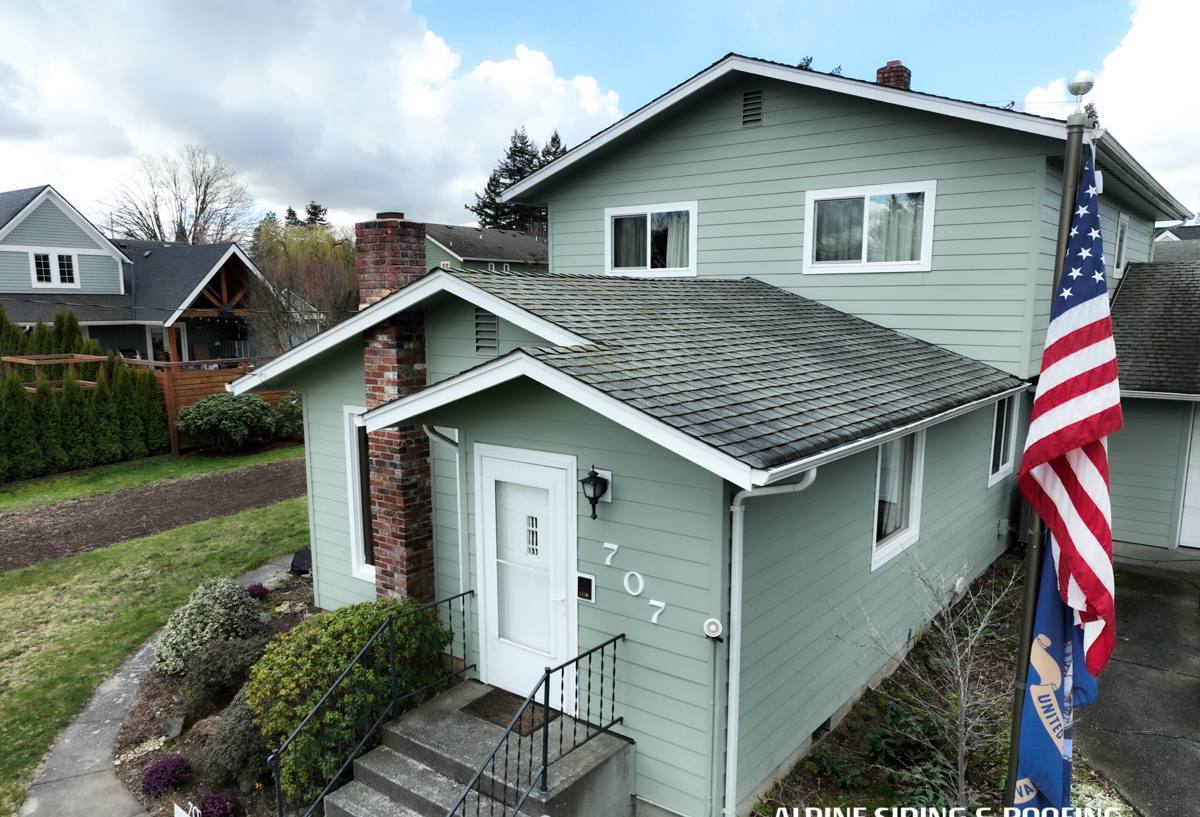
Signs a Puget Home Needs Replacement, Not Another Repair
Repairs make sense when a roof is fundamentally sound and the damage is isolated. Replacement becomes the honest recommendation when the problems are systemic. On homes in this area, we typically see a few patterns that tip the scale toward a full replacement:
- Moss and algae staining that keeps returning within a season or two of cleaning, especially on shaded, north-facing roof planes
- Granule loss heavy enough that you can see bare asphalt mat on multiple slopes, not just one weathered spot
- Soft or spongy decking felt underfoot during inspection, a sign that moisture has been getting past the roofing layer for some time
- Rusted or corroding metal flashing and fasteners, which shows up faster here because of the salt content in the air
- Curling, cracking, or lifting shingles along multiple courses rather than a single damaged section
- Interior signs — attic staining, musty smell, or ceiling discoloration — that point to a moisture problem bigger than a patch can fix
If a roof is showing two or more of these at once, patch work usually just delays the inevitable and adds cost on top of the eventual replacement.
What a Correct Replacement Involves in This Climate
Starting With the Decking
Every tear-off is also an inspection. Once the old roofing is off, we check the sheathing for soft spots, delamination, or rot before anything new goes down. In a wet climate, skipping this step is how a new roof ends up with old problems underneath it. Any compromised decking gets replaced, not covered over.
Underlayment That Actually Holds Up to Driving Rain
Standard felt underlayment is not our default for homes exposed to wind-driven rain off the water. We favor synthetic underlayment for its tear resistance and consistent moisture performance, with self-adhered ice-and-water membrane at the eaves, valleys, and any low-slope transitions where wind-blown rain is most likely to get pushed backward under the roofing material.
Flashing and Fasteners Built for Salt Exposure
Salt air accelerates corrosion on ordinary galvanized flashing and fasteners faster than most homeowners realize. We use corrosion-resistant flashing and fastener specifications appropriate for coastal-influenced air, particularly around chimneys, skylights, and roof-to-wall intersections where a failed flashing seam causes a disproportionate amount of water damage.
Ventilation That Discourages Moss
Moss doesn't just grow because a roof is shaded — it thrives where a roof stays damp longer than it should. Balanced intake and exhaust ventilation helps the roof deck dry out between rain events instead of staying saturated, which is one of the most effective long-term moss deterrents available, more effective over time than chemical treatment alone.
Material Options for Puget-Area Homes
There's no single right material for every home, but each option carries real trade-offs once you factor in moisture exposure, moss resistance, and long-term maintenance.
| Material | Moisture & Moss Behavior | Typical Lifespan | Maintenance Burden |
|---|---|---|---|
| Architectural asphalt shingle | Good when paired with proper ventilation and algae-resistant granules | 25-30 years | Periodic moss/moisture checks |
| Standing seam metal | Sheds moisture fast, very moss-resistant, handles salt air well with the right coating | 40-50+ years | Low |
| Synthetic/composite shake | More consistent moisture performance than wood, resists rot | 30-40 years | Low to moderate |
| Cedar shake | Attractive but requires diligent upkeep in a wet, mossy climate | 20-30 years with upkeep | High |
We're upfront when a material isn't the best fit for a given roof. Cedar shake, for example, can look great, but in a climate with this much sustained moisture and shade, it demands a level of ongoing maintenance — cleaning, treating, monitoring for rot — that not every homeowner wants to sign up for. We'd rather explain that trade-off honestly than sell a product that becomes a maintenance headache two years in.
Our Replacement Process
- On-site inspection. We walk the roof, check the attic, and document the actual condition — not just what's visible from the ground.
- Written estimate. Material options, scope of work, and a clear price, with the reasoning behind any recommendation spelled out.
- Tear-off and decking check. Old materials come off, decking is inspected and repaired as needed before anything new is installed.
- Underlayment and flashing installation. Ice-and-water membrane at vulnerable points, synthetic underlayment across the field, corrosion-resistant flashing detailed at every penetration.
- Roofing material installation. Installed to manufacturer specification, with attention to nailing pattern and exposure — details that matter more in high-wind, high-rain conditions than they do in milder climates.
- Ventilation check and correction. Intake and exhaust balanced so the new roof can actually dry between storms.
- Final walkthrough. We review the finished work with you and clean the site thoroughly before we consider the job done.
Why Local Experience in Puget Matters
A roofing crew that already works in this specific area knows which slopes on a given lot type stay shaded longest, how far wind-driven rain tends to push under improperly detailed eaves, and which flashing details fail first when they're not built for salt exposure. That's not knowledge you get from a general roofing background — it's knowledge you get from replacing and repairing roofs in this exact climate, on homes with the same tree cover and coastal exposure as the one you're standing in.
It also means faster, more accurate estimates. We're not guessing at how a material will perform here; we've seen how it actually performs on roofs like yours, through the same rainy seasons and the same moss pressure.
What Affects the Cost of a Replacement
Every roof is different, but the same handful of factors drive most of the cost variation we see on Puget-area homes.
| Factor | Why It Matters Here |
|---|---|
| Roof pitch and complexity | Steeper, multi-plane roofs take longer to detail correctly for wind-driven rain |
| Decking condition | Rot from long-term moisture exposure means more sheathing replacement, not just re-roofing |
| Material choice | Metal and composite options cost more upfront but reduce moss-related maintenance over time |
| Flashing and penetrations | Chimneys, skylights, and valleys need corrosion-resistant detailing, which adds labor and material cost |
| Ventilation upgrades | Correcting inadequate attic ventilation adds cost now but reduces moss and moisture problems later |
| Access and tree cover | Heavy tree canopy common in this area can add setup and cleanup time |
We'll walk through which of these apply to your roof specifically during the estimate, rather than quoting a flat number that doesn't reflect your home's actual condition.
Keeping a New Roof Performing Once It's Installed
A properly installed roof still benefits from basic upkeep, especially in a climate this wet and shaded. A few habits go a long way:
- Keep gutters and downspouts clear so water isn't backing up under the eaves
- Trim back tree limbs that keep sections of the roof in constant shade
- Have moss growth addressed early, before it lifts shingle edges or holds moisture against the surface
- Schedule a roof check after major windstorms, particularly for flashing and ridge components
- Watch for granule buildup in gutters, which can signal accelerated shingle wear
None of this replaces a quality installation, but it does help you get the full lifespan out of the roof you're paying for.
Ready for a Straight Answer About Your Roof
If your Puget-area roof is showing its age — persistent moss, granule loss, or signs of moisture getting where it shouldn't — we're glad to take a look and give you an honest read on whether repair or replacement makes sense. Estimates are free, there's no pressure attached, and you'll get a clear explanation of what we find and why. Use the form below to get started.