 Bellingham Roofing
 Window Replacement Built for Silver Beach, Not a Generic House Somewhere Else
Silver Beach is one of those Bellingham neighborhoods where the housing stock tells a story — a mix of older homes with their original single-pane or early-generation dual-pane windows, alongside newer construction and remodels. What most of these homes have in common is exposure to the same weather pattern that defines window performance everywhere in Whatcom County: salt-laden air off the water, long stretches of driving rain, and a moss season that runs longer here than it does almost anywhere else in the state. Windows in this part of Bellingham don't fail because they're old in the abstract sense — they fail because moisture and airborne salts find their way into places a window wasn't built to handle it, year after year, until the seals, frames, or sills give out.
A window replacement done right in Silver Beach isn't just about picking a style out of a catalog. It's about understanding how a specific frame material, glass package, and installation detail will hold up against this specific climate, on this specific style of home, over the next 20-plus years. That's the lens we bring to every window job in this neighborhood.
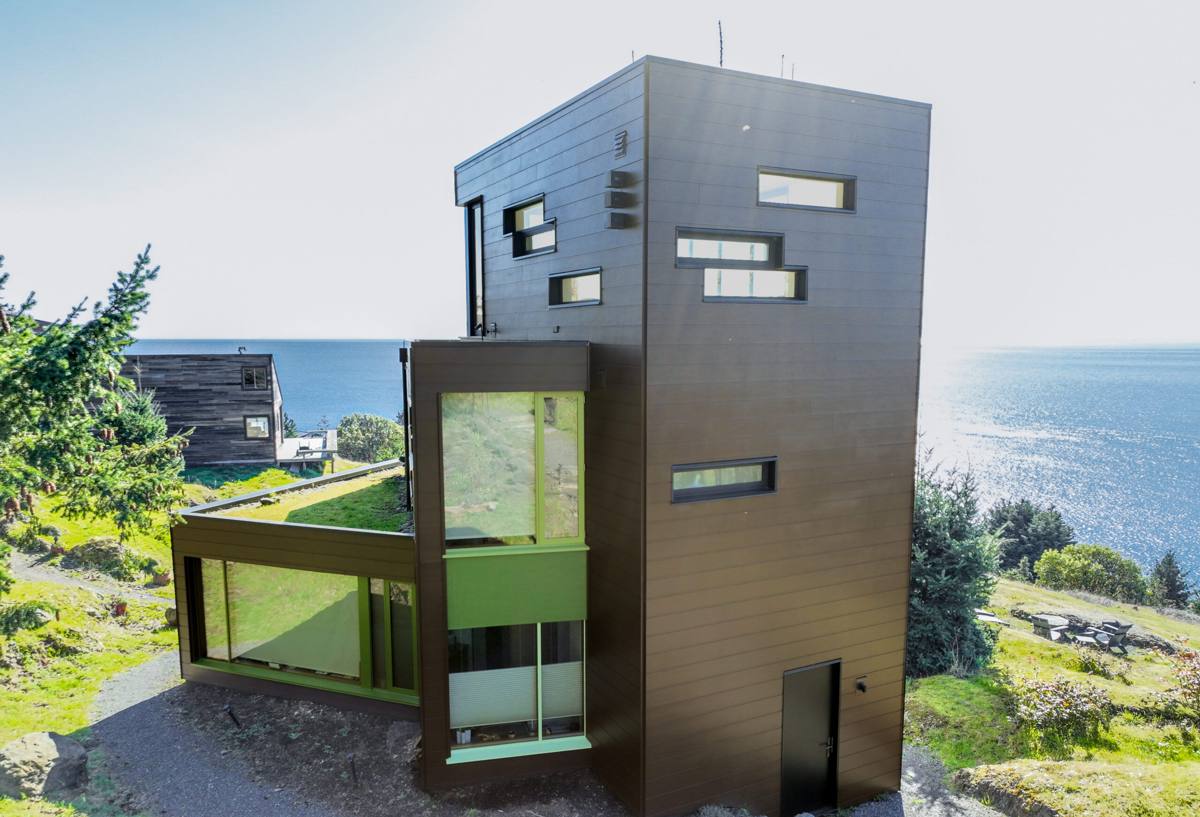
Signs Your Silver Beach Home Is Ready for New Windows
Window failure is rarely sudden. It shows up gradually, and homeowners often live with the early signs longer than they need to because none of them feel like an emergency on their own. Here's what we look for, and what you should be watching for too:
- Visible fogging or a permanent haze between panes of dual-pane glass — a sign the seal has failed and the gas fill (or the air gap itself) is no longer doing its job
- Windows that are difficult to open, close, or lock, especially wood or vinyl frames that have swollen or warped from repeated moisture exposure
- Soft, discolored, or spongy wood at the sill or the bottom corners of the frame — often the first place rot takes hold
- Visible mold, mildew, or that persistent greenish tinge of early moss growth on the exterior trim or sill
- Noticeable drafts or cold spots near the window even when it's fully closed and latched
- A jump in heating costs without a clear explanation, which is often a sign of failing seals or degraded weatherstripping
- Condensation forming on the interior glass regularly, which can point to both window performance issues and larger moisture-management problems in the home
Any one of these on its own might not mean full replacement is necessary. Several of them together, especially on windows older than 15–20 years, usually means repair is a temporary patch and replacement is the honest long-term answer.
What a Correct Window Replacement Actually Involves
It's the Install, Not Just the Window
The single biggest factor in how long a new window lasts in this climate isn't the brand printed on the frame — it's how carefully it was installed. A premium window installed poorly will fail faster than a mid-grade window installed correctly. In a wet, coastal-influenced climate like Bellingham's, the details that matter most are the ones you never see once the trim goes back on.
The Details That Actually Matter
- Flashing and water management — proper flashing tape and drainage planes direct any water that gets past the window back out, rather than letting it collect in the wall cavity
- Sill pan installation — a sloped, sealed sill pan under the window gives incidental water a clear path out instead of pooling against the framing
- Air sealing and insulation — the gap between the window frame and the rough opening needs to be sealed and insulated correctly, not just stuffed with fiberglass
- Level, plumb, and square setting — a window that's slightly out of square will bind, leak, and wear out its hardware years before it should
- Correct fastening and shimming — enough support at the right points so the frame doesn't flex or bow under wind load or normal house settling
This is the work that separates a window replacement that lasts two decades from one that starts showing problems again in five years — and it's exactly the kind of detail that gets rushed on jobs where the crew doesn't have deep experience in this specific climate.
Choosing the Right Frame Material for This Climate
Frame material matters more here than in a drier inland climate, because the frame is constantly negotiating with moisture, temperature swings, and — this close to Bellingham Bay — a measure of salt in the air. Here's how the common options actually compare for a home in this part of Bellingham:
| Frame Material | Moisture Resistance | Maintenance | Typical Lifespan | Our Take |
|---|---|---|---|---|
| Vinyl | Very good — won't rot or corrode | Low; occasional cleaning | 20–30 years | Strong all-around choice for the budget-conscious homeowner; performance depends heavily on installation quality |
| Fiberglass | Excellent — very stable, resists warping | Low | 30-plus years | Higher upfront cost, but handles temperature swings and moisture with less long-term movement than vinyl |
| Wood (unclad) | Poor to fair without diligent upkeep | High; regular repainting/sealing required | Varies widely with maintenance | We generally steer clients away from unclad wood in this climate — the upkeep burden in a wet, moss-prone area is significant |
| Wood-clad (vinyl or aluminum exterior) | Good — exterior is protected, interior keeps wood look | Moderate | 25-plus years | A reasonable middle ground if you want a wood interior look without the full maintenance load |
| Aluminum | Fair — prone to condensation without thermal breaks | Low | 20-plus years | Less common for residential replacement here due to condensation and energy-performance drawbacks |
There's no single "best" material for every home — a lot depends on your home's architectural style, your budget, and how much maintenance you're realistically willing to keep up with. What we won't do is recommend a product because it's easier for us to install or carries a better margin. We'll tell you honestly what trade-offs come with each option for your specific house.
Glass Packages: Where a Lot of the Real Performance Lives
Homeowners often focus on frame material and overlook glass, but the glass package does most of the work when it comes to comfort, energy performance, and long-term durability against condensation.
What to Look For
- Dual or triple-pane construction — triple-pane offers a meaningful step up in insulation and noise reduction, worth considering for north- or water-facing rooms
- Low-E coatings — reduce heat loss in winter and heat gain in summer without noticeably darkening the glass
- Argon or krypton gas fill — improves insulating performance between panes; this is also the seal that fails and causes the foggy-window look if compromised
- Warm-edge spacer systems — reduce condensation risk at the edge of the glass, which matters in a climate with persistent humidity and temperature swings
In a marine climate with a long damp season, condensation resistance deserves as much attention as insulation value. A window that insulates well but condenses heavily on the interior glass will still lead to sill damage and mold risk over time.
Our Window Replacement Process
- On-site assessment — we walk the exterior and interior of every window being considered, checking framing, sill condition, and any signs of hidden moisture damage before recommending anything
- Honest recommendation — we explain frame and glass options in plain terms, with real trade-offs, not a sales script
- Written estimate — a clear scope of work and pricing, so there are no surprises once the job starts
- Proper removal — old windows come out carefully, with attention to what the removal reveals about the condition of the rough opening and surrounding framing
- Correct installation — flashing, sill pans, air sealing, and precise setting, following the details that actually determine how long the window lasts
- Final inspection and cleanup — every window is checked for smooth operation and a tight seal before we consider the job done
Why a Crew That Already Works Silver Beach Makes a Difference
Window replacement in a marine-influenced climate isn't a one-size-fits-all trade skill. A contractor who mostly works drier inland regions may not instinctively account for how much attention flashing, sill pans, and moss-resistant trim details deserve here. A crew that regularly works Silver Beach and the surrounding Bellingham neighborhoods has already seen how homes of different ages and construction styles in this exact climate hold up — and where they typically run into trouble.
That local pattern recognition shows up in small but important ways: knowing which older homes in the area are likely to have rough openings that are slightly out of square, understanding how Whatcom County's building department typically handles window replacement permitting, and recognizing early moss or moisture damage before it becomes a bigger structural problem. It's the difference between a contractor who installs windows and one who installs windows for houses like yours, in weather like this.
What Affects the Cost of Window Replacement
We won't quote a number without seeing the job, but a few honest cost drivers apply to almost every window replacement project in this area:
| Factor | How It Affects Cost |
|---|---|
| Frame material | Vinyl is typically the most budget-friendly; fiberglass and wood-clad options run higher |
| Glass package | Triple-pane, upgraded Low-E coatings, and specialty gas fills add cost but improve long-term performance |
| Window size and configuration | Larger openings, custom shapes, and multi-panel setups cost more than standard single or double-hung windows |
| Condition of the existing opening | Rot repair or reframing discovered during removal adds cost but is essential to a proper install |
| Number of windows | Full-home replacement typically brings a better per-window rate than replacing one or two at a time |
| Access and site conditions | Second-story windows, tight side yards, or landscaping obstacles can add labor time |
Broadly speaking, homeowners in this area should expect a wide range depending on these factors — anywhere from a modest per-window cost for a straightforward vinyl replacement up to a considerably higher figure for larger openings, premium materials, or extensive rough-opening repair. We'll walk you through exactly what's driving your number before any work begins.
Getting the Most Life Out of Your New Windows
Once new windows are in, a small amount of ongoing attention goes a long way in this climate:
- Rinse exterior frames periodically to clear salt residue, dust, and early moss growth before it takes hold
- Check and clean weep holes on vinyl and fiberglass frames so water drains properly instead of pooling
- Inspect caulking and exterior sealant annually, especially after a hard winter, and touch up as needed
- Keep gutters and downspouts clear so runoff isn't sheeting directly down over window heads
- Address any new condensation, sticking, or drafts early rather than waiting for them to worsen
Good windows and a good install will do most of the work on their own. A few minutes of seasonal attention just makes sure that investment lasts as long as it's designed to.
If your Silver Beach home has windows showing any of the signs above — or you're simply ready to stop fighting drafts, fog, and sticky frames every winter — we're happy to take a look and give you a straightforward, no-pressure estimate. Use the form below to get started.