 Bellingham Roofing
 Why South Hill Roofs Wear Differently Than Roofs Ten Miles Inland
South Hill sits up above downtown Bellingham with open exposure to Bellingham Bay on one side and mature tree canopy through much of the neighborhood on the other. That combination puts two very different kinds of stress on a roof at the same time. The elevation and bay-facing exposure mean more direct wind and salt-laden air moving across the shingles, which speeds up the breakdown of sealants, fasteners, and metal flashing. The tree cover, especially on the shadier, north-facing lots, keeps roof surfaces damp longer after every rain, which is exactly what moss and algae need to take hold.
Add in the driving rain that comes through Whatcom County for a good stretch of the year, and you've got a roof that's being asked to shed water fast while also resisting wind-driven moisture at every seam, vent, and valley. A roof repair here isn't just patching a leak — it's addressing the specific way South Hill's climate attacks a roof, so the same problem doesn't reappear in the next wet season.
Signs a South Hill Roof Needs Repair
What you'll notice inside the house
Most roof leaks don't show up as a dramatic drip during a storm. They show up quietly first: a faint water stain on a ceiling that seems to grow slightly after each heavy rain, a musty smell in an attic or upstairs closet, or paint that's started to bubble near an exterior wall. In older South Hill homes with less attic ventilation, condensation and slow leaks can look nearly identical, which is why an accurate diagnosis matters more than a quick patch.
What you'll notice from outside
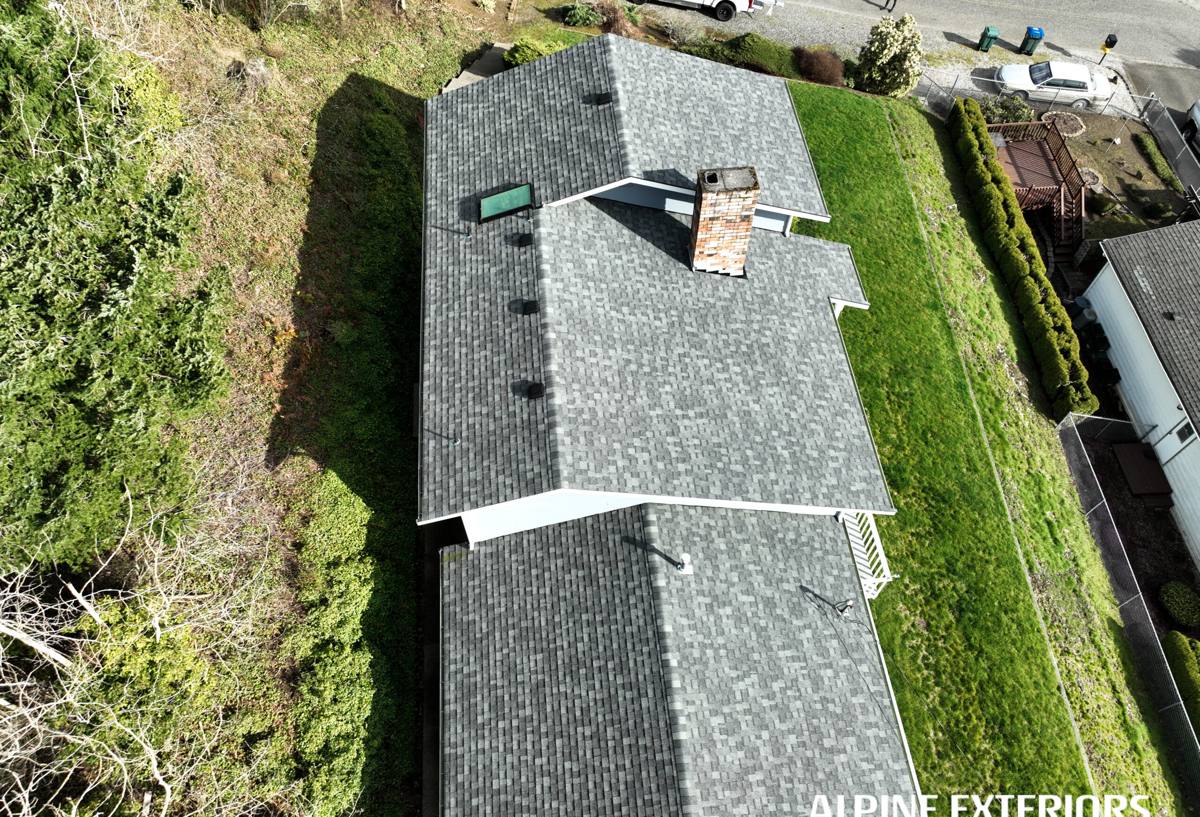
From the ground, look for shingles that are cupping, curling at the edges, or visibly darker in patches — that darkening is often moss or algae getting a foothold, particularly on the shaded slopes common on this hill. Granules collecting in gutters, flashing that looks lifted or rusted around chimneys and vent pipes, and moss creeping up from the eaves are all signs the roof needs attention before the next round of driving rain finds the weak spot.
What a Correct Roof Repair Actually Involves
Diagnosing the real problem, not just the symptom
A stain on the ceiling doesn't always mean the leak is directly above it — water travels along decking and framing before it shows itself. A proper repair starts with tracing the leak to its actual source, which usually means getting on the roof, checking the attic side if there's access, and ruling out condensation or ventilation issues before assuming it's a shingle or flashing failure.
Matching materials the right way
Roofing shingles fade and weather over time, so a patch using mismatched material stands out and can also behave differently than the surrounding roof — different expansion, different water-shedding properties. We match shingle type, weight, and where possible color as closely as the existing roof allows, and we're upfront when an exact match isn't realistic so you know what to expect.
Flashing, valleys, and the details that actually leak
Most roof leaks don't come from the field of the shingles — they come from the transitions: chimney flashing, valleys where two roof planes meet, step flashing along walls, and pipe boots that have cracked with age and UV exposure. A repair that only replaces shingles and ignores worn flashing is a repair that fails again within a year or two. We treat these details as the priority, not an afterthought.
Common South Hill Roof Repairs, At a Glance
| Repair Type | Typical Cause on This Hill | What the Fix Involves |
|---|---|---|
| Moss and algae removal | Shaded, north-facing slopes under tree canopy holding moisture | Careful low-pressure removal, treatment, and addressing the shade or ventilation issue causing regrowth |
| Flashing repair or replacement | Age, wind exposure, and metal fatigue around chimneys and walls | Removing surrounding shingles, replacing flashing, and re-sealing the transition correctly |
| Valley repair | Heavy water volume concentrating where two roof planes meet | Reworking the valley material and underlayment so water sheds cleanly instead of backing up |
| Pipe boot and vent repair | UV and weather cracking rubber seals over time | Replacing the boot and checking the surrounding shingles for water intrusion |
| Wind or storm damage | Exposed positions catching gusts off the bay | Replacing lifted or missing shingles and checking fastening on the surrounding field |
Moss, Shade, and the South Hill Tree Canopy
Moss deserves its own section here because it's the single most common reason we get called out to this part of Bellingham. It's not just cosmetic. Moss holds moisture directly against the shingle surface long after the rest of a sunnier roof has dried out, and over a long moss season that constant dampness works granules loose and shortens the life of the roofing material underneath. Left unaddressed, moss mats can also work under shingle edges and lift them, giving wind-driven rain a place to get in.
The right approach isn't to blast moss off with high pressure, which can strip granules and do more damage than the moss itself. It's gentle removal, appropriate treatment, and — where it's actually the driver of the problem — a conversation about whether trimming back overhanging branches or improving attic ventilation would slow the regrowth. We'll tell you honestly if moss is a symptom of a shadier lot you can't change much about, versus something a bit of tree maintenance would meaningfully improve.
How We Handle a Repair, Start to Finish
Inspection and an honest diagnosis
We get on the roof (or use safe access where pitch or condition makes that unwise) and physically trace the problem rather than guessing from the ground. You get a plain explanation of what's actually wrong, not just a quote.
A written estimate before any work starts
You'll know the scope and the cost before we touch anything. If we find something additional once we're into the repair — hidden decking damage, for example — we stop and talk to you before proceeding, not after.
The repair itself
We work efficiently but don't cut corners on the parts that actually determine whether the repair holds: proper flashing technique, correct underlayment at valleys and transitions, and fastening that matches manufacturer specs, not just "close enough."
Cleanup and a clear record
Job site is cleaned of debris, nails, and old material before we leave. You get a clear rundown of what was done, so if you sell the house or file an insurance claim down the road, there's a record.
Repair or Replace? How We Help You Decide
Not every damaged roof needs a repair, and not every aging roof needs full replacement. The honest answer usually comes down to a few practical questions: How old is the roofing material relative to its expected lifespan? Is the damage isolated to one area, or scattered across the whole roof in a pattern that suggests the material itself is failing? Is the decking underneath still sound, or has sustained moisture started to compromise it?
A roof that's ten or fifteen years into a thirty-year shingle's expected life, with an isolated flashing failure, is usually a straightforward repair. A roof with widespread granule loss, curling across multiple slopes, and a history of repeated leak calls is often past the point where another patch makes financial sense. We'll walk you through which situation you're actually in, with the reasoning laid out, so the decision is yours to make with real information.
Why a Crew That Already Works South Hill Matters
Roofing crews who haven't worked this neighborhood tend to underestimate a few things: the pitch and access challenges on some of South Hill's steeper lots, the narrower streets that affect where a truck or dumpster can actually stage, and how much of the moss and shade pattern is driven by the tree cover specific to this part of Bellingham. None of that is complicated, but it's the difference between a crew that shows up prepared and one that's figuring it out on your roof.
Working regularly in this part of Whatcom County also means we see the same handful of failure points repeatedly — the same flashing details, the same shaded-slope moss patterns, the same wind exposure on bay-facing roofs — and that familiarity shows up in faster, more accurate diagnosis rather than trial and error.
Simple Roof Maintenance Between Repairs
A repair holds longer when it's not fighting neglect on the rest of the roof. Between service calls, a few basic habits go a long way on a South Hill property:
- Keep gutters clear so water isn't backing up under the shingle edge, especially during heavy fall rain
- Have moss addressed early, before it mats and starts lifting shingle edges
- Trim back branches that keep a section of roof shaded and damp longer than the rest
- Check the attic occasionally for musty smells, damp insulation, or daylight around vent pipes
- Have flashing and pipe boots looked at every few years, since they wear out well before shingles typically do
- Walk the roofline visually after major windstorms for lifted or missing shingles
If you're noticing any of these signs, or it's simply been a while since a roofer actually looked at your roof rather than a photo of it, we're glad to come take a look. The estimate is free, there's no pressure attached to it, and you'll get a straight answer about what your roof actually needs — just fill out the form below to get started.