 Bellingham Roofing
 Metal Roofing Built for How Sunnyland Actually Weathers
Sunnyland is one of Bellingham's older, tree-shaded residential pockets, and that's exactly why roofing decisions here need more thought than a generic city-wide recommendation. Homes tucked under mature conifers, close enough to Bellingham Bay to catch salt-laden air, and shaded enough to stay damp for days after a storm passes, are dealing with a different set of stresses than a roof out in open sun. Metal roofing can be an excellent match for this kind of exposure, but only when the system, the details, and the installation are matched to the neighborhood rather than treated as a one-size-fits-all product.
This page is specifically about metal roofing for Sunnyland properties — not a general overview of metal roofing everywhere in Whatcom County. The climate factors below, the system choices, and the installation details are all framed around what actually shows up on roofs in this part of Bellingham.
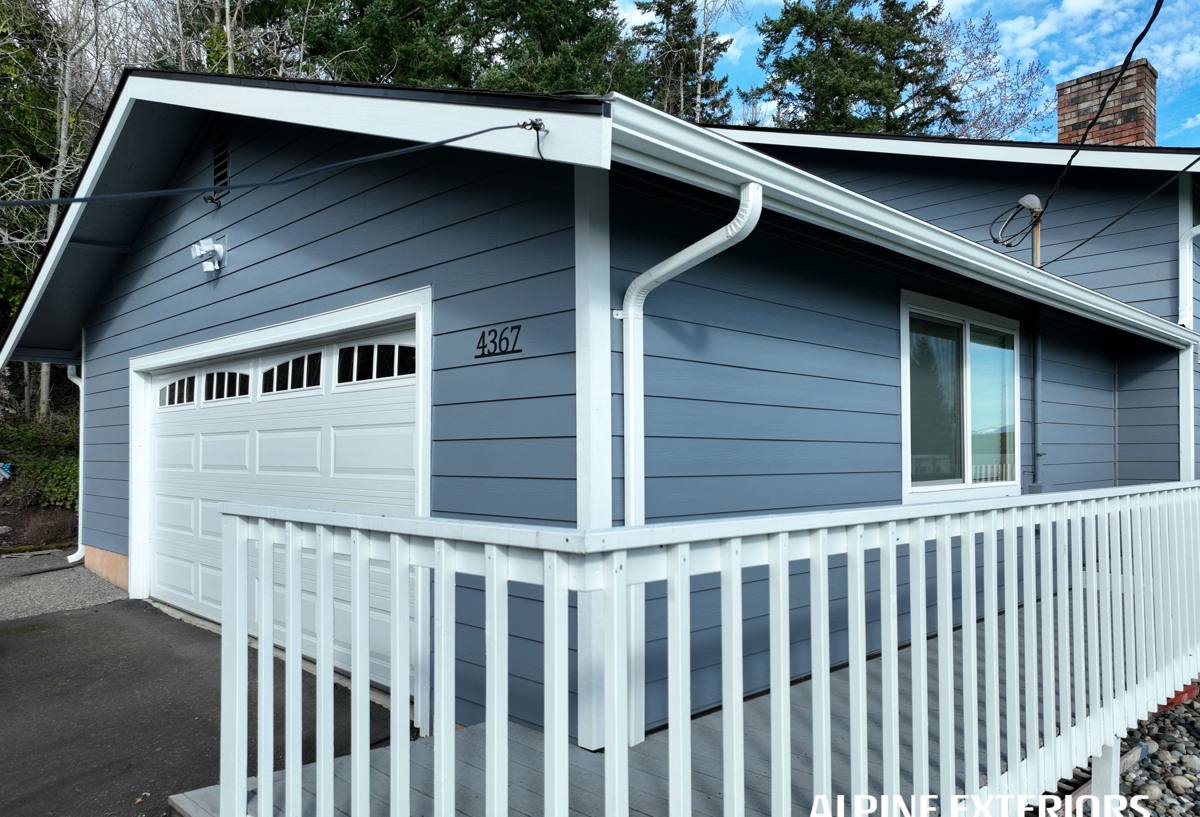
What Salt Air, Driving Rain, and Moss Season Do to a Roof
Salt Air
Proximity to the bay means airborne salt settles on roofing surfaces even on properties that aren't waterfront. Over years, that salt exposure accelerates corrosion on unprotected metal edges, fasteners, and flashing. It's not usually dramatic — it's slow, steady wear that shows up first at cut edges and fastener heads, which is exactly where a lot of cheaper installations cut corners.
Driving Rain
Bellingham doesn't just get steady drizzle — it gets wind-driven rain that comes in at an angle, which pushes water sideways into laps, seams, and penetrations that a straight-down rain would never reach. A roof that's watertight in a light shower can still leak under a sideways February storm if the underlayment and flashing details weren't built for that scenario.
Moss Season
The tree cover that makes Sunnyland pleasant to live in also means extended shade, slower drying times, and organic debris collecting in valleys and against fascia. That combination is close to ideal for moss growth, and moss holds moisture against roofing material for months at a stretch. On some roofing types that means gradual granule loss or rot; on metal, the concern shifts to trapped moisture at fastener penetrations and under debris buildup in low-slope areas.
None of these three factors is a reason to avoid metal roofing — they're reasons to be specific about panel choice, coating, and installation detail. A metal roof that's designed and installed with Whatcom County's coastal, wet climate in mind holds up well against all three; one installed with generic assumptions will show problems in exactly the spots you'd expect.
Why Metal Makes Sense for This Neighborhood
Metal roofing sheds water fast, has no exposed granules for moss to anchor into the way asphalt shingles do, and holds up structurally under wind gusts that come off the water. For homes under heavy tree cover, the smooth, low-friction surface also means less organic material sticks around after a windstorm compared to a rougher-textured roof. Metal is also a strong long-term option for homeowners who are tired of repeat maintenance calls every few years — it's a higher upfront investment that trades off against a longer service life and less frequent attention, provided it's installed correctly the first time.
Choosing the Right Metal System
Not all metal roofing is the same, and the right choice depends on the home's roof pitch, existing structure, and how much of a factor moss and shade are for that specific property.
| System Type | Best Fit | Trade-offs |
|---|---|---|
| Standing seam (concealed fasteners) | Most Sunnyland homes, especially anything with moderate to steep pitch near tree cover | Higher material and labor cost; virtually eliminates fastener-related leak points |
| Exposed-fastener panel | Outbuildings, secondary structures, budget-conscious re-roofs | Lower cost but fastener gaskets need periodic inspection, especially given salt air exposure |
| Stone-coated steel | Homeowners wanting a shingle or shake appearance with metal's durability | Textured surface can trap organic debris in shaded, low-slope areas more than smooth panel |
| Aluminum panel | Properties closest to the bay with the highest salt exposure | Naturally corrosion-resistant but a smaller pool of installers experienced with it |
For most Sunnyland homes we evaluate, standing seam is the system we recommend, specifically because concealed fasteners remove the weak point that salt air and driving rain both attack first. That said, roof pitch, budget, and the look a homeowner wants all factor into the final recommendation — we don't push one system regardless of the property in front of us.
Coatings and Finishes
The paint or coating system matters as much as the base metal. A quality Kynar-based or comparable coating resists fading and chalking far longer than a basic polyester finish, which matters in a climate that gets consistent damp exposure year-round rather than a dry season to recover in. We factor coating quality into every quote rather than treating it as an upsell.
What a Correct Metal Roof Installation Actually Involves
The panels themselves are only part of the system. Most metal roof failures we get called to inspect trace back to installation shortcuts, not the metal itself. A correct installation for a Sunnyland property includes:
- Full synthetic underlayment rated for the wind-driven rain this area sees, not just a minimal moisture barrier
- Ice-and-water shield or equivalent self-adhering membrane at eaves, valleys, and all penetrations, since these are the spots driving rain and moss debris both concentrate
- Properly matched, corrosion-resistant fasteners and closures — mismatched metals at fastener points is one of the most common causes of premature corrosion near salt air
- Custom-formed flashing at every chimney, vent, skylight, and wall intersection, rather than generic pre-formed pieces that don't match the actual roof geometry
- Adequate attic and roof ventilation, so trapped moisture from long damp stretches has somewhere to go instead of condensing under the deck
- Panel layout planned around water flow and prevailing wind direction specific to the property's orientation
Skipping any one of these is usually invisible on installation day and only shows up as a problem two, five, or ten years later — which is exactly why it matters who's doing the work and how they were trained to do it.
Our Process, Start to Finish
1. On-Site Evaluation
We start with a walk of the roof and attic space, not just a look from the ground. Pitch, existing deck condition, ventilation, and current moss or moisture patterns all factor into the recommendation.
2. System and Material Selection
Based on that evaluation, we walk through system options, coating choices, and color, with honest trade-offs for each rather than steering toward whatever is easiest to install.
3. Written, Itemized Estimate
You get a clear scope of work — tear-off or overlay, underlayment spec, flashing detail, ventilation work, and disposal — so there's no ambiguity about what's included.
4. Installation
Proper tear-off and deck inspection where called for, correct underlayment and flashing per the details above, and a jobsite that's kept clean and safe throughout, including protection of landscaping and gutters during the work.
5. Final Walkthrough and Cleanup
We walk the finished roof with the homeowner, confirm the work matches the estimate, and do a full magnetic sweep and yard cleanup before we consider the job done.
What Metal Roofing Costs and Why It Varies
Metal roofing is a real investment, and the honest answer is that cost depends heavily on the specifics of the property rather than a flat per-square-foot number.
| Factor | Why It Moves the Price |
|---|---|
| Roof pitch and complexity | Steep pitches, multiple valleys, and dormers all add labor and custom flashing work |
| Tear-off vs. overlay | Removing an old roof and inspecting the deck adds cost but is often the right call on an older Sunnyland home |
| Panel system chosen | Standing seam runs higher than exposed-fastener panel due to labor and material |
| Coating quality | Premium coatings cost more upfront and last significantly longer in this climate |
| Ventilation upgrades | Adding or correcting attic ventilation during the re-roof is cheaper than doing it later |
| Access and tree cover | Heavily treed lots, common in Sunnyland, can affect staging, debris removal, and crew safety setup |
Rather than quoting a number without seeing the roof, we give a firm written estimate after the on-site evaluation, broken down by these factors so a homeowner can see exactly what's driving the cost.
Maintaining a Metal Roof in This Climate
Metal roofing needs less maintenance than most alternatives, but "less" isn't "none," especially with Sunnyland's tree cover and moss season working against it. A simple annual routine goes a long way:
- Clear gutters and valleys of needles and leaf debris before the fall rains set in
- Check for moss or organic buildup in shaded, low-slope sections and remove it gently — never with a pressure washer on the panel surface
- Look at flashing points around chimneys and vents for any sign of lifted sealant or corrosion
- Confirm downspouts are directing water away from the foundation, especially after major storms
- Have a professional inspection every few years rather than waiting for a visible problem
Why Local Experience in Sunnyland Matters
A crew that already works in this neighborhood knows which streets sit under the heaviest tree canopy, which properties get the worst wind-driven rain off the bay, and which roof details tend to fail first because they've seen it happen on the house down the block. That's different from a contractor who treats every Whatcom County job the same way regardless of microclimate. We've installed and repaired roofs across Bellingham long enough to know that Sunnyland's combination of shade, moisture, and coastal air calls for real attention to underlayment, flashing, and ventilation — not just a good-looking panel on top.
If you're considering metal roofing for a Sunnyland home, we're happy to walk your roof, talk through honest options for your specific property, and put together a free, no-pressure estimate using the form below.