 Bellingham Roofing
 Why Siding Repair Looks Different in Sunnyland
Sunnyland sits within Bellingham's marine climate, and that climate is hard on exterior walls in ways that aren't always obvious from the street. Whatcom County gets a steady diet of driving rain for much of the year, humidity stays elevated even between storms, and the salt-tinged air off Bellingham Bay works its way inland on prevailing winds. Add in the tree cover that shades many Sunnyland lots — lovely for curb appeal, less lovely for siding that never fully dries out — and you get a recipe for slow, quiet damage that shows up as peeling paint, dark streaking, or soft spots long before anyone notices a leak.
Siding repair here isn't just patching a hole. It's understanding how water moves behind the wall assembly, how moss and algae take hold on a north-facing wall that stays damp from October through May, and how salt-laden moisture accelerates corrosion on fasteners and trim. A repair that ignores those local realities tends to fail again within a year or two.
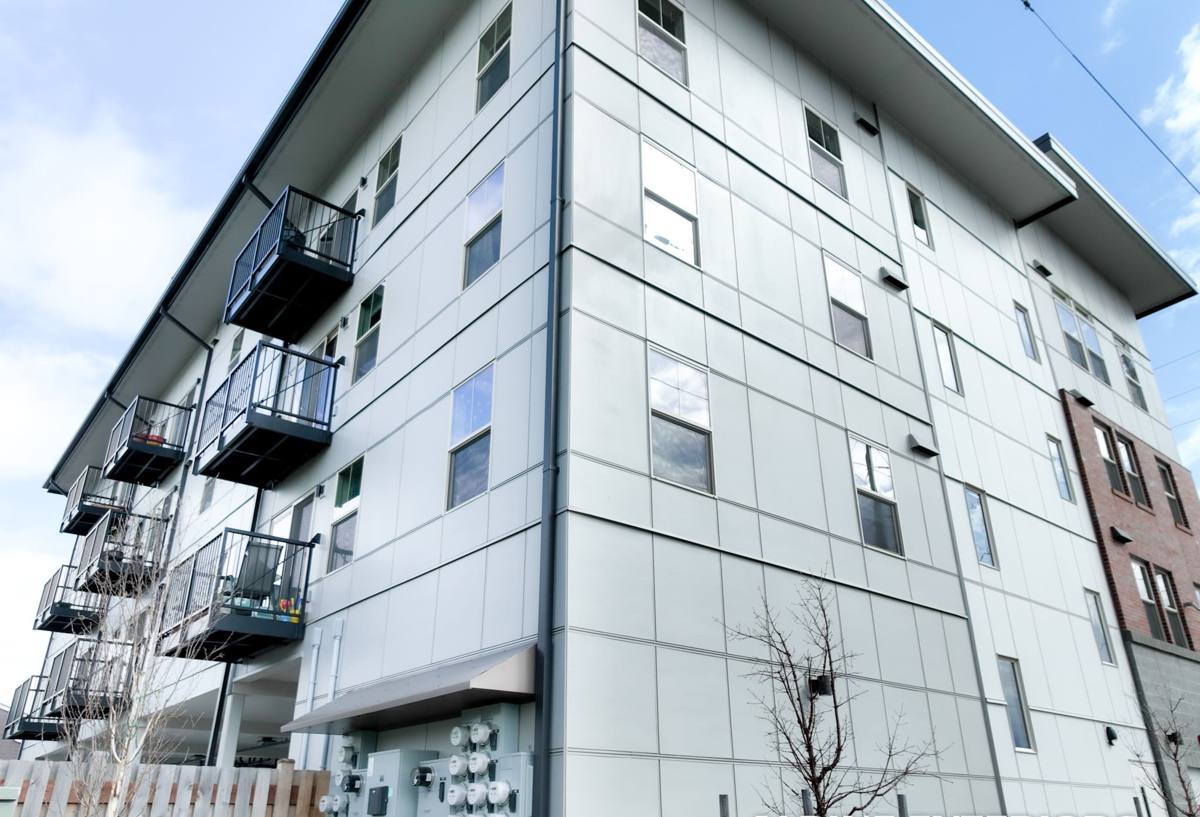
Common Siding Damage We See in Sunnyland Homes
Moisture intrusion and hidden rot
The most serious damage is often the least visible. Water that gets behind siding through a failed seam, a cracked board, or poorly flashed trim can sit against sheathing for months before it telegraphs to the surface as a soft spot, a bulge, or a musty smell inside. By the time paint is visibly bubbling, the substrate underneath has usually been wet for a while.
Moss, algae, and green-black staining
Bellingham's long, wet, shaded season is close to ideal growing conditions for moss and algae on exterior surfaces. On wood-based siding, that growth holds moisture against the material and accelerates decay. On any siding, it's a sign that a wall isn't drying between rain events the way it should.
Cracked, warped, or delaminating boards
Wood and engineered wood products expand and contract with moisture cycles. Repeated wetting and drying opens up cracks at butt joints and fastener points, and in more extreme cases causes boards to cup, bow, or delaminate at the edges — problems that get worse every winter they're left alone.
Failed caulk, trim, and penetration seals
Caulk is not a permanent material. Around windows, doors, hose bibs, and vent penetrations, it dries out, shrinks, and cracks over time. Once that seal fails, it becomes a direct path for water into the wall — often with no visible sign on the siding itself.
What a Correct Repair Actually Involves
A repair that lasts starts with a real diagnosis, not just a patch over the visible symptom. We look past the damaged board to answer the questions that determine whether a repair will hold:
- Is there moisture behind the siding right now, and if so, where is it getting in?
- Is the sheathing or framing underneath still structurally sound, or has rot spread beyond the visible damage?
- Is the weather-resistive barrier (the house wrap or building paper) intact, or does it need to be repaired as part of the job?
- Is the damage isolated, or is it a symptom of a systemic issue — bad flashing detail, poor drainage, a missing kick-out flashing — that will keep causing damage until it's corrected?
- Can the repair be matched properly in material, profile, and finish, or will it stand out as an obvious patch?
Skipping any of these steps is how a "quick fix" turns into a bigger repair bill two winters later. It's also why we sometimes recommend opening up more of the wall than a homeowner expects — not to upsell the job, but because patching over a still-wet cavity just traps the problem.
Repair vs. Replacement: How to Decide
Not every damaged section needs a full re-side, and not every repair is worth doing. The right call depends on a few honest factors:
| Factor | Leans toward repair | Leans toward replacement |
|---|---|---|
| Extent of damage | Isolated to one or two areas | Spread across multiple walls or elevations |
| Age and condition of remaining siding | Siding is mid-life and otherwise sound | Siding is near or past its expected service life |
| Underlying moisture | Framing and sheathing are dry once opened up | Rot has spread into structural framing |
| Material match | Original product is still available or a close visual match exists | Product is discontinued, faded, or mismatched profile |
| Root cause | Cause was a one-off (impact damage, a single failed seal) | Cause is systemic (chronic drainage issue, wrong product for the exposure) |
We'll walk through this table with you on-site, not in the abstract. A siding repair is a legitimate, cost-effective answer for a lot of Sunnyland homes — we're not going to talk you into replacing a wall that just needs a proper fix.
Why We Repair and Rebuild With James Hardie Fiber Cement
When a repair calls for new material — a section of wall, a full elevation, or trim around a problem area — we use James Hardie fiber cement, and only James Hardie. We don't install LP SmartSide, vinyl, Cemplank, Allura, primed spruce, or cedar, and that's a deliberate standard, not a limitation we work around.
Fiber cement is non-combustible and dimensionally stable in a way wood and engineered-wood products simply aren't, which matters directly for the moss, moisture, and cyclical wetting that define a Bellingham winter. Hardie's HZ5 product line is engineered specifically for climates like ours — freeze-thaw cycles, sustained damp, and coastal moisture exposure — rather than a general-purpose product asked to perform in conditions it wasn't built for.
Just as important for a repair job: Hardie's ColorPlus factory finish means a patched section can be color-matched with real precision, and it comes with a stronger, more transferable finish warranty than field-applied paint. That's the difference between a repair that blends in and one that reads as an obvious patch for the next decade.
What we won't do
We won't patch a moisture problem with a material that will just re-absorb water and fail again. If a homeowner has existing wood, engineered wood, or vinyl siding elsewhere on the house, we'll be straightforward about the trade-offs of matching that product versus transitioning the repaired section to fiber cement — and why we think the latter holds up better long-term, even if it means a slightly more visible seam between old and new in the short run.
Our Sunnyland Siding Repair Process
- On-site assessment. We inspect the visible damage and the areas around it, checking for moisture, soft spots, and signs the problem extends further than what's obvious from the ground.
- Opening up the wall. Where moisture is suspected, we open the siding to check sheathing, framing, and the weather-resistive barrier before doing anything else.
- Root-cause correction. If the damage traces back to a flashing, drainage, or installation defect, we fix that cause first — otherwise the repair is temporary no matter how good it looks.
- Repair or replace the material. Depending on what the table above points to, we either patch with matched material or replace the affected section with James Hardie fiber cement.
- Seal and finish. Proper flashing, fastening, and joint treatment, finished to match the surrounding siding as closely as the existing material allows.
- Final walkthrough. We show you exactly what we found and what we did — including photos of anything that was hidden behind the wall — so there are no surprises.
A Homeowner's Checklist: Signs Your Siding Needs a Look
- Dark green, black, or gray staining that keeps returning after cleaning
- Paint that's peeling, bubbling, or cracking in one concentrated area
- Boards that feel soft, spongy, or give slightly when pressed
- Visible gaps, cracks, or separation at seams and butt joints
- A musty or damp smell near an exterior wall on the inside of the house
- Caulking around windows, doors, or vents that's cracked, shrunken, or missing
- Siding that's warped, bowed, or pulling away from the wall at the edges
Any one of these on its own might be minor. Two or more in the same area, especially after a wet winter, is worth a professional look before the next rainy season sets in.
Why It Matters to Hire a Crew That Already Works in Sunnyland
Siding repair is very location-sensitive work. A crew that regularly works in Sunnyland and the surrounding Bellingham neighborhoods already understands how the local exposure — tree canopy, prevailing wind and rain direction, proximity to the bay — tends to concentrate damage on specific walls and details, and what that usually means once the siding comes off. That familiarity shows up in faster, more accurate diagnosis and fewer surprises mid-job.
It also matters for the practical side of the work: knowing how Whatcom County's weather windows affect scheduling repairs, understanding City of Bellingham permitting requirements when a repair crosses into a larger scope of work, and having a track record in the area that you can actually check. A contractor with no local footprint is guessing at all of that.
Getting an Honest Look at Your Siding
If you're seeing staining, soft spots, or damage on your Sunnyland home, the most useful next step is a straightforward, no-pressure look at what's actually going on behind the siding — not a sales pitch for a full re-side you may not need. We'll tell you plainly whether you're looking at a targeted repair or something bigger, and why. Reach out for a free estimate and we'll walk the property with you.