 Bellingham Roofing
 Siding Repair in York: Built for Bellingham's Marine Climate
York is one of Bellingham's older, more established neighborhoods, with a mix of housing ages and styles under a lot of mature tree cover. That combination — older siding, big trees, and a location close to Bellingham Bay — means homes here take on a specific kind of wear. Salt-laden air off the water, driving rain that comes in sideways during winter storms, and a moss season that can run eight months or longer all work on siding at the same time, from different directions.
A lot of siding repair work in this part of Whatcom County isn't dramatic. It's slow: a gap at a trim joint that lets moisture in a little at a time, a shaded north wall that never fully dries out between rain events, a spot where two old repairs were never properly flashed. By the time it's visible from the ground, there's usually more going on behind the surface than a homeowner expects. Repairing it correctly means understanding not just what's damaged, but why that spot failed in the first place — otherwise you're fixing the same wall again in a few years.
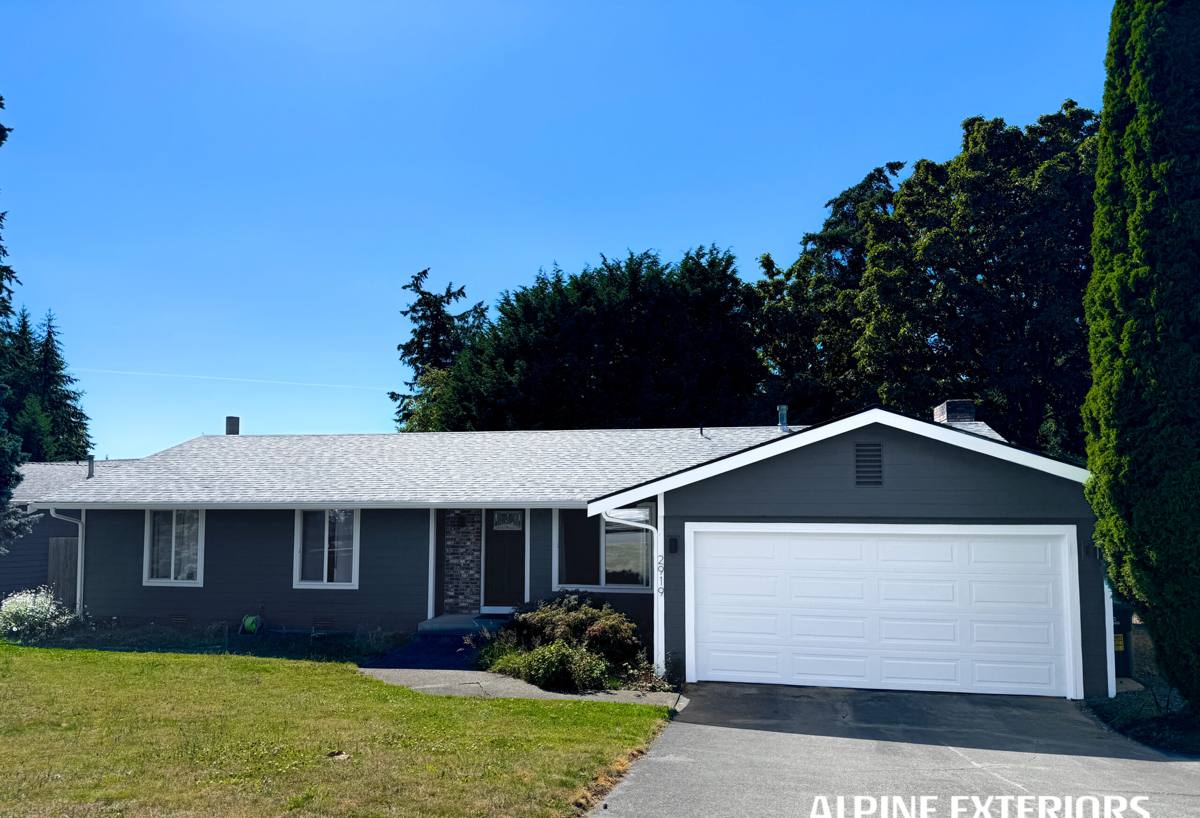
Signs Your York Home Needs Siding Repair
Most siding problems show themselves in small ways long before they become expensive ones. Worth checking for, especially on walls that face prevailing weather or sit under heavy tree canopy:
- Soft or spongy spots when you press on the siding, especially near the bottom courses or below windows
- Paint that's bubbling, peeling, or alligatored in a localized area rather than evenly across the wall
- Dark streaking or green-black growth concentrated at seams, laps, or shaded corners
- Boards or panels that have started to cup, bow, or pull away from the wall
- Visible gaps or cracked caulk at trim joints, window and door casings, or butt seams
- Staining that runs downward from a fastener, seam, or flashing point
- Small holes or soft, crumbly wood — a sign of pest activity that's often secondary to moisture damage
- Interior clues: a musty smell, a soft spot on interior drywall, or a stain on an interior wall that lines up with an exterior problem area
Repair or Replace? How We Make the Call
Not every damaged section needs full replacement, and not every home needs a full re-side just because one wall is failing. The right call depends on how far the damage has spread, what's causing it, and what condition the rest of the siding is in. We look at the whole picture before recommending anything.
| Factor | Points Toward Spot Repair | Points Toward Fuller Replacement |
|---|---|---|
| Extent of damage | Isolated to one wall or a few boards | Recurring across multiple elevations |
| Moisture intrusion | Surface-level, caught early | Has reached sheathing or framing |
| Age of existing siding | Mid-life, otherwise sound | Near or past its expected service life |
| Cause of failure | A single flashing or joint defect | Systemic issue — wrong material, poor original install |
| Material match | Matching material still available | Discontinued profile or faded, unmatched color |
When a repair is the right answer, we do it right rather than doing the minimum. When the damage tells a bigger story — a section that's failed three times in the same spot, for instance — we'll say so plainly instead of patching over a problem that's going to come back.
What a Correct Siding Repair Actually Involves
It's Not Just Patching the Surface
A repair that only addresses what's visible from the ground is a temporary fix. Correct siding repair means pulling back the damaged material far enough to see what's underneath: the weather-resistive barrier, the flashing at that location, the condition of the sheathing, and the fastening pattern. If the underlying moisture path isn't corrected, new siding in that spot will fail the same way the old siding did.
Flashing and Drainage Come First
Most siding failures we find in this climate trace back to water management, not the siding material itself — a missing kick-out flashing at a roof-wall intersection, a window that was never properly flashed, or a butt joint with no drainage path behind it. We correct the flashing and drainage detail before any new siding goes back on. Replacing boards without fixing the water path just delays the next repair.
Matching and Finishing
Once the underlying issue is addressed, the visible repair needs to actually blend in — matching board width and reveal, proper fastener placement, and a finish that doesn't leave an obvious patch on the wall. Sloppy color or profile matching is one of the most common signs of a rushed repair, and it's usually avoidable.
Why We Repair with James Hardie Fiber Cement
When a repair calls for new material — whether it's a few boards or a full elevation — we use James Hardie fiber cement, and that's the only siding product we install anywhere on a home. We don't carry vinyl, LP SmartSide, cedar, or primed spruce, and we won't mix a patch of one of those into a Hardie wall or vice versa. Fiber cement is non-combustible, dimensionally stable in wet climates, and holds its factory-applied ColorPlus finish far longer than field-painted wood or engineered wood products — which matters a lot in a neighborhood where humidity rarely lets up. It also means a repair section can be ordered to match existing Hardie siding precisely, rather than hunting for a discontinued vinyl profile or repainting an entire wall to hide a patch.
Our Siding Repair Process
- Inspection. We walk the full exterior, not just the spot you called about — related damage often shows up nearby once you start looking.
- Diagnosis. We identify the actual cause: flashing failure, trapped moisture, failed caulk joint, or something else, and probe the area to check how deep the damage goes.
- Written plan and estimate. You get a clear explanation of what's damaged, why, and what the repair involves — no vague line items.
- Repair work. Damaged material comes out, the water-management detail gets corrected, and new material goes in matched to the existing siding.
- Cleanup and walkthrough. We clear debris and walk the finished repair with you before we consider the job done.
What Siding Repair Costs Depend On
Every repair is different, but the same handful of factors drive the cost up or down on most jobs:
| Cost Factor | Why It Matters |
|---|---|
| Extent of hidden damage | Soft sheathing or framing behind the siding adds carpentry work beyond the siding itself |
| Wall height and access | Second-story and steep-site walls need staging or lift access |
| Material matching | Matching an existing color or discontinued profile can take more sourcing time than a straightforward replacement |
| Flashing and drainage corrections | Fixing the root cause, not just the symptom, is part of doing the job right |
| Number and location of repair areas | Several small spots across the home can add up to more labor than one larger contiguous section |
Why Hire a Crew That Already Works in York
Bellingham's neighborhoods don't all age the same way. A home a few blocks from Bellingham Bay deals with salt air and wind-driven rain that an inland Whatcom County property doesn't see as much of, and heavy tree cover changes how long a wall stays wet after a storm. A crew that already works in York has seen how the housing stock here tends to fail — which wall orientations struggle most, which older repair details don't hold up, and what the City of Bellingham expects for permitting on exterior work. That local pattern recognition is the difference between a repair that treats the visible symptom and one that treats the actual cause.
Keeping Your Siding in Shape After the Repair
A well-executed repair should hold for years, but a few habits make a real difference in a climate like this one:
- Keep gutters and downspouts clear so water isn't overflowing onto siding below
- Trim back vegetation and tree limbs that keep a wall shaded and damp longer than it needs to be
- Rinse moss and algae buildup off siding gently once or twice a year rather than letting it establish
- Walk your exterior after major storms and check trim joints, corners, and flashing points
- Address small caulk or paint failures early, before they become moisture pathways
If you're seeing any of the warning signs above, or just want a second opinion on a repair someone else quoted, we're happy to take a look. Fill out the form below for a free, no-pressure estimate on your York home.