 Bellingham Roofing
 Asphalt Shingle Roofing Built for Blaine's Coastal Conditions
Blaine sits right on the water at the northern edge of Whatcom County, and that location shapes everything about how a roof ages here. Salt-laden air off the Strait of Georgia, wind-driven rain that comes in sideways during winter storms, and a moss season that can run eight months or longer all put more stress on an asphalt shingle roof than you'd see in a drier, inland climate. A shingle roof installed the same way you'd install one in Spokane won't hold up the same way in Blaine, and that's the gap we work to close.
This page covers what asphalt shingle roofing specifically needs to succeed in Blaine, what a correct installation actually involves, how our process works from first look to final cleanup, and why working with a crew that already understands this stretch of coastline matters more than it might seem.
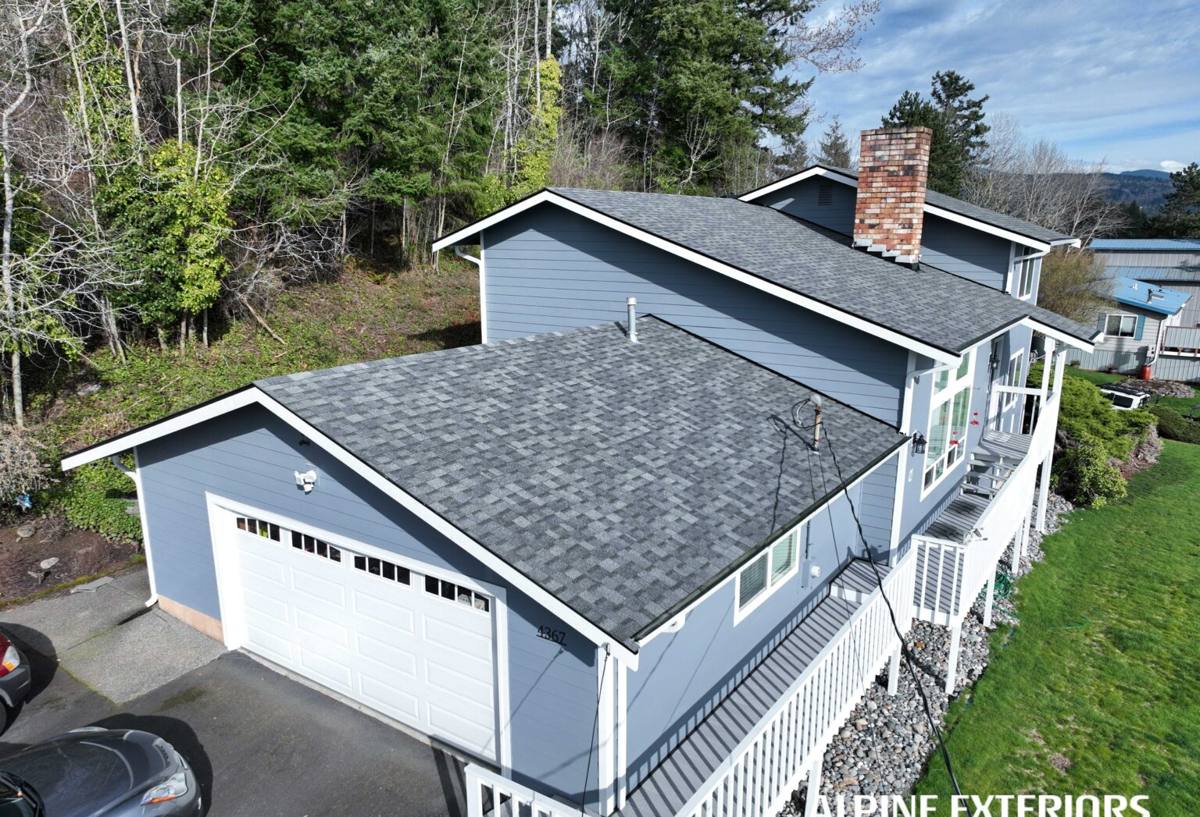
What Blaine's Climate Actually Does to a Shingle Roof
Salt Air and Metal Components
Homes close to the water deal with airborne salt that settles on every exposed surface, including roof flashing, nail heads, vent caps, and gutter hardware. Left unprotected, ordinary fasteners and thin-gauge metal corrode faster near the shoreline than they do even a few miles inland. It's not usually the shingles themselves that fail first from salt exposure — it's the metal details around them: step flashing, valley metal, and exposed nails that were never meant to sit in a marine environment.
Driving Rain and Wind-Driven Water
Storms moving through this part of the Pacific Northwest frequently push rain sideways rather than straight down. That matters because a roof designed only to shed water downhill can still let moisture work backward under shingle tabs, around chimneys, and along wall-to-roof transitions when wind pressure is involved. Underlayment quality and how flashing is layered — not just the shingle brand — determine whether that wind-driven rain stays out.
A Long Moss Season
Bellingham and the surrounding Whatcom County coastline stay damp and shaded much of the year, which is exactly what moss needs to establish itself. Moss holds moisture against the shingle surface, lifts tabs as it grows, and works its way into granule loss over time. A roof that isn't detailed or maintained with moss in mind will show premature wear years before the shingles are actually worn out.
What a Correctly Installed Roof Needs Here
A shingle roof that's going to hold up in Blaine needs more than a good shingle laid in straight rows. The components underneath and around the shingles do most of the real work.
- A synthetic or self-adhered underlayment rated for high-moisture climates, not the minimum felt some installers still default to.
- Ice-and-water shield at eaves, valleys, and around penetrations — the spots most exposed to wind-driven rain and standing moisture.
- Corrosion-resistant flashing and fasteners, especially on homes within the first mile or two of the water.
- Balanced attic ventilation so moisture from inside the home doesn't condense against the roof deck from underneath while rain and moss pressure it from above.
- Proper valley and step flashing detail at every wall intersection, dormer, and chimney — the places most roofs actually leak.
Skip any one of these and the shingles on top can still look fine while the roof underneath is already taking on water or holding moisture it shouldn't.
Signs a Blaine Roof Needs Attention
Because of the moss and moisture load here, problems often show up differently than they would in a drier climate. Homeowners in Blaine should watch for:
| What You See | What It Usually Means |
|---|---|
| Green or black streaking, especially on north-facing slopes | Moss or algae establishing itself; early stage, often manageable with cleaning and treatment |
| Moss visibly lifting shingle tabs | Moisture is being held against the roof deck; left alone, this shortens shingle life significantly |
| Granules collecting in gutters | Normal in small amounts as shingles age, but heavy accumulation signals accelerated wear |
| Rust streaking near flashing or vents | Fasteners or flashing corroding from salt exposure, a common issue on homes closer to the water |
| Water stains on interior ceilings after wind storms | Wind-driven rain finding a path around flashing or under shingle tabs, not just a "roof leak" in general |
Our Asphalt Shingle Roofing Process
Inspection and Honest Assessment
We start by getting on the roof, not just looking at it from the ground. That means checking the shingle field, all flashing points, valleys, vents, and — when accessible — attic ventilation and any signs of moisture from underneath. We'll tell you plainly whether you're looking at a repair, a partial re-roof, or a full replacement, and why.
Tear-Off and Deck Inspection
For a full replacement, we remove the old roofing down to the deck. This is the point where hidden problems — soft or rotted sheathing, old moisture damage, undersized ventilation — actually get found and fixed, rather than covered over with a new layer of shingles on top of old damage.
Underlayment and Flashing First
Before a single shingle goes down, we install underlayment rated for this climate and set new flashing at every valley, wall intersection, and penetration. Given how much of a shingle roof's actual performance in Blaine comes down to these details, we don't treat this step as a formality.
Shingle Installation
Shingles go down to manufacturer specification for nailing pattern, exposure, and fastener count — details that matter more in high-wind coastal conditions than they do in sheltered inland settings. Proper nailing is also what keeps a warranty valid if wind damage ever becomes a claim.
Ventilation and Final Details
We confirm intake and exhaust ventilation is balanced so the attic can dry out properly year-round, which helps the roof deck and the new shingles last as long as they're rated to. We finish with a cleanup pass, including a magnetic sweep for stray fasteners.
Choosing the Right Shingle for This Environment
Not every shingle product is a good match for a marine climate with heavy moss pressure. We generally steer homeowners toward products with strong algae-resistant granules and a warranty structure that accounts for coastal exposure, rather than the lowest-cost option on the shelf. Here's how the common tiers compare for a home in Blaine's conditions:
| Shingle Tier | Typical Lifespan | How It Handles Moss/Salt Air | Best Fit |
|---|---|---|---|
| 3-tab (economy) | 15–20 years | Minimal algae resistance unless specifically treated; more prone to early wear near the water | Budget-limited projects, secondary structures |
| Architectural/dimensional | 25–30 years | Usually includes algae-resistant granules; heavier profile sheds wind-driven rain better | Most primary homes in Blaine |
| Impact-rated or premium architectural | 30+ years | Best granule adhesion and wind ratings; strongest long-term performance in coastal exposure | Homes with direct water exposure or high wind history |
We'll walk through these trade-offs with you directly rather than just quoting a single option — the right tier depends on how close your home sits to the water, your roof's pitch and exposure, and how long you plan to be in the home.
Maintenance That Actually Matters Here
A well-installed shingle roof in Blaine still needs periodic attention because of the moss and moisture load unique to this stretch of coastline. A simple homeowner checklist:
- Have moss growth removed or treated before it lifts shingle tabs, not after.
- Keep gutters clear so water isn't backing up under the roof edge during heavy rain.
- Trim back overhanging branches that keep shaded roof sections damp longer than the rest of the roof.
- Have flashing and exposed fasteners checked periodically for early corrosion, especially on homes within a mile or two of the water.
- Schedule a professional look after any major windstorm, even if nothing looks obviously wrong from the ground.
None of this replaces a quality installation — but it's what keeps a correctly installed roof performing for its full expected lifespan instead of failing early because of moisture nobody addressed.
Why a Crew That Already Works in Blaine Matters
Roofing crews that mostly work drier, inland areas don't always default to marine-grade fasteners, algae-resistant shingles, or the ventilation balance a coastal home actually needs — because they don't run into those failure patterns as often. Working regularly in Blaine and along the rest of the Whatcom County coastline means we're used to sizing up how close a home sits to the water, how exposed it is to wind-driven rain, and how aggressive the moss pressure is on a given lot, and building the roof accordingly from the start rather than fixing it after the fact.
It also means we're familiar with the permitting and inspection expectations in this part of the county, and we're not learning coastal detailing on your roof for the first time.
What a Project Typically Involves
Timelines and scope vary by roof size, pitch, and how much deck repair is needed once tear-off begins, but most straightforward asphalt shingle replacements on a typical home are completed in a matter of days, weather permitting. Weather windows matter more here than in drier climates — we plan tear-off and underlayment installation around forecasted rain, since an open roof deck and a Blaine winter storm are not a combination we want either.
If you're weighing a repair against a full replacement, or just want a straight answer on how much moss or salt exposure has already affected your roof, we're glad to take a look. Reach out for a free, no-pressure estimate using the form below, and we'll give you an honest read on where your roof stands.