 Bellingham Roofing
 Getting Windows Right the First Time in Puget
When you're building new in the Puget area of Bellingham, the window package is one of the few decisions that's genuinely hard to fix later. Once siding, trim, and interior finishes are closed up around a window opening, correcting a bad flashing detail or an undersized unit means tearing back work that's already done. New construction is the one point in a home's life where the window opening is fully exposed, the weather-resistive barrier isn't buried yet, and there's no old caulk or rotten sheathing to work around. Get it right at this stage and the windows should give the homeowner decades of trouble-free service. Get it wrong, and the problems — usually water intrusion — tend to show up quietly behind the wall long before anyone sees a stain.
We treat new-construction window work in Puget as its own discipline, separate from replacement window jobs. The products, the flashing sequence, and the tolerances are all different, and Whatcom County's marine climate doesn't leave much room for shortcuts.
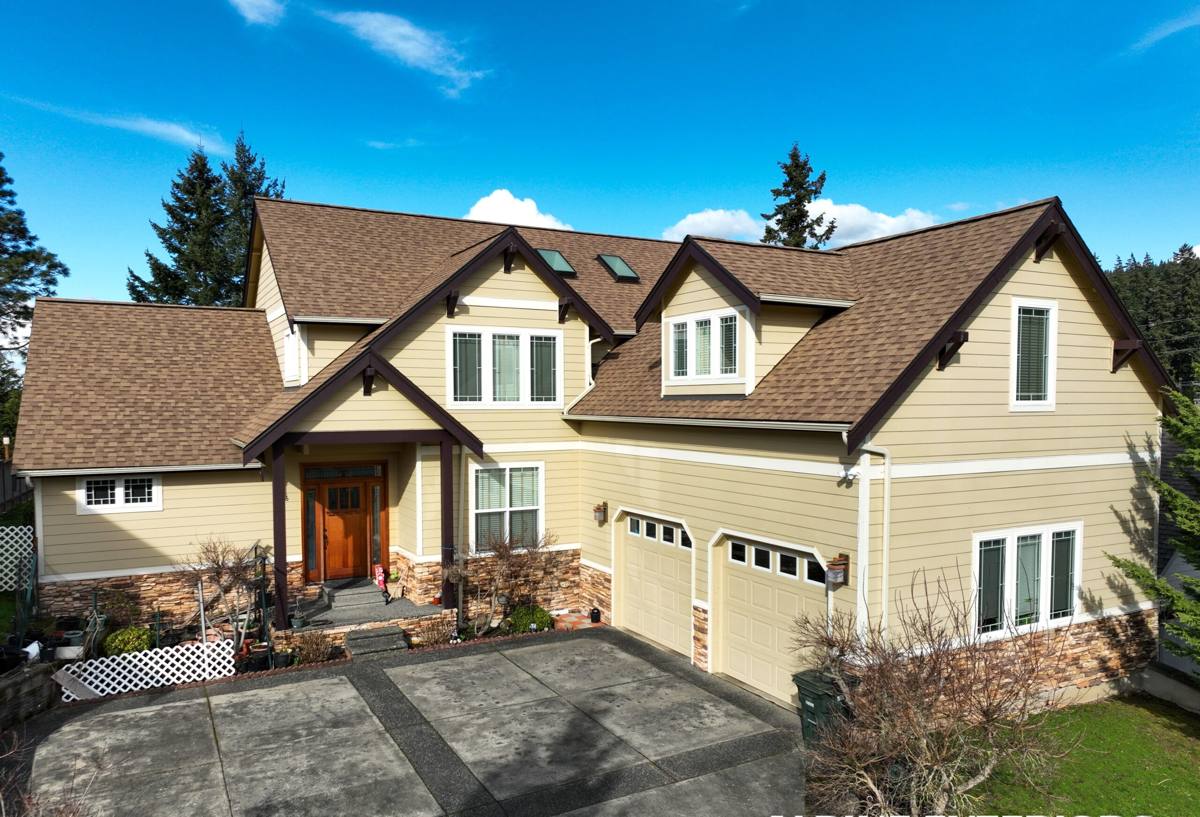
What Bellingham's Climate Does to a New Window System
Puget sits close enough to the water that salt air is a real factor in material selection, not a theoretical one. Salt-laden moisture accelerates corrosion in hardware, fasteners, and lower-grade metal components — the kind of thing that doesn't fail in year one, but shows up as pitted locks or streaking finishes five or ten years in. Combine that with Bellingham's driving rain, which comes in sideways during winter storms rather than falling straight down, and you have a climate that tests the water-shedding details of a window install far harder than a drier inland market would.
Then there's moss season, which in this part of Whatcom County runs long — often eight months or more of the kind of damp, shaded conditions moss thrives in. Moss and algae growth on siding and trim near window openings holds moisture against the building envelope and can mask early signs of a flashing problem. A window opening that's correctly flashed and sealed sheds that moisture without issue. One with even a small gap in the water-resistive barrier can trap it, and by the time it's visible, there's often sheathing or framing damage behind the wall.
None of this means new construction in Puget is riskier than building anywhere else — it just means the install has to account for salt air, sustained wind-driven rain, and prolonged damp conditions as the baseline, not the exception.
Wind and Rain Exposure by Lot Position
Not every lot in Puget faces the same exposure. Homes on higher ground or more open sites tend to catch more direct wind-driven rain, while homes tucked into tree cover deal with more shade, slower drying times, and heavier moss and algae growth. We look at the specific lot and its orientation before finalizing the window and flashing specification — a south- or west-facing wall exposed to weather off the water gets treated differently than a sheltered, tree-shaded elevation.
What a Correct New-Construction Window Installation Involves
New-construction windows are installed before or during the siding phase, which means the window and the weather-resistive barrier (WRB) have to be integrated correctly, in the right order, or the whole assembly is compromised. There's no do-over once trim and siding go on.
Flashing and Water Management
This is the part of the job that actually keeps water out — the window itself is almost secondary. A correct sequence includes a sloped sill pan to direct any incidental water back outside, properly lapped flashing tape at the sides and head so water sheds downward and outward like shingles, and integration with the WRB so nothing behind the window opening is ever relying on caulk alone to stay dry. Caulk and sealant are a backup layer in a good install, not the primary defense.
Frame Material and Hardware
Given the salt air common in Puget, we pay close attention to hardware quality and finish — cheaper fasteners and hinge hardware corrode faster near the water, even a few miles inland, where salt-bearing fog and wind carry further than people expect. Frame material matters too, and there's no single right answer for every home; it depends on budget, architectural style, and how much upkeep the homeowner wants to take on.
Glass Package
Bellingham's climate calls for a glass package that manages condensation and heat loss well without overspending on performance the local climate doesn't demand. Double-pane, low-E glass with argon fill is the standard workhorse here and performs well against the region's damp, moderate-temperature conditions. Triple-pane glass has its place on homes prioritizing energy performance or noise reduction, but it adds cost and weight that isn't always necessary for a typical Puget build.
Comparing Frame Materials for a Puget New Build
Every frame material has trade-offs in a marine climate. This is a general comparison to help frame the conversation — the right choice depends on the home's design, budget, and how the homeowner wants to maintain it long-term.
| Frame Material | Salt Air / Moisture Behavior | Maintenance | Typical Fit |
|---|---|---|---|
| Vinyl | Good corrosion resistance; won't rot or rust | Low — occasional cleaning | Budget-conscious builds, rental or spec homes |
| Fiberglass | Excellent stability in wet, temperature-swinging conditions | Low | Homeowners wanting long-term durability with less upkeep |
| Wood-clad | Attractive interior look; exterior clad protects from weather if detailed correctly | Moderate — exterior clad is low-maintenance, interior wood needs periodic care | Custom or higher-end architectural styles |
| Aluminum | Prone to corrosion near salt air unless properly coated; conducts cold | Moderate to high depending on finish | Modern designs prioritizing narrow sightlines |
We'll walk through these trade-offs specifically for the home being built, rather than push one product line as a default. The goal is matching the material to the site's exposure and the homeowner's tolerance for upkeep, not upselling.
Our Process for New-Construction Window Work in Puget
New-construction window installs run on the builder's schedule, which means coordination matters as much as craftsmanship. Our process generally looks like this:
- Plan review and rough opening verification — confirming window sizes and rough openings match the architectural plans before framing is finalized, catching sizing conflicts early.
- Product selection walkthrough — reviewing frame material, glass package, and hardware options against the home's exposure and the owner's budget.
- Coordination with the WRB and siding trades — scheduling the window install at the right point in the build sequence so flashing laps correctly with the house wrap and siding.
- Installation with sloped sill pans and lapped flashing — following manufacturer instructions and best-practice water management, not just caulk-and-go.
- Final check and documentation — verifying operation, seals, and flashing before the opening is closed in by siding.
Why It Matters That We Already Work in Puget
A crew that's worked new construction elsewhere but hasn't spent time on Puget lots doesn't automatically know how much wind-driven rain a given elevation catches, how long moss season really runs in the tree-shaded pockets versus the more open sites, or which flashing details tend to hold up against the salt air coming off the water. That knowledge doesn't come from a manufacturer's install manual — it comes from having installed windows on homes in this specific area and having gone back to look at how earlier installs have held up over time.
It also matters for coordination. Builders in Whatcom County work with inspectors and code requirements that a crew unfamiliar with the area has to learn on the fly. A crew that already knows the local inspection expectations moves through that part of the schedule without surprises.
Common Mistakes We See on New-Construction Window Openings
Most window failures in new construction trace back to a handful of avoidable errors during the rough-in and flashing stage. Before a window opening gets closed in, we check for:
- Missing or improperly sloped sill pan flashing, which allows any water that gets past the window to pool instead of draining out
- Flashing tape applied out of shingle-lap order, so water works its way behind a layer instead of over it
- Gaps between the window flange and the WRB that rely on caulk alone to seal
- Undersized or missing head flashing above the window, especially on walls with heavy rain exposure
- Fasteners or hardware not rated for coastal or high-moisture conditions
- Insulation gaps around the frame that create condensation points inside the wall cavity
- Rough openings that are out of square, forcing the window to be shimmed unevenly and stressing the frame
Cost Factors for New-Construction Window Packages
Pricing for a whole-house new-construction window package depends on several variables, and we'd rather explain what drives the number than quote a figure that doesn't apply to a specific build.
| Factor | Why It Moves the Price |
|---|---|
| Number and size of openings | More glass and larger units mean more material and labor |
| Frame material | Vinyl is typically the most budget-friendly; fiberglass and wood-clad cost more upfront |
| Glass package | Upgraded low-E coatings or triple-pane glass add cost but may reduce long-term energy bills |
| Site exposure | Homes on more exposed lots may warrant upgraded flashing details or hardware |
| Coordination complexity | Tight build schedules or multiple trades on site can affect labor efficiency |
Broadly, new-construction window packages for a typical single-family home run from a modest mid-four-figure investment for a smaller home with a basic vinyl package, up into the five-figure range for larger homes with upgraded materials or extensive glass. Every build is different, and the only way to get a real number is to look at the plans.
Planning a New Build in Puget?
If you're building new in the Puget area, we're happy to walk through the window package with you before framing is even finished — that's the point in the schedule where the right decisions save the most trouble later. Reach out for a free, no-pressure estimate using the form below, and we'll talk through what your specific site and design call for.