 Bellingham Roofing
 Siding Repair Built for Barkley's Weather, Not Just Its Homes
Barkley sits close enough to Bellingham Bay that homes here take on the same combination of problems every siding contractor in Whatcom County knows well: salt-tinged marine air, long stretches of driving rain off the water, and a moss season that can run from October clear through May. None of that is unusual for this part of Washington. But it does mean siding repair here isn't the same job as siding repair in a dry inland climate, and it shouldn't be treated that way.
Barkley is a newer, mixed neighborhood by Bellingham standards, with a lot of homes built over the last two to three decades sitting alongside older construction nearby. That range matters for siding repair because the failure patterns are different depending on the era and material. Homes built during certain stretches were commonly sided in materials that don't hold up as well to constant moisture cycling as fiber cement does. When we get a repair call in Barkley, the first question isn't "how do we patch this" — it's "why did this fail here, and what will stop it from failing again."
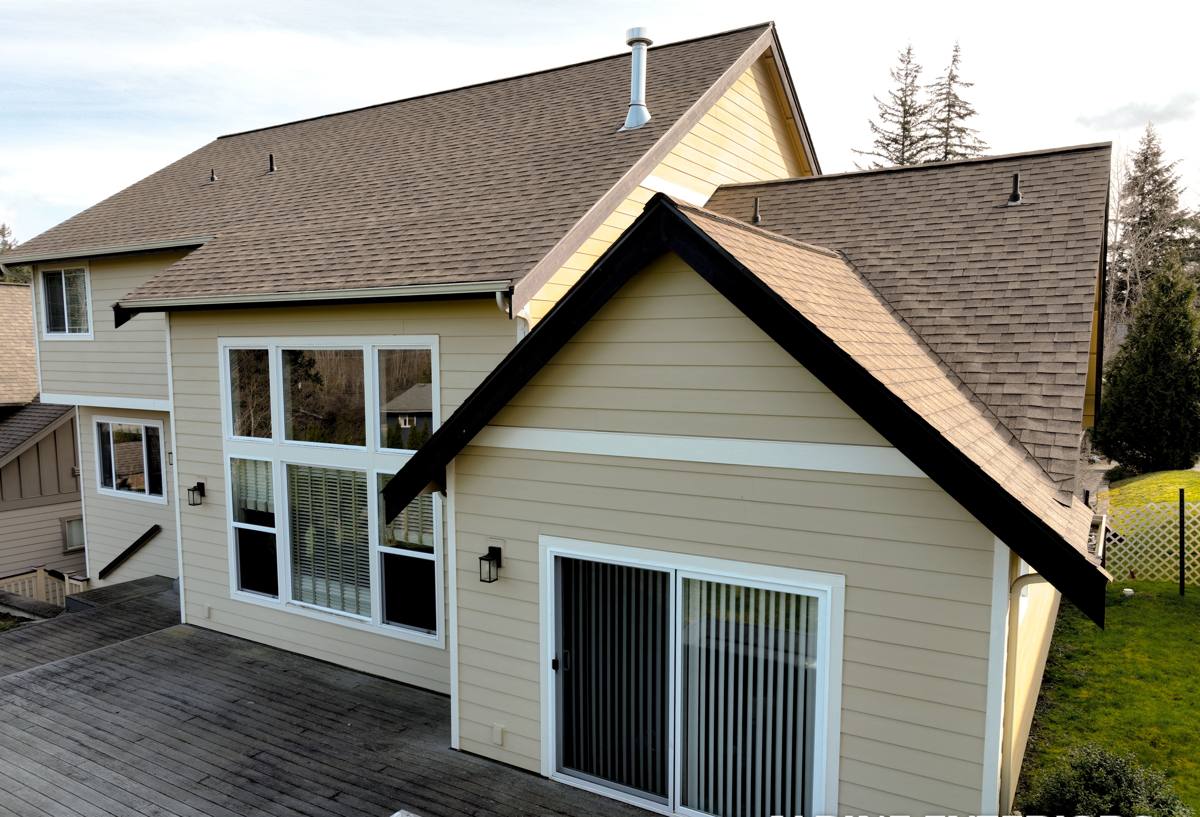
What Bellingham's Climate Actually Does to Siding
It helps to understand the specific mechanisms at work, because they drive every decision in a proper repair.
Salt Air and Slow Corrosion
Proximity to Bellingham Bay means airborne salt settles on exterior surfaces even a few miles inland. It accelerates corrosion of fasteners, flashing, and any exposed metal trim, and it speeds up the breakdown of paint films on materials that rely on a surface coating for protection.
Driving Rain and Wind-Driven Moisture
Whatcom County rain rarely falls straight down. Wind off the water pushes it sideways into siding, seams, and trim details. Any gap in flashing, caulking, or panel overlap becomes an entry point, and once moisture gets behind siding, it can sit there for weeks in our cool, humid winters instead of drying out quickly like it might in a warmer, drier climate.
Moss and Algae Season
Shade, moisture, and mild temperatures are exactly what moss and algae need to thrive, and Bellingham offers all three for most of the year. Moss on siding isn't just cosmetic — it holds moisture against the surface, feeds on organic material in some substrates, and can work into seams and fastener holes over time.
Common Siding Problems We Find on Barkley Homes
- Soft, swollen, or delaminating panels where moisture has been trapped behind the siding for an extended period
- Green or black staining concentrated on north-facing and shaded walls, fence lines, and under eaves
- Cracked or split panels near corners, window trim, and butt joints where caulking has failed
- Rust streaking below nail heads or metal trim, a sign fasteners are corroding
- Paint or factory finish that's chalking, peeling, or fading unevenly across different exposures
- Gaps at flashing, J-channel, or trim where the original installation didn't account for wind-driven rain
What a Correct Siding Repair Actually Involves
A repair that's done right starts before anyone touches a panel. We look at the whole wall system, not just the visible damage, because siding failure is almost always a symptom of a moisture or installation problem, not just a cosmetic one.
1. Diagnose the Cause, Not Just the Symptom
We check whether the damage is isolated or spreading, whether it traces back to a flashing gap, a caulking failure, ground contact, sprinkler overspray, or an original installation shortcut. Replacing a damaged panel without fixing the underlying cause just buys a year or two before the same spot fails again.
2. Check What's Behind the Siding
Where there's evidence of moisture intrusion, we look at the water-resistive barrier and sheathing underneath. If there's rot or compromised sheathing, that gets addressed as part of the repair — patching siding over damaged sheathing is not a real fix, it's a delay.
3. Match Material and Profile
Repairs need to match the existing siding's profile, reveal, and finish closely enough that the wall reads as one consistent surface. On homes already sided in James Hardie fiber cement, this is straightforward since the product line and colors are well documented. On homes sided in other materials, we'll be upfront about what a true match looks like versus what a reasonable repair looks like.
4. Rebuild the Water Management, Not Just the Surface
Flashing, house wrap laps, kick-out flashing at roof-wall intersections, and proper caulking joints all get corrected as part of the repair. In a climate with this much wind-driven rain, the water management details matter as much as the siding itself.
Repair or Replace? How We Make the Call
Not every siding problem in Barkley calls for a full re-side, and we're not going to tell a homeowner they need one when a targeted repair will genuinely hold up. The table below covers the factors we weigh.
| Factor | Points Toward Repair | Points Toward Replacement |
|---|---|---|
| Extent of damage | Isolated to one or two areas | Spread across multiple walls or elevations |
| Underlying sheathing | Dry, sound wood beneath | Rot or soft sheathing found in multiple spots |
| Age of existing siding | Newer install, otherwise sound | Original siding is at or past its expected service life |
| Material match availability | Same product/color still available | Discontinued profile or faded color that won't blend |
| Root cause | One-time or fixable issue (single flashing gap, one bad joint) | Systemic installation issues across the whole exterior |
Why We Repair and Replace With James Hardie Fiber Cement
When a repair calls for new material, or a section is far enough gone that a partial re-side makes more sense than a patch, we use James Hardie fiber cement exclusively. We don't install vinyl, LP SmartSide, or engineered wood products, and on a home in Barkley's climate, that's a deliberate call, not a brand preference.
Fiber cement doesn't absorb moisture the way wood-based siding can, and it won't warp, delaminate, or feed the kind of organic growth that thrives in our wet winters. Hardie's HZ5 product line is engineered specifically for climates like ours — freeze-thaw cycles, high humidity, and heavy rain — and it's factory-finished with ColorPlus coating, which holds color and resists the chalking and peeling we commonly see on field-painted or lower-grade siding after a few Bellingham winters. It's also non-combustible, which matters given how much wildfire smoke has become a seasonal reality even here on the west side of the Cascades.
If your home currently has a different siding material, we'll still repair it honestly where a repair is the right call. But when it's time to replace a section — or eventually the whole exterior — Hardie fiber cement is what we recommend and what we install.
Our Siding Repair Process in Barkley
- Inspection: We walk the full exterior, not just the reported problem area, since moisture issues often show up in more than one spot.
- Diagnosis: We identify the root cause — flashing, caulking, grading, sprinkler contact, or an installation gap — and explain it in plain terms.
- Written estimate: A clear scope covering material, labor, and any sheathing or water-barrier repair needed, with no vague allowances.
- Repair or partial re-side: We match panel profile and color as closely as the product line allows, and rebuild flashing and joints to shed water correctly.
- Final walkthrough: We check the repaired area against the surrounding siding for fit and finish before calling the job done.
Why It Matters That We Already Work in Barkley
Siding repair is a job where local knowledge shows up in small decisions that add up. A crew that regularly works Bellingham neighborhoods knows which wall orientations take the worst of the wind-driven rain, how aggressive moss growth gets by late winter, and how quickly a small flashing gap turns into hidden rot in this climate versus a drier one. That's the difference between a repair that gets re-done in three years and one that holds for the long term.
Working locally also means faster response for estimates and follow-up, and familiarity with the kind of home styles and HOA aesthetic expectations common in planned Bellingham neighborhoods like Barkley, so a repair blends in rather than standing out.
Signs You Should Have Your Barkley Home's Siding Inspected
- Panels that feel soft or spongy when pressed near the bottom edge
- Persistent green or black staining that returns quickly after cleaning
- Visible cracks or gaps at corners, seams, or around window and door trim
- Peeling or bubbling paint, especially on walls that get the most wind and rain exposure
- Rust streaks below nail heads or along metal flashing
- Any interior sign of moisture near an exterior wall — musty smell, discoloration, or soft drywall
Keeping Repaired Siding in Good Shape Afterward
Once a repair is done, a little seasonal upkeep goes a long way in this climate. Keep gutters clear so overflow doesn't run down the wall face, trim back vegetation that keeps siding shaded and damp, and rinse off moss and algae buildup before it has a chance to establish, particularly on north-facing walls. A quick visual check each fall, before the heavy rains set in, catches small caulking or flashing issues while they're still cheap and easy to fix.
If you're seeing any of the warning signs above on a Barkley home, or you just want an honest read on whether it's a repair or something bigger, we're happy to take a look. Estimates are free, there's no pressure, and you'll get a straight answer about what your siding actually needs.