 Bellingham Roofing
 Why Sehome Roofs Age Differently Than You'd Expect
Sehome sits close enough to Bellingham Bay and the surrounding hills that its housing stock takes a specific kind of beating. It isn't one big dramatic event that wrecks a roof here — it's the slow accumulation of salt-laden air off the water, wind-driven rain that gets pushed sideways under standard flashing details, and a moss season that can run eight or nine months out of the year in shaded, tree-lined streets. A roof that would hold up fine in a drier inland climate can start showing real trouble in Sehome years ahead of schedule if it wasn't built or maintained with these conditions in mind.
We've worked enough roofs in this neighborhood to know the pattern: north-facing slopes and sections shaded by mature trees hold moisture longer, valleys and low-slope transitions collect debris that traps water against the roof deck, and older asphalt shingles in particular lose their granule protection faster once salt air and moss have been working on them together. None of that means Sehome is a bad place to own a roof — it just means the replacement has to account for what the neighborhood actually does to a roof, not what a generic install manual assumes.
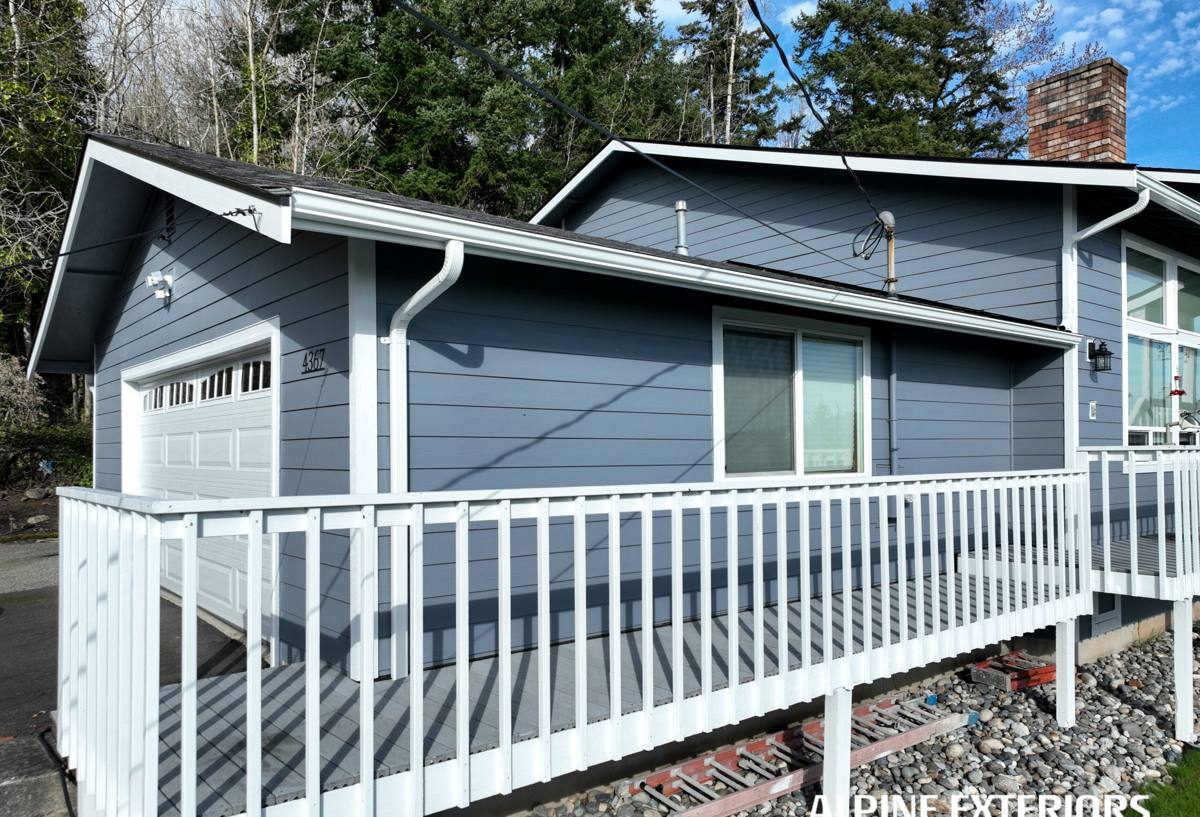
Signs a Sehome Roof Has Crossed From "Repair" Into "Replace"
Not every problem roof needs full replacement, and we'll tell you plainly when a repair is the honest answer. But there are signs that point toward replacement being the more cost-effective path over the long run:
- Granule loss heavy enough that you can see bare, shiny patches on multiple slopes, not just one weathered section
- Moss that has worked its way under shingle tabs rather than just sitting on the surface — this lifts shingles and breaks the seal
- Soft or spongy decking felt underfoot during inspection, which signals moisture has already reached the sheathing
- Repeated leaks around the same penetration or valley even after prior repairs
- A roof nearing or past the manufacturer's expected service life for its material, especially if it was never properly ventilated
- Visible sagging along the ridge or roof plane, which usually means structural moisture damage, not just a surface issue
If you're only seeing one or two isolated shingles damaged, or a single flashing point leaking, that's a repair conversation. We'd rather fix what actually needs fixing than sell a full replacement a roof doesn't need yet.
What Makes Whatcom County Roofs Different From a Drier Climate
Whatcom County's rainfall isn't just volume — it's duration. Long, steady rain events combined with wind off the bay mean water has more time and more lateral push to find weak points than a short, heavy downpour would create elsewhere. That changes how underlayment, flashing laps, and valley details need to be built, and it's a big part of why a roof designed for a different climate can underperform here even when installed correctly on paper.
What a Correct Roof Replacement Actually Involves
A roof replacement done right in this climate is more than stripping old material and nailing down new shingles. Every layer matters, and skipping or shortcutting any one of them is usually where premature failures start.
Full Tear-Off, Not Overlay
We remove the existing roofing down to the deck rather than laying new material over old. Overlays trap moisture that's already gotten in and hide deck damage that needs to be found and fixed before new material goes down — and in a climate this wet, hidden moisture under an overlay is a problem waiting to surface.
Deck Inspection and Repair
Once the old roofing is off, we inspect the sheathing for soft spots, delamination, or rot, particularly around valleys, chimneys, and any area that was holding moss or standing water. Damaged sections get replaced before anything new is installed — new shingles over a compromised deck is a warranty problem and a leak problem waiting to happen.
Underlayment and Ice-and-Water Protection
Given how much wind-driven rain this area sees, we pay close attention to underlayment coverage at eaves, valleys, and low-slope transitions where water is most likely to be pushed backward under the shingle line.
Flashing at Every Penetration
Chimneys, vents, skylights, and wall-to-roof transitions are where most leaks actually originate — not the open field of shingles. New flashing, properly lapped and sealed, goes in at every one of these points rather than reusing old flashing to save time.
Ventilation
Proper intake and exhaust ventilation keeps the attic space at a consistent temperature and moisture level, which reduces the moss and algae growth that thrives on a roof that's staying damp and cool longer than it should.
Material Options for Sehome's Climate
There's no single "best" roofing material for every home — it depends on your roof's slope, shading, budget, and how long you plan to stay in the house. Here's how the common options actually perform under Bellingham's specific mix of salt air, rain, and moss pressure:
| Material | Moss & Moisture Resistance | Salt Air Durability | Typical Lifespan | Notes |
|---|---|---|---|---|
| Architectural Asphalt Shingle | Moderate — benefits from zinc/copper strips | Good with quality granules | 25-30 years | Most common choice; cost-effective and widely available |
| Standing Seam Metal | Excellent — sheds moisture, little for moss to grip | Very good with proper coatings | 40-50+ years | Higher upfront cost, lower long-term maintenance |
| Synthetic/Composite Shingle | Good | Good | 30-40 years | Useful where wood-look appearance is wanted without wood's moisture sensitivity |
| Cedar Shake | Requires diligent upkeep in this climate | Moderate | 20-30 years with maintenance | We'll walk you through the maintenance commitment honestly before you commit to it |
We don't push one material on every homeowner. What we will do is explain the real maintenance trade-offs for your specific roof — slope, shade exposure, and how much upkeep you actually want to do — before you decide.
Moss Prevention Isn't Optional Here — It's Part of the Job
A roof replacement in Sehome that doesn't address moss is an incomplete job. We install roofs with moss growth in mind from day one: proper ventilation to reduce the damp, shaded conditions moss favors, zinc or copper strips near the ridge where applicable, and slope-appropriate materials that give moss less to hold onto in the first place. We'll also give you a straightforward maintenance schedule — gutter clearing and periodic moss treatment — because even the best-installed roof still needs basic upkeep in a climate this wet.
Our Replacement Process
- Inspection and honest assessment — we look at the whole roof system, not just the obvious problem area, and tell you plainly whether replacement or repair is the right call
- Written estimate — clear scope, material options, and pricing with no vague allowances
- Permitting — we handle the permit process required for roof replacement in the City of Bellingham so you don't have to navigate it yourself
- Material delivery and site protection — landscaping, siding, and gutters get protected before tear-off begins
- Full tear-off and deck inspection — old material removed, deck checked and repaired as needed
- Underlayment, flashing, and new roofing installed — built for this climate's rain and wind patterns, not a generic install
- Cleanup and final walkthrough — magnetic sweep for debris, full walkthrough with you before we consider the job done
Why Hiring a Crew That Already Works Sehome Matters
A roof isn't just a product — it's an installation, and installation quality is where most roofing problems actually start. A crew that already works in Sehome and the surrounding Bellingham neighborhoods has seen how houses here are laid out, how tree cover affects moisture patterns street by street, and which flashing and ventilation details hold up against this specific combination of salt air, sustained rain, and moss. That's not something you get from a crew that mostly works drier inland climates and treats every job the same way.
Being local also means we're not disappearing after the check clears. If something needs a warranty callback, we're a short drive away, not a company that worked the area for one season and moved on.
What Affects the Cost of a Sehome Roof Replacement
Every roof is different, and we'll give you specific numbers after an on-site inspection rather than a rough guess over the phone. In general, the factors that move the price are:
| Factor | Why It Matters |
|---|---|
| Roof size and complexity | More valleys, dormers, and penetrations mean more flashing work and labor time |
| Current roof condition | Deck repair needs aren't known until tear-off, so hidden damage can affect final cost |
| Material selection | Asphalt, metal, and composite options carry different material and labor costs |
| Roof pitch and access | Steeper or harder-to-access roofs require more time and safety setup |
| Ventilation upgrades | Adding or correcting intake/exhaust ventilation adds some cost but reduces long-term moss and moisture issues |
Most full roof replacements land in a broad mid-to-upper four-figure to low five-figure range depending on these factors, with metal roofing typically running higher upfront than asphalt. We'll always walk you through exactly what's driving your number.
Ready When You Are
If your Sehome roof is showing its age — moss working under the shingles, granule loss, a leak that keeps coming back — we're glad to take a look and give you a straightforward assessment. There's no pressure and no obligation, just an honest read on where your roof actually stands and what it would take to fix it right. Use the form below to request a free estimate, and we'll get back to you to schedule a time that works.