 Bellingham Roofing
 Siding Replacement for Barkley Homes
Barkley sits close enough to the water and to Bellingham's tree cover that its homes take a specific kind of weathering: salt-tinged air moving in off Bellingham Bay, long stretches of driving rain through fall and winter, and shade patterns that keep north- and west-facing walls damp well after a storm has passed. Siding in this neighborhood doesn't fail because homeowners neglect it. It fails because the wrong product was never suited to this combination of moisture, salt, and shade in the first place.
When we replace siding in Barkley, we're not applying a generic Whatcom County spec. We're accounting for the specific walls that take the worst of the weather on each house, the drainage path water actually follows once it hits the cladding, and the fact that whatever goes up needs to hold its finish and its shape for decades, not just look good the year it's installed.
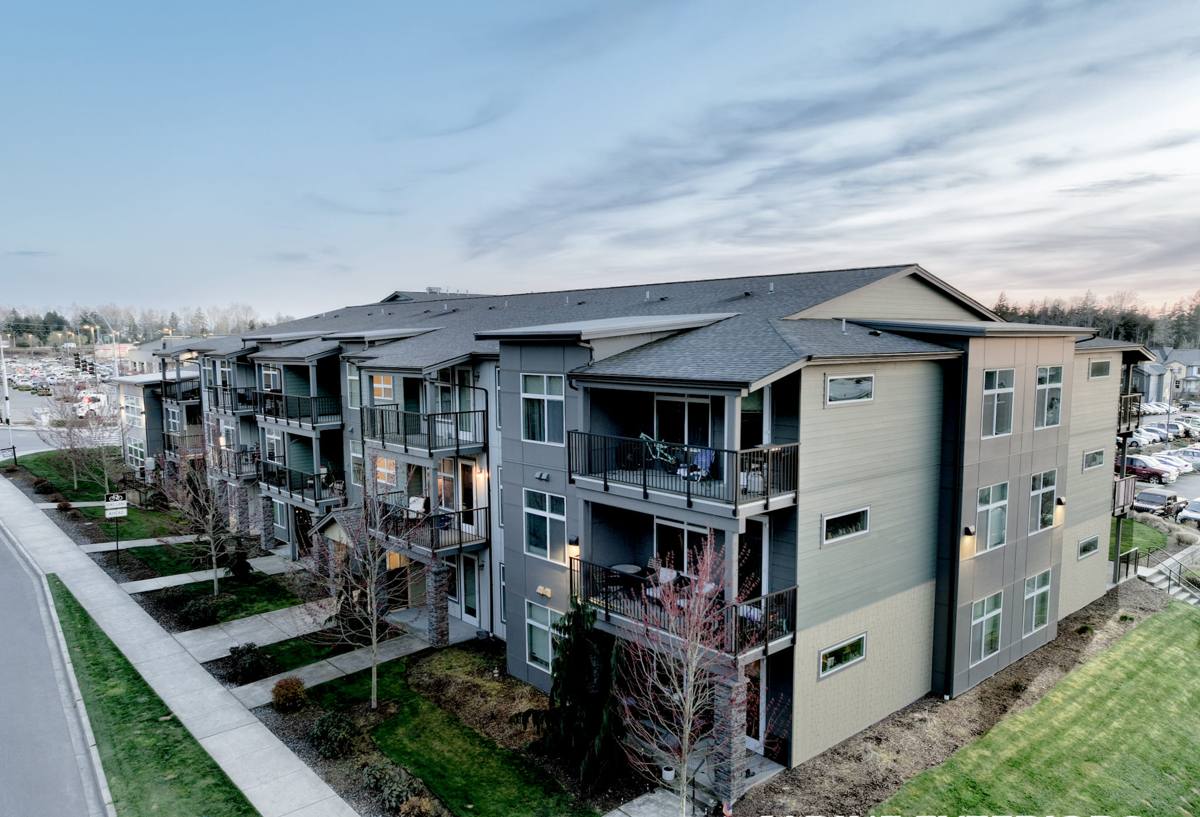
What Barkley's Climate Actually Does to Siding
Salt Air and Coastal Moisture
Bellingham isn't a heavy salt-spray environment the way an oceanfront town is, but Barkley's proximity to the bay means a steady low-level exposure to moist, salt-tinged air. Over years, that exposure works on fasteners, trim edges, and any seam where a siding product's factory finish has been compromised by field cutting or poor caulking. Materials that rely on paint film alone to keep moisture out are the first to show it — chalking, fading, and soft spots at butt joints.
Driving Rain
Whatcom County's rain doesn't just fall straight down. Wind off the water pushes it sideways into walls, especially on gable ends and any elevation without deep eave overhangs. That means water is hitting siding at an angle for a large share of the year, working its way behind poorly lapped boards or under caulking that's lost its seal. A correct installation has to assume wind-driven rain as the normal case, not the exception.
Moss Season
Shade from mature trees plus consistent moisture gives Barkley a moss season that runs longer than it does in drier, more open parts of the county. Moss and algae don't just look bad — they hold moisture against the siding surface for extended periods, which accelerates any weakness already present in the material or the finish. Siding that can't shed water quickly, or that absorbs moisture into its substrate, gives moss more time to take hold with every season.
Why We Only Install James Hardie Fiber Cement
We've made a standing decision as a company to install James Hardie fiber cement siding and nothing else — not vinyl, not LP SmartSide, not Cemplank, not Allura, not primed spruce or cedar. That's not a marketing position; it's a practical one built around what actually holds up in this climate.
Fiber cement is non-combustible and dimensionally stable — it doesn't expand and contract with moisture the way wood-based products do, and it doesn't soften at seams the way some engineered wood sidings can when water gets behind them. James Hardie's ColorPlus factory-applied finish is baked on under controlled conditions, which gives it better adhesion and UV resistance than field-applied paint, and it's specifically what stands up to the fade and chalk cycle that salt air and sun exposure cause over time.
Hardie also builds region-specific HZ5 product lines engineered for climates like ours — freeze-thaw cycling, sustained moisture, and the kind of weather Whatcom County sees for eight or nine months of the year. That's a meaningfully different design target than a product engineered as a one-size-fits-all national offering.
What We Turn Down, and Why
- Vinyl siding: Lightweight and inexpensive, but it can warp under heat, doesn't hold paint if you ever want to change color, and its seams are a long-term weak point against wind-driven rain.
- LP SmartSide and other engineered wood products: Reasonable performers when installation is flawless, but any breach in the surface — a missed caulk joint, a poorly flashed penetration — lets moisture into the wood substrate, and Barkley's moss season gives that moisture nowhere to dry out quickly.
- Cemplank and Allura: Both are fiber cement competitors to Hardie, and reasonable products on paper. We standardized on one manufacturer so our crews build deep, repeatable expertise with a single system's fastening patterns, joint details, and warranty requirements rather than splitting attention across several.
- Primed spruce or raw cedar: Beautiful when new, but they demand a maintenance schedule most homeowners don't keep up with, and in a shaded, damp neighborhood like Barkley that maintenance gap shows up fast as rot, cupping, and moss growth.
What a Correct Siding Replacement Involves
Pulling old siding off and nailing up new boards is the easy part to see. The parts that actually determine whether the job lasts are underneath and around it.
Sheathing and Moisture Barrier
Once old siding is off, we inspect the sheathing for soft spots, rot, or prior water damage — common on north and west walls that catch the worst of the driving rain. Any compromised sheathing gets replaced before anything else happens. A weather-resistive barrier goes on correctly lapped, shingle-style, so water is directed out and down rather than trapped behind the new siding.
Flashing Details
Windows, doors, and any wall penetration are where siding jobs actually fail. We flash these openings so that water is shed to the exterior at every layer, not just relying on caulk as a first line of defense. Caulk is a backup, not a strategy.
Fastening and Clearances
James Hardie has specific fastening patterns and minimum clearances from grade, roofing, and decks — these exist because ignoring them is exactly how moisture gets a foothold at board bottoms. We follow manufacturer installation specs because that's also what keeps the product's warranty valid.
Trim and Joint Sealing
Butt joints and trim transitions get sealed with a sealant compatible with ColorPlus finish, not just whatever's on the truck. In a neighborhood with this much sustained moisture and shade, joint integrity is one of the first things to fail on a rushed job.
Our Process for a Barkley Home
- On-site assessment: We walk the property, note which elevations take the worst weather, check for existing rot or moss buildup, and look at trees and shade patterns specific to the lot.
- Written estimate: A clear scope covering tear-off, sheathing repair contingencies, James Hardie product line and color, and a realistic timeline.
- Tear-off and inspection: Old siding comes off, sheathing gets inspected and repaired as needed before anything new goes up.
- Weather barrier and flashing: Installed to manufacturer spec, with particular attention to window and door openings.
- Hardie installation: Fastened, lapped, and sealed to James Hardie's published specifications for our climate zone.
- Final walkthrough: We review the finished work with the homeowner before calling the job complete.
Why a Crew That Already Works Barkley Matters
A siding crew that's worked this neighborhood already knows which elevations on a typical Barkley lot take the worst wind-driven rain, how much shade a given tree canopy actually throws across the year, and what moss buildup looks like when it's cosmetic versus when it's a sign of trapped moisture underneath. That's not something you can fully substitute with a generic checklist — it comes from doing the work here, house after house, season after season.
It also matters for something more basic: showing up. A crew based in and around Bellingham can get back out to a Barkley job site quickly if something needs a second look, without routing through a call center or a multi-week scheduling gap that out-of-area contractors often can't avoid.
Cost Factors for Siding Replacement in Barkley
Every home is different, but the following factors are what actually move the price on a siding replacement in this neighborhood — we avoid quoting numbers until we've seen the specific house, but this is what to expect to discuss.
| Factor | Why It Matters Here |
|---|---|
| Sheathing condition | Homes with prior water intrusion on shaded or exposed walls may need sheathing replaced before new siding goes on |
| Home size and wall complexity | Dormers, gables, and multiple roof lines add cutting, flashing, and labor time |
| James Hardie product line selected | Lap siding, panel systems, and shingle-style products carry different material and labor costs |
| Trim and accessory scope | Fascia, soffit, and trim replacement alongside siding changes total project cost |
| Access and site conditions | Mature landscaping, tight lot lines, or difficult staging areas common in established Barkley yards can affect labor time |
| Color and finish | Standard ColorPlus color options versus custom or premium finishes |
Signs Your Barkley Home Needs Siding Replacement Now
- Persistent moss or algae growth that returns within weeks of cleaning
- Soft or spongy siding when pressed, especially near the base of walls or under windows
- Visible warping, cupping, or gaps opening at board seams
- Paint that's chalking, peeling, or fading unevenly across a single wall
- Interior signs of moisture — musty smells, staining, or soft drywall near exterior walls
- Rising energy bills that suggest the wall assembly is no longer sealing properly
Get an Estimate for Your Barkley Home
If your siding is showing wear from Barkley's mix of salt air, driving rain, and long moss season, it's worth having a local crew take a direct look before problems move from cosmetic to structural. We offer free, no-pressure estimates — fill out the form below and we'll walk your property and talk through what James Hardie fiber cement would look like on your home.