 Bellingham Roofing
 Why Birch Bay Homes Need a Different Approach to Windows
Birch Bay sits right on the water, and that changes what a window has to survive out here compared to a house a few miles inland in Bellingham proper. Salt-laden air corrodes hardware and finishes faster than it does anywhere else in Whatcom County. Wind-driven rain off the bay doesn't just fall on a window — it gets pushed sideways into every gap, joint, and sill. And the long gray stretch from October through April keeps moisture sitting against frames and trim for months at a time, which is exactly what moss and mildew need to take hold.
A window that's fine in a sheltered neighborhood can fail early in Birch Bay if it wasn't specified, flashed, and sealed with those conditions in mind. This page walks through what actually matters for custom window work in this specific area — not generic window-buying advice, but what we've learned installing and repairing windows on homes that sit close to the water.
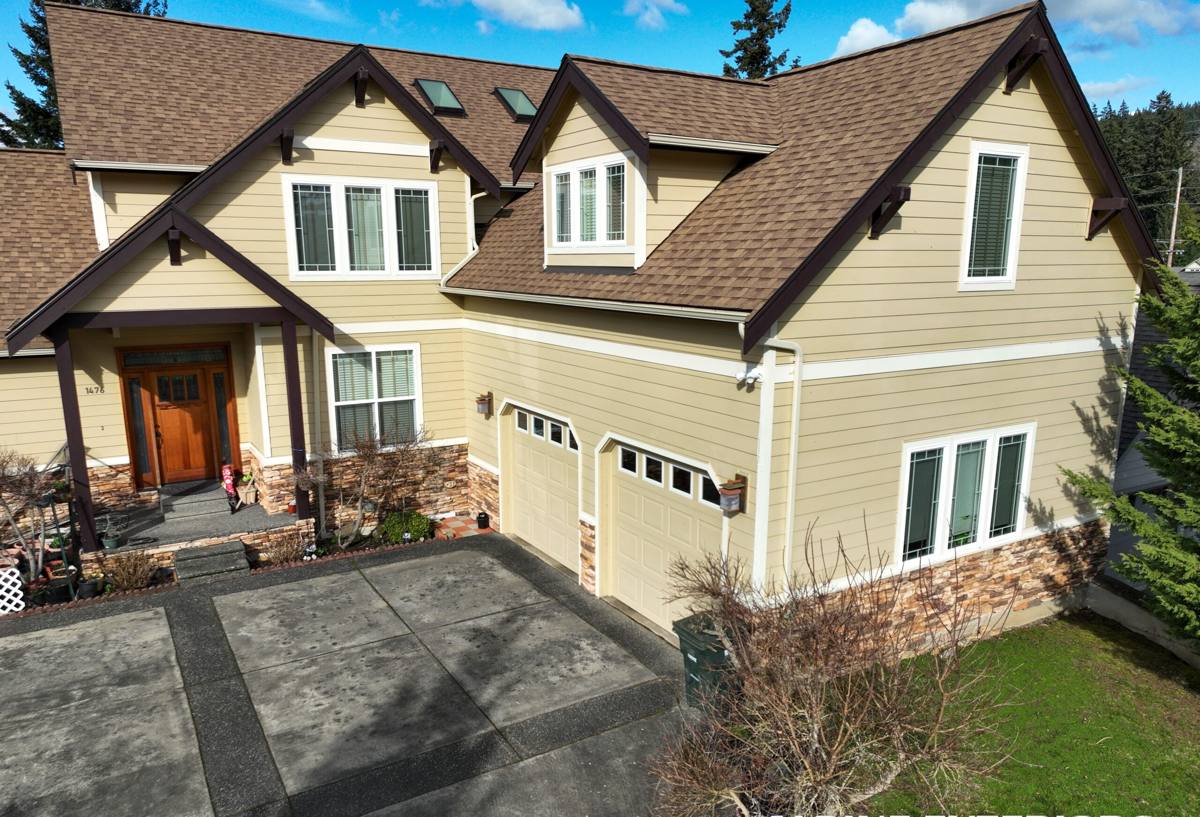
What Salt Air Actually Does to a Window Over Time
Salt air is corrosive to metal hardware — hinges, locks, balances, and especially aluminum or steel components that aren't rated for coastal exposure. Over several seasons, untreated or lower-grade hardware can pit, stiffen, or seize, which shows up as windows that get harder to open, latches that don't seat right, or locks that start to bind.
It also affects finishes. Cheaper vinyl and painted wood trim can chalk, fade, or develop a rough texture faster near the water than it would a few miles inland. This doesn't mean windows near the bay are doomed — it means the hardware grade, finish quality, and frame material need to be chosen with that exposure in mind, not just picked off a standard spec sheet built for a typical suburban lot.
What We Look For Before Recommending a Window
- Corrosion-resistant hardware (stainless or coated components rated for coastal/marine-adjacent use)
- Frame materials that don't rely on a painted finish alone to resist moisture and salt exposure
- Weatherstripping and seals rated for sustained wind-driven rain, not just occasional exposure
- Glazing and spacer systems that hold up to constant humidity swings without fogging prematurely
Driving Rain and Wind Load: The Installation Problem, Not Just the Product
A big mistake homeowners make is assuming the window itself is what keeps water out. In our experience, most water intrusion problems on custom windows near the water trace back to the installation — the flashing, the sealant detail, and how the window integrates with the wall assembly — not a defective window unit.
Birch Bay gets rain that comes in at an angle, pushed by wind off the water. That means:
- Sill pans and flashing need to actually shed water outward, not just sit there as a formality
- Sealant joints need to be continuous, with no gaps at corners where most leaks start
- The window's nailing flange or mounting method needs to match the wall system it's going into — retrofit versus new-construction detailing are not interchangeable
- Head flashing above the window matters as much as the sill below it, especially on walls that take direct wind exposure
We treat every custom window installation in this area as a water-management job first, and a window-swap job second. Get the water management wrong and even a premium window will eventually leak around it.
Moss Season and What It Means for Window Trim and Sills
Whatcom County's long wet season keeps organic growth active for much of the year, and window sills, trim, and the top edges of frames are prime real estate for moss and mildew — especially on north-facing walls or windows shaded by trees, both common around Birch Bay. Moss holds moisture against wood and painted surfaces, which accelerates rot and paint failure if it's left to build up.
Custom window work in this climate should account for that from the start:
- Sill design that sheds water and doesn't create a flat ledge where debris and moss can collect
- Trim materials and paint systems chosen for sustained moisture exposure, not just appearance
- Enough of a drip edge or overhang detail (where the house design allows) to reduce direct rain contact on the window head
None of this eliminates the need for periodic cleaning, but the right detailing at install time cuts down how often moss becomes a real maintenance problem instead of a cosmetic one.
Common Signs a Birch Bay Home Needs Window Work
| What You're Seeing | What It Usually Means |
|---|---|
| Fogging or moisture between panes | Failed seal on the insulated glass unit — usually a replacement, not a repair |
| Soft or discolored trim/sill wood | Ongoing moisture intrusion, often from a flashing or sealant gap |
| Drafts even with the window fully latched | Worn weatherstripping or a frame that's shifted slightly out of square |
| Hardware that's stiff, sticking, or won't lock cleanly | Hardware corrosion or frame movement — common in salt-air exposure |
| Moss or dark staining building up on sills | Sill design or drainage not shedding water fast enough |
| Visible gaps or cracked caulk around the frame exterior | Failing seal — an early-stage water intrusion risk, worth addressing before it becomes rot |
What "Custom" Actually Means for Window Work
Custom windows aren't just about non-standard shapes or sizes, though that's part of it — older Birch Bay homes and additions often have openings that don't match current standard sizing, and a custom order avoids the compromises of forcing a stock size into a mismatched opening. Custom also covers:
- Matching sightlines and trim profiles on a partial replacement, so new windows don't look out of place next to originals you're keeping
- Choosing glazing packages suited to sun exposure and wind direction on a given wall, rather than a one-size-fits-all spec
- Coordinating with siding or trim work when a window replacement overlaps with other exterior repairs, so flashing details tie together correctly instead of being done in isolation
On a coastal property, custom sizing and detailing is often less about style preference and more about solving real fit and water-management problems that a stock order can't.
Our Process for a Birch Bay Custom Window Project
1. On-Site Assessment
We look at the actual wall assembly, existing flashing condition, and exposure direction for each window — a wall facing the bay directly gets different treatment than a sheltered side wall.
2. Honest Scope and Options
We'll tell you plainly whether a window needs full replacement or whether a repair (reseal, hardware swap, glazing unit replacement) solves the actual problem. We don't upsell a full replacement when a repair will hold up.
3. Custom Order and Fit
Measurements are taken for the actual opening, not assumed standard sizes, and materials are selected with coastal exposure in mind.
4. Installation with Water Management as Priority One
Proper flashing, sill pan detailing, and continuous sealant joints — done in a sequence that actually sheds water, not just looks finished.
5. Walkthrough
We show you what was done, what to expect from the materials over time, and what basic upkeep (if any) helps the install last in this environment.
Why Local Experience in Birch Bay Specifically Matters
Bellingham and Whatcom County cover a lot of different microclimates — a home in the Columbia neighborhood doesn't face the same wind and salt exposure as a home a block off the water in Birch Bay. A crew that mainly works inland jobs may not default to the hardware grades, flashing sequence, or sill detailing that a bay-front or near-bay home actually needs, simply because it's not what they run into every day.
Working this specific area regularly means we've seen which details hold up here and which ones cause callbacks a few years down the road. That's not a marketing point — it's the difference between a window install that needs revisiting in three years and one that doesn't.
Questions Worth Asking Any Contractor for This Kind of Work
- What hardware grade are you specifying, and is it rated for coastal/salt exposure?
- How are you detailing the sill pan and flashing on this specific wall?
- Are you matching trim and sightlines to the existing windows I'm keeping?
- What's your plan if the opening isn't a standard size?
- What warranty coverage applies to the installation itself, separate from the manufacturer's product warranty?
If you're dealing with drafty, foggy, sticking, or moss-stained windows on a Birch Bay property, we're happy to take a look and give you a straight answer about what's actually needed. Reach out for a free, no-pressure estimate using the form below.