 Bellingham Roofing
 Why Silver Beach Roofs Wear Differently Than Roofs Inland
Silver Beach sits close enough to the water that homes here take on a different kind of weathering than a roof ten miles inland in Whatcom County. The combination of salt-laden air, wind-driven rain coming off Bellingham Bay, and heavy tree cover on many lots creates a roofing environment that's harder on materials and less forgiving of shortcuts. A new roof installation done right for this neighborhood isn't the same job as a generic reroof — it needs to account for corrosion, moisture intrusion, and moss from day one, not as an afterthought.
We've installed and repaired roofs across this part of Bellingham long enough to know which failure points show up first in Silver Beach specifically: rusted fasteners and flashing on older homes, soaked sheathing under valleys that were never properly lined, and moss colonies that take hold on north-facing slopes shaded by mature trees. None of that is unusual for the area — it's just what marine-climate roofing looks like, and it's exactly what a correct installation is designed to resist.
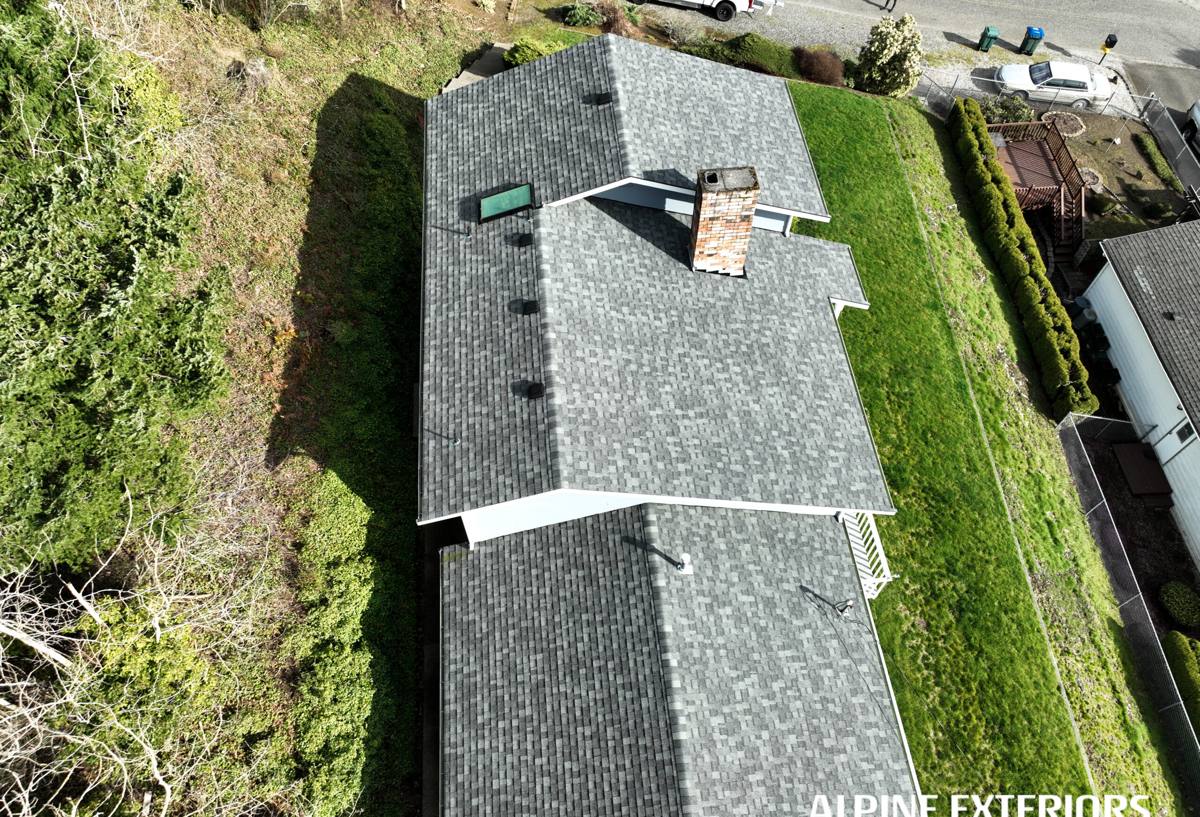
What Salt Air, Rain, and Moss Actually Do to a Roof
Salt Air and Corrosion
Airborne salt accelerates corrosion on any exposed metal — nails, flashing, drip edge, vent stacks, and gutter hardware. On a standard-grade install, that shows up as rust streaks and failing fasteners years before the shingles themselves are worn out. Once a fastener corrodes and loosens, wind can lift the shingle around it, and that's usually where a leak starts.
Driving Rain
Rain that comes in sideways off the water doesn't just run down the roof — it gets pushed sideways and upward at valleys, wall intersections, and low-slope transitions. A roof built for calm, straight-down rain will leak here even if every shingle is installed correctly, because wind-driven rain finds gaps that gravity-only rain never would.
Moss and Shade
Whatcom County's long wet season and Silver Beach's tree cover give moss everything it needs: moisture, shade, and time. Moss holds water against the roofing material, works its way under shingle edges as it grows, and can lift granules and tabs over several seasons. Left unmanaged, it shortens the useful life of an otherwise sound roof.
What a Correct New Roof Installation Involves
Full Tear-Off and Deck Inspection
We don't install a new roof over an old one. A full tear-off lets us actually see the deck — soft spots, water staining, rot around old flashing — and replace damaged sheathing before it's covered up and forgotten for another 20 years. Skipping this step is one of the most common ways a "new roof" fails early.
Ice-and-Water Barrier at Vulnerable Points
Even though Bellingham doesn't see the ice-dam problems of colder climates, self-adhering waterproof membrane still matters here — at eaves, valleys, around chimneys and skylights, and anywhere driving rain is likely to get pushed uphill under the shingles. This is the single detail that separates a roof that shrugs off a windstorm from one that leaks at the first hard rain.
Synthetic Underlayment Across the Field
Over the full roof deck, a synthetic underlayment gives a secondary water barrier that resists tearing and holds up during the (sometimes multi-day) install window better than old-style felt, which matters when you're working around Bellingham's unpredictable weather windows.
Flashing Done Right, Not Reused
Flashing around chimneys, walls, skylights, and roof-to-roof transitions gets replaced, not reused. Old flashing is one of the most common sources of hidden leaks, and reusing it to save time is a shortcut that costs the homeowner later.
Ventilation That Matches the Home
Proper intake and exhaust ventilation keeps moisture from building up in the attic, which matters in a climate where the air outside is already damp much of the year. Poor ventilation traps moisture against the underside of the deck and can rot sheathing from the inside, even with a perfect roof surface on top.
Material Choices for a Marine Climate
There's no single "best" roofing material for Silver Beach — the right choice depends on budget, roof slope, tree cover, and how long you plan to own the home. Here's how the common options actually compare for this specific environment:
| Material | Salt Air Resistance | Moss Resistance | Typical Lifespan | Trade-offs |
|---|---|---|---|---|
| Architectural asphalt shingle | Good, with corrosion-resistant fasteners | Moderate — benefits from algae-resistant granules | 25–30 years | Best value; needs periodic moss treatment on shaded slopes |
| Standing seam metal | Excellent with proper coating/fastener spec | Excellent — sheds moss with little foothold | 40–50+ years | Higher upfront cost; requires correct fastener and underlayment detailing near salt exposure |
| Cedar shake | Fair — needs regular maintenance | Poor without ongoing treatment | 20–25 years with upkeep | Highest maintenance burden in a wet, shaded climate; we're honest that this isn't our first recommendation for heavily shaded Silver Beach lots |
| Synthetic/composite shingle | Good | Good | 30–50 years depending on product | Mid-to-high cost; product quality varies by manufacturer |
For most Silver Beach homes, a quality architectural shingle with corrosion-resistant fasteners and algae-resistant granules hits the right balance of cost and durability. Homeowners planning to stay long-term, or with a lot of shade and moss history, often find metal pays for itself in reduced maintenance and moss resistance over the life of the roof.
Our Installation Process, Start to Finish
- On-site inspection and estimate — we walk the roof, check the attic where accessible, and give you an honest assessment of what the job actually needs.
- Material selection — we walk through the trade-offs above based on your budget, slope, and shade conditions.
- Scheduling around weather — we plan install windows with Bellingham's rain patterns in mind, and tarp any exposed deck if weather turns mid-job.
- Full tear-off and deck inspection — old roofing removed, deck checked and repaired as needed.
- Underlayment, ice-and-water barrier, and flashing installation — the waterproofing layer that does the real work over the life of the roof.
- Shingle or panel installation — installed to manufacturer spec, with corrosion-resistant fasteners throughout.
- Ventilation check and adjustment — intake and exhaust verified or upgraded as part of the job.
- Cleanup and final walkthrough — magnetic sweep for stray fasteners, debris hauled off, and a walkthrough so you know exactly what was done.
Timeline and What to Expect During the Project
A typical single-family roof replacement in this area takes one to three days of active work, weather permitting, though the calendar time from estimate to install often runs longer depending on material availability and scheduling. Bellingham's damp season means we build in flexibility — if rain moves in mid-tear-off, the deck gets protected and work resumes rather than being rushed to beat weather. Most jurisdictions, including here in Whatcom County, require a building permit for a full roof replacement; a contractor who handles that step for you (rather than leaving it to the homeowner) is doing the job the way it should be done.
Ongoing Moss and Debris Management
A correct install reduces moss problems but doesn't eliminate the need for basic upkeep, especially under mature trees. Zinc or copper strips near the ridge can help suppress regrowth over time, and periodic gentle cleaning — never pressure washing, which strips granules and shortens shingle life — keeps a new roof performing as designed. We're happy to talk through a simple maintenance schedule appropriate to your specific lot and tree cover.
Questions Worth Asking Before You Hire
- Does the estimate include full tear-off, or is it a cheaper overlay quote?
- Are fasteners and flashing rated for a marine/coastal environment, or standard grade?
- Is ice-and-water barrier included at valleys, eaves, and penetrations — or only where code minimums require it?
- Who pulls the building permit, and is that cost included in the quote?
- What's the workmanship warranty, separate from the manufacturer's material warranty?
- Does the crew have current, verifiable experience working in this specific neighborhood or climate zone?
Why a Crew That Already Works Silver Beach Matters
Roofing crews that mostly work drier, inland areas sometimes treat coastal detailing as optional — extra flashing, upgraded fasteners, ventilation adjustments — because it's not what they see every day. A crew that regularly works Silver Beach and the surrounding Bellingham waterfront treats those details as standard practice, because we've seen what happens when they're skipped: the callback for a leak two winters later, the fastener rust bleeding through new shingles, the moss creeping back because drainage was never addressed. Local, ongoing familiarity with how this specific stretch of Whatcom County weather behaves isn't a marketing line — it's the difference between a roof that's built for where it actually sits and one that's built to a generic spec sheet.
If you're planning a new roof installation in Silver Beach, we're glad to come take a look, walk you through what your roof specifically needs, and give you a straightforward, no-pressure estimate using the form below.