 Bellingham Roofing
 Metal Roofing on a Waterfront Lot in Birch Bay
Birch Bay sits right on the water in northern Whatcom County, and that location changes the math on roofing more than most homeowners expect until they've lived through a few winters out here. Homes get a steady dose of salt-laden marine air coming off the bay, long stretches of wind-driven rain through fall and winter, and a moss season that can run most of the year on shaded or north-facing slopes. That combination is exactly why metal roofing gets asked about so often in this specific neighborhood — it handles salt exposure, wind, and moss better than most other roofing materials, provided it's specified and installed correctly for this exact climate.
We install metal roofing for homes throughout Birch Bay and the surrounding waterfront areas, and we treat the material, the fasteners, and the underlayment as one connected system rather than a stack of parts. A metal roof that's wrong in any one of those details can fail in ways a shingle roof wouldn't, so getting the details right matters more here than it does on a lot of other roofing jobs.
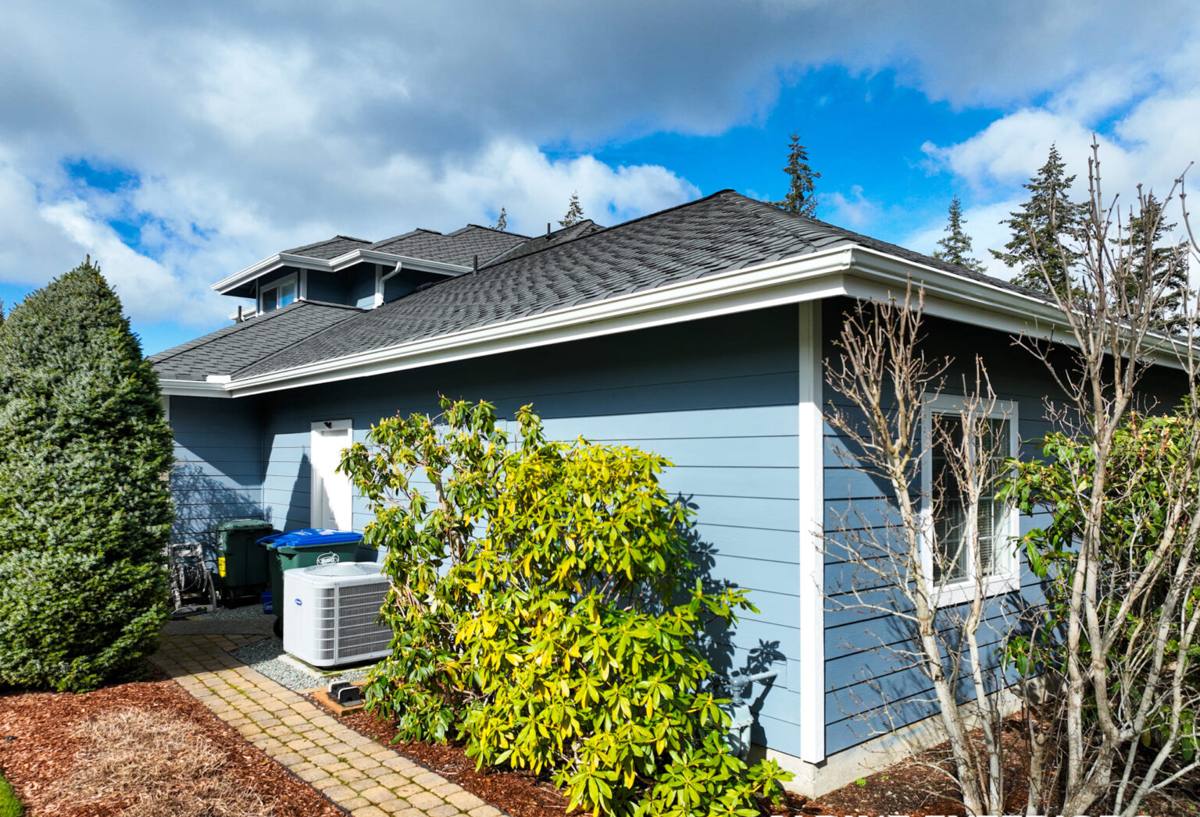
What Birch Bay's Climate Actually Does to a Roof
Salt Air and Metal Corrosion
Being on the bay means more direct salt exposure than homes even a few miles inland see. Salt-laden air accelerates corrosion of fasteners, flashing, and any metal component with a weak or mismatched coating. This is the single biggest reason a metal roof in Birch Bay needs to be spec'd differently than one going on a home in a drier, more sheltered part of the county — the panel finish, the fastener material, and the flashing all need to be chosen with corrosion resistance as a starting requirement, not an afterthought.
Wind-Driven Rain
Waterfront exposure also means more sustained wind, and that wind rarely lets rain fall straight down. It gets pushed sideways into panel seams, ridge caps, and roof-to-wall transitions. A metal roof's biggest advantage over shingles is a nearly continuous water-shedding surface, but that advantage only holds if the seams, laps, and penetrations are sealed and fastened to handle wind-driven water, not just gravity-fed rain.
Moss and Sustained Dampness
Shaded, tree-covered, and north-facing roof planes in Birch Bay stay damp longer than open, sun-exposed ones, and that extended dampness is what moss needs to take hold. Metal roofing's smooth, non-porous surface gives moss far less to grip onto compared to the textured surface of asphalt shingles, which is a real, practical advantage in a climate where moss removal is an ongoing maintenance item for a lot of local roofs.
Why Metal Roofing Fits This Location
Metal roofing isn't the right material for every home or every budget, and we say that upfront rather than pushing it as a universal answer. But for a waterfront property in Birch Bay dealing with salt, wind, and moss all at once, it solves three problems at the same time that a shingle roof addresses separately, if at all:
- A smooth, continuous surface that sheds wind-driven rain instead of relying on overlapping tabs to hold it back
- A non-porous finish that resists moss and algae growth far better than a granular shingle surface
- A lifespan that, with correct installation and fastener spec, regularly runs 40 to 60 years — two to three times what a typical asphalt shingle roof delivers in this climate
- Better wind uplift resistance when panels are fastened per manufacturer spec, which matters on an exposed waterfront lot
The trade-off is upfront cost and a different look than a traditional shingle roof. For homeowners planning to stay in their Birch Bay property long-term, the lifespan difference usually justifies that cost over time. For others, a well-installed architectural shingle roof remains a reasonable option — we're honest about that trade-off rather than steering every conversation toward the more expensive material.
Standing Seam vs. Exposed-Fastener Metal Roofing
Not all metal roofing is the same product, and the difference matters more on a waterfront lot than it would somewhere calmer. The two systems most homeowners in this area choose between are standing seam and exposed-fastener (sometimes called corrugated or ag-panel) metal roofing.
| Factor | Standing Seam | Exposed-Fastener Panel |
|---|---|---|
| Fastener exposure | Fasteners hidden under interlocking seams — no exposed penetrations | Fasteners driven through the panel face, exposed to weather |
| Performance in salt air | Fewer failure points; nothing for corrosion to start at on the exposed surface | Exposed fastener heads and washers are the first thing salt air attacks |
| Maintenance over time | Minimal; no fasteners to re-tighten or replace | Fastener washers typically need inspection and occasional replacement over the roof's life |
| Upfront cost | Higher | Lower |
| Best fit | Waterfront and long-term ownership situations, like most of Birch Bay | Outbuildings, shops, or budget-driven projects with lower exposure |
Given the direct salt exposure most Birch Bay properties deal with, we generally steer waterfront homes toward standing seam. The hidden-fastener design removes the one component — exposed screw heads and rubber washers — that ages fastest in this specific climate. Exposed-fastener panels are a legitimate, less expensive option, and we install them where the budget or the structure calls for it, but we're upfront that they carry more long-term maintenance on a bay-front lot than standing seam does.
Panel Material and Coating
Beyond the seam style, the base metal and its coating matter just as much in a salt-air environment. Steel panels need a quality factory coating (Kynar or comparable) to resist corrosion and fading; aluminum resists salt corrosion inherently well and is a common choice for the most exposed waterfront sites, at a somewhat higher material cost. We'll walk through which coating and gauge makes sense for your specific roof plane and exposure rather than defaulting to whatever's cheapest to stock.
What a Correct Metal Roof Install Actually Involves
A metal roof's reputation for longevity only holds up if the installation underneath the panels is done right. The visible panels get all the attention, but most of what determines whether a metal roof lasts 20 years or 50 happens in details a homeowner never sees once the job is finished:
- Full underlayment coverage, including a self-adhered ice-and-water barrier at eaves, valleys, and any low-slope transitions where wind-driven rain concentrates
- Fasteners and clips matched to the panel material to avoid galvanic corrosion between dissimilar metals — a detail that gets skipped more often than homeowners realize
- Correct panel overlap and fastening spacing for wind uplift rated to what an exposed waterfront site actually experiences
- Properly formed and lapped flashing at every ridge, valley, roof-to-wall transition, and penetration (vents, chimneys, skylights)
- Expansion allowance built into the fastening method, since metal panels expand and contract with temperature swings more than shingles do
- Proper venting so the roof deck underneath the metal can dry out instead of trapping moisture against the underside of the panels
Skip any one of these and the roof can still look correct for years while a slow problem builds underneath it — trapped moisture, a corroding fastener, a flashing lap that's backwards. Those issues take time to surface, which is exactly why a rushed or under-spec'd metal roof install is hard to catch until it's already causing damage.
How We Approach a Birch Bay Metal Roofing Project
Inspection and Assessment
We start with a full look at the existing roof deck, current flashing, ventilation, and the specific exposure of your roof planes — which sides face the water and prevailing wind, which stay shaded, and where moss or moisture has already been an issue. That assessment shapes the panel, coating, and fastening spec we recommend, rather than applying one standard package to every roof.
Deck Prep and Underlayment
Any soft, rotted, or under-ventilated decking gets addressed before a single panel goes down. Underlayment goes on with full coverage and correct lapping, with extra attention at eaves, valleys, and low-slope sections where wind-driven rain pools and works its way uphill against gravity.
Panel Installation and Flashing
Panels go on with fastening and overlap specs matched to your site's wind exposure, using fasteners and clips compatible with the panel metal to avoid corrosion between dissimilar materials. Flashing at every transition — ridges, valleys, walls, penetrations — gets formed and lapped correctly, since these transitions are where the overwhelming majority of roof leaks actually start, on metal roofs and shingle roofs alike.
Final Walkthrough
Once the roof is complete, we walk the job with you, cover the maintenance the panel and coating you chose actually need (usually minimal for standing seam, a bit more for exposed-fastener systems), and make sure you understand the warranty coverage on both the material and our labor before we consider the job finished.
Cost Factors for Metal Roofing in Birch Bay
Metal roofing costs more upfront than asphalt shingles, and the total for any given home depends on several factors specific to the property and the panel system chosen:
| Factor | How It Affects Cost |
|---|---|
| Panel system (standing seam vs. exposed-fastener) | Standing seam runs higher due to hidden-fastener panel manufacturing and installation labor |
| Panel material and coating | Aluminum and premium coatings cost more than standard steel but resist salt corrosion better |
| Roof complexity | More valleys, penetrations, and roof planes mean more flashing work and labor time |
| Tear-off vs. overlay | Removing an existing roof adds cost but allows deck inspection and repair, which matters on an older Birch Bay home |
| Ventilation and deck condition | Rotted decking or inadequate venting found during tear-off adds repair scope |
We give a straightforward, itemized estimate before any work starts, and we walk through exactly which factors are driving the number for your specific roof rather than handing over a lump-sum figure and moving on.
Maintaining a Metal Roof in a Waterfront Climate
One of metal roofing's real advantages in Birch Bay is how little ongoing maintenance it needs compared to shingles, but "low maintenance" isn't "no maintenance." A few habits keep a metal roof performing for its full lifespan out here:
- Keep gutters and valleys clear of debris so water isn't backing up against panel seams or flashing during heavy rain
- Have flashing and penetrations checked periodically, since these transitions are the roof's actual weak points, not the panels themselves
- On exposed-fastener systems, have fastener washers inspected every few years — they're the component most affected by sustained salt exposure
- Trim back overhanging branches where possible to reduce shade, debris, and the moss growth that comes with both
None of this is heavy labor, and it's considerably less than the moss treatment and shingle repair most asphalt roofs in this climate need on a recurring basis.
Why Local Experience with Birch Bay Roofs Matters
Waterfront lots in Birch Bay don't behave like roofing jobs a few miles inland. The salt exposure is more direct, the wind is more consistent, and the moisture load on shaded roof planes runs longer through the year. A contractor who mostly works drier, more sheltered parts of Whatcom County can still install a technically correct roof and still get the fastener spec, flashing detail, or ventilation wrong for this specific exposure, because they haven't seen what this exact climate does to a roof over ten or twenty years. We have, and we spec every metal roofing job in Birch Bay around what this location actually demands, not around a generic install package.
If you're weighing a metal roof for a Birch Bay home, we're happy to walk your roof, talk through standing seam versus exposed-fastener for your specific exposure, and give you a straightforward, no-pressure estimate. Use the form below to get started.