 Bellingham Roofing
 Building a Deck That Actually Holds Up in Birchwood
Birchwood sits close enough to Bellingham Bay and the surrounding lowland moisture that a deck built the way it would be in a drier inland climate simply doesn't last as long here. Whatcom County's combination of driving rain, salt-tinged air, and a long stretch of the year spent under cloud cover creates conditions that go after wood, fasteners, and finishes faster than most homeowners expect. A deck that looks fine the first year can start showing soft spots, rust streaks, and slick green growth by year three if it wasn't built with this specific climate in mind.
This page is about deck building as a standalone service for Birchwood properties — what the local conditions demand, what a correctly built deck involves from the ground up, and how our process is set up to account for the moisture and salt exposure that's part of living this close to the water.
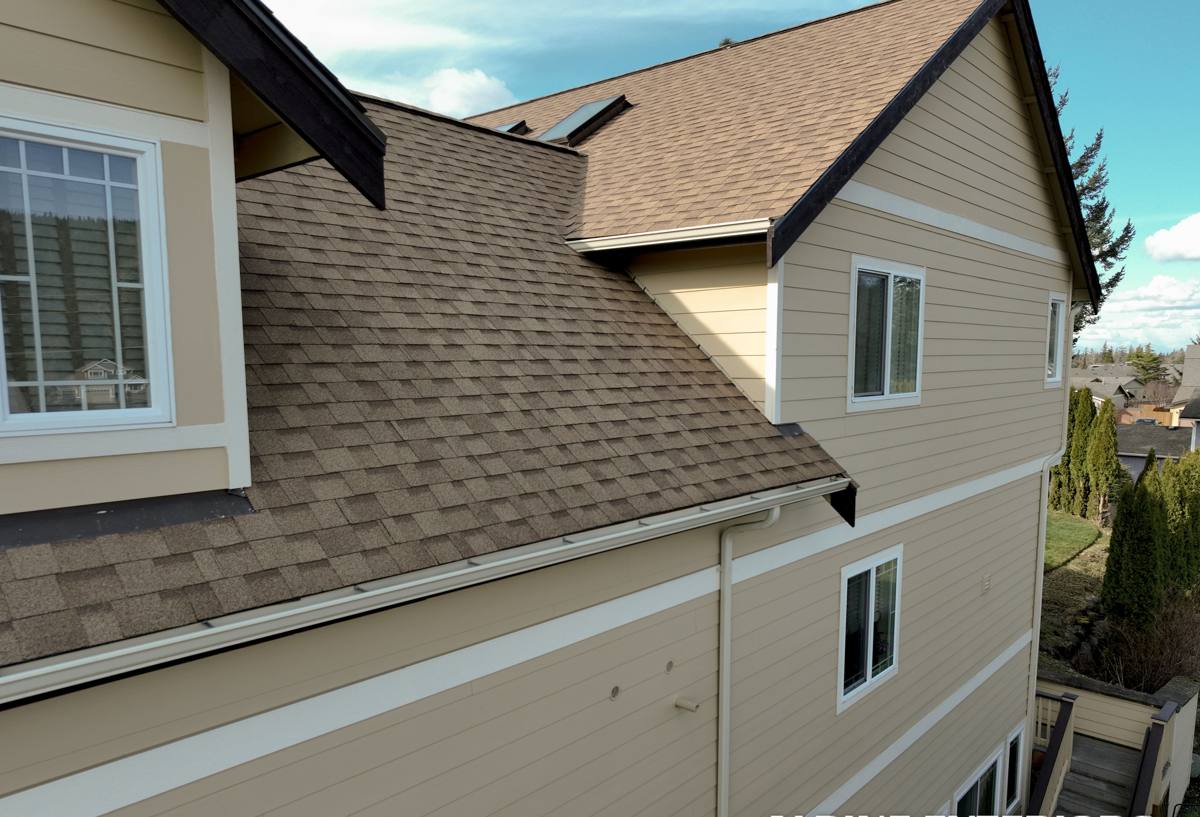
What Bellingham's Climate Does to an Ordinary Deck
Three things work against decks in this part of Whatcom County, and they compound each other:
- Driving rain — wind-driven rain doesn't just fall straight down, it gets pushed sideways into ledger connections, under railing posts, and into any gap where end-grain wood is exposed.
- Salt air — proximity to the bay means airborne salt accelerates corrosion on any fastener, bracket, or hinge that isn't rated for it. Standard interior-grade hardware corrodes noticeably faster here than it would inland.
- Moss season — Bellingham's long stretch of overcast, damp weather (roughly fall through spring) gives moss, algae, and lichen months of ideal growing conditions on any deck surface that stays shaded and wet.
None of these are dramatic on their own. The problem is that on a deck built without them in mind, they work quietly for a few seasons before the damage becomes visible — usually as soft or spongy decking, rust bleeding from screw heads, or a walking surface that turns slick every time it rains.
The Ledger Connection: Where Most Deck Failures Start
The ledger board — the piece that attaches the deck framing to the house — is the single most important connection on any deck, and it's also the point most exposed to wind-driven rain working its way behind the siding. If flashing isn't installed correctly here, water gets behind the ledger and into the house framing, where it can rot both the deck structure and the wall behind it long before anyone notices from the outside.
A correct ledger installation includes:
- Proper flashing that directs water out and away from the house, not just a bead of caulk
- A gap or water-resistant barrier between the ledger and the siding so moisture can't wick or pool
- Structural bolts or lag screws rated for exterior use, sized and spaced to code — not just deck screws
- Confirmation that the house framing behind the ledger is sound before anything gets attached to it
This is the step that's easiest to rush and hardest to inspect once the deck boards are down, which is exactly why it deserves the most attention up front.
Footings and Framing for Local Soil and Moisture
Whatcom County soil holds moisture well into the dry months, and footings that aren't set deep enough or aren't properly drained can shift over a few wet winters, leading to a deck that develops a noticeable bounce or an out-of-level railing. A correctly built deck uses:
- Footings set below frost depth and bearing on undisturbed or properly compacted soil
- Post bases that hold the post above the concrete rather than embedding wood directly in it, so the post base doesn't sit in standing water after rain
- Joist spacing sized for the actual decking material being used, since composite and wood have different span ratings
- Joist tape or a comparable protective layer on top of the framing, so rain that lands on the deck surface isn't the only water the joists ever see — end grain and cut edges get sealed too
This part of the build isn't visible once the project is finished, which is exactly why it's worth asking a contractor to walk you through it before the decking goes down.
Choosing a Decking Material for This Climate
There's no single "best" decking material — the right choice depends on how much upkeep you want to take on versus what you're willing to pay up front. Here's how the common options hold up under Bellingham's rain and moss conditions specifically:
| Material | How it handles our rain/moss | Maintenance | Typical lifespan |
|---|---|---|---|
| Pressure-treated pine | Needs sealing to resist moisture uptake; more prone to splintering and mildew if neglected | Re-stain/seal every 1-2 years | 10-15 years |
| Cedar | Naturally moisture- and insect-resistant, but still needs finish upkeep to prevent graying and surface mildew | Clean and reseal every 1-2 years | 15-20 years |
| Composite (e.g. Trex, TimberTech) | Doesn't rot or splinter; can still grow surface algae in shaded, damp spots without regular cleaning | Periodic wash, no sealing needed | 25-30 years |
| PVC decking | Fully moisture-proof core; best resistance to mildew staining of the common options | Occasional wash | 25-30+ years |
We'll walk through this trade-off with you honestly rather than push a single product — a shaded, low-airflow deck under tree cover behaves differently than one that gets sun and wind most of the day, and that affects which material makes sense.
Why Fastener and Hardware Choice Matters More Here
Salt-influenced air corrodes standard hardware faster than it would twenty or thirty miles inland. On every deck we build, structural hardware — joist hangers, post bases, ledger bolts — is stainless steel or hot-dip galvanized rated for exterior/coastal exposure, not the standard zinc-coated hardware sold for general construction. The same goes for visible fasteners: rust streaks bleeding down a deck board within a year or two are almost always a sign that interior-grade screws were used somewhere they shouldn't have been.
Managing Moss and Drainage Long-Term
Even a well-built deck will grow some moss or algae in Whatcom County's damp months if it's shaded and doesn't get airflow underneath. Two things reduce how much of a problem this becomes:
- Deck board spacing and orientation that lets water drain through rather than pool on the surface
- Under-deck ventilation — skirting or landscaping that blocks airflow under a low deck keeps the framing damp far longer after a rain, which is where rot and moss both get their start
We design for airflow and drainage from the start rather than treating moss as something to fight with cleaning products after the fact.
Our Process for a Birchwood Deck Project
- On-site assessment — we look at sun/shade exposure, drainage slope, existing ledger conditions if this replaces an old deck, and how the space will actually be used.
- Design and material selection — sizing, railing style, and decking material chosen against your budget and how much upkeep you want.
- Permitting — most decks above a certain height or attached to the house require a permit; we handle that submission and inspection scheduling.
- Framing and structural work — footings, ledger, joists, all built to the standards above before decking goes down.
- Decking, railing, and finish work — installed to manufacturer spec for whichever material you've chosen.
- Final walkthrough — we go over the finished deck and basic care specific to your site's sun and shade conditions.
Simple Deck Care for This Climate
A few habits go a long way toward getting the full lifespan out of a Bellingham-area deck:
- Sweep leaves and debris off the deck surface before wet weather sets in each fall
- Rinse or lightly scrub shaded areas that stay damp longest, a couple times during moss season
- Keep gutters and downspouts clear so roof runoff isn't dumping extra water directly onto or under the deck
- Check railing posts and stair connections once a year for movement or soft spots
- Reseal wood decking on the schedule appropriate to the finish product used
Why a Crew That Already Works Birchwood Makes a Difference
A contractor who works Bellingham and the surrounding Whatcom County neighborhoods regularly already knows which details matter here — the flashing detail that keeps driving rain out of a ledger, the hardware grade that won't rust out in a few seasons, the drainage and airflow choices that keep moss from taking over a shaded deck. That's different from a generalist crew building decks the same way regardless of climate. Familiarity with local permitting and typical lot conditions in this area also means fewer surprises once the project starts.
If you're planning a new deck or replacing one that's showing its age, we're happy to take a look and put together a straightforward, no-pressure estimate — just fill out the form below.