 Bellingham Roofing
 Storm Damage Repair Built for Birchwood's Weather
A hard blow off the water doesn't usually announce itself with a hole in the roof. More often it shows up as a handful of lifted shingle tabs, a dented section of flashing, or a leak that only appears during the next round of driving rain. In Birchwood, that pattern repeats itself for a specific reason: salt-tinged marine air, wind-driven rain, and a long moss season all put stress on a roof in different ways, and a storm doesn't cause damage in isolation from that background wear. It exploits whatever weakness was already there.
This page is about one thing — storm damage repair for roofs in Birchwood specifically, not a generic overview of wind and hail claims. It covers what storm damage actually looks like here, what a correct repair involves, how we run the job from inspection to final sign-off, and why it matters that the crew doing the work already knows this stretch of Whatcom County.
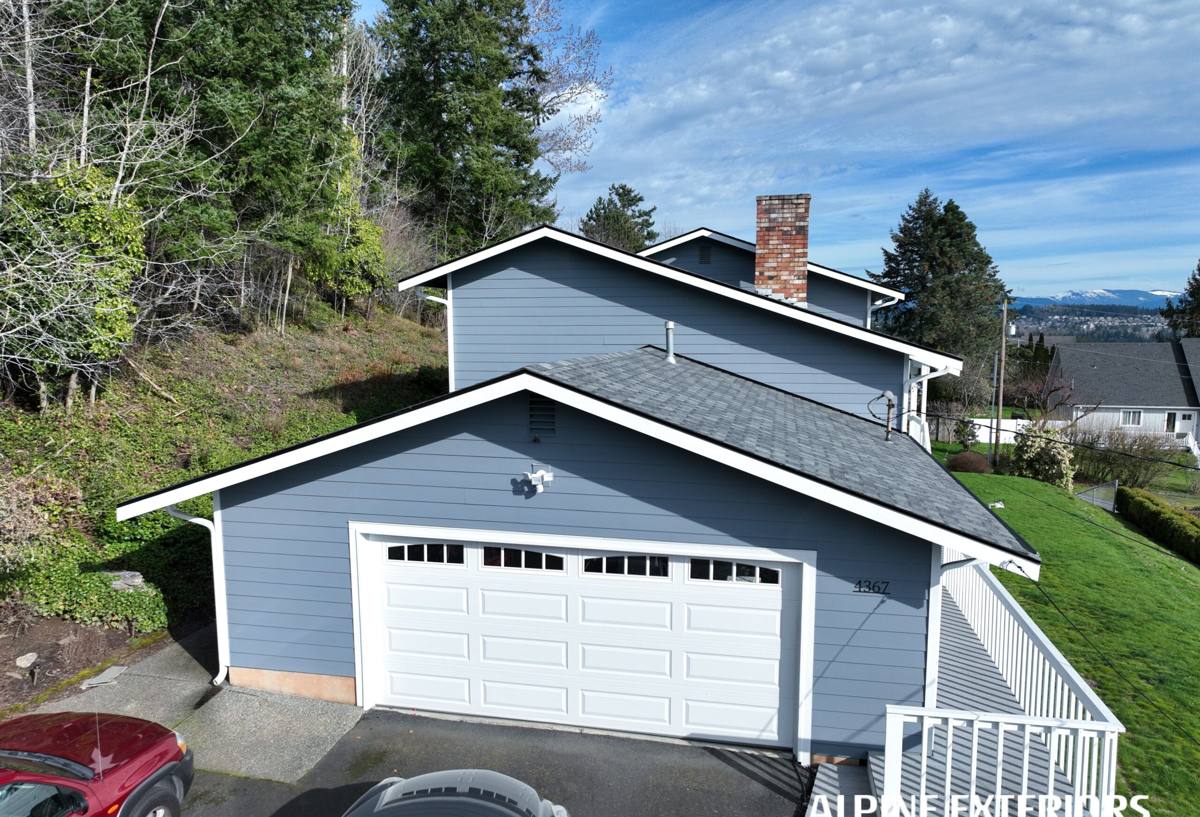
What Makes Storm Damage in Birchwood Different
Storms here rarely deliver a single dramatic event that leaves obvious damage. More often it's a combination of factors working together over the course of one weather system, and the resulting damage can be easy to miss from the ground.
Wind-Driven Rain, Not Just Wind
Wind off the water tends to push rain sideways and up under shingle edges rather than letting it run straight down and off the roof. A roof that would shed a normal downpour without issue can still take on water during a windstorm if shingle tabs have been lifted or underlayment has aged past its useful life. That's why storm damage repair here has to account for water intrusion even when there's no visibly missing material.
Salt Air and Accelerated Corrosion
Salt-laden air speeds up corrosion on flashing metal, fasteners, and exposed hardware faster than it would happen further inland. A storm that bends or loosens flashing that was already partway corroded creates a much bigger problem than the same event would on a roof with fresh, corrosion-resistant metal in place.
Moss and Trapped Moisture
Birchwood's long moss season means many roofs are already carrying moisture in shaded areas before a storm ever arrives. Wind can knock loose moss and debris into valleys and gutters during a storm, blocking drainage right when the roof needs it most and backing water up under the shingle field.
Common Types of Storm Damage We See
| Damage Type | What It Looks Like | Why It Matters |
|---|---|---|
| Lifted or torn shingle tabs | Edges pulled up or missing sections, often on wind-exposed slopes | Opens a direct path for wind-driven rain to reach the underlayment and deck |
| Damaged or displaced flashing | Bent, loosened, or separated metal at valleys, chimneys, and walls | Flashing failures are one of the most common sources of interior leaks after a storm |
| Debris impact | Dents, punctures, or granule loss from falling branches or wind-carried debris | Can create localized weak points even when the surrounding roof looks fine |
| Blocked valleys and gutters | Moss, needles, or debris pushed into drainage paths during the storm | Backs water up under shingles instead of letting it drain off the roof |
| Soft or spongy deck areas | Usually found from the attic side, not visible from outside | Signals water has already reached the plywood or OSB decking underneath |
What a Correct Storm Damage Repair Involves
A storm damage repair isn't just patching whatever is visibly missing. Done correctly, it starts with figuring out the actual extent of the damage, then addresses both the immediate opening and whatever condition allowed the damage to happen in the first place.
Full Inspection, Not a Quick Look
We inspect the whole roof plane where damage occurred, not just the spot that's obviously affected, along with the attic side where accessible. Wind and impact damage often extends beyond what's visible from the ground, and a repair limited to the most obvious spot can leave a second problem area untouched.
Matching Repair to Existing Roofing
Where shingles need replacing, we match the existing product as closely as possible in profile and color so the repair doesn't stand out as an obvious patch. When an exact match isn't available because the original product has aged or been discontinued, we'll tell you that directly and discuss options rather than installing a mismatched section without a conversation first.
Flashing Repair Done as a System
Damaged flashing gets properly integrated with the surrounding underlayment and shingle courses, not caulked over the top as a quick fix. A flashing repair that isn't tied back into the water-shedding system correctly tends to fail again in the next storm, often in a way that's harder to spot the second time.
Deck Assessment Where Warranted
If there's any indication water reached the decking, we check it before closing the repair back up. Covering a section of wet or soft decking with new shingles just delays a bigger repair and lets rot continue underneath, out of sight.
What We Check on Every Storm Damage Call
- Condition and attachment of shingles across the full affected slope, not just the visible damage point
- Flashing integrity at valleys, chimneys, vents, and wall transitions near the damaged area
- Underlayment condition where shingles have been lifted or removed
- Gutter and valley drainage for blockages caused by the storm
- Attic-side signs of moisture intrusion, where access allows
- Overall roof age and condition, to flag if a repair is a reasonable fix or a stopgap ahead of a larger project
Repair vs. Replacement After a Storm
Not every storm-damaged roof needs full replacement, and not every roof can be reasonably patched back to a sound condition. The honest answer depends on the roof's age, how widespread the damage is, and what condition the rest of the roofing was in before the storm hit.
| Factor | Favors Repair | Favors Replacement |
|---|---|---|
| Roof age | Well within expected shingle lifespan | Already near or past the end of its expected service life |
| Extent of damage | Isolated to one section or slope | Spread across multiple planes or the whole roof |
| Condition prior to the storm | Roof was otherwise sound and well maintained | Storm exposed pre-existing wear, moss damage, or deck issues |
| Material availability | Close match to existing shingles is available | Original product discontinued and no reasonable match exists |
We'll walk you through which category your roof falls into and why, so the decision is based on the actual condition of the roof rather than a guess made from the ground.
How Our Process Works
- Initial contact and scheduling: We move storm-related calls to the front of the queue when there's active water intrusion, and schedule other repairs within a reasonable window.
- On-site inspection: We assess the damaged area, surrounding roof sections, and attic access where available, and document what we find.
- Written estimate: You get a clear scope covering what's being repaired, the materials involved, and the reasoning behind the recommendation, not just a total dollar figure.
- Temporary protection if needed: If there's active leaking and full repair can't happen immediately, we can discuss temporary measures to limit further water intrusion in the meantime.
- Repair work: Shingles, flashing, underlayment, and any affected decking are addressed as a system, not as isolated patches.
- Final walkthrough: We review the completed repair with you and do a site cleanup, including a check for stray fasteners and debris.
Insurance Claims and Storm Damage
Many storm damage repairs get submitted through homeowners insurance, and having clear documentation matters a great deal in that process. We provide a detailed written scope and photos of the damage we find, which you can use as part of your claim. We're glad to talk through what we're seeing in plain terms, but the claim decision itself is between you and your insurer — we're not going to promise a claim outcome we don't control.
Why Hiring a Crew That Already Works in Birchwood Matters
A contractor who regularly repairs storm damage in and around Birchwood has already seen how salt air accelerates corrosion on flashing, how wind-driven rain finds its way through lifted shingle edges, and which roof orientations tend to hold moss and trap moisture longest. That background knowledge shapes real decisions during a repair — what to check even when it isn't the obvious damage point, and what corners not to cut because we've seen what happens when they are.
It also matters that a repair holds up. A contractor with an established, ongoing presence in the area is one you can reach again if a question comes up after the work is done, rather than a name that showed up after a storm and moved on.
A Practical Checklist Before You Hire Anyone for Storm Repair
- Do they inspect the full roof plane, not just the obviously damaged spot?
- Does the estimate specify materials and scope, or just a lump-sum number?
- Will they check the attic side for moisture intrusion where access allows?
- Do they carry current WA contractor licensing, liability insurance, and workers' compensation?
- Are they willing to provide documentation and photos to support an insurance claim?
- Can they point to an established, ongoing presence doing real work in or near Birchwood?
Signs You May Have Storm Damage Worth Checking
Some storm damage is obvious right away. Some doesn't show up until the next heavy rain, or until it's already caused an interior leak. It's worth having the roof checked after any significant windstorm, even if nothing looks wrong from the ground.
- Shingle pieces or granules in the yard or gutters after a storm
- Visibly lifted, curled, or missing shingle tabs on any slope
- New water staining on ceilings or in the attic following a storm event
- Dented or displaced flashing around chimneys, vents, or valleys
- Debris buildup in valleys or gutters that wasn't there before the storm
If any of this sounds familiar after a recent storm, it's worth having the roof looked at before the next round of weather rather than waiting to see if a small problem gets bigger.
If you'd like an honest, no-pressure look at storm damage on your Birchwood roof and a written estimate you can rely on, we're glad to come take a look. Use the form below to request a free estimate.