 Bellingham Roofing
 Siding Repair in Lynden: A Different Set of Problems Than a City Lot
Lynden sits inland from Bellingham Bay along the Nooksack River valley, in farm and small-town country rather than on the water. That doesn't mean the siding on Lynden homes gets an easy ride. Whatcom County's weather moves through the whole region the same way: long stretches of wind-driven rain off the Pacific, moisture-heavy marine air that pushes inland on a regular basis, and a mossy, shaded season that can stretch from fall through spring. Add the wide-open exposure of many Lynden properties — fewer tall neighboring structures to block wind, more direct weather off open fields — and siding here takes on damage in patterns that a downtown Bellingham inspector would recognize instantly, even if the address is twenty minutes away.
When we get called out for siding repair in Lynden, the damage almost always traces back to the same root cause: water finding a way behind the siding and staying there longer than the material was built to tolerate. Repair work that doesn't address that root cause is a patch, not a fix — and it tends to fail again within a season or two.
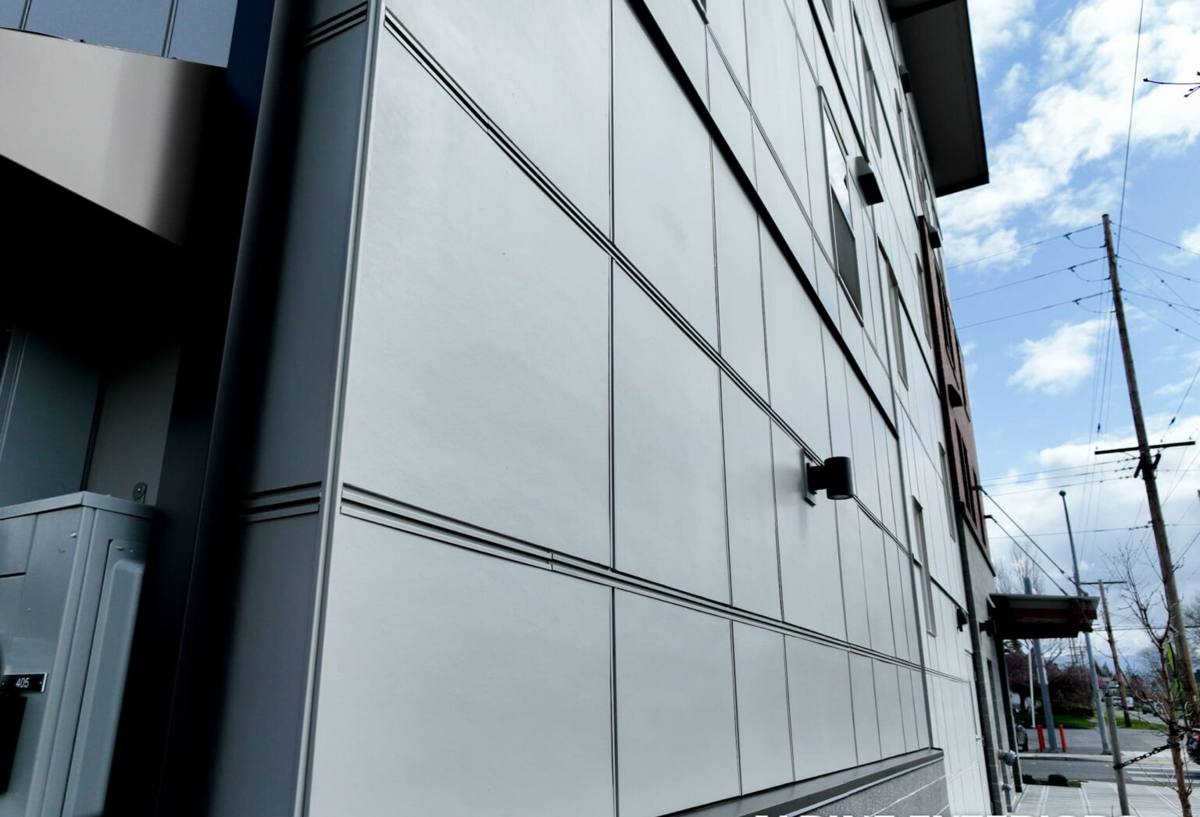
Signs a Lynden Home Needs Siding Repair, Not Just Paint
A lot of siding problems get treated as cosmetic when they're actually structural warnings. Before scheduling any exterior painting or touch-up work, it's worth checking for these signs:
- Soft, spongy, or crumbling spots when you press on the siding, especially near the bottom courses and around window and door trim
- Paint that's peeling, bubbling, or won't hold no matter how many times it's redone in the same spot
- Visible gaps, warping, or boards pulling away from the wall line
- Dark streaking, green or black moss growth, or a persistently damp smell near an exterior wall
- Cracked or missing caulk at seams, corners, and penetrations (hose bibs, vents, light fixtures)
- Interior signs — a musty smell, discoloration, or soft drywall on the wall opposite a suspect area of siding
Any one of these on its own might be minor. Several together, or any sign near a roofline, deck ledger, or window, usually means moisture has already gotten past the surface.
What a Correct Siding Repair Actually Involves
Finding the Real Cause First
Cutting out a bad section and nailing up a new piece is the easy part. The harder — and more important — part is figuring out why that section failed. Was it a flashing gap above a window? A clogged gutter dumping water straight down a wall? A missing kick-out flashing where a roofline meets siding? Caulk that was never applied correctly at a penetration? If we don't find and correct the actual water path, the replacement piece just fails the same way the original did.
Checking What's Behind the Siding
Once a damaged section is opened up, we check the weather-resistive barrier (house wrap or building paper) and the sheathing underneath. If those are compromised — torn, missing, or the sheathing has gone soft — repairing the visible siding without addressing what's behind it just seals the problem back in. This is the step that gets skipped on a lot of quick patch jobs, and it's the step that determines whether a repair lasts five years or fifteen.
Matching Materials the Right Way
Siding repair only looks right, and performs right, when the replacement piece matches the existing material's profile, exposure, and finish. Mismatched patches are one of the most common giveaways of a rushed repair — and on fiber cement, mixing brands or profiles can also affect how water sheds at the seams.
Repair or Replace? How We Help Lynden Homeowners Decide
Not every damaged section calls for a full re-side, and not every repair is worth doing on its own. The right call depends on how contained the damage is and what's driving it.
| Situation | Usually a Repair | Usually a Replacement |
|---|---|---|
| Damage limited to one or two isolated sections | Yes | No |
| Damage tracks along multiple walls or elevations | No | Yes |
| Underlying wrap/sheathing tested and sound | Yes | Not required |
| Existing siding is near or past its expected service life | No | Yes |
| Existing material is a discontinued color or profile | Sometimes (visible patch) | Consider if match matters |
| Recurring moisture issue with no clear single source | No | Yes, with a full moisture audit |
We'll always tell you honestly which side of that table your home falls on. A repair that's likely to fail again within a couple of years isn't a favor to anyone — it just delays a bigger job and costs more in total.
Why We Repair — and Replace — With James Hardie Fiber Cement Only
We install and repair with James Hardie fiber cement exclusively. We don't work with vinyl, LP SmartSide, or other engineered wood and composite sidings, and it's worth explaining why, especially in a climate like Whatcom County's.
Fiber cement doesn't absorb and swell the way wood-based composite sidings can when they take on repeated moisture exposure. It won't warp, buckle, or delaminate the way vinyl can under temperature swings and long-term UV exposure. James Hardie's HZ product lines are engineered specifically for climate zones like ours — the HZ5 formulation is built for regions that see the kind of sustained wet weather Whatcom County gets every year. The ColorPlus factory finish is baked on under controlled conditions, which holds color and resists the chalking and fading that field-applied paint jobs are more prone to over time.
None of that makes fiber cement immune to moisture problems if it's installed wrong — poor flashing, missing gaps, or bad caulking will cause trouble behind any siding material. But it gives us a product that, installed to spec, holds up to Lynden's weather with a strong transferable warranty behind it, and that's what we're willing to put our name on.
Our Process for a Lynden Siding Repair Call
1. On-Site Inspection
We look at the damaged area and the surrounding wall, check gutters, flashing, and grading nearby, and open up enough of the siding to see what's actually happening underneath before we quote anything.
2. A Straight-Up Estimate
You get a clear explanation of what we found, what caused it, and what it'll take to fix it correctly — including whether a repair makes sense or whether we'd be doing you a disservice recommending one.
3. The Repair Itself
We correct the underlying cause first — flashing, sealant, drainage — then address the weather barrier and sheathing if needed, and finish with matched James Hardie material, properly fastened and finished to blend with the surrounding siding.
4. A Final Walkthrough
We walk the repair with you, explain what was done and why, and flag anything else on the exterior worth keeping an eye on.
Why Hiring a Crew That Already Works Lynden Matters
Siding repair is very site-specific work. A crew that regularly works Whatcom County knows what wind-driven rain does to west- and south-facing walls, understands how quickly moss builds up on shaded north sides during our wet months, and has seen enough local homes to recognize which damage patterns are cosmetic and which ones are the first sign of something worse. That local pattern-recognition is the difference between a repair that treats a symptom and one that fixes the actual problem — and it's harder to get from a crew that's unfamiliar with how this specific region's weather behaves over a full year.
Maintaining Your Siding Between Repairs
A few habits go a long way toward keeping Lynden siding from needing repair in the first place:
- Keep gutters clear so water isn't overflowing directly onto siding below
- Trim back vegetation and tree cover that keeps siding shaded and damp
- Re-caulk seams, trim joints, and penetrations every few years, before gaps open up
- Rinse off moss and organic growth before it gets a strong foothold, using a gentle method that won't drive water behind the siding
- Walk the exterior once or twice a year and press-test any area that looks discolored or swollen
Catching a small problem during a routine check is always cheaper and simpler than catching it after it's spread behind the wall.
Get an Honest Look at Your Siding
If you're seeing soft spots, peeling paint that won't quit, or moss creeping across a wall of your Lynden home, it's worth having someone look before it turns into a bigger repair. We'll give you a straight answer on what's actually happening and what it takes to fix it — no pressure, no upsell. Reach out using the form below for a free estimate.