 Bellingham Roofing
 Deck Repair in Blaine: Built to Handle Water, Not Just Patched to Hide It
Blaine sits at the northern edge of Whatcom County, right on Semiahmoo Bay and Drayton Harbor, close enough to the water that salt air is a daily fact of life for most homes in town. That coastal position, combined with driving rain off the water and a mild climate that keeps moss growing for most of the year, is hard on any exterior structure — and a deck, sitting low, flat, and exposed to the weather from every angle, usually shows the wear before anything else on the house does. We work on decks across Blaine regularly, alongside roofing, siding, and window work, and we've seen the same pattern often enough to know it well: a deck that looks fine from a few feet away can already have soft framing, corroded hardware, or a failing connection to the house underneath it.
Deck repair isn't just about swapping a cracked board or tightening a wobbly rail. Done right, it means figuring out why a deck is failing in the first place — moisture intrusion, undersized or corroded fasteners, a ledger board that was never properly flashed — and fixing that root cause, not just the symptom on the surface. In a town with as much sustained moisture exposure as Blaine, a repair that only addresses what's visible tends to come back within a season or two.
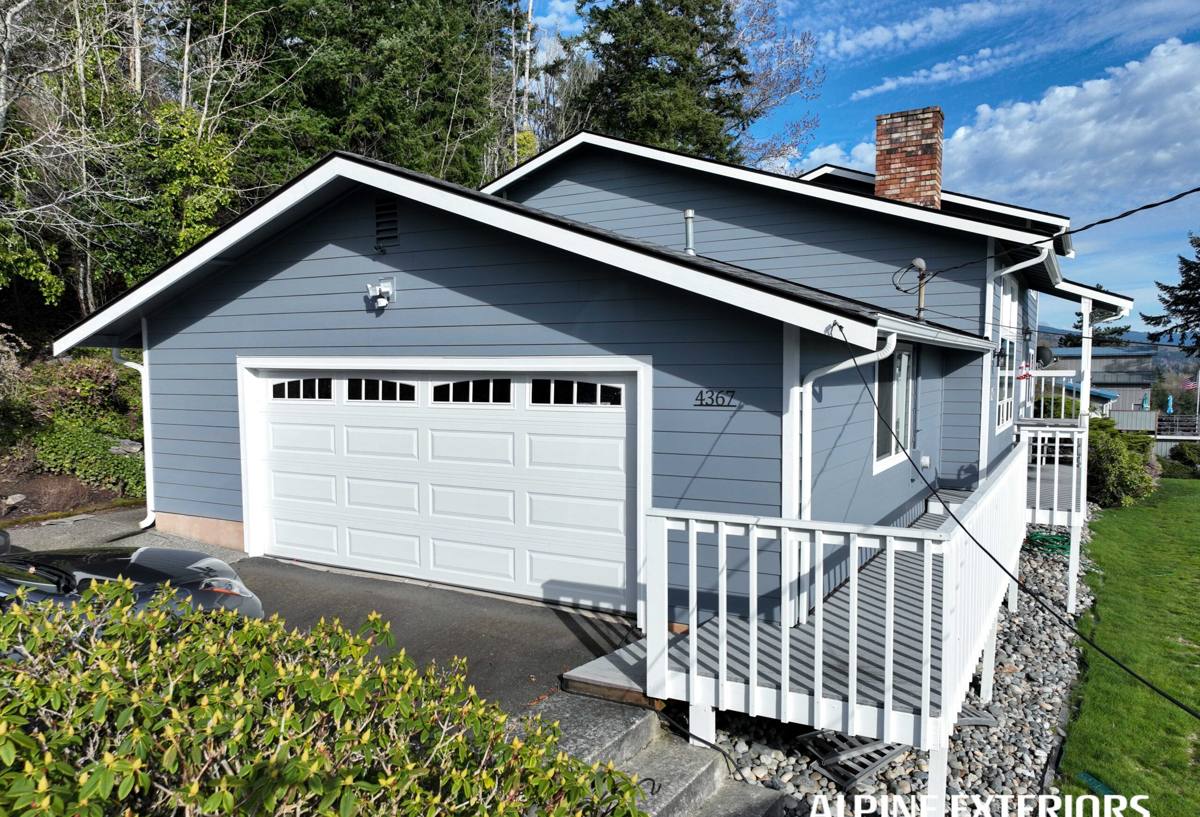
What Blaine's Climate Does to a Deck
Salt Air and Metal Corrosion
Homes near the bay or harbor take a steadier dose of salt-laden air than towns further inland, and that air is hard on anything metal. Nails, screws, joist hangers, and bolts that aren't rated for coastal exposure corrode faster here, and once a fastener weakens, the board or framing member it's holding loses strength long before the wood itself looks damaged. We see this most often on older decks built with standard galvanized hardware instead of stainless steel or hot-dip galvanized components rated for marine environments.
Driving Rain and Standing Moisture
Storms coming off the water don't just fall straight down — wind pushes rain sideways, and on a horizontal surface like a deck, that means water finds its way into every seam, board gap, and fastener hole. Decks don't dry out the way a vertical wall does, either. Water that pools on a deck surface or gets trapped between boards sits there far longer than it would on siding, which is exactly why decking material, spacing, and drainage details matter more in Blaine than they would in a drier inland climate.
A Long Moss and Mildew Season
Mild temperatures and near-constant moisture add up to a moss season that can run most of the year on shaded decks or those under tree cover. Moss holds moisture against the deck surface, and on wood decking it accelerates rot in exactly the spots that are hardest to see — the underside of boards and the tops of joists. A deck that's shaded for much of the day tends to show these problems years ahead of one that gets consistent sun.
Common Deck Problems We Find on Blaine Homes
Soft or Rotting Deck Boards
This is usually the first thing a homeowner notices — a board that flexes or feels spongy underfoot. By the time it's noticeable at the surface, moisture has often been working on that board, and sometimes the joist beneath it, for a while. Not every soft board means a full rebuild; sometimes it's isolated damage that a targeted board and framing repair can fix cleanly.
A Failing Ledger Board Connection
The ledger board is what attaches the deck to the house, and it's one of the most common points of structural failure we find, especially on older decks. If it wasn't properly flashed when installed, water tracks down behind it, into the house's wall framing and into the deck's own structure, weakening the connection that holds the whole deck to the building. This is also one of the more serious issues to catch early, since a failing ledger connection is a safety concern, not just a cosmetic one.
Corroded or Undersized Fasteners and Hardware
As covered above, salt air accelerates corrosion on standard-grade fasteners. We regularly find joist hangers, structural screws, and bolts on older Blaine decks that have visibly rusted or weakened, even when the wood around them still looks reasonable.
Unstable Posts and Footings
Posts that have shifted, settled, or rotted near ground contact affect the whole structure above them, and this is a category of damage that's easy to miss on a casual walk-through since it often shows up as a subtle lean or bounce rather than anything obviously broken.
Railing and Guard Issues
Loose, wobbly, or improperly spaced railings are a safety issue as much as a structural one. Railing posts that were undersized or poorly attached when the deck was built tend to loosen over time as the wood around the fasteners weathers.
Repair vs. Replacement: How We Decide
Not every deck problem calls for a full rebuild, and not every deck is worth patching indefinitely. The honest answer depends on where the damage is and how much of the structure it's reached.
| Factor | Favors Repair | Favors Replacement |
|---|---|---|
| Extent of damage | Isolated to a few boards or one framing area | Widespread rot or corrosion across the structure |
| Ledger board condition | Intact, properly flashed | Failing or never flashed correctly to begin with |
| Post and footing condition | Solid, no settling or ground-contact rot | Shifted, settled, or rotted near the base |
| Age of the deck | Newer deck with an isolated issue | Older deck already near the end of its service life |
| Original build quality | Framing and hardware were done to code | Undersized framing or non-rated hardware throughout |
We'll always tell you honestly which category your deck falls into. Sometimes that means a smaller repair bill than a homeowner expected; sometimes it means recommending a rebuild rather than sinking repair costs into a structure that's already compromised in more places than the visible damage suggests.
What a Correct Deck Repair Involves
A repair that holds up in Blaine's climate has to address moisture and corrosion, not just replace what's broken with the same materials that failed the first time. On every repair, that means:
- Pulling and inspecting boards around any visible damage, not just the board that's obviously failing, since rot rarely stops at a clean edge
- Checking the ledger board flashing and re-flashing it if it wasn't done correctly the first time
- Replacing corroded hardware with stainless steel or hot-dip galvanized fasteners rated for coastal exposure
- Inspecting joists and posts beneath any repaired area for hidden rot before new decking goes back down
- Confirming board spacing allows water to drain rather than pool or wick between boards
- Checking post bases and footings for settling or ground-contact deterioration while the structure is already open for repair
Skipping any of these steps is how a repair ends up being temporary. A new board over a compromised joist, or new hardware that isn't rated for salt air, just delays the same problem by a season or two.
Our Deck Repair Process
- On-site inspection: We walk the deck, check for soft spots, inspect the ledger connection, and get underneath where we can to look at joists, posts, and footings — not just the surface.
- Honest assessment: We tell you what we found, what's driving the damage, and whether the right move is a targeted repair or something more involved.
- Written scope before work begins: You know what's being repaired and why before anyone starts pulling boards.
- Repair work: Damaged material comes out, framing and connections get inspected and corrected, and new material goes in with hardware suited to Blaine's coastal exposure.
- Final check: We walk the finished repair with you so you can see exactly what was done.
Signs Your Blaine Deck Needs Repair Now
- Boards that feel soft, spongy, or flex more than they used to
- Visible gaps, movement, or staining where the deck meets the house
- Rust streaks around fasteners or hardware
- Railings that wobble or feel less solid than they should
- Persistent moss or dark staining that returns quickly after cleaning
- A noticeable bounce or give when walking across certain areas
- Visible gaps between decking boards that have widened over time
None of these mean a deck is unsafe to use immediately, but each one is worth having looked at before the next wet season adds to the damage.
Cost Factors for Deck Repair in Blaine
Deck repair costs vary widely depending on what's actually found once boards come up, and we're cautious about giving a number without seeing the deck in person. In general, cost depends on how much decking needs replacing, whether framing or the ledger connection is involved, the hardware and material used, and how accessible the affected area is. A repair limited to a handful of boards and some hardware is a modest job; one that reaches the ledger board, posts, or footings is a bigger scope, closer in cost to a partial rebuild. We'll walk the deck with you and give you a clear, written scope before any work starts, rather than a phone estimate that doesn't account for what's underneath the surface.
Why a Local Crew Matters for Deck Repair in Blaine
A crew that works in Blaine regularly sees how salt air, wind-driven rain, and moss actually affect decks here over a full year, not just what a product spec sheet claims. That shapes real decisions on a repair job — which hardware is worth the extra cost, which areas of a deck tend to fail first in this climate, and how a repair needs to be built so it doesn't need to be redone in two years. Blaine's coastal exposure isn't the same as more sheltered towns further inland in Whatcom County, and a deck repair that doesn't account for that difference is really just a delay before the same problem resurfaces.
If your Blaine deck has soft boards, a shaky railing, or you're just not sure whether it's due for repair, we're glad to take a look and give you an honest, no-pressure assessment. Reach out using the form below to schedule a free estimate.