 Bellingham Roofing
 Blaine Decks Take a Different Kind of Beating
Blaine sits at the top of Whatcom County, right on Semiahmoo Bay and Drayton Harbor, which means every deck here is dealing with something most inland Washington decks never see: salt-laden air moving in off the water almost year-round. Add in the Pacific Northwest's driving winter rain and a moss season that can stretch from October into May, and you have a combination that ages wood, fasteners, and even some composite products faster than the marketing on the lumber rack ever admits. A deck built to a generic spec, or built by a crew that mostly works drier inland neighborhoods, tends to show its age in Blaine years before it should.
This page is specifically about replacing a deck in Blaine — not a general deck-building overview. If your deck is sagging, soft, discolored, or just tired-looking after years of coastal exposure, the details below are what actually matter for getting the replacement right the first time.
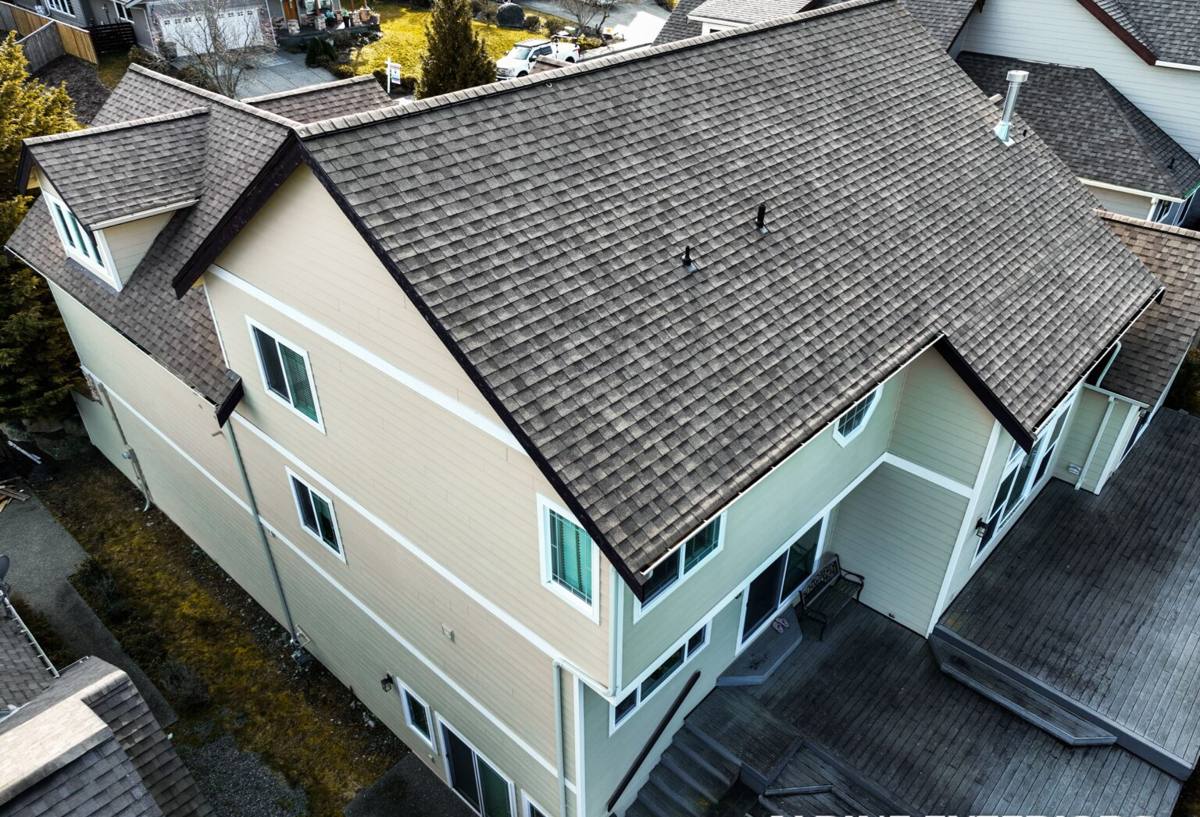
How to Tell a Deck Needs Replacing, Not Just Repairing
Not every worn deck needs a full rebuild. But there's a point where patching boards or sistering a joist is just delaying a bigger, more expensive failure. In our experience working on homes around Whatcom County, these are the signs that push a project from "repair" to "replace":
- Soft or spongy spots in the decking, especially near the house or at board ends where water sits longest
- Visible rot or dark staining at the ledger board (where the deck attaches to the house) — this is a structural safety issue, not cosmetic
- Rust streaking or crumbling around fasteners, joist hangers, or post bases
- Persistent moss or algae growth that comes back within weeks of cleaning, which usually points to a drainage or shade problem the surface material can't fix
- Railings or stairs that flex, wobble, or feel less solid than they used to
- A structure more than 15-20 years old that was never engineered with proper flashing or ledger connections — common in older coastal homes built before current code required them
If you're only seeing one or two of these and the framing underneath is sound, a repair or resurfacing may be enough. If you're seeing several, or if the framing itself is compromised, replacement is usually the more honest recommendation — and the more cost-effective one over a 10-year horizon.
What a Correct Deck Replacement Actually Involves
It Starts Below the Decking, Not With It
Homeowners often think of a "new deck" as new boards on top of the old frame. That's not a replacement — that's a resurfacing, and it doesn't fix the problems that caused the original deck to fail. A proper replacement means evaluating and, where needed, rebuilding the framing: ledger attachment, joists, beams, posts, and footings. In a marine climate like Blaine's, this step matters more than almost anywhere else in the county, because moisture and salt exposure attack framing connections long before the visible decking looks bad.
The Ledger Board and Flashing
The ledger — the board that bolts the deck to your house — is the single most common point of failure we find on older coastal decks. If it was installed without proper flashing, or with flashing that's degraded, water gets trapped between the ledger and the house siding and rots both from the inside out. Any deck replacement worth doing includes correct ledger flashing, proper structural fasteners (not just nails), and a gap or drainage plane that lets water escape instead of pooling against the house.
Footings and Post Bases
Whatcom County's wet ground and freeze-thaw cycles put real stress on undersized or shallow footings. A replacement is the right time to confirm footings meet current code depth and bearing requirements, and to set posts on proper metal bases that keep the wood off standing water — a small detail that makes a large difference in a climate that stays damp for months at a stretch.
Choosing Materials for Blaine's Marine Climate
There's no single "best" decking material — there's a best material for your budget, your maintenance appetite, and how directly your lot faces the water and prevailing wind. Here's how the common options actually perform under Blaine's conditions:
| Material | Salt Air / Moisture Behavior | Maintenance | Typical Lifespan (well-installed) |
|---|---|---|---|
| Pressure-treated wood | Prone to graying, splintering, and fastener corrosion faster near the coast | Annual cleaning, periodic sealing/staining | 10-15 years |
| Cedar | Naturally rot-resistant, but salt air accelerates surface weathering and requires diligent sealing | Regular oiling or staining to prevent graying and cracking | 15-20 years with upkeep |
| Composite decking | Doesn't rot, but lower-quality composites can absorb moisture at cut ends and show mold/mildew in shaded, damp areas | Periodic washing; minimal sealing | 20-30 years |
| PVC / capped composite | Best moisture resistance of the group; holds up well to salt exposure and constant dampness | Low; occasional washing | 25-30+ years |
We don't push one product on every homeowner. The right call depends on how close your home sits to the water, how much shade and moss pressure the deck gets, and what you're willing to spend on upkeep versus upfront cost. What we won't do is install a premium decking surface on framing or fasteners that won't last as long as the boards — that's a mismatch that just moves the failure point around instead of solving it.
Fasteners and Hardware: The Detail Salt Air Punishes First
Long before decking boards themselves fail, standard fasteners and hardware often don't. Salt-laden coastal air accelerates corrosion on anything less than stainless steel or properly rated coated fasteners, and once a fastener starts rusting, it weakens the connection around it and can stain the surrounding wood or composite. On a Blaine deck replacement, we spec fasteners and structural hardware — joist hangers, post bases, ledger bolts — rated for coastal and treated-lumber exposure, not the minimum-grade hardware that's fine 30 miles inland but underperforms here. It's a small line item on a bid and one of the biggest differences in how long a deck actually lasts.
Moss, Drainage, and the Long Wet Season
Whatcom County's moss season is long, and a deck's design has more to do with moss growth than most homeowners expect. Moss and algae need three things: moisture, shade, and something to grip onto. A deck replacement is a chance to reduce all three:
- Proper board spacing and slope so water sheds instead of sitting on the surface
- Joist tape or a drainage layer under the decking to keep the framing drier longer
- Gaps and clearance under the deck for airflow, which slows moss and mildew growth in shaded areas
- Material selection that resists surface growth in the shadiest, dampest sections of the deck
None of this eliminates the need for occasional cleaning — nothing does in this climate — but a deck built with drainage and airflow in mind needs far less scrubbing and lasts longer between it.
Our Process for a Blaine Deck Replacement
We keep the process straightforward and don't skip the steps that matter most in this climate:
- On-site evaluation — we check the framing, ledger connection, footings, and any moisture or rot damage, not just the surface boards
- Honest scope and estimate — we tell you what's actually needed, including whether a repair could reasonably extend the life of the existing structure instead
- Permit handling — most deck replacements in Whatcom County require a permit; we handle that process so it's not on you
- Demolition and disposal — old decking, framing, and hardware removed and hauled off
- Rebuild — framing, flashing, footings, and hardware done to code and to the coastal-exposure standard, then decking, railing, and stairs
- Final walkthrough — we go over the finished deck with you, including what maintenance it actually needs going forward
Why a Crew That Already Works Blaine Matters
A deck replacement done by a crew that mostly builds in drier, inland conditions can look fine on installation day and still fail early, because the framing and hardware choices that work elsewhere in Washington don't hold up the same way this close to the water. Working regularly in Blaine and along the rest of Whatcom County's coastline means we've seen firsthand which ledger details, fastener grades, and drainage choices actually hold up through repeated salt exposure and a wet season that doesn't really end — and which ones look good on a spec sheet but fail early out here. That local track record is why we build the way we do, rather than defaulting to whatever's standard practice for a drier region.
Questions Worth Asking Before You Hire Anyone
Whoever you hire for a deck replacement in Blaine, these are worth confirming up front:
- Will they inspect and, if needed, rebuild the framing — not just replace the surface boards?
- What fastener and hardware grade are they specifying, and is it rated for coastal exposure?
- How is the ledger board flashed against the house?
- Are they pulling the required permit, or leaving that to you?
- Do they have experience with decks specifically in Blaine or similar Whatcom County coastal areas?
- What does the warranty actually cover — materials, labor, or both?
If your deck is showing its age or you're just not sure whether it needs repair or full replacement, we're happy to take a look and give you a straight answer. Fill out the form below for a free, no-pressure estimate.