 Bellingham Roofing
 Siding Built for Blaine's Coastal Exposure
Blaine sits right on Semiahmoo Bay, a few miles from the Canadian border, and that waterfront position makes it one of the more demanding spots in Whatcom County for exterior siding. Homes here take a steady diet of salt-laden air, wind-driven rain off the Strait of Georgia, and a moss and algae season that can stretch nine or ten months out of the year. Siding that would hold up fine twenty miles inland in Bellingham can fail early in Blaine if it isn't matched to the environment it's actually sitting in.
We install siding across Whatcom County, and Blaine is one of the areas where we're the most selective about product choice. Salt air accelerates corrosion of fasteners and trim, moisture that collects behind poorly flashed panels doesn't dry out quickly in a marine climate, and constant dampness feeds moss, algae, and mildew on anything with an organic or moisture-absorbent surface. This page covers what that means for a siding replacement project in Blaine specifically, and why we've standardized on one product system rather than offering the full range of options most contractors carry.
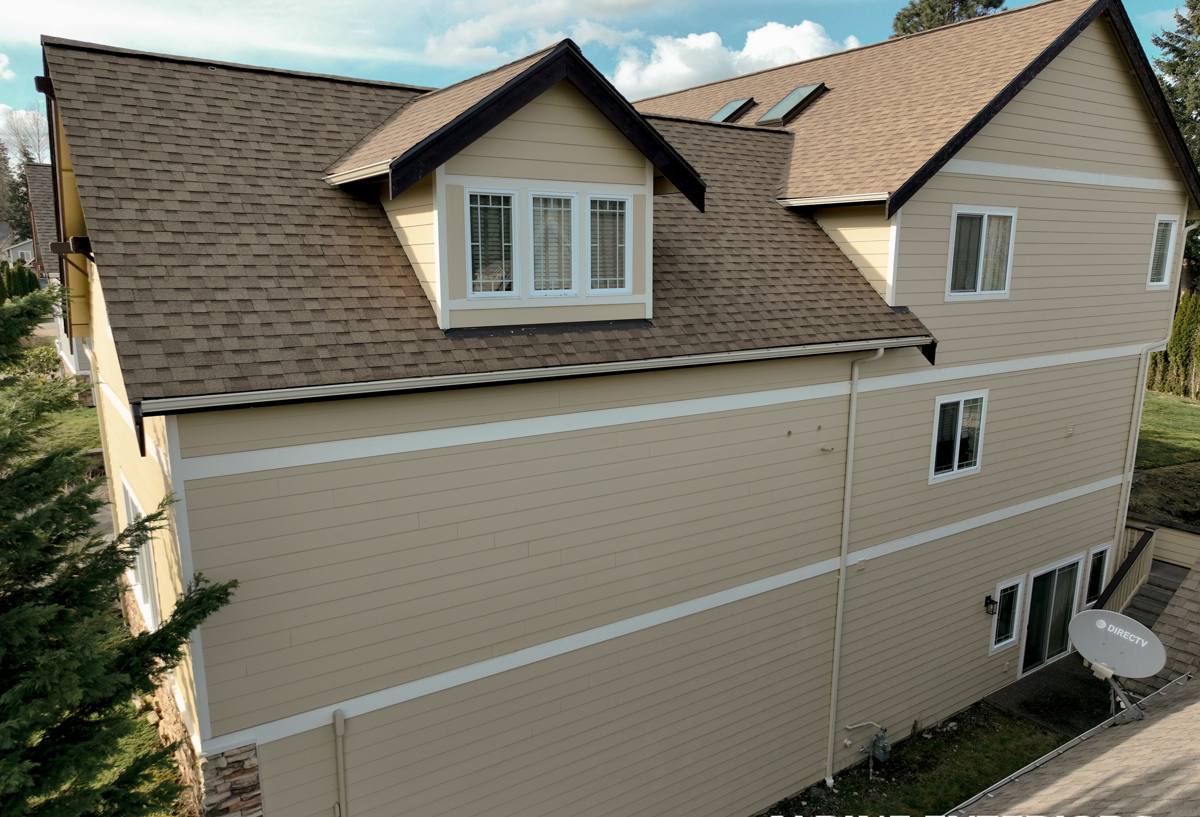
What Blaine's Climate Actually Does to Siding
Salt Air and Corrosion
Airborne salt from the bay settles on exterior surfaces and accelerates the corrosion of exposed metal — nail heads, flashing, trim fasteners, and any hardware that isn't rated for coastal exposure. Over years, corroding fasteners can streak siding, loosen panels, and create small gaps where water gets behind the cladding.
Driving Rain
Storms coming off the water often arrive with real wind behind them, which pushes rain sideways into joints, laps, and penetrations rather than letting it run straight down and off. Siding systems with poor lap design or thin water-resistive barriers behind them are far more likely to let moisture through in this kind of exposure.
Moss, Algae, and Prolonged Dampness
Blaine doesn't get long dry stretches the way areas east of the Cascades do. Shaded walls, north-facing elevations, and anything close to landscaping stay damp for extended periods, which is exactly the environment moss and algae need to establish. Siding materials that absorb moisture or have organic content in their composition are more vulnerable to this than dense, engineered materials.
Why We Only Install James Hardie Fiber Cement
Bellingham Roofing Company installs one siding system: James Hardie fiber cement. We don't offer vinyl, LP SmartSide, cedar, primed spruce, Cemplank, or Allura as options, and that's a deliberate standard, not a lack of familiarity with those products. Each of them has legitimate uses in certain climates and budgets — but for a coastal Whatcom County property like a Blaine home, the trade-offs work against the homeowner over time:
- Vinyl can warp or become brittle with UV and temperature swings, and its seams and J-channels give wind-driven rain more opportunities to find a way behind the panel.
- Wood-based products (cedar, primed spruce, engineered wood like LP SmartSide) rely on an intact paint or coating layer to keep moisture out. In a climate this damp, any coating failure or panel damage opens the door to rot, and continuous dampness is exactly the condition that supports moss and mildew growth on organic materials.
- Other fiber cement brands (Cemplank, Allura) are formulated similarly to Hardie in concept, but we've standardized on one manufacturer so our crews install to one spec, one warranty structure, and one set of engineering data — rather than switching systems project to project.
James Hardie fiber cement is non-combustible, dimensionally stable, and doesn't rely on an organic substrate that can rot. Its ColorPlus factory finish is baked on under controlled conditions rather than field-painted, which matters in a climate where field-applied coatings have less time to cure properly between rain events. Hardie also engineers specific product lines (HZ5, HZ10) for different climate zones, so the product itself is matched to regional moisture and temperature exposure rather than being a one-size-fits-all board.
What a Correct Siding Replacement Involves
Siding is only as good as what's behind it and how it's flashed. A proper replacement in a marine-exposed area like Blaine isn't just removing old panels and nailing up new ones — it's a full envelope job.
Tear-Off and Sheathing Inspection
Once old siding is removed, we inspect the sheathing underneath for water damage, soft spots, or rot that may have developed unseen behind failing siding. Any compromised sheathing gets replaced before anything new goes up — covering damaged sheathing with new siding just hides a problem that will resurface.
Water-Resistive Barrier and Flashing
A correctly installed weather-resistive barrier, properly lapped and taped, is what actually keeps bulk water out of the wall assembly — the siding itself is the first line of defense, not the only one. Windows, doors, and any wall penetrations get flashed so water sheds outward and down, not into the wall cavity, which matters more in a wind-driven-rain environment than almost anywhere else.
Fastening and Clearances
Corrosion-resistant fasteners, correct nailing patterns per Hardie's specifications, and proper clearance between the siding's bottom edge and grade, roofing, or decking all affect how well the system resists moisture intrusion over the long run. This is where installation quality — not just product choice — determines whether siding performs for decades or needs attention in five years.
Trim, Caulking, and Finish Details
Corner boards, trim, and joints are sealed with the right materials and finished per manufacturer spec, since these are common points where amateur installations fail first.
Comparing Siding Options for a Coastal Whatcom County Home
| Factor | Vinyl | Wood / Engineered Wood | James Hardie Fiber Cement |
|---|---|---|---|
| Moisture behavior in constant dampness | Doesn't rot, but seams can let water behind panel | Vulnerable to rot if coating fails or panels are damaged | Doesn't rot; engineered for moisture exposure |
| Moss/algae resistance | Moderate — surface can host growth in shaded areas | Lower — organic substrate supports growth | Higher — dense, factory-finished surface |
| Salt air / fastener corrosion | Panel unaffected, hardware can corrode | Hardware can corrode; coating can chalk faster | Installed with corrosion-resistant fasteners per spec |
| Finish durability | Can fade or become brittle with UV/temperature swings | Field or factory paint, needs recoating over time | Factory-baked ColorPlus finish, longer color retention |
| Fire resistance | Combustible | Combustible | Non-combustible |
Our Process for a Blaine Siding Project
We keep the process straightforward and honest from the first visit through final walkthrough:
- On-site assessment — we inspect existing siding, sheathing condition where accessible, and any problem areas specific to the home's exposure (north walls, areas near landscaping, low-clearance sections).
- Written estimate — scope, product line (HZ5 or HZ10 depending on exposure), color, and cost broken out clearly, no vague allowances.
- Tear-off and sheathing check — old siding removed, sheathing inspected and repaired as needed before anything new is installed.
- Weather barrier and flashing — installed and inspected before siding goes up, since this step is invisible once panels are on.
- Hardie installation — installed to manufacturer specification for fastening, clearance, and joint treatment.
- Final walkthrough — we review the finished work with the homeowner before calling the job complete.
Why a Crew That Already Works Blaine Matters
Blaine's exposure isn't identical to inland Bellingham or the Whatcom County foothills, and a crew that only occasionally works this close to the water can miss details that matter here — clearance at grade on a waterfront lot, extra attention to flashing on a wind-exposed elevation, or recognizing early moss growth as a sign of a moisture problem rather than just a cosmetic issue. We work across Whatcom County regularly, which means we've seen how James Hardie siding performs specifically in coastal conditions like Blaine's over multiple seasons, not just in a showroom or a drier part of the state.
Local familiarity also means fewer surprises in permitting, scheduling around the area's weather windows, and understanding which parts of a Blaine property are most exposed before work even starts.
Signs Your Blaine Home May Need Siding Replacement
- Persistent moss or algae staining that returns shortly after cleaning
- Soft spots, bubbling, or visible warping in panels
- Paint or finish that's chalking, peeling, or fading unevenly
- Rust streaks below nail heads or trim fasteners
- Gaps opening at seams, corners, or butt joints
- Visible rot or discoloration on sheathing when siding is removed for repair
- Rising energy bills that may point to a compromised building envelope
If your Blaine home is showing any of these signs, or you're simply ready to stop maintaining siding that isn't holding up to the salt air and rain, we're happy to take a look. Request a free, no-pressure estimate using the form below and we'll walk the property with you and lay out exactly what we'd recommend and why.