 Bellingham Roofing
 Building Decks That Actually Hold Up in Blaine
Blaine sits right on the water at the top of Whatcom County, which means homes here take a different kind of beating than decks built twenty miles inland. Salt-laden air off the Strait of Georgia and Semiahmoo Bay accelerates corrosion on fasteners and hardware, driving rain off the water pushes moisture into every joint and seam, and the long gray moss season that runs from fall through spring gives organic growth months to establish itself on any surface that doesn't drain and dry properly. A deck built to a generic spec sheet, without accounting for those conditions, tends to show its age fast around here — soft spots at the ledger board, rust streaks bleeding from screw heads, and moss creeping across boards that never quite dry out between rains.
We build decks in Blaine the way the climate actually demands, not the way a big-box installation crew builds them in a drier part of the state. That means different fastener choices, different attention to drainage and airflow, and a construction sequence that assumes the deck will be wet more often than it's dry.
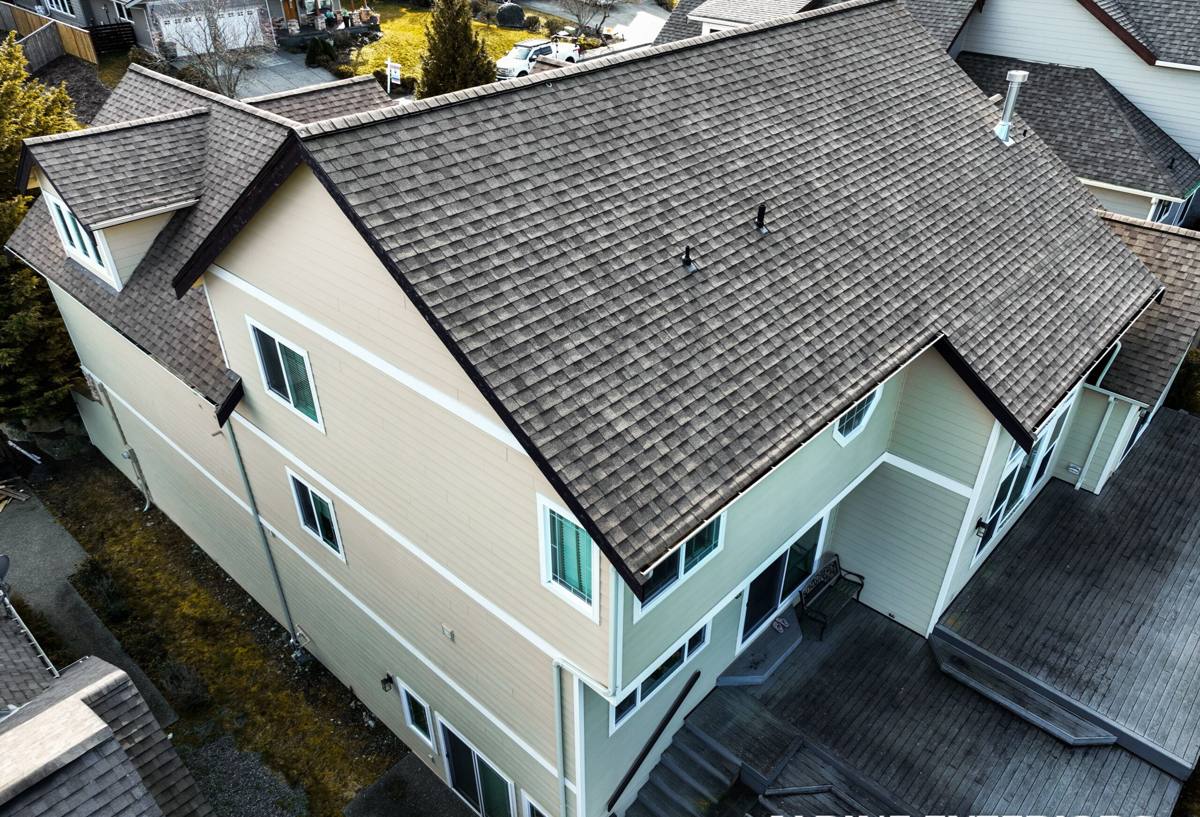
What Blaine's Climate Actually Does to a Deck
Salt Air and Metal Hardware
Proximity to salt water is the single biggest factor most homeowners underestimate when planning a deck. Salt in the air settles on every exposed metal surface — joist hangers, structural screws, railing brackets, post bases — and speeds up corrosion compared to a deck built a few miles inland. Standard galvanized hardware can start showing rust bleed within a few seasons in a salt-exposed location like Blaine. That's a cosmetic problem at first, but it's a structural one eventually, because corroding fasteners lose holding strength right where the deck needs it most.
Driving Rain and Water Intrusion
Whatcom County rain doesn't always fall straight down. Wind off the water pushes it sideways into ledger connections, under railing posts, and behind fascia boards — the spots a lot of decks are never actually designed to shed water from. Once water gets behind a ledger board or into an unsealed post base, it's slow to dry out again given how much of the year stays damp, and that's where rot gets started.
Moss and the Long Wet Season
Moss needs shade, moisture, and time, and Blaine decks get plenty of all three for much of the year. Boards that don't drain well, or that sit close to grade or under heavy tree cover, develop a moss and algae film that's not just unsightly — it holds moisture against the wood or composite surface and turns the deck surface slick and genuinely dangerous underfoot.
Getting the Structure Right the First Time
Everything visible on a deck — the decking boards, the railing, the finish — sits on top of a structural frame that has to be right, because it's the part nobody sees again once the project is done. In a Blaine microclimate that means:
- Ledger board flashing and sealing that actually sheds wind-driven rain away from the house rim joist, not just standard flat flashing
- Corrosion-resistant structural hardware and fasteners rated for coastal exposure, not the cheapest galvanized option on the shelf
- Post bases set above grade and detailed to drain, so posts aren't sitting in standing water after every storm
- Joist spacing and blocking that matches the actual decking material span rating, not a generic layout
- Ventilation underneath the deck so the frame gets airflow and can actually dry out between rain events
Skipping any one of these doesn't show up as a problem in year one. It shows up in year five or six, as soft framing, rust-streaked fascia, or a railing post that's gone spongy at the base — and by then it's a repair job instead of a five-minute detail during construction.
Decking Material Choices for a Coastal Whatcom County Property
There's no single "best" decking material for Blaine — the right call depends on how much sun exposure the deck gets, how close it sits to the water, and how much upkeep the homeowner actually wants to do. We walk through the honest trade-offs rather than pushing whatever's easiest to install.
| Material | How It Handles This Climate | Maintenance |
|---|---|---|
| Pressure-treated wood | Affordable, but needs consistent sealing to resist moisture and moss in a shaded, damp location | Annual cleaning and re-sealing recommended |
| Cedar | Naturally moisture- and insect-resistant, ages to a gray patina if left unfinished; still needs periodic care near salt air | Moderate — cleaning, occasional finish refresh |
| Composite decking | Resists rot and doesn't need sealing; still needs regular cleaning since moss and algae can grow on any surface that stays damp | Low — periodic washing |
| PVC/capped polymer | Very low moisture absorption, holds up well in salt-exposed and shaded coastal spots | Lowest — occasional washing |
Composite and capped polymer boards tend to be the strongest fit for shaded, moss-prone, or heavily salt-exposed sections of a Blaine property because they don't absorb water the way wood does. But plenty of homeowners want the look and feel of real wood, and cedar built and finished correctly can perform well for years — it just asks for more attention. We'll give you a straight answer about what a given spot on your property actually needs rather than steering you toward one product across the board.
Fasteners and Hardware: Where Corners Get Cut
This is the part of a deck build that's invisible once the project wraps, and it's exactly where cheaper installations cut corners in salt-exposed towns like Blaine. Standard electro-galvanized screws and connectors can start corroding within a couple of years this close to the water. We use fasteners and structural connectors rated for coastal and high-moisture exposure throughout the build — not just on the parts that are visible. It costs a little more up front and it's the difference between hardware that's still sound in fifteen years and hardware that's bleeding rust streaks down your fascia boards in five.
Railings, Stairs, and Surface Details That Matter Here
Beyond the deck field itself, a few details matter more in Blaine than they would in a drier inland setting:
- Railing post attachment needs to be genuinely watertight where posts penetrate the deck surface — this is a common spot for hidden rot to start
- Stair stringers should be built or protected against standing water at the base, since moss and algae build up fastest on shaded stair treads
- Board spacing needs to allow real drainage and airflow, not just look tight and clean on installation day
- Surface texture matters for slip resistance given how often the deck will be damp or moss-touched during the wet season
Our Process for a Blaine Deck Project
1. On-Site Assessment
We walk the property and look at sun exposure, shade patterns, proximity to the water, drainage slope, and how the deck will tie into the house. That assessment drives our material and hardware recommendations — it's not a one-size-fits-all quote.
2. Design and Material Selection
We talk through layout, decking material, railing style, and any structural considerations like elevation changes or existing drainage issues, and give you an honest read on maintenance expectations for whatever you choose.
3. Permitting
Deck projects in Whatcom County and the City of Blaine typically require a building permit depending on size, height, and attachment to the structure. We handle that process as part of the job so you're not chasing paperwork.
4. Construction
Framing, flashing, hardware, and decking installation, built to the coastal-exposure standard described above — not a generic inland spec.
5. Final Walkthrough
We go over the finished deck with you, including basic care and cleaning guidance suited to your specific material and site conditions, so the deck actually lasts as long as it's built to.
Why a Crew That Already Works Blaine Matters
A contractor who mostly builds decks in drier, inland parts of the county doesn't always think about salt-air hardware corrosion or moss-season drainage as a default — because it isn't a default problem where they usually work. We're already familiar with how homes along this stretch of Whatcom County hold up over time, what parts of a build tend to fail first in a salt-exposed, high-rainfall setting, and which material and hardware choices actually earn their keep here rather than just looking good on installation day. That local pattern recognition is worth more than it sounds like on paper — it's the difference between a deck that needs real attention in year five and one that's still solid twenty years out.
Maintaining Your Deck Once It's Built
Whatever material you choose, a few habits go a long way in this climate:
- Sweep debris and standing leaves off the deck regularly, especially in shaded areas, to limit moss and algae growth
- Rinse or lightly scrub the surface a couple of times a year to keep moss from establishing
- Check railing posts and stair connections annually for any softness or movement
- Re-seal wood decking on the schedule recommended for that specific product — don't wait until it looks obviously weathered
- Keep gutters and downspouts near the deck clear so runoff isn't dumping extra water onto the structure
If you're planning a new deck or replacing one that's showing its age in Blaine's salt air and wet winters, we're happy to come take a look and give you a straightforward, no-pressure estimate — just fill out the form below.