 Bellingham Roofing
 Siding That Actually Holds Up in Cordata
Cordata sits in north Bellingham, close enough to the water and the lowland weather patterns of Whatcom County that siding here works harder than siding in a lot of other parts of the state. Salt-laden air moving in off the Strait, long stretches of driving rain through fall and winter, and a moss season that can run half the year all put steady pressure on exterior materials. A siding product and installation that would be perfectly fine in a drier inland climate can start failing early here if it isn't matched to what this neighborhood actually deals with.
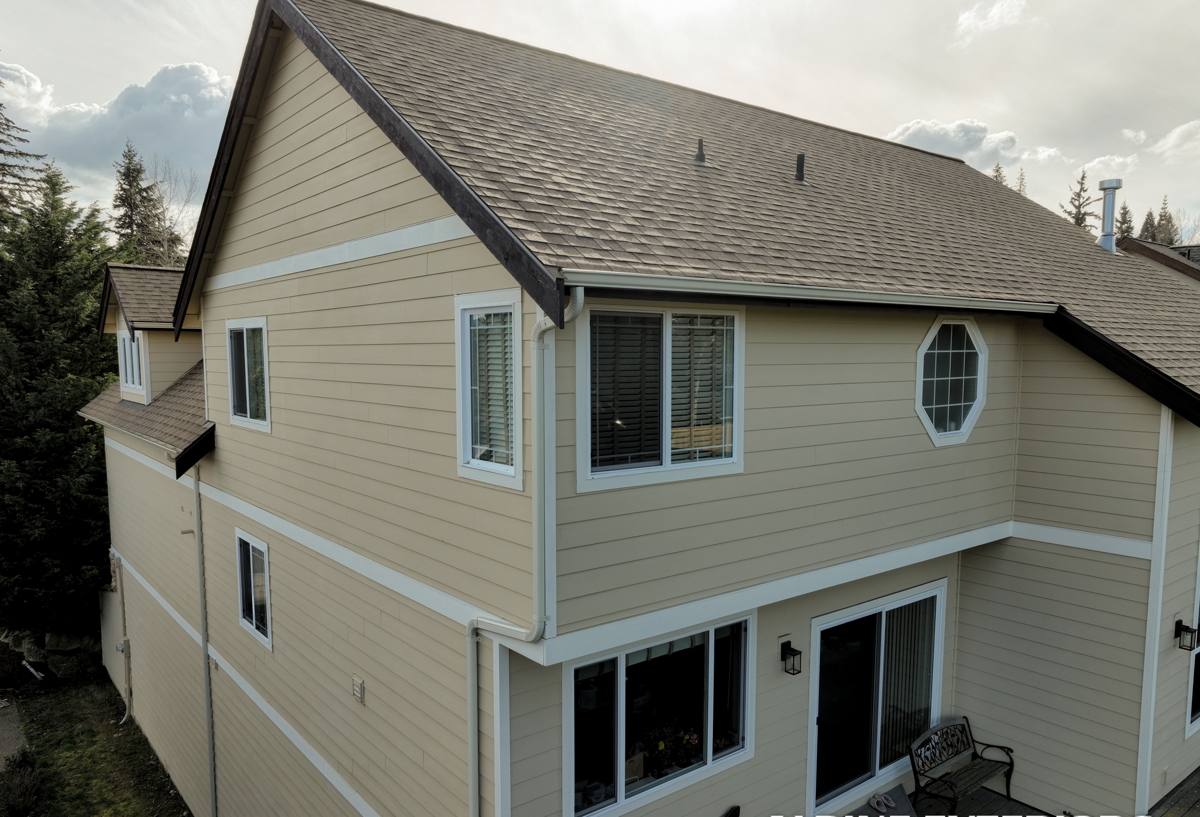
This page is specifically about James Hardie fiber cement siding installed on Cordata homes. We install Hardie exclusively — no vinyl, no LP SmartSide, no cedar, no primed spruce — and we want to walk through why that matters for this particular neighborhood, what a correct installation looks like, and how our process works from first look to final inspection.
What Bellingham's Climate Does to Exterior Siding Over Time
Whatcom County's marine climate is mild compared to a lot of the country, but "mild" doesn't mean gentle on building materials. Three factors do most of the damage locally:
- Salt air: Airborne salt accelerates corrosion of fasteners and metal flashing, and it can degrade lower-grade paint finishes faster than inland exposure would.
- Driving rain: Wind-driven rain doesn't just wet a wall surface — it pushes moisture sideways into seams, laps, and penetrations. Any siding system with weak joints or poor water management will eventually let moisture behind the cladding.
- Moss and prolonged dampness: A long wet season means surfaces that don't dry out quickly stay damp for extended stretches, which is exactly the environment moss, algae, and mildew need to take hold. Once moss establishes on a wall, it holds moisture against the surface even longer, compounding the problem.
None of this is unique to Cordata specifically, but it's worth saying plainly: siding decisions in this part of Bellingham should be made with this climate in mind first, not treated as an afterthought to color and style.
Why We Install James Hardie Fiber Cement Here
James Hardie's fiber cement is engineered from cement, sand, and cellulose fiber, which makes it dimensionally stable and non-combustible. That matters in a wet climate for a simple reason: fiber cement doesn't swell, rot, or delaminate the way wood-based products can when they take on repeated moisture. It also holds paint and factory finish far longer than wood substrates because it isn't expanding and contracting with every wet-dry cycle the way wood fiber does.
James Hardie's ColorPlus factory finish is baked on in a controlled setting rather than applied on site, which gives it more consistent coverage and a stronger bond than field-applied paint. For homes exposed to salt air and driving rain, that finish durability translates directly into fewer repaint cycles and less fading.
Hardie also engineers specific product formulations for different climate zones — commonly referred to as HZ zones. Western Washington falls into a wetter HZ zone, and the product formulated for it is built to perform in exactly the rain and humidity conditions Cordata sees. We install to the specification for our climate zone, not a generic national default.
What This Means in Practice
- Panels and lap siding that resist moisture-driven swelling and cracking
- A factory finish that holds color and sheds moss and mildew better than a field-painted surface
- Fastener and flashing details matched to a wet, salt-exposed environment
- A manufacturer warranty backed by a product actually engineered for this climate, not just this budget
What a Correct Hardie Installation Actually Involves
Fiber cement siding is only as good as the installation behind it. James Hardie is explicit about this in its own installation instructions, and it's the single biggest reason two Hardie jobs can perform very differently over ten or fifteen years. A correct installation on a Cordata home includes:
- Proper weather-resistive barrier: A code-compliant water-resistive barrier installed and lapped correctly behind the siding, so any moisture that does get past the cladding has somewhere to go besides the sheathing.
- Rainscreen or drainage gap where called for: Allowing a small air gap behind the siding lets water drain and the wall assembly dry, which matters more in a driving-rain climate than in a dry one.
- Correct fastener type, spacing, and penetration depth: Hardie specifies fastener requirements precisely; under- or over-driven fasteners are one of the most common causes of premature siding failure.
- Proper flashing at every penetration: Windows, doors, vents, hose bibs, and light fixtures all need correctly integrated flashing so water is directed out and away, not into the wall.
- Correct clearances: Siding held to the required clearance above rooflines, decks, and grade so it isn't sitting in standing water or constant splash-back.
- Caulking and joint treatment per manufacturer spec: Butt joints and trim intersections sealed the way Hardie specifies, not just "close enough."
Skipping any one of these doesn't usually cause an obvious problem on day one. It shows up years later as trapped moisture, premature paint failure, or siding that has to come off far sooner than it should have.
Our Process for a Cordata Siding Project
- On-site assessment: We look at the existing siding, the wall assembly behind it where visible, moisture patterns, moss growth, and any problem areas around windows, decks, and roof lines specific to your home.
- Scope and product selection: We walk through the relevant Hardie product line, profile, and color options for your home's style and exposure, and explain the reasoning rather than just handing over a brochure.
- Tear-off and prep: Old siding is removed, sheathing is inspected for hidden moisture damage, and any needed repairs are addressed before anything new goes on the wall — installing new siding over a compromised wall assembly just hides the problem.
- Weather barrier and drainage detail: Barrier and drainage plane installed correctly for our climate, not skipped to save a step.
- Installation to manufacturer spec: Fastening, flashing, clearances, and joint treatment done to James Hardie's published requirements.
- Final walkthrough: We review the finished work with you, point out anything you should know for long-term care, and make sure everything matches what was scoped.
Choosing the Right Hardie Line for Your Home
James Hardie makes several product lines and profiles, and the right choice depends on your home's style and how it's exposed to weather and salt air. The table below is a general guide, not a substitute for an on-site look at your specific home.
| Product Line | Typical Look | Good Fit For |
|---|---|---|
| HardiePlank lap siding | Traditional horizontal lap | Most Cordata home styles, classic and updated exteriors |
| HardiePanel vertical siding | Board-and-batten, vertical panels | Accent walls, gables, more contemporary or farmhouse looks |
| HardieShingle | Staggered or straight shingle profile | Craftsman-style homes, accent gables |
| HardieTrim | Trim boards and fascia | Window and door surrounds, corner boards, finishing detail |
What Affects the Cost of a Cordata Siding Project
Every home is different, but the same handful of factors drive most of the cost variation we see on Hardie projects in this area.
| Factor | Why It Matters |
|---|---|
| Existing siding removal | Tear-off, disposal, and any sheathing repair add time before new siding can go on |
| Home size and wall complexity | More corners, gables, and dormers mean more cutting, flashing, and labor |
| Product line and profile | Lap, panel, and shingle products differ in material and labor cost |
| Trim and accent detail | Additional HardieTrim work for windows, corners, and accents adds scope |
| Access and site conditions | Slopes, tight lot lines, and staging constraints affect labor time |
We give straightforward, itemized estimates rather than a single vague number, so you can see exactly what's driving the price.
Why It Matters That We Already Work in This Neighborhood
A crew that regularly works Cordata and the surrounding Bellingham area already understands the moisture patterns, prevailing wind and rain exposure, and typical construction of homes in this part of Whatcom County. That familiarity shows up in practical ways: knowing which elevations of a home in this neighborhood take the worst weather, recognizing early signs of moisture intrusion before they become structural problems, and understanding local permitting expectations so your project moves without avoidable delays.
It also means we're not learning on your home. Installation quality on fiber cement siding depends heavily on experience with the material's specific fastening, flashing, and joint requirements — and on judgment calls that only come from having done it repeatedly in this exact climate.
Long-Term Care After Installation
Correctly installed James Hardie siding is low-maintenance, but "low-maintenance" isn't "no-maintenance," especially given Bellingham's moss season. A short list of what keeps it performing well for the long haul:
- Periodic gentle washing to keep salt residue, pollen, and organic buildup from accumulating
- Keeping gutters clear so overflow doesn't run down the wall face repeatedly
- Trimming back vegetation and tree cover that keeps siding shaded and damp longer than it should be
- Watching caulking and joint sealant over time and having it refreshed if it starts to fail
- Addressing any moss growth on adjacent roofing before it spreads onto siding surfaces
None of this is heavy upkeep — it's the same kind of basic exterior care most homes in this climate already need, just applied consistently.
If you're weighing a siding project for a Cordata home, we're glad to come take a look and give you a straightforward, no-pressure estimate — you can request one using the form below.