 Bellingham Roofing
 Why Cordata Siding Takes a Beating
Cordata sits close enough to the water and the lowland fog belt that its homes deal with a specific combination of stresses: salt-tinged marine air moving in off Bellingham Bay, long stretches of driving rain in the fall and winter, and a moss season that can run half the year on shaded north- and west-facing walls. None of these on their own is unusual for Whatcom County. Together, applied to the same wall assembly year after year, they're what turns a small siding problem into a rot problem if it isn't caught and repaired correctly.
Salt air is corrosive to exposed fasteners and metal trim, and it also holds moisture against painted and wood surfaces longer than dry inland air would. Driving rain — rain that comes in sideways during a windstorm rather than falling straight down — finds every gap in flashing, every open seam at a butt joint, and every spot where old caulking has shrunk and pulled away. And moss doesn't just look bad; it holds water against the siding surface and, on some materials, works into seams and fastener holes where it keeps that surface damp long after the rain has stopped.
Siding repair in this neighborhood isn't just cosmetic work. Done right, it's about interrupting a moisture cycle before it reaches the sheathing and framing behind the siding. Done wrong — caulked over, painted over, or patched without addressing what let water in in the first place — it's a temporary cover that fails again within a season or two.
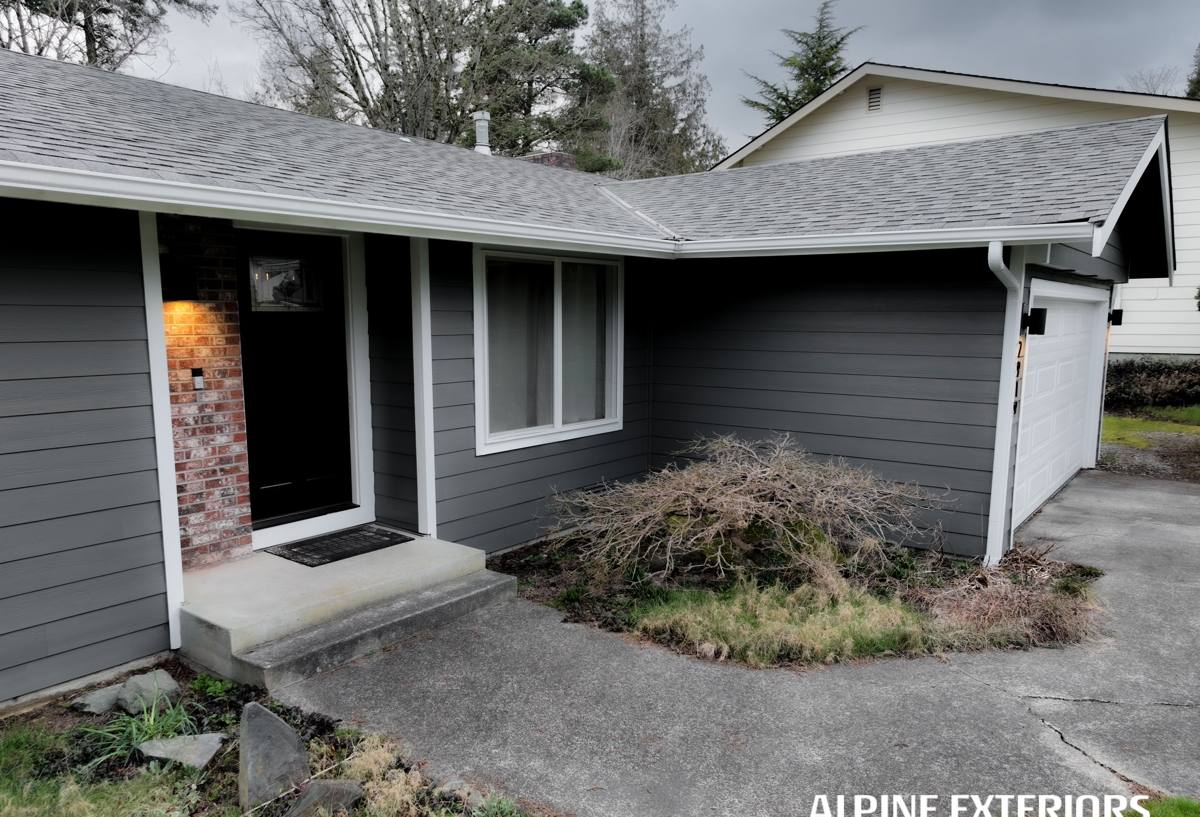
Signs a Cordata Home Needs Siding Repair
Most siding damage announces itself well before it becomes structural. The trouble is that a lot of homeowners write off early signs as cosmetic. Here's what we look for, and what you can check yourself from the ground:
- Soft or spongy spots when you press on the siding, especially near the bottom courses or below windows
- Paint that's bubbling, peeling, or flaking in a pattern that follows seams or panel edges rather than sun exposure
- Visible gaps at butt joints, corner boards, or trim where caulking has shrunk, cracked, or disappeared
- Persistent moss or algae staining that comes back within weeks of cleaning, especially on north-facing walls
- Streaking or discoloration below nail heads or fastener lines
- Warping, cupping, or visible separation between siding boards and the wall
- A musty smell in an interior room that shares a wall with a suspect area
Any one of these on its own might be minor. Several together, or any sign near a window, door, or roofline where flashing details are more complex, is worth a closer look before the next wet season.
What Correct Siding Repair Actually Involves
A repair that lasts starts with figuring out why the damage happened, not just where it is. Cutting out a bad board and nailing in a new one without addressing the water path behind it is the single most common reason siding repairs fail a second time.
Diagnose Before You Patch
We pull back siding around the damaged area to check the condition of the water-resistive barrier, flashing, and sheathing underneath. If water has been getting behind the siding for a while, the visible damage is often smaller than what's hidden. It's better to find that out at the start of the job than after the new material is installed over it.
Fix the Water Path, Not Just the Symptom
That usually means correcting flashing at windows, doors, and butt joints; replacing degraded house wrap or building paper; and re-establishing proper clearance between the bottom of the siding and grade, decks, or roof lines — a common issue on older Whatcom County homes where landscaping or paving has crept up over the years.
Match Material and Method
Repairs need to match the existing siding's exposure, profile, and fastening pattern, or the patched section will read differently and may perform differently in weather. When the surrounding siding is failing broadly rather than in one isolated spot, patching stops making sense and replacement of that section — or the wall — is the more honest recommendation.
What We See Most Often in Cordata
| Siding Material | Common Repair Issue Locally | Repair Reality |
|---|---|---|
| Cedar (traditional lap or shingle) | Moss-driven rot, cupping, checking | Repairable if caught early; recurring maintenance is the tradeoff |
| Vinyl | Cracking in cold snaps, warping near dryer vents, gaps at seams | Individual panels can be swapped, but color-matching aged vinyl is often impossible |
| LP SmartSide (engineered wood) | Edge swelling at cut ends and seams exposed to driving rain | Repairable, but swelling at an edge is often a sign of a broader moisture issue on that elevation |
| Primed spruce / wood composite | Paint failure, moisture absorption at joints | Needs more frequent repainting and joint maintenance than fiber cement |
| James Hardie fiber cement | Failures are almost always installation-related, not material-related | Non-combustible, dimensionally stable, and holds up to sustained moisture exposure far better than wood-based sidings |
We're not going to tell you every cedar or LP SmartSide wall in Cordata is a disaster — plenty are holding up fine with regular maintenance. But when we're called out to repair recurring moisture damage on wood-based siding, the honest answer is often that the material itself is working against the climate here, not with it.
Our Siding Repair Process
- On-site assessment. We inspect the damaged area and the surrounding wall, checking for hidden moisture with the siding pulled back where needed.
- Written scope and honest recommendation. You get a clear explanation of what's actually wrong, what a proper repair involves, and whether patching or partial replacement is the right call — no upselling a full re-side when a targeted repair will hold.
- Correct the water management first. Flashing, house wrap, and clearances get fixed before any new siding goes back on.
- Repair or replace the siding section. Matched as closely as possible to the existing material and reveal, with proper fastening and sealant details.
- Final check. We walk the repair with you before we consider the job done.
Why We Only Install James Hardie Fiber Cement
When a repair turns into a full section or wall replacement, we install James Hardie fiber cement and nothing else. We don't carry vinyl, LP SmartSide, Cemplank, Allura, or bare cedar, and we're upfront about why: fiber cement doesn't absorb water the way wood-based products do, it doesn't warp or crack the way vinyl can in a hard freeze, and it's non-combustible, which matters more every year in Washington. Hardie's HZ5 product line is engineered specifically for wetter, colder climates like ours, and the factory-applied ColorPlus finish holds color longer than field-applied paint on wood siding — which means fewer repaint cycles and fewer chances for moisture to get in through a failing paint film.
That's not a knock on every other product on the market — plenty of them are reasonable choices in the right climate and with the right maintenance commitment. It's a statement about what we've decided is worth standing behind on homes we work on in Whatcom County's marine climate, backed by a strong transferable warranty when it's installed to spec.
Repair vs. Replacement: What Drives the Cost
| Factor | Why It Matters |
|---|---|
| Extent of hidden moisture damage | Damage found behind the siding, not just on the surface, is the biggest cost driver |
| Wall height and access | Second-story and steep-site repairs take more setup time |
| Material match | Matching an existing profile, texture, or aged color adds labor versus a straightforward panel swap |
| Flashing and trim condition | Corner boards, window trim, and flashing often need attention alongside the siding itself |
| Number of separate damaged areas | Several small repair zones across a wall can add up to more labor than one larger section |
Why a Crew That Already Works in Cordata Matters
Siding repair done by someone unfamiliar with Bellingham's marine climate tends to under-diagnose moisture problems, because the failure patterns here — moss-driven rot on shaded walls, salt-air corrosion on fasteners, driving-rain intrusion at flashing details — don't show up the same way they do in drier inland regions. A crew that regularly works Cordata and the surrounding Bellingham neighborhoods knows which elevations take the worst weather, which older flashing details tend to fail first, and what a repair actually needs to hold through a full Whatcom County winter rather than just look fixed until the next one.
After the Repair: Keeping It That Way
A correctly repaired wall still benefits from basic upkeep, especially in a moss-prone yard:
- Rinse moss and algae off shaded siding once or twice a year before it gets a grip
- Keep gutters clear so overflow isn't running down the wall face
- Trim back landscaping and maintain clearance between siding and grade, mulch, or paving
- Re-caulk exposed joints and trim on the schedule the material manufacturer recommends
- Walk your exterior after major windstorms and check for new gaps or loosened trim
If you're seeing soft spots, recurring moss staining, or gaps around trim on a Cordata home, it's worth having it looked at before the next stretch of driving rain finds its way in. We're happy to come out, take an honest look, and give you a straightforward assessment — no pressure, no upsell, just a free estimate and a clear explanation of what your siding actually needs.