 Bellingham Roofing
 Windows in Cordata Face a Different Set of Conditions
Cordata sits close enough to Bellingham Bay and the Salish Sea that salt-laden air is a real factor in how exterior materials age here, not just a coastal cliché. Add Whatcom County's long stretch of driving rain each fall and winter, plus the shaded, damp conditions that keep moss and algae active for much of the year, and you have a climate that is genuinely hard on window assemblies — not the glass itself, but everything around it: the frame, the flashing, the sealant, and the wall connection behind it.
Most window failures we see in this area aren't caused by bad glass. They're caused by water finding a path in through a gap in flashing, a cracked bead of caulk, or a frame that was never properly shimmed and sealed to begin with. In a drier climate that kind of shortcut might go unnoticed for years. In Cordata, with rain that can fall sideways in a winter storm and humidity that lingers, the same shortcut shows up as a soft spot in the sill or a stain on the interior wall within a season or two.
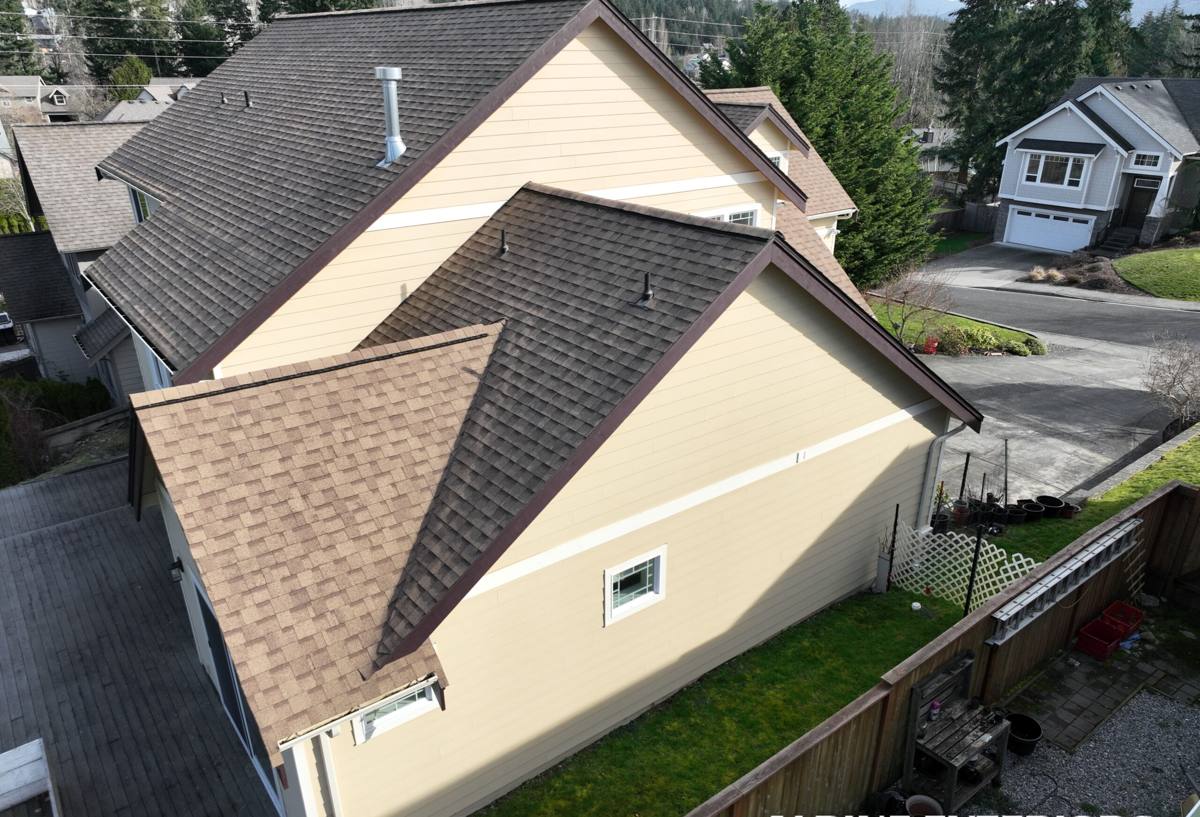
Signs Your Cordata Home Needs New Windows
Homeowners in this neighborhood range from newer builds put up over the last couple of decades to older properties that have been through many wet seasons. Regardless of age, the warning signs tend to look the same:
- Condensation building up between panes, which means the seal on a double- or triple-pane unit has failed
- Soft, discolored, or swelling wood at the sill or bottom corners of the frame
- Visible daylight or a draft around the frame edge when the window is closed and locked
- Difficulty opening, closing, or locking a window that used to operate smoothly
- Moss or dark streaking on the exterior trim directly above or around the window
- A noticeable rise in heating costs with no other explanation
- Paint that keeps peeling or bubbling on interior trim near the window, a sign moisture is getting behind it
Any one of these on its own might just mean routine maintenance. Two or three together, especially on windows facing the prevailing weather, usually means the assembly has started to let water in and replacement is the more honest answer than another round of caulk.
What a Correct Window Installation Actually Involves
Window installation looks simple from the outside — old window out, new window in — but the parts nobody sees are what determine whether the job holds up through a Whatcom County winter. We treat every install as a full envelope repair at that opening, not just a swap.
Removal and Opening Inspection
Once the old window is out, we inspect the rough opening before anything new goes in. This is the point where hidden water damage, soft framing, or missing flashing from the original build shows up. If we find rot or compromised sheathing, we address it then — installing a new window into a damaged opening just locks the problem behind new trim.
Flashing and Moisture Barrier
This is the single most important step for a house in this climate. Proper flashing directs any water that gets behind the siding down and out, away from the wall cavity, rather than letting it pool at the sill. We integrate the window's flashing with the home's existing weather-resistive barrier in the correct shingle-style layering — top piece overlapping the one below it — so water always sheds downward and outward.
Sealing and Insulation
Around the frame, we use low-expansion foam or backer rod and sealant rated for exterior use, not just whatever caulk is on the truck. Over-filling the gap with expanding foam can bow the frame and cause operational problems later, so this step is done carefully, not quickly.
Trim and Finish
Exterior trim gets caulked at the joints most exposed to driving rain and primed or capped where wood meets the elements. Interior trim is reset cleanly, and any disturbed paint or finish is touched up so the room looks finished, not patched.
Choosing the Right Window for This Climate
Material choice matters more here than in a drier region, mainly because of how each frame material handles sustained moisture exposure and salt air over time. Here's how the common options compare for a Cordata home:
| Frame Material | Moisture Behavior | Maintenance | Relative Cost |
|---|---|---|---|
| Vinyl | Won't rot; handles damp conditions well | Low — occasional cleaning | Lower |
| Fiberglass | Very stable in wet, temperature-swinging conditions; resists warping | Low | Mid to higher |
| Wood-clad (wood interior, clad exterior) | Good if the cladding and flashing details are correct; interior wood needs a dry environment | Moderate — watch cladding seams and interior finish | Higher |
| Aluminum | Durable but conducts cold and can condensate more in our humidity without a thermal break | Low | Mid |
We don't push one material as universally "best." A vinyl or fiberglass window with a correctly installed flashing and sealant system will outperform a premium wood window that was installed carelessly. The frame material affects long-term maintenance and appearance; the installation quality is what actually keeps water out. Where we steer clients away from a particular product, it's usually about maintenance burden or installation sensitivity in our wet climate — not a knock on the manufacturer.
Our Installation Process, Start to Finish
- On-site assessment — we look at each opening, note existing damage or drafts, and measure for accurate ordering.
- Product selection — we walk through frame material, glass package, and grille or style options based on your home's exposure and your budget.
- Scheduling — we plan around the weather window when possible, since an open wall cavity needs a dry stretch to install correctly.
- Removal and opening prep — old units come out, the opening is inspected and repaired if needed.
- Flashing and installation — new window is set, shimmed level and plumb, flashed, and sealed.
- Interior and exterior finish — trim, caulking, and paint touch-up to match the existing finish.
- Walkthrough — we operate every window with you, check the seal, and clean up the work area before we leave.
Why a Crew That Already Works Cordata Matters
A contractor who works this specific area regularly has already seen how the local weather patterns and housing stock in this part of Bellingham interact — which wall orientations take the worst of the driving rain, how older homes in the area were typically flashed compared to newer construction, and what permitting or inspection expectations apply within the city. That local pattern recognition shortens the guesswork on your project and reduces the chance of a callback for something that should have been caught the first time.
It also matters for accountability. A crew based in and around Whatcom County isn't disappearing after the invoice clears — if a seal needs a second look after the first hard rain of the season, we're a local call away, not a name on an out-of-town truck.
Energy Efficiency and Condensation in This Climate
Bellingham's marine climate means homes deal with persistent humidity, not just cold. That combination is exactly what causes interior condensation on poorly performing windows — you'll see it as fogging or dripping on the glass or frame during cold mornings. A correctly installed, properly sealed window with an appropriate glass package (typically dual-pane with a low-E coating for this region) reduces that condensation risk significantly and keeps heating costs more predictable through the wet months. Poor installation undermines even a high-performance window; a well-sealed mid-range window will often outperform a top-tier window that wasn't installed with the same care.
Before You Hire: A Practical Checklist
- Ask specifically how the installer handles flashing integration with your existing siding — this is the detail that determines long-term water performance
- Confirm whether opening repairs (rot, damaged sheathing) are included or billed separately if found
- Get the glass package spec in writing — pane count, coating, gas fill — not just "energy efficient"
- Ask how cleanup and disposal of old windows is handled
- Clarify the warranty on both the product and the labor separately, since they're often different lengths
Maintenance After Installation
A correctly installed window needs very little upkeep, but a little goes a long way in this climate. Rinse pollen, salt residue, and grime off the glass and frame a couple of times a year, keep an eye on exterior caulk lines for cracking, and clear any moss or debris that accumulates on sills or nearby trim before it holds moisture against the frame. Catching a small caulk crack early is a five-minute fix; ignored through a wet winter, it can become a much bigger repair.
If your windows in Cordata are showing any of the signs above, or you're simply ready to stop fighting drafts and fogged glass through another Whatcom County winter, we're happy to take a look. Reach out for a free, no-pressure estimate using the form below.