 Bellingham Roofing
 Why Decks Wear Out Faster in Happy Valley
Happy Valley sits close enough to Bellingham Bay that salt-laden air reaches deck framing and fasteners year-round, and it's shaded by enough mature tree canopy that many decks in the neighborhood stay damp longer than decks out in the open. That combination — salt air plus shade plus Whatcom County's long, wet winters — is hard on outdoor structures in a way that's easy to underestimate until you're standing on a deck that feels softer than it used to.
None of this means Happy Valley is a bad place for a deck. It means a deck built or maintained the way you'd build one in a dry inland climate won't hold up the same way here. The moisture doesn't evaporate off quickly, moss and algae get a long head start every fall, and any spot where water can pool or hardware can corrode will find trouble well before the deck looks obviously worn on the surface.
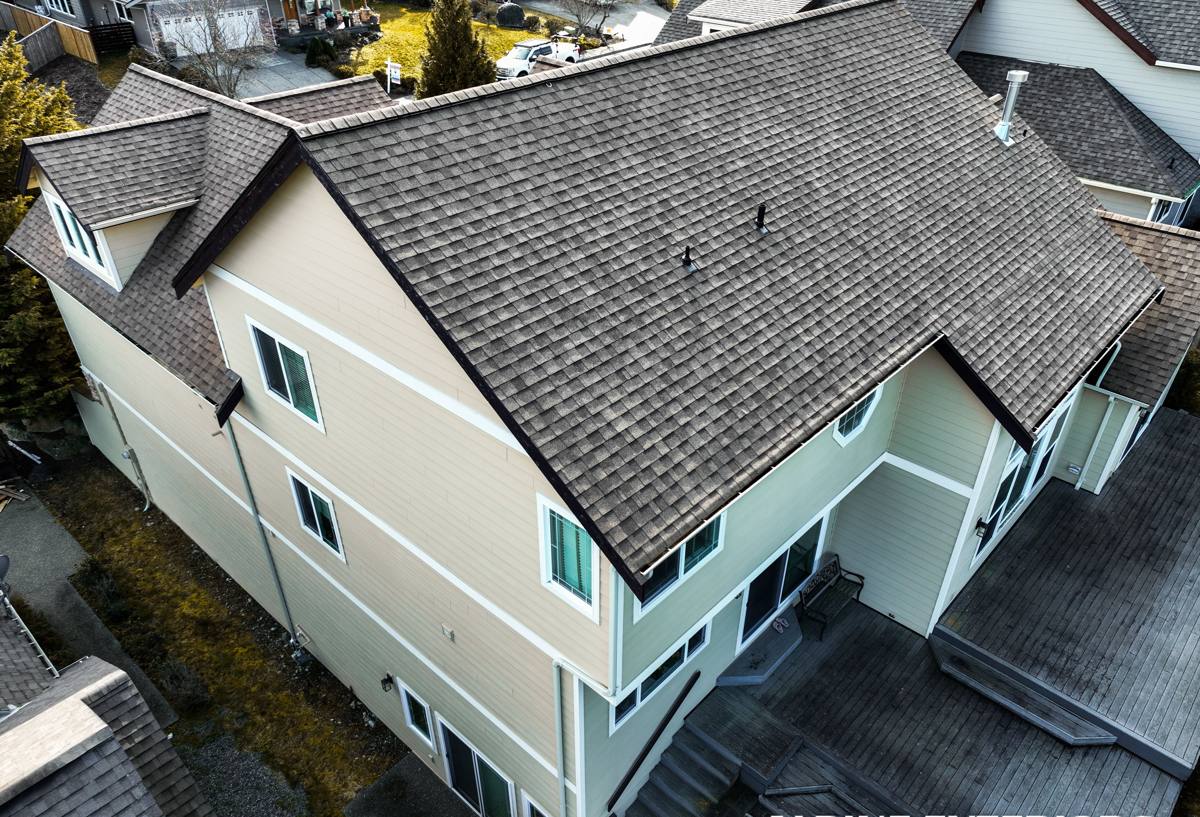
Signs Your Deck Needs Replacing, Not Just Repairing
Repair makes sense when the problem is isolated — a few rotten boards, a loose railing, a step that's come free. Replacement makes sense when the problem is systemic. Here's how to tell which one you're actually dealing with:
- Soft or spongy decking in more than one area, not just near a planter or downspout
- Rust streaking around fasteners, which usually means the hardware is failing from the inside out
- Ledger board separation — any gap, movement, or water staining where the deck meets the house
- Post rot at ground level, especially where posts sit in or near soil instead of on proper footings
- Persistent moss or algae film that returns within weeks of cleaning, a sign the wood is staying wet longer than it should
- Joists that flex noticeably underfoot, which points to structural degradation, not just a cosmetic issue
If you're only seeing one of these on one section of the deck, a repair may genuinely be the right call. If you're seeing two or three of these across the structure, you're usually looking at a deck that's cheaper to replace properly than to keep patching.
What a Correct Deck Replacement Actually Involves
What's Under the Boards Matters More Than the Boards
The decking surface is what you see, but the framing underneath — ledger, joists, beams, posts, and footings — is what determines whether the deck is safe and how long it lasts. A full replacement means removing the old structure down to a point where every component can be inspected, not just re-decking over questionable framing. In a climate like this one, framing that looks fine from a quick glance can still have moisture damage at connection points, which is exactly where structural failure starts.
The Ledger Connection
The ledger board — where the deck attaches to the house — is the single most important connection on the structure and the most common source of failure when it's done wrong. It needs proper flashing to keep water from tracking behind it into the house framing, and it needs to be fastened correctly, not just nailed on. Given the amount of driving rain this area gets, a poorly flashed ledger is one of the fastest ways for a deck to cause damage to the house itself, not just to the deck.
Footings and Posts
Footings need to be sized and set to the frost depth and load requirements that apply here, and posts need to be isolated from direct ground contact with proper post bases rather than buried or set in soil. On shaded, tree-covered lots that hold moisture longer, this detail matters more than it would on an open, sunny lot — ground-contact posts are where rot starts first.
Choosing Decking Material for a Wet, Shaded Climate
There's no single "best" decking material — there's a best material for your budget, your maintenance appetite, and how much sun or shade the deck actually gets. Here's how the common options compare for a Happy Valley setting:
| Material | Upfront Cost | Maintenance | How It Handles This Climate |
|---|---|---|---|
| Pressure-treated wood | Lowest | Annual cleaning, periodic staining/sealing | Needs consistent upkeep to shed moisture; shaded areas need extra attention to moss and mildew |
| Cedar | Moderate | Regular sealing to maintain color and resist moisture | Naturally more rot-resistant than pressure-treated, but still needs maintenance in wet, shaded spots |
| Capped composite | Higher | Occasional washing, no staining or sealing | Doesn't absorb moisture or rot, though algae and mildew can still grow on the surface film in constant shade and need washing |
| PVC / cellular decking | Highest | Occasional washing | Fully moisture-resistant material; performs well in damp, shaded conditions but is more sensitive to correct installation and expansion gaps |
Our general standard on shaded, damp lots is to steer homeowners away from bare pressure-treated wood as a long-term surface unless they're genuinely committed to yearly maintenance — not because the material fails outright, but because the upkeep burden in a climate like this is real and most homeowners underestimate it. Composite and PVC cost more up front, but the trade-off is fewer weekends spent scrubbing and resealing.
Our Deck Replacement Process
- On-site assessment. We look at the whole structure, not just the decking surface — ledger, framing, footings, and drainage around the deck.
- Honest scope. We tell you plainly whether you need a full replacement or whether targeted repair is a legitimate option, and why.
- Permitting. We handle the permit process where required so the work is inspected and documented correctly.
- Demolition and disposal. Full removal of the old structure, including anything hidden underneath that isn't visible until it's opened up.
- Rebuild from the ground up. Footings, framing, ledger flashing, and structural connections built to current code, not just "what was there before."
- Decking and railing installation. Installed per manufacturer spec, including the fastening and gapping details that matter for how the material performs over time.
- Final walkthrough. We go over the finished deck with you and explain what maintenance, if any, it needs going forward.
Permits and Code Considerations
Deck replacement in Bellingham typically requires a permit, particularly for anything involving structural framing, footings, or a deck attached to the house above a certain height. Guardrail height, baluster spacing, and stair requirements are all governed by code, and they exist for real safety reasons, not as red tape. We pull the necessary permits and build to the inspected standard rather than cutting corners that would only surface as a problem — or a liability — later. If you're planning to sell the home eventually, a deck that was never permitted can also become a headache during a real estate transaction.
What Deck Replacement Costs and Why
Deck replacement costs vary widely based on size, material, height off the ground, and how much of the structural work is involved — there's no honest way to quote a number without seeing the deck. What we can tell you is what actually drives the cost:
| Cost Factor | Why It Matters |
|---|---|
| Deck size and shape | More square footage and complex shapes (angles, multiple levels) mean more material and labor |
| Decking material | Composite and PVC cost more per square foot than wood, but reduce long-term maintenance spending |
| Height above grade | Taller decks need more substantial framing, railing, and often stairs |
| Ground conditions | Sloped or soft ground can require deeper or more extensive footings |
| Structural condition underneath | Hidden rot or ledger damage found during demo can add scope once the old deck is opened up |
| Railing and stair style | Cable, metal, and custom railing systems cost more than standard baluster railing |
We'd rather walk your deck in person and give you real numbers than throw out a range that doesn't mean much once we're standing on your actual structure.
Why It Matters to Hire a Crew That Already Works Happy Valley
A deck built by someone who mostly works drier, sunnier parts of the state can look fine the day it's finished and still fail early here, because the details that matter — ledger flashing, footing depth, fastener choice, spacing that allows airflow under shaded decking — are exactly the details that don't show up as problems until a wet Whatcom County winter has had a few years to work on them. A crew that regularly works this neighborhood already knows which spots on a lot tend to stay damp, which framing details hold up to salt air, and which shortcuts cause callbacks two or three years down the line. That's not a marketing claim — it's just what comes from building and maintaining decks in this specific climate repeatedly, instead of once.
Keeping a New Deck Looking Good
Whatever material you choose, a little seasonal attention goes a long way in this climate:
- Sweep leaves and debris off the deck regularly in fall, especially in shaded corners where moss gets a foothold fastest
- Rinse the surface periodically to clear salt residue and organic buildup before it has a chance to set in
- Check railing and stair connections once a year for movement or looseness
- Keep gutters and downspouts near the deck clear so runoff isn't draining directly onto or under the structure
- For wood decks, reseal on the schedule the product calls for — skipping a season is when moisture starts winning
- Trim back overhanging branches where practical to cut down on shade and debris buildup
If you're dealing with a deck that's showing its age, or you just want a straight answer on whether repair or replacement makes more sense for your home, we're happy to take a look. Use the form below to request a free, no-pressure estimate.