 Bellingham Roofing
 Windows Built for Life on Bellingham Bay
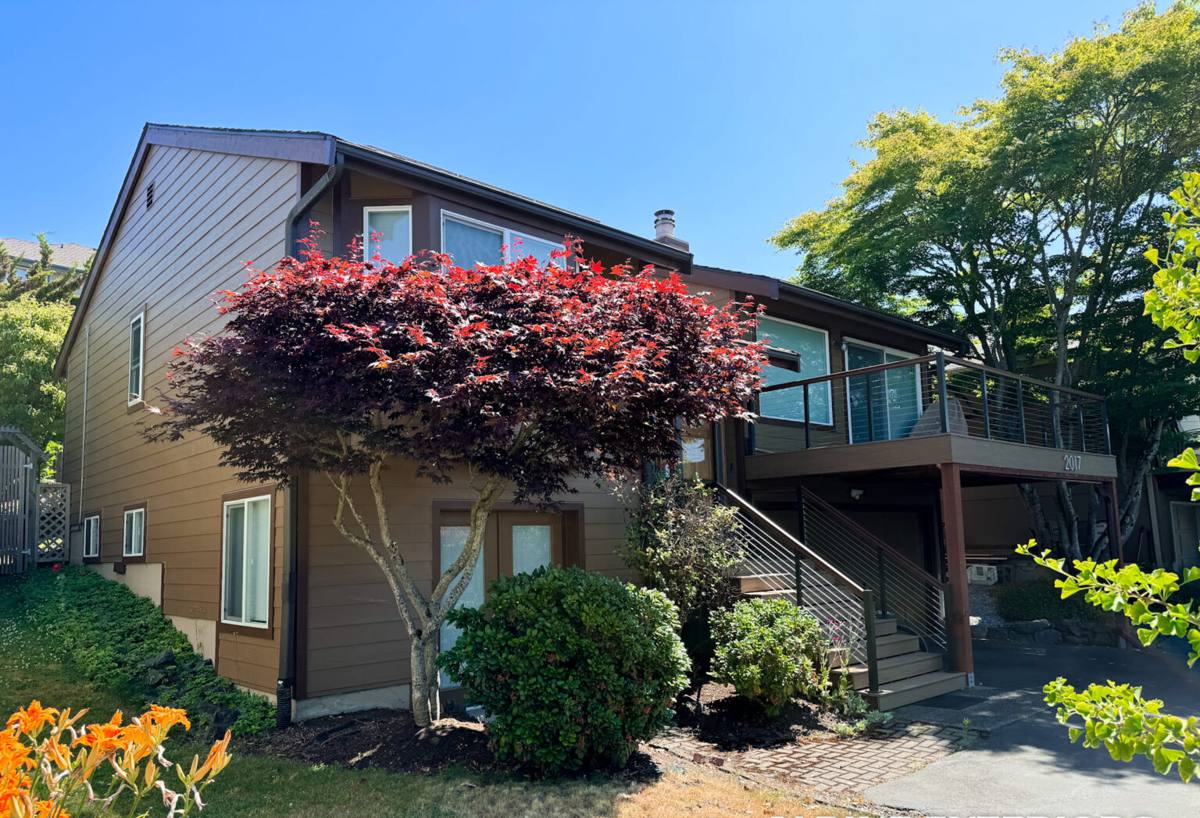
Edgemoor sits close enough to Bellingham Bay that salt-laden air is part of daily life, and the mature tree canopy that gives the neighborhood its character also means a lot of homes sit in dappled shade for much of the year. That combination — salt air, driving rain off the water, and shade that keeps surfaces damp longer than they'd like — is hard on windows in ways that inland Whatcom County homes don't deal with as often. When we install or replace windows in Edgemoor, we're not just fitting a window into a hole in the wall. We're accounting for how this specific stretch of Bellingham weathers a house over time.
This page covers what Edgemoor homeowners should know before starting a custom window project: what the local climate actually does to windows over time, what a correct installation looks like, how our process works from estimate to final walkthrough, and why hiring a crew that already works this neighborhood makes a real difference.
What Bay-Side Weather Does to Windows Over Time
Salt Air and Hardware Corrosion
Homes within a mile or two of Bellingham Bay pick up airborne salt that settles on glass, frames, and — more importantly — hardware. Cheap or poorly coated hinges, locks, and balance mechanisms corrode faster near the water than they would a few miles inland. It's not dramatic; it's slow pitting and stiffness that shows up as a window that used to open smoothly and now sticks or won't latch cleanly. Frame material and hardware coating matter more here than in a lot of Whatcom County.
Driving Rain and Water Intrusion
Storms coming off the water don't just fall straight down — wind pushes rain sideways into west- and southwest-facing walls, which describes a lot of Edgemoor lots given the terrain toward the bay. A window that's watertight in a light, vertical rain can still leak under wind-driven rain if the flashing, sill pan, or sealant wasn't done correctly. This is one of the most common problems we find when we're called out to fix a window that "has leaked for years" — it's almost never the window unit itself, it's the installation.
Moss, Shade, and Trapped Moisture
The tree cover that makes Edgemoor attractive also keeps a lot of siding and trim damp well after a storm passes. Moss and algae take hold on north-facing trim and window sills faster here than on open, sun-exposed lots, and that trapped moisture is exactly what wood trim, sills, and old caulk lines struggle with over the long moss season — roughly fall through spring in this climate. Wood-frame windows without proper cladding or regular maintenance are the most vulnerable to this pattern.
What a Correct Installation Actually Involves
A window installation done right is mostly invisible — you never think about it because it never causes a problem. That invisibility is earned through a handful of steps that are easy to skip and expensive to fix later.
Opening Prep and Structural Check
Before a new window goes in, we check the rough opening for level, square, and rot. Older homes and additions on Edgemoor's wooded lots sometimes have opening damage from long-term moisture intrusion that isn't visible until the old window comes out. We address that before anything gets installed — covering it up guarantees a repeat failure down the road.
Flashing and Water Management
This is the step that determines whether a window survives driving rain. A correct install uses a sill pan to direct any water that gets past the window back outside, integrates flashing tape with the house wrap in the right shingle-lap order so water always sheds outward, and never relies on caulk alone to keep water out. Caulk is a backup layer, not the primary defense against a bay-facing storm.
Sealing and Insulation
Gaps around the frame get filled with low-expansion foam or backer rod and sealant — never packed tight with standard spray foam, which can bow the frame and cause operational problems. Interior and exterior sealant beads are tooled cleanly and matched to a sealant rated for this climate's freeze-thaw cycles and UV exposure.
Choosing Window Materials for a Bay-Adjacent Property
Material choice matters more in Edgemoor than in drier, more sheltered parts of the county. Here's how the common options hold up against salt air, shade-driven moisture, and driving rain:
| Material | Salt Air / Corrosion | Moisture in Shade | Maintenance |
|---|---|---|---|
| Vinyl | Not affected (no corrosion) | Good — won't rot | Low |
| Fiberglass | Excellent resistance | Excellent — dimensionally stable | Low |
| Wood-clad | Good if cladding stays intact | Vulnerable if cladding fails | Higher — watch cladding seams |
| Solid wood | Poor without diligent upkeep | Most vulnerable in shaded, damp spots | Highest |
| Aluminum | Fair — needs marine-grade coating | Good, but conducts cold and condensation | Low to moderate |
None of these are wrong choices — a number of Edgemoor's character homes were built with wood windows, and homeowners often want to keep that look. Our job is to make sure whatever material you choose is specified and installed correctly for where your house actually sits, right down to the hardware coatings on anything within reach of salt spray.
Matching Windows to Edgemoor's Architecture
Edgemoor is a mix of established custom homes, mid-century houses, and newer builds tucked into wooded, often sloped lots. There isn't one dominant style, which means window replacement here is rarely a catalog match — it's usually a custom or semi-custom order built to fit existing openings, trim profiles, and sightlines toward the water or the trees these homes are built around.
We measure and order to the actual opening rather than assuming a stock size will work, and we talk through grille patterns, glass tint or low-E coatings for water-facing glare, and frame colors that fit the house instead of defaulting to whatever's fastest to order. On homes with a view toward the bay, we also talk through glass options that cut glare and UV without darkening the room more than you want.
Our Process, Start to Finish
- Free on-site assessment — we look at every window being considered, check for rot, drafts, or old flashing failures, and measure actual openings.
- Straightforward estimate — material options, a real price range, and an honest read on what's replacement-only versus what needs opening repair first.
- Scheduling around weather — we plan installs for dry windows where possible and protect open walls if conditions turn while work is underway.
- Removal and opening prep — old units come out carefully, and any rot or damaged sheathing gets repaired before the new window goes in.
- Installation with proper flashing — sill pans, flashing tape, and sealant applied in the correct order, every time, not just on the units someone might inspect.
- Final walkthrough — we test operation on every window, check seals, and clean up the site before we consider the job done.
What Affects Cost on a Custom Window Project
Every Edgemoor project is different, but the same handful of factors drive the price up or down. A rough, honest range for a straightforward vinyl or fiberglass replacement window runs from several hundred to a couple thousand dollars per opening installed, with custom shapes, larger units, or wood-clad and specialty glass pushing well above that. The only way to get a real number is a site visit — anyone quoting a firm price over the phone without seeing the openings is guessing.
- Window material and brand (vinyl and fiberglass generally cost less than wood-clad or aluminum)
- Standard size versus a custom cut for a non-standard opening
- Whether the rough opening needs repair before the new window can go in
- Glass upgrades — low-E coatings, tempered glass where code requires it, or specialty tint for glare
- Number of openings done at once (bundling several windows typically lowers the per-unit cost)
- Access — second-story or hard-to-reach openings take more time and equipment
- Trim and interior finish work needed to match the existing house
Why It Matters That We Already Work in Edgemoor
A crew that only shows up in this neighborhood occasionally doesn't have a feel for which walls take the worst of the driving rain, how fast moss builds back on shaded trim, or which hardware finishes actually hold up to salt air over a few winters. We've worked enough windows and exteriors across Bellingham and Whatcom County to know that a spec that works fine in a dry, inland subdivision isn't automatically the right call a few blocks from the bay. That local pattern recognition is part of what you're paying for — not just the labor to set a window into an opening.
It also means we're not guessing at permitting or code requirements specific to this area, and we're a known, reachable local business if a question comes up two years after installation instead of a name you found once and never hear from again.
Maintaining Your Windows Once They're In
Good installation buys you years of trouble-free performance, but Edgemoor's climate still asks a little upkeep of any window:
- Rinse salt residue off exterior glass and frames a few times a year, especially after windy weather off the water
- Check and clear weep holes at the base of the frame so water can drain instead of pooling
- Keep gutters and downspouts clear so roof runoff isn't sheeting directly down over window heads
- Brush moss and debris off sills and trim before it has a chance to hold moisture through the wet season
- Re-caulk exterior joints if you notice cracking or gaps — small gaps become water intrusion fast in driving rain
- Operate every window a few times a season, even ones you rarely open, to keep hardware from seizing
If your windows in Edgemoor are drafty, fogging between panes, sticking, or you're planning a remodel and want them done right the first time, we're happy to come take a look. The estimate is free, there's no pressure, and you'll get a straight answer about what your home actually needs — just fill out the form below to get started.