 Bellingham Roofing
 Edgemoor's Waterfront Setting Is Hard on Siding
Edgemoor sits close to Bellingham Bay, and that proximity to open water shapes everything about how siding ages here. Salt-laden air drifts in off the bay and settles on exterior surfaces year-round, and combined with Whatcom County's wet, marine climate, it creates conditions that are noticeably tougher on a home's exterior than what you'd see a few miles inland. Add in the driving, wind-pushed rain that comes through in fall and winter storms, plus the long, damp moss season that runs from roughly October through April, and you have a combination that punishes any siding material with a weak point in its finish, its water management, or its resistance to moisture.
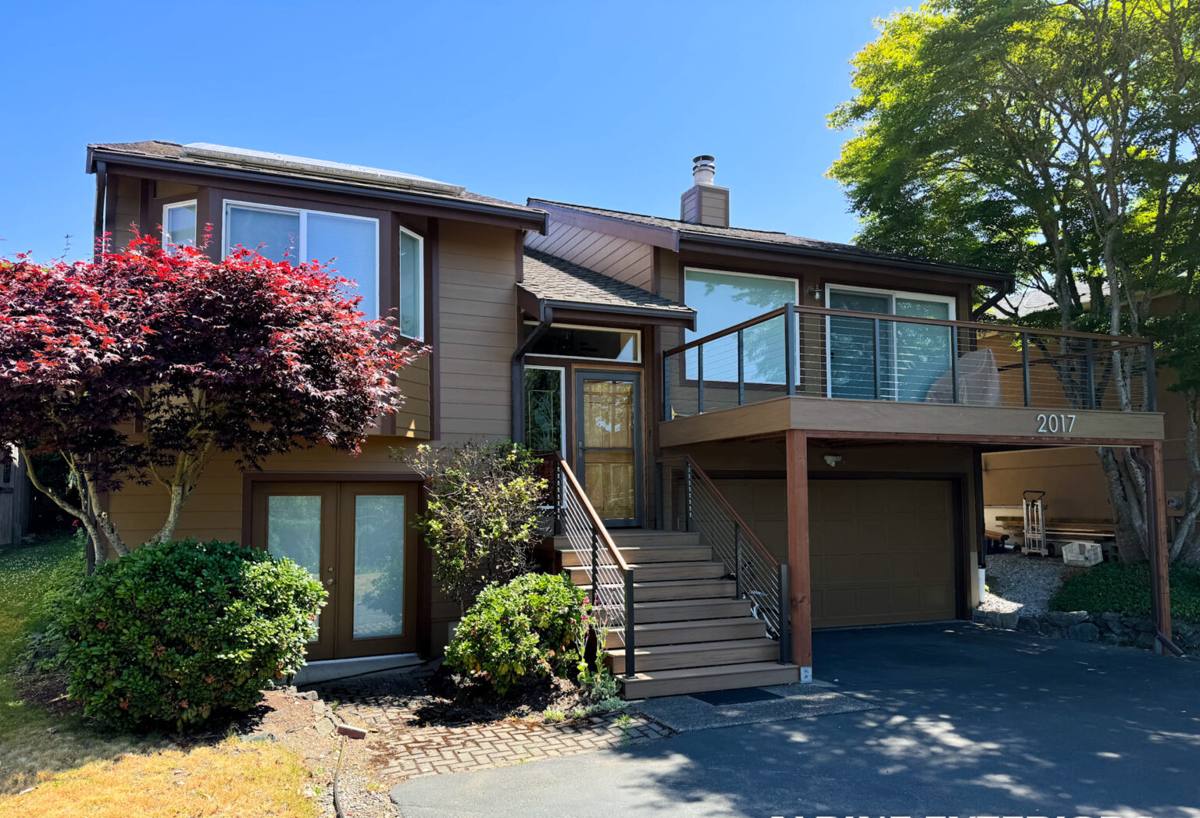
None of this is unique to any one street or block in the neighborhood — it's a function of being close to the water and under heavy tree cover, which describes most of Edgemoor. Homes here tend to sit among mature trees, which keeps siding shaded and slower to dry after rain, and that combination of shade and moisture is exactly what moss, algae, and mildew need to take hold.
What Edgemoor Homes Actually Need From Their Siding
Given that setting, siding in this neighborhood has to do three things well, and most products only manage one or two.
Hold up to sustained moisture without swelling or rotting
Wood-based products, including primed spruce trim and cedar siding, absorb water. In a climate where surfaces rarely get a long, dry stretch to fully release that moisture, repeated wetting and drying cycles lead to swelling, cupping, and eventually rot at seams, corners, and butt joints — the exact spots where water collects.
Resist salt exposure without breaking down the finish
Airborne salt is corrosive to fasteners and abrasive to lesser paint systems. A finish that isn't engineered to hold up under that exposure will chalk, fade, or peel years before it should, especially on the water-facing sides of a house.
Shed moss and mildew instead of feeding it
Under a tree canopy with limited direct sun, siding stays damp longer after every rain. Materials with any organic content, or finishes with a rougher, more porous surface, give moss and mildew something to grip. A dense, factory-finished surface sheds spores far more effectively than a field-painted one.
Why We Only Install James Hardie Siding
We've made a deliberate decision as a company to install James Hardie fiber cement siding exclusively. We don't install vinyl, LP SmartSide, Cemplank, Allura, primed spruce, or cedar. That's not a marketing position — it's the conclusion we reached after years of seeing how different siding materials actually perform in this climate over time, not just in the first few years after installation.
James Hardie is fiber cement: a mix of cellulose fiber, sand, and Portland cement engineered specifically to resist moisture, hold paint, and stand up to exactly the kind of weather Edgemoor gets. It doesn't absorb water the way wood-based products do, it's non-combustible, and it's backed by a factory finish system built to outperform anything applied on site.
HZ5 — engineered for this climate zone
James Hardie makes climate-specific product formulations, called HZ (HardieZone) products, and Bellingham falls into the HZ5 zone — the formulation engineered for regions with significant moisture exposure and freeze-thaw cycling. The HZ5 line is manufactured with that moisture and cold-weather performance in mind, rather than being a generic product sold everywhere in the country.
ColorPlus — a factory finish, not a field paint job
Most James Hardie products we install use the ColorPlus finish system: baked-on color applied in a controlled factory environment, cured to a hardness and consistency a brush or sprayer can't match on site. It resists fading, chipping, and the chalking that salt air accelerates on ordinary paint, and it comes with its own finish warranty separate from the substrate warranty. For a neighborhood this close to the water, that finish durability is not a cosmetic upgrade — it's the difference between a house that still looks sharp in year twelve and one that needs repainting by year five.
What a Correct James Hardie Installation Actually Involves
James Hardie siding performs the way it's designed to only when it's installed to the manufacturer's specifications. It's a forgiving material in terms of durability, but unforgiving of installation shortcuts — and shortcuts are exactly what cause the moisture problems that give any siding a bad reputation.
| Installation Detail | Done Correctly | Common Shortcut |
|---|---|---|
| Flashing at windows, doors, and penetrations | Properly lapped, integrated with a weather-resistant barrier so water sheds outward | Skipped or minimally taped, relying on caulk alone |
| Fastener placement and type | Corrosion-resistant fasteners set per Hardie's nailing pattern and depth | Standard fasteners overdriven, cracking the board's fiber cement edge |
| Ground and roof clearance | Minimum clearances held so splashback and roof runoff don't sit against the board | Siding run too close to grade or a roofline, wicking moisture |
| Panel and joint gaps | Manufacturer-specified gaps and sealant at butt joints to allow for movement | Boards butted tight with no expansion allowance |
| Caulking and sealants | Used only where specified, with compatible, paintable sealant | Over-relied on to compensate for poor flashing work |
Flashing and water management
Most siding failures, regardless of the material, trace back to water getting behind the cladding rather than the cladding itself failing. Correct flashing at every window, door, roofline, and penetration is what keeps water moving down and out instead of finding its way into the wall assembly. In a neighborhood that gets driving, wind-pushed rain off the bay, this detail matters more than it does a few miles inland, where rainfall tends to be more vertical.
Fastening and clearances
Fiber cement is dense and durable, but it will crack if a fastener is overdriven, and it will wick moisture if it's installed too close to grade, a deck, or a roofline. Hardie publishes clear clearance and fastening specs for exactly this reason, and following them is what keeps the warranty valid and the siding performing for decades rather than years.
Our Process for Edgemoor Siding Projects
Every home is different, but the sequence we follow doesn't change, because it's built around getting the water management right before a single piece of finished siding goes up.
- On-site assessment — we look at the existing siding, sheathing, and any signs of past moisture intrusion, along with the home's exposure to prevailing wind and rain direction.
- Removal and substrate check — old siding comes off and we inspect the sheathing underneath for rot or damage before anything new goes on. Hidden problems get addressed here, not covered up.
- Weather-resistant barrier and flashing — a proper water-resistive barrier goes on first, with flashing integrated at every window, door, and penetration.
- James Hardie installation — HZ5 product installed to manufacturer clearance, fastening, and gap specifications, in the ColorPlus finish and profile the homeowner selects.
- Trim, caulking, and final details — sealant applied only where it belongs, not as a substitute for proper flashing.
- Final walkthrough — we go over the finished exterior with the homeowner before calling the job done.
Cost Factors for a James Hardie Project in Edgemoor
Every project's price depends on the specifics of the house, but the factors that drive cost up or down are consistent. We give firm numbers only after seeing the home in person — anyone quoting a full price over the phone hasn't accounted for your home's actual condition.
| Factor | Why It Matters |
|---|---|
| Substrate condition | Rot or damage found under old siding needs repair before new siding goes on — common in homes with a history of wood or lesser fiber-cement products |
| Home size and complexity | Multiple gables, dormers, and cutouts add cutting, flashing, and labor time versus a simple rectangular footprint |
| Access and site conditions | Mature trees, sloped lots, and limited staging space — common in Edgemoor — can affect scaffolding and material staging |
| Product selection | Lap siding, shingle-style panels, and board-and-batten profiles carry different material and labor costs |
| Trim and detail work | Window and door trim, corner boards, and fascia detailing add to both material and labor |
Living With Salt Air and Moss Season
James Hardie siding is low-maintenance compared to wood-based alternatives, but "low-maintenance" doesn't mean "no maintenance," especially this close to the bay. A little seasonal attention keeps it performing and looking right for the long haul.
- Rinse siding periodically to clear accumulated salt residue and airborne grime, especially on water-facing walls
- Keep gutters clear so overflow doesn't run down the siding face and feed moss growth
- Trim back tree limbs and shrubs that hold siding in constant shade and slow drying time
- Check caulking at trim and joints annually and touch up before gaps let water behind the board
- Address moss or mildew with a gentle wash rather than pressure-washing directly into seams, which can force water behind the siding
Why a Crew That Already Works This Neighborhood Matters
Edgemoor's combination of waterfront exposure, mature tree cover, and older housing stock isn't something every contractor accounts for by default. A crew that's worked this neighborhood knows to pay extra attention to flashing on the bay-facing side of a house, understands why shaded walls need different maintenance guidance than sun-exposed ones, and has seen firsthand what happens when a previous installer skipped a clearance detail or under-flashed a window. That familiarity doesn't replace following the manufacturer's spec sheet — it's what makes sure the spec sheet gets followed correctly on a home with this specific set of exposures.
It also means fewer surprises during the project. Site access, tree protection, and staging around mature landscaping are things we plan for up front rather than figuring out mid-job.
Get a Straightforward Estimate
If your Edgemoor home needs new siding, or you're not sure whether what's on the walls now is still doing its job, we'll come take a look, explain what we see, and give you a clear, no-pressure estimate for a correct James Hardie installation. There's no obligation — just an honest read on where things stand.