 Bellingham Roofing
 Metal Roofing Built for Edgemoor's Bay-Facing Lots
Edgemoor sits in one of the more demanding spots in Bellingham for a roof to earn its keep. Homes here sit close to the water, tucked under mature trees, on lots that get more shade and more salt-laden wind than most inland Whatcom County neighborhoods. A roofing material that performs fine in a dry, open subdivision can struggle here. Metal roofing, installed correctly for this specific setting, is one of the few systems that holds up to all three of Edgemoor's biggest stressors at once: salt air, driving rain, and a moss season that never really ends.
This page is about metal roofing specifically for Edgemoor — what the local climate asks of the material, what a correct installation actually involves, and how our process works for homeowners in this neighborhood.
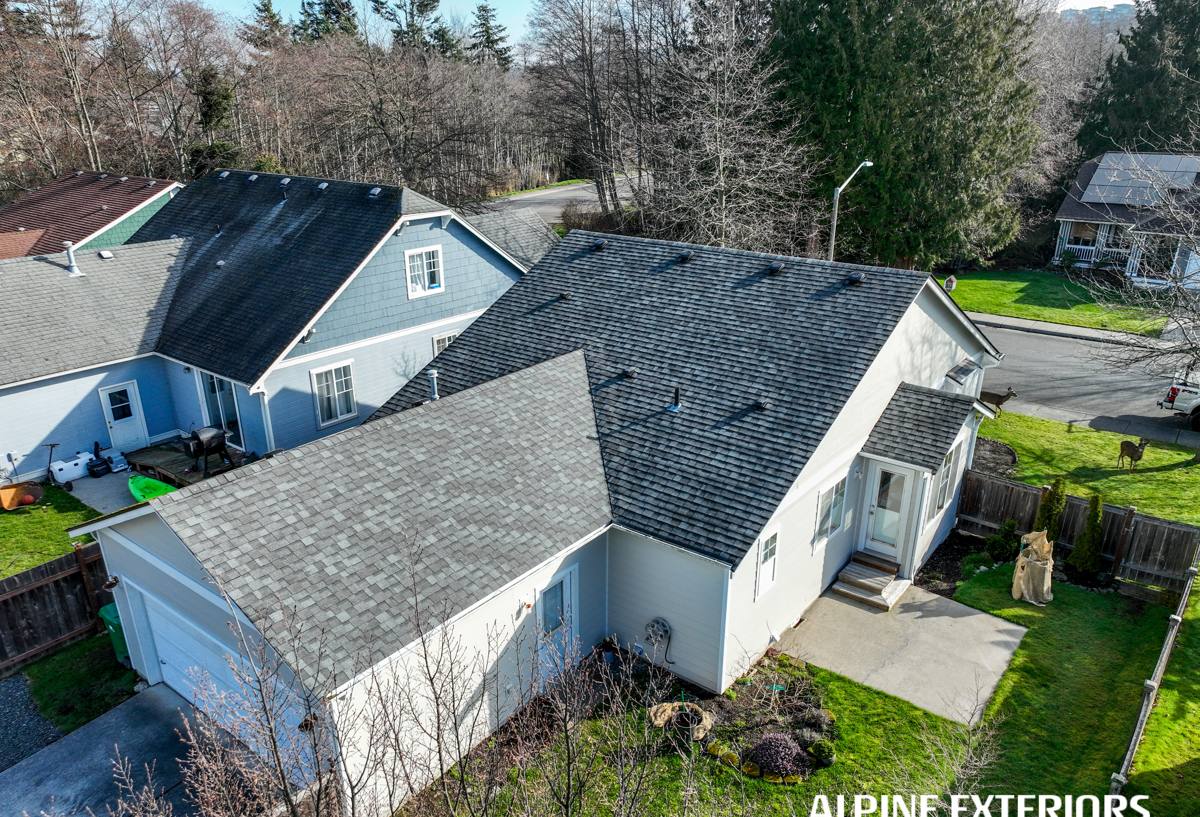
What Bellingham Bay's Climate Does to a Roof
Salt Air and Slow Corrosion
Proximity to Bellingham Bay means airborne salt is a constant, low-grade presence on Edgemoor roofs. It doesn't destroy a roof overnight, but it works steadily on exposed metal — fasteners, flashing, gutters — and it's harder on cheaper or mismatched materials than most homeowners expect. Roofing hardware that's rated for inland use can start showing corrosion years earlier here than it would twenty miles east.
Wind-Driven Rain Off the Water
Rain in Edgemoor rarely falls straight down. Wind off the bay pushes it sideways, which means it finds gaps that would stay dry in a calmer setting — under shingle tabs, around poorly lapped flashing, into valleys that weren't detailed for lateral water pressure. A roof here needs to be built assuming rain will hit it from the side, not just from above.
Shade, Moss, and a Long Wet Season
Many Edgemoor properties sit under heavy tree cover, which is part of the neighborhood's character but also means roofs stay damp longer after every rain and get less direct sun to dry out. That combination — shade plus moisture plus Bellingham's long wet season — is exactly what moss and algae need to take hold. On a shingle roof, that moss works its way under tabs and holds water against the deck. On a properly installed metal roof, there's far less for it to grip onto in the first place.
Why Metal Makes Sense for This Neighborhood
Metal roofing isn't the right fit for every home or every budget, and we'll say so honestly during an estimate. But for Edgemoor's specific combination of salt exposure, shade, and driving rain, it solves problems that asphalt shingles simply can't:
- Smooth, hard panel surfaces give moss and algae far less to root into than the textured, granulated surface of asphalt shingles
- Standing seam profiles shed wind-driven rain through raised, mechanically locked seams rather than relying on gravity and overlap alone
- Properly coated steel and aluminum resist salt-air corrosion far longer than exposed fasteners or bare galvanized hardware
- A correctly installed metal roof typically outlasts two or more asphalt roofing cycles, which matters on shaded lots where reroofing means working around mature trees
Picking the Right Metal System for This Climate
Panel Profile: Standing Seam vs. Exposed Fastener
Standing seam panels use hidden clips and mechanically seamed joints instead of exposed screws through the panel face. For a salt-air, high-rain environment like Edgemoor, that matters — every exposed fastener is a future maintenance point and a potential leak path as gaskets age and salt works on the metal. Exposed-fastener panel systems cost less up front and can be a reasonable choice on secondary structures, but for a primary residence this close to the bay, we generally recommend standing seam.
Coatings and Corrosion Protection
Not all "metal roofing" is built the same. The base metal (steel or aluminum) and the coating system on top of it are what actually determine how the roof handles salt air over time. We select coatings rated for coastal exposure rather than the standard inland spec, and we match fasteners, flashing, and trim to the same metal family so you don't end up with dissimilar metals corroding each other at the contact points — a mistake that shows up on more roofs than homeowners realize.
Underlayment, Ice-and-Water Protection, and Ventilation
The panels get the attention, but what's underneath them does most of the work protecting your home. We use synthetic underlayment rated for the exposure, self-adhered ice-and-water membrane at eaves, valleys, and penetrations, and ventilation detailing that lets a shaded, damp roof deck actually dry out between rain events instead of staying wet all winter.
Metal vs. Other Roofing Options in a Coastal, Moss-Prone Climate
| Roofing Option | Moss Resistance | Wind-Driven Rain Performance | Typical Lifespan | Ongoing Maintenance |
|---|---|---|---|---|
| Standing Seam Metal | High — smooth surface, little for moss to grip | Strong — mechanically seamed, no exposed fasteners | 40-60+ years | Low — periodic gutter/valley checks |
| Exposed-Fastener Metal | High | Good, but fasteners are a long-term wear point | 25-40 years | Moderate — fastener/gasket checks over time |
| Asphalt Shingle | Low — textured surface holds moisture and moss | Fair — depends on install quality and wind exposure | 15-25 years | Higher — periodic moss treatment and inspection |
| Cedar Shake | Low without regular treatment | Fair | 20-30 years with upkeep | High — regular treatment against rot and moss |
We're not going to tell you asphalt or cedar can't work in Edgemoor — plenty of homes here have them. But we'll be direct about the trade-off: those materials ask for more attention from the homeowner over time in a climate that doesn't give roofs much of a break.
What a Correct Metal Roof Installation Actually Involves
A lot of metal roofing problems we see on older or poorly installed systems trace back to a handful of details that get rushed or skipped. On every Edgemoor project, we pay particular attention to:
- Flashing at every roof-to-wall transition, chimney, and penetration — sealed and lapped correctly for water moving sideways, not just downhill
- Clip spacing and fastening that allows the panels to expand and contract with temperature swings without buckling or working loose over the years
- Valley detailing sized for real storm volume, not just light rain, since valleys are where wind-driven water concentrates
- Consistent metal compatibility throughout — panels, trim, fasteners, and flashing all matched to avoid galvanic corrosion
- Ventilation that accounts for tree-shaded roof decks that dry more slowly than roofs in open sun
Our Process for Edgemoor Roofing Projects
We start with an on-site assessment of the existing roof, the deck condition underneath it, and the specific exposure of your lot — how much direct sun it gets, how close it sits to the water, and how the wind typically hits the house. From there we walk you through panel profile and coating options suited to that exposure, with straightforward pricing and no pressure to upsize the job beyond what your home actually needs.
Once you approve a plan, we handle tear-off, deck inspection and repair where needed, underlayment and flashing installation, and panel installation in a sequence built to keep your home protected even if weather moves in mid-project. We clean the site thoroughly at the end of every job, including magnetic sweeps for stray fasteners around the yard and driveway.
Keeping a Metal Roof Performing Long-Term
Metal roofing asks for far less maintenance than shingles or shakes, but "low-maintenance" isn't "no-maintenance" — especially under Edgemoor's tree cover. A short annual routine goes a long way:
- Clear gutters and valleys of needles and leaf debris at least twice a year, more often under heavy tree cover
- Walk the perimeter after major windstorms to check for loosened branches or debris resting against the roof
- Have flashing and sealant at penetrations visually checked every few years, since these are the most common source of any leak on a metal roof
- Rinse off heavy pollen, needle buildup, or salt residue with a garden hose rather than a pressure washer, which can damage coatings and seams
- Trim back branches that overhang the roofline to reduce shading and debris accumulation over time
Why Hire a Crew That Already Works in Edgemoor
Edgemoor's narrow, tree-lined streets and steep or bluff-adjacent driveways aren't like a typical suburban lot — staging materials and equipment safely takes planning that a crew unfamiliar with the neighborhood won't have dialed in on day one. We've worked around the tight access, mature landscaping, and shoreline-adjacent siting that come with these properties, and we know how to protect gardens, retaining walls, and drainage during a reroof rather than treating them as obstacles.
We also understand Bellingham and Whatcom County permitting requirements for reroofing projects, and we handle that paperwork as part of the job rather than leaving it to the homeowner. That local familiarity — with the terrain, the climate, and the process — is the difference between a roof that's simply installed and one that's actually built for where it sits.
If you're weighing options for a metal roof in Edgemoor, we're happy to walk your property, look at your existing roof, and give you an honest, no-pressure estimate. Fill out the form below and we'll get in touch to schedule a time.