 Bellingham Roofing
 Roofing in Edgemoor: A Different Set of Conditions
Edgemoor sits close to Bellingham Bay, under a heavy tree canopy, on lots that see more wind-driven rain and more shade than most of the rest of the city. That combination is hard on a roof. Salt-laden air off the bay accelerates corrosion on exposed metal fasteners and flashing. Mature conifers and big-leaf maples drop needles and leaves into valleys and gutters year-round, and the shade underneath them keeps roof decks damp longer after every storm. Add Whatcom County's long, wet fall-through-spring stretch and you get ideal conditions for moss, algae, and slow moisture intrusion — the kind that doesn't show up as a leak until it's already done damage to the decking underneath.
None of this means Edgemoor homes need exotic solutions. It means a new roof here has to be installed with those specific stressors in mind — the right underlayment, the right ventilation, the right flashing details at valleys and penetrations, and material choices that actually hold up under tree cover and salt air rather than just looking good on install day.
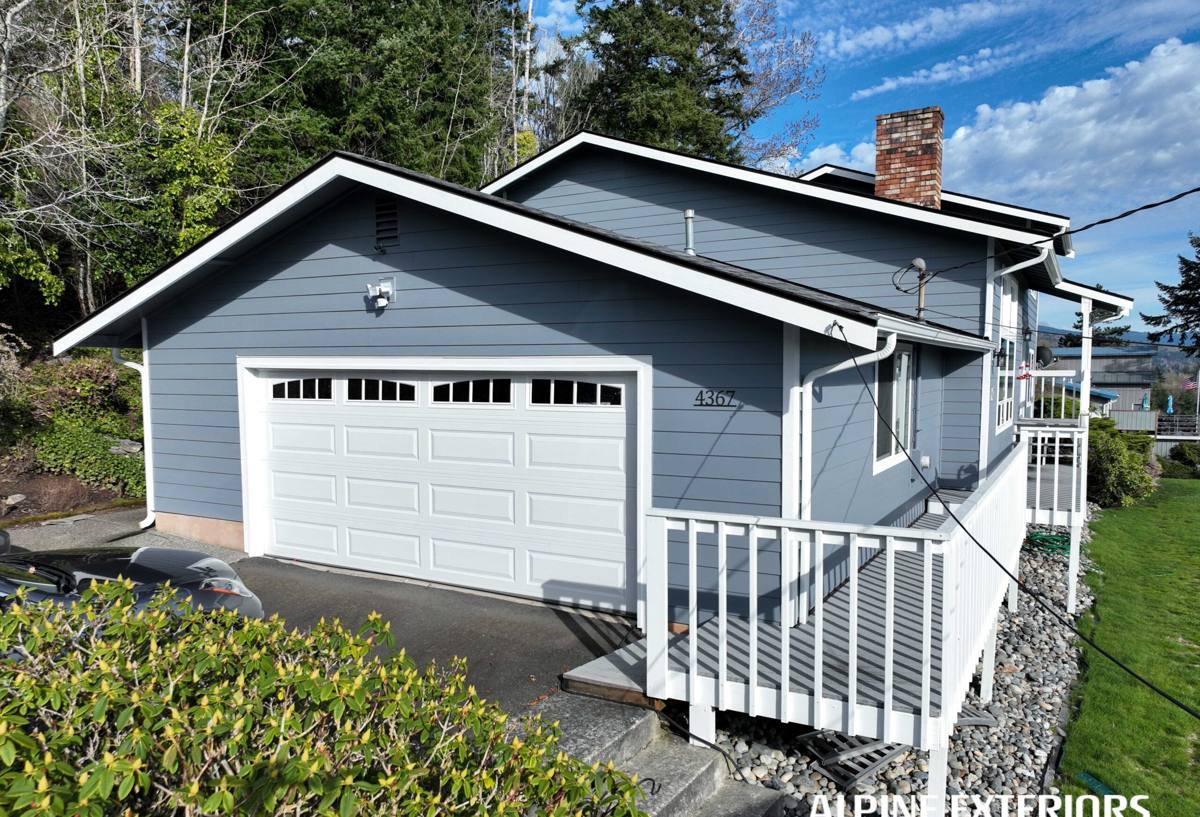
Signs an Edgemoor Roof Is Due for Replacement
Roofs rarely fail all at once. Usually there's a run-up of smaller signs that add up to "it's time" rather than "wait another year." On homes in this neighborhood, we typically see:
- Moss established in the shaded slopes, not just growing on the surface but lifting shingle edges
- Granule loss showing up in gutters and downspouts, a sign the shingle's UV and weather protection is wearing thin
- Soft or spongy spots when walking the roof, usually where trapped moisture has reached the decking
- Dark streaking or staining that keeps coming back within weeks of a cleaning
- Curling, cracking, or missing shingles, especially on slopes that catch the most wind off the bay
- Rusted or corroded flashing at chimneys, vents, and valleys
- Daylight or water stains visible from the attic
One or two of these might mean a repair is enough. Several together, especially on a roof already past 20 years old, usually means repair costs start approaching what a properly installed new roof would cost — and a patched-together roof rarely performs as well against this area's rain and moss as one installed correctly from the start.
What a Correct Installation Actually Involves
Tear-Off and Deck Inspection
We don't install new roofing over old material or over a deck we haven't inspected. A full tear-off lets us see the actual condition of the plywood or plank decking underneath — something that matters more in Edgemoor than in drier parts of the county, because shaded, moisture-retentive lots are exactly where hidden deck rot tends to develop. Any soft or delaminated decking gets replaced before anything new goes down; installing over compromised decking just guarantees a shorter roof life and hides the problem for the next owner.
Underlayment and Moisture Protection
Given how much rain this area sees, we use synthetic or felt underlayment rated for the local climate, with self-adhering ice-and-water shield at the eaves, valleys, and any roof-to-wall transitions — the spots where wind-driven rain off the bay is most likely to find a way in. Valleys in particular get extra attention on tree-heavy lots, since they're where needle debris collects and slows drainage.
Ventilation
A roof deck that can't breathe stays damp longer, and damp decking under shade is where rot and moss both get their start. We check existing intake and exhaust ventilation as part of every new roof and correct it where it's undersized or blocked — this is one of the most overlooked factors in how long a roof actually lasts under tree cover.
Flashing and Penetrations
Chimneys, plumbing vents, skylights, and valleys are where most roof leaks actually originate, not the open field of shingles. We install new flashing at every penetration rather than reusing old pieces, and we pay particular attention to material compatibility so dissimilar metals aren't set up to corrode against each other in salt-influenced air.
Material Installation
Whatever material is chosen, it's installed to manufacturer specification for nail pattern, exposure, and overlap — not "close enough." In a climate that tests every seam eventually, shortcuts here are exactly what show up as leaks two or three winters later.
Choosing a Roofing Material for Edgemoor's Conditions
There's no single "best" roofing material — the right choice depends on your home's style, your budget, how much tree cover and shade you're dealing with, and how much long-term maintenance you're willing to take on. Here's how the common options compare for a shaded, bay-influenced lot:
| Material | Typical Lifespan | Moss/Algae Resistance | Salt Air Performance | Relative Cost |
|---|---|---|---|---|
| Architectural asphalt shingle | 25–30 years | Moderate; algae-resistant granules help but need periodic cleaning under trees | Good with proper flashing metals | $ |
| Standing seam metal | 40–50+ years | Very good; sheds moss and debris well due to steep slope shed | Excellent with coated/marine-grade fasteners | $$$ |
| Synthetic composite (shake/slate look) | 30–50 years | Good; resists moisture absorption better than wood | Good | $$–$$$ |
| Cedar shake | 20–30 years with upkeep | Poor under shade without regular treatment | Fair; needs ongoing maintenance | $$$ |
Cedar shake has a natural look that fits the wooded character of the neighborhood, but on shaded, moisture-heavy lots it demands more upkeep than most homeowners want to commit to — regular treatment and cleaning to keep moss from taking hold. We'll install it if that's what a homeowner wants and understands the maintenance involved, but on most Edgemoor roofs we steer the conversation toward architectural shingle or metal, because both hold up longer under tree cover with far less babysitting.
Our Process, Start to Finish
- Free on-site inspection. We walk the roof and the attic, check the decking, ventilation, and flashing, and give you a straight answer on whether you need a repair or a full replacement.
- Written estimate. A clear scope of work and price — materials, tear-off, disposal, and any deck repair contingencies spelled out up front, not discovered mid-project.
- Permitting. We handle the permit paperwork with the City of Bellingham or Whatcom County, depending on your address, so there's no gap in coverage or inspection sign-off.
- Tear-off and deck repair. Old material comes off, decking is inspected and any compromised sections replaced.
- Installation. Underlayment, ice-and-water shield, flashing, ventilation corrections, and the roofing material itself, installed to spec.
- Site cleanup. Magnetic sweep for nails, tarps for landscaping and gardens, and full debris haul-away — important on lots with established plantings.
- Final walkthrough. We go over the finished roof with you before calling the job done.
Why a Crew That Already Works Edgemoor Matters
A roof crew that hasn't worked this neighborhood before will treat it like any other job site — and that's where mistakes happen. Edgemoor's mature trees mean tight access in places, careful staging to protect landscaping, and roof geometry that's often more complex than a standard subdivision roof. Knowing how to work around established trees without damaging them, how to protect a bluff-adjacent yard during tear-off, and how local permitting actually runs for this part of Bellingham all come from having done it before, not from reading a spec sheet.
We also know what actually fails first on roofs in this specific setting — which valleys clog with debris, which north-facing slopes hold moss longest, which flashing details need extra attention because of the salt air coming off the bay. That's the kind of judgment that only comes from working this neighborhood repeatedly, not from a general roofing checklist.
Protecting Your Investment After Installation
A correctly installed roof still benefits from basic upkeep, especially under tree cover. A short annual routine goes a long way:
- Clear gutters and valleys of needles and leaves at least twice a year
- Have moss treated or removed before it establishes under shingle edges, not after
- Trim back branches that overhang the roofline to reduce debris and shade
- Check attic ventilation isn't blocked by insulation or storage
- Schedule a roof inspection every few years, or after any major windstorm off the bay
None of this replaces a well-built roof, but it protects the investment you've made in one and helps it reach the upper end of its expected lifespan instead of the lower end.
Get a Straight Answer on Your Edgemoor Roof
If your roof is showing moss, granule loss, or you're just not sure whether it's a repair or replacement situation, we're glad to take a look. The estimate is free, there's no pressure attached to it, and you'll get an honest assessment of what your roof actually needs based on its condition and this neighborhood's conditions — not a generic sales pitch. Use the form below to get started.