 Bellingham Roofing
 Why Edgemoor Homes Take a Different Kind of Beating
Edgemoor sits close to Bellingham Bay, and that proximity to open water changes what siding has to survive. Homes here deal with a combination most inland Whatcom County properties don't face in the same intensity: salt-laden air moving off the bay, driving rain that comes in sideways during winter storms, and a moss season that can stretch from fall through spring under the region's tree cover and marine cloud layer. Any one of these is manageable. All three, working on the same wall assembly year after year, is what actually wears siding out before its time.
Salt air is corrosive to fasteners, trim metal, and paint film long before it visibly damages the siding material itself. Wind-driven rain doesn't just wet the surface of a wall — it finds every lap joint, butt seam, and penetration that wasn't detailed correctly, and it pushes moisture behind the cladding rather than just running down the face of it. Moss and algae growth thrives in the shaded, damp microclimate that many Edgemoor lots have thanks to mature trees and the bluff's exposure pattern, and organic growth holds moisture against the siding surface far longer than open sun-exposed walls ever would. Siding replacement in this neighborhood isn't just about appearance — it's about choosing a system and installation method that's actually built for this specific combination of stressors.
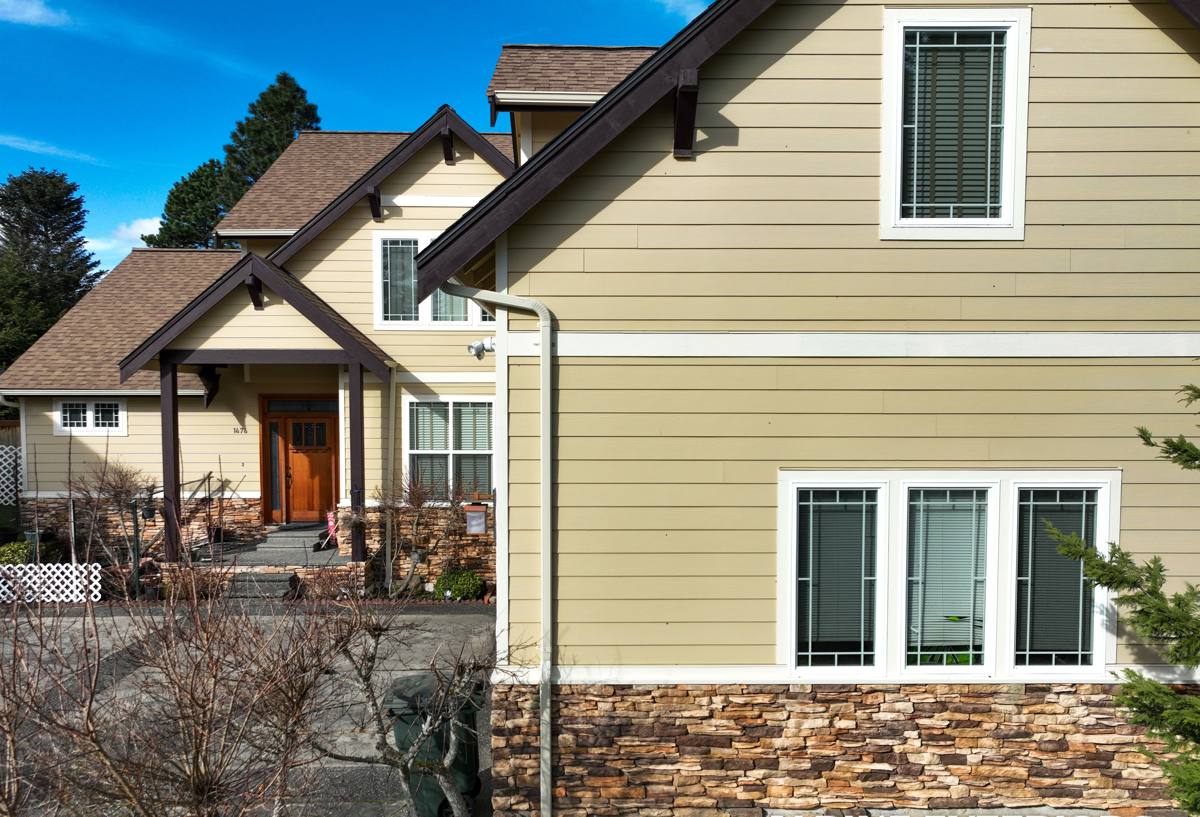
Signs an Edgemoor Home Needs Replacement, Not Just Repair
Not every siding problem calls for a full tear-off. But there's a point where patching individual boards stops making sense and a full replacement becomes the more honest recommendation. Common signs we look for on Edgemoor homes include:
- Soft or spongy spots when you press on the siding, especially near the bottom courses and around window and door trim
- Persistent moss or dark streaking that returns within a season or two of cleaning
- Paint that's bubbling, peeling, or failing repeatedly in the same spots — often a sign of moisture trapped behind the material
- Visible warping, cupping, or separation at seams and corners
- Rot or staining at the bottom edge of siding boards, particularly on walls facing prevailing wind and rain
- Interior signs like musty smells, peeling interior paint near exterior walls, or unexplained humidity in a room
If you're seeing two or more of these on a home that's dealt with a full cycle of Bellingham winters, it's worth having someone look at the wall assembly itself — not just the siding surface — before deciding between repair and replacement.
What a Correct Siding Replacement Actually Involves
A siding replacement done right is mostly about what happens before the new cladding ever goes up. The siding itself is the last layer of a system, and if the layers underneath it are wrong, the new siding will fail on the same timeline as the old one — regardless of how good the material is.
Tear-Off and Inspection
Removing the old siding is also the only real chance to see what's happening underneath: sheathing condition, evidence of past water intrusion, framing damage, and whether previous flashing details were done correctly. On a home exposed to the level of moisture Edgemoor properties see, this step matters more than it does on a drier, more sheltered lot.
Water-Resistive Barrier and Flashing
A weather-resistive barrier goes over the sheathing, lapped correctly from bottom to top so water sheds outward rather than working its way in. Flashing at windows, doors, and every roof-to-wall or deck-to-wall intersection has to be installed in the correct sequence with the barrier — not caulked on as an afterthought. In a wind-driven-rain climate, flashing sequencing is often the single biggest factor in whether a wall stays dry for the next 30 years or fails in five.
Fastening and Clearances
Corrosion-resistant fasteners matter in a salt-air environment — the wrong fastener can rust and stain the siding face or fail structurally well before the siding material itself would ever need replacing. Proper ground clearance and gaps at grade, decks, and roof lines also keep siding from sitting in standing moisture or wicking it up from below.
Finish Work
Trim, caulking at appropriate joints (and no caulking where it should be left to drain), and touch-up of factory-finished panels complete the job. Every one of these steps is a place where corners get cut on lower-bid jobs, and every one of them is invisible once the siding is up — which is exactly why it matters who's doing the work.
Why We Install Only James Hardie Fiber Cement
We don't install vinyl, LP SmartSide, primed wood, cedar, or other fiber cement brands. That's a deliberate standard, not a limitation of what we're capable of installing. Each of those products has legitimate strengths, but in a coastal, high-moisture, moss-prone climate like Bellingham's, they each come with trade-offs we're not willing to put our name behind: vinyl can warp and doesn't hold paint if a homeowner ever wants to change color; wood and primed spruce need consistent recoating and are more vulnerable to rot and moss in shaded, damp conditions; engineered wood products depend heavily on maintaining an intact factory coating to resist moisture. James Hardie fiber cement is non-combustible, dimensionally stable in wet climates, resists moisture-driven warping and rot by nature of the material itself, and comes with a factory ColorPlus finish backed by a real, transferable warranty. For a neighborhood dealing with salt air, driving rain, and moss on a near-constant basis, it's the product we trust to actually perform for the long haul.
Matching the Right Hardie Product to Edgemoor's Exposure
James Hardie builds siding in climate-engineered "HZ" formulations, and the Pacific Northwest falls under the HZ5 line — engineered specifically for regions with high moisture exposure and freeze-thaw cycling. Beyond the base product, there are choices in board style (lap siding, shingle-style panels, board-and-batten) and finish that affect both look and performance on a given lot. Homes with heavier shade and moss exposure benefit from tighter attention to detail work and drainage gaps; homes with more direct bay-facing wind exposure benefit from extra care in fastening and joint sealing. We walk every Edgemoor property individually rather than defaulting to a one-size answer.
| Factor | James Hardie Fiber Cement | Vinyl Siding | Untreated / Primed Wood |
|---|---|---|---|
| Moisture & rot resistance | Engineered for wet climates (HZ5) | Doesn't rot, but can trap moisture behind panels | Vulnerable without consistent maintenance |
| Moss & algae resistance | Factory finish resists staining; cleans well | Can host algae in shaded, damp areas | Prone to moss growth in shade |
| Salt air & wind exposure | Stable, non-warping in coastal conditions | Can warp or crack under thermal stress | Finish breaks down faster near salt air |
| Maintenance | Occasional wash; no repainting for years | Low maintenance but limited repair options | Requires regular recoating |
| Fire resistance | Non-combustible | Combustible | Combustible |
Our Siding Replacement Process
Every Edgemoor project follows the same core sequence, adjusted for the specific home's exposure and condition:
- On-site assessment — we look at the whole wall assembly, not just the visible siding, and check drainage, grading, and exposure to prevailing wind and rain
- Written scope and product selection — we walk through Hardie board styles, colors, and finish options based on your home's exposure and your preferences
- Tear-off and sheathing inspection — old siding comes off and we inspect and, if needed, repair the sheathing and framing underneath before anything new goes up
- Weather barrier and flashing installation — installed in correct sequence at every window, door, and penetration
- Hardie siding installation — installed to manufacturer specification, including fastener type, clearances, and joint treatment
- Final trim, caulking, and cleanup — finish details completed and the site cleaned up before we walk it with you
What Affects the Cost of a Siding Replacement
Every Edgemoor home is different, and we won't quote a number without seeing the property, but the main cost drivers are consistent across most projects:
| Factor | Why It Matters |
|---|---|
| Home size and wall complexity | More square footage and more corners, gables, and dormers mean more material and labor |
| Condition of existing sheathing | Rot or damage found during tear-off may need repair before new siding goes up |
| Board style and finish | Lap siding, shingle-style panels, and board-and-batten differ in material and labor time |
| Trim and detail work | Homes with more windows, doors, and architectural detail take more time to flash and finish correctly |
| Site access | Steep lots, tight setbacks, or limited equipment access can add labor time |
Why a Crew That Already Works Edgemoor Matters
Siding installation isn't just about following a manufacturer's manual — it's about applying that manual correctly to the conditions in front of you. A crew that's replaced siding on other homes in this same stretch of Bellingham already understands which walls take the worst of the wind-driven rain, where moss tends to establish first, and how salt air affects fastener and trim choices over time. That's the kind of knowledge that shows up in the details — flashing laps, gap clearances, fastener selection — long before it would ever show up as a warranty claim. It also means a straightforward, honest conversation about your specific lot instead of a generic answer that doesn't account for exposure or shading.
Questions Worth Asking Any Contractor Before You Hire
- Are you licensed and insured to do siding work in Washington State?
- Will you inspect and repair sheathing if damage is found during tear-off, and how is that priced?
- What weather-resistive barrier and flashing sequence will you use at windows and doors?
- What fastener type will you use, and is it rated for coastal/salt-air exposure?
- Is the warranty from the manufacturer, the installer, or both — and what does it actually cover?
- Can you walk me through why you recommend this specific product for my home's exposure?
Get an Honest Look at Your Edgemoor Home
If your siding is showing wear, holding moss, or you're just planning ahead before the next stretch of Bellingham winter storms, we're happy to come take a look. We'll give you a straight assessment of what's going on with your walls, what a correct replacement involves for your specific home, and a free, no-pressure estimate — no obligation, just an honest read on where things stand.