 Bellingham Roofing
 Why Ferndale's Climate Is Tougher on Windows Than It Looks
Ferndale sits close enough to Bellingham Bay and the Salish Sea that homes here deal with a specific combination of conditions most window manufacturers never test for: salt-laden air, wind-driven rain that hits glass and trim at an angle instead of straight down, and a long, damp shoulder season where moss and mildew get a head start on anything that stays wet. None of these things destroy a window overnight. They work slowly, at the seams, the sills, and the seals, which is exactly why so many homeowners don't notice a problem until it shows up as a fogged pane, a soft spot in the trim, or a heating bill that doesn't add up.
Whatcom County's marine climate is milder than most of the country, but mild doesn't mean easy. Consistent moisture exposure and salt air accelerate corrosion on hardware and finishes that would hold up fine in a drier inland climate. A window built and installed for Spokane or Yakima isn't necessarily built for a lot facing open water or exposed to prevailing coastal wind.
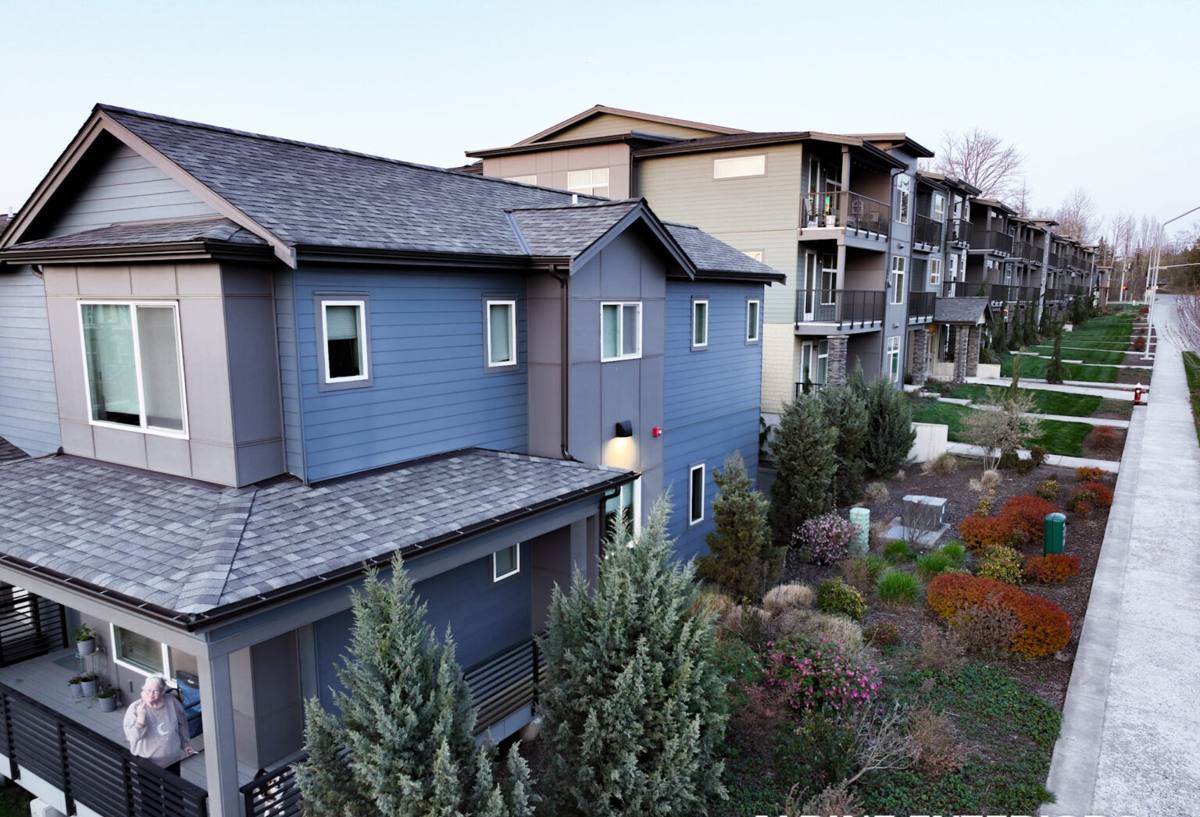
Signs a Ferndale Home Needs New Windows
Most window replacement decisions get made too late, after a problem has already spread into the surrounding wall. Catching these signs early saves money and avoids a bigger repair down the line.
Moisture and Air Signs
- Condensation or fogging between the panes — this means the seal has failed and the gas fill (if any) is gone
- Noticeable drafts near the sash or frame, especially during driving rain or wind events
- Musty smell or visible mildew on the interior sill or frame
- Soft, discolored, or spongy wood at the sill or exterior trim
Operational and Visual Signs
- Windows that stick, won't stay open, or are hard to lock
- Visible moss or green growth building up on horizontal trim surfaces or sills
- Paint or finish that's peeling or bubbling specifically around the window opening, not the rest of the wall
- Chalky, pitted, or corroded hardware and hinges
What "Energy-Efficient" Actually Means in This Climate
Energy-efficient windows get marketed nationally with numbers that don't always translate to a Pacific Northwest coastal home. Two ratings matter most here, and they matter differently than they would in a hot, dry climate.
U-Factor: The One That Matters Most Here
U-factor measures how well a window resists heat loss. In a climate like Bellingham and Ferndale's, where the heating season is long and mild rather than short and brutal, a low U-factor is the single biggest driver of comfort and energy savings. Lower is better, and it's worth prioritizing over other ratings if you have to choose.
Solar Heat Gain Coefficient (SHGC)
SHGC measures how much solar heat passes through the glass. Because this region doesn't get intense, sustained summer sun the way the Southwest does, a moderate SHGC is usually fine — you don't need to block heat aggressively, but you also don't want a window that turns a south-facing room into a greenhouse on the handful of genuinely sunny days each year.
Condensation Resistance
This rating gets overlooked constantly, and it shouldn't be, especially here. A window with poor condensation resistance will sweat on the interior during our cool, humid winters, which leads to sill damage and mildew regardless of how good its insulation numbers look on paper.
Frame Material: What Holds Up Near the Water
Frame material decisions matter more in a marine climate than almost anywhere else, because the frame is what takes the direct hit from salt air and driving rain year after year.
| Material | Moisture & Salt Air Resistance | Maintenance | Notes for Coastal Whatcom County Homes |
|---|---|---|---|
| Vinyl | Very good | Low | Won't rot or corrode; a solid, budget-friendly default for most Ferndale homes |
| Fiberglass | Excellent | Low | Handles temperature swings and moisture with minimal expansion/contraction; higher upfront cost |
| Wood / Wood-Clad | Fair without diligent upkeep | High | Beautiful, but the exposed wood needs consistent maintenance to avoid rot in a wet climate |
| Aluminum | Poor to fair | Moderate | Conducts cold and is prone to condensation and corrosion near salt air; we steer most homeowners away from it here |
We're not tied to pushing one frame material on every job. The right call depends on the home's exposure, your budget, and how much upkeep you actually want to do. What we won't do is install a product we know is a poor match for a house that catches direct wind off the water, just because it's cheaper up front — that's a callback waiting to happen, and it's not a trade-off we put on your bill later.
Glass Packages That Make Sense Here
Double-Pane vs. Triple-Pane
Double-pane, low-E, argon-filled glass is the standard workhorse for this climate and covers the vast majority of homes well. Triple-pane adds meaningful sound dampening and a modest efficiency bump, but it also adds weight, cost, and — on older homes with settled framing — can be harder to fit cleanly. We'll tell you honestly when triple-pane is worth it and when it's overkill for the return you'd actually see on a typical Ferndale house.
Low-E Coatings
Low-emissivity coatings are a thin, virtually invisible layer that reflects heat while letting light through. In this climate, a low-E coating tuned for heat retention (rather than heat blocking) generally performs better than a coating optimized for hot-climate sun control.
Our Installation Process
A window is only as good as its installation, and in a wind-driven-rain climate, installation is where most failures actually start — not in the glass itself.
- On-site assessment — we look at each opening individually, not just the window unit. Framing condition, existing flashing, and sill pitch all get checked before we quote anything.
- Removal and inspection — once the old window is out, we inspect the rough opening for hidden rot or moisture damage before anything new goes in. This is often where the real story of a home's water management shows up.
- Flashing and moisture barrier integration — proper flashing at the head, jambs, and sill is what actually keeps driving rain out over the long term. We integrate new flashing with the existing weather-resistive barrier rather than just caulking around the edges and calling it done.
- Setting and shimming — the window gets set level, plumb, and square, then shimmed correctly so it operates smoothly and seals evenly for its full lifespan.
- Sealing and finish work — exterior sealant, interior trim, and insulation around the frame get finished to spec, not rushed.
- Walkthrough — we test operation and locking on every window before we consider the job done.
Why the Flashing Step Matters More Here Than Elsewhere
Because we also work on roofing and the water-shedding systems that tie into it, we look at a window opening the same way we look at a roof penetration: as a place where water management either works or fails. A window that's beautiful but poorly flashed will let water track into the wall assembly during a hard coastal storm, and by the time it shows up as a stain or soft spot, the damage has usually been building for a while.
Why Hire a Crew That Already Works in Ferndale
Window replacement isn't just a product decision — it's an installation decision, and installation quality depends heavily on understanding local exposure conditions. A crew that regularly works homes in and around Ferndale and greater Whatcom County already knows how driving rain behaves against a wall facing open water, how long moss season actually runs here, and what kind of flashing detail holds up through a wet winter versus one that looks fine for a year or two and then fails quietly behind the trim.
There's also a practical coordination benefit. If your windows and roofline or siding both need attention, a crew that handles exterior work broadly can look at how water moves across the whole building envelope, not just one opening at a time. Water doesn't care about trade boundaries — it finds the weakest connection point, wherever that happens to be.
Living With Moss Season: Simple Upkeep That Protects Your Investment
New windows are a meaningful investment, and a little seasonal attention keeps them performing the way they should for the long haul, especially through Whatcom County's long, damp fall-through-spring stretch.
- Clear leaves and organic debris off sills and horizontal trim before they can trap moisture
- Rinse off visible moss or algae growth early — a soft brush and water is usually enough, no need for harsh chemicals near glass and finishes
- Check and clear weep holes on vinyl and fiberglass frames so trapped water can drain out
- Look at exterior caulking once a year and have any cracked or shrinking sealant addressed before the wet season sets in
- Wipe down interior sills if you notice recurring condensation, and mention it to us if it keeps happening — it may point to a ventilation issue rather than a window problem
What Affects the Cost
We won't quote a number without seeing the job, but these are the main factors that move the price up or down on a typical Ferndale window replacement.
| Factor | Why It Matters |
|---|---|
| Frame material | Vinyl is generally the most budget-friendly; fiberglass and wood-clad cost more upfront |
| Glass package | Triple-pane and specialty coatings add cost over standard double-pane low-E |
| Opening condition | Hidden rot or framing repair found during removal adds labor and materials |
| Number and size of openings | Larger or custom-sized windows cost more than standard sizes |
| Access and exposure | Upper-story or hard-to-access windows on exposed elevations can add installation complexity |
Broadly, homeowners in this area should expect a wide range depending on these factors — we'll walk through exactly where your project lands and why, with no pressure to upsize the scope beyond what the house actually needs.
Ready to Talk Through Your Windows?
If your Ferndale home has windows that are drafty, fogged, sticking, or just past their prime, we're happy to take a look and give you a straight, no-pressure assessment of what's actually going on and what it would take to fix it right. Use the form below to request a free estimate — no obligation, no sales pressure, just an honest look at your options.